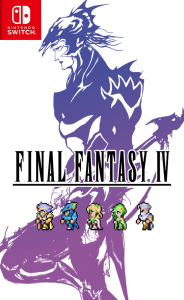
Final Fantasy IV Switch NSP
Report Link Error
Select the broken download file, then submit the report.
Screenshots
About Game
Final Fantasy IV Switch NSP brings Square Enix’s role-playing classic to Nintendo Switch with a story built around duty, loss, friendship, and redemption. Released on April 19, 2023, this version places Cecil Harvey’s long journey alongside strategic Active Time Battle encounters, a varied party, magical abilities, dungeons, towns, and airship-enabled exploration.
Final Fantasy IV on Nintendo Switch: Release and Game Details
The Nintendo Switch release of Final Fantasy IV arrived on April 19, 2023. Square Enix served as both publisher and developer for this role-playing game, which is listed for Europe, USA, Asia, and Japan.
Language support includes English, French, German, Italian, Japanese, Korean, Portuguese, Russian, Chinese, and Spanish. The base game requires firmware v15.0.1, while its update is listed with firmware v16.0.1. The listed file size is 730MB.
For players returning to the game or meeting its cast for the first time, the appeal is rooted in a focused fantasy adventure. Crystals sit at the center of the conflict, while a changing group of allies gives the journey emotional movement as well as tactical variety. The Switch release preserves a game known for combining character drama with brisk, decision-driven battles.
Cecil Harvey’s Path from Dark Knight to Hero
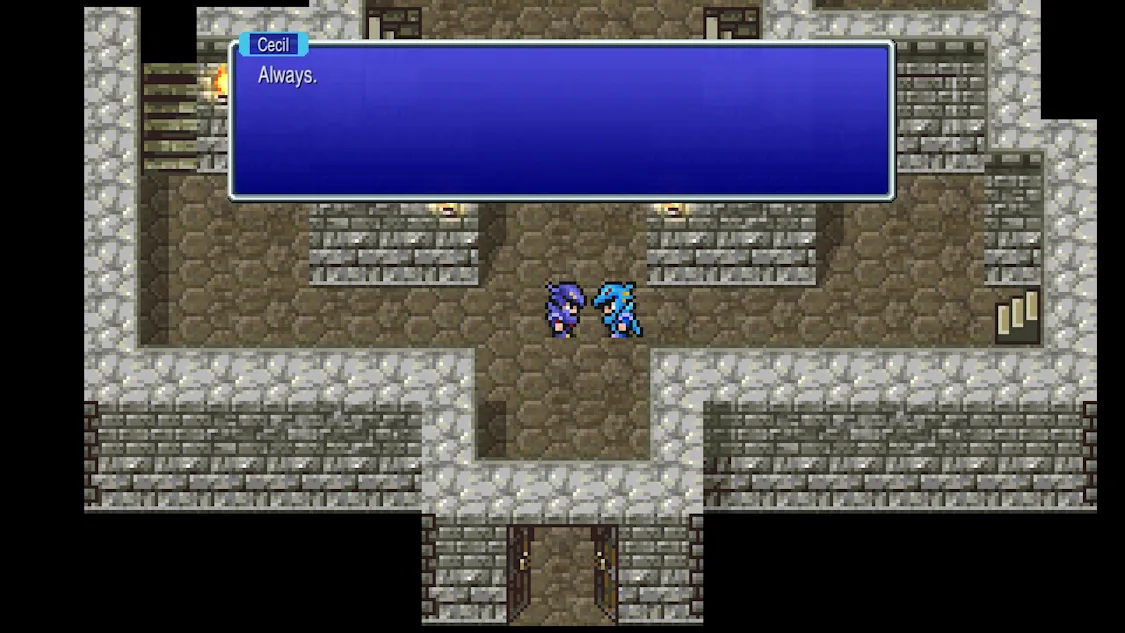
The Final Fantasy IV story begins with Cecil Harvey in a difficult position. He is a Dark Knight and the captain of Baron’s Red Wings, an airship fleet acting under royal command. His missions involve taking powerful crystals from innocent kingdoms, and the cruelty of those orders gradually becomes impossible for him to ignore.
That conflict is not treated as a minor plot point. Cecil’s doubts put him directly against the authority he once served. When he questions the king’s increasingly aggressive decisions, he loses his command and is sent away. Exile becomes the beginning of a personal reckoning rather than the end of his role in the story.
Cecil’s quest is therefore shaped by more than stopping an external threat. He must confront the consequences of his earlier actions and find a way forward as the world’s crystals become the target of a larger, mysterious force. Betrayals, reunions, sacrifice, and forgiveness all inform the arc of a character trying to become worthy of being called a hero.
Kain and the Allies Who Join Cecil’s Journey
Kain, Cecil’s loyal companion and a Dragon Knight, is one of the most important figures at the start of the journey. His presence gives Cecil a trusted ally during the upheaval that follows exile, while also establishing the story’s interest in friendship tested by larger events.
The party expands as Cecil meets mages, summoners, and warriors with their own strengths. This variety matters in both narrative and combat terms. Different characters bring different abilities, creating room for distinct approaches when the group faces dangerous enemies and difficult locations.
The cast’s changing makeup also helps the adventure retain momentum. New companions can alter how a battle is approached, but they also broaden the perspective on the crisis surrounding the crystals. The group is not simply a collection of combat roles; its members reinforce the stakes of a journey involving fate, loss, and the possibility of redemption.
- A conflicted leader: Cecil’s past as a Dark Knight gives the central quest a moral weight beyond a simple mission to defeat evil.
- A Dragon Knight ally: Kain begins as Cecil’s close companion, placing friendship near the heart of the early story.
- Specialized party members: Mages, summoners, and warriors provide different tools for battle and encourage flexible team planning.
- Crystals in danger: The struggle over powerful crystals connects the personal drama to a threat with far-reaching consequences.
- Travel with purpose: Towns, dungeons, and airships turn exploration into a steady path toward new challenges and discoveries.
How the Active Time Battle System Shapes Combat
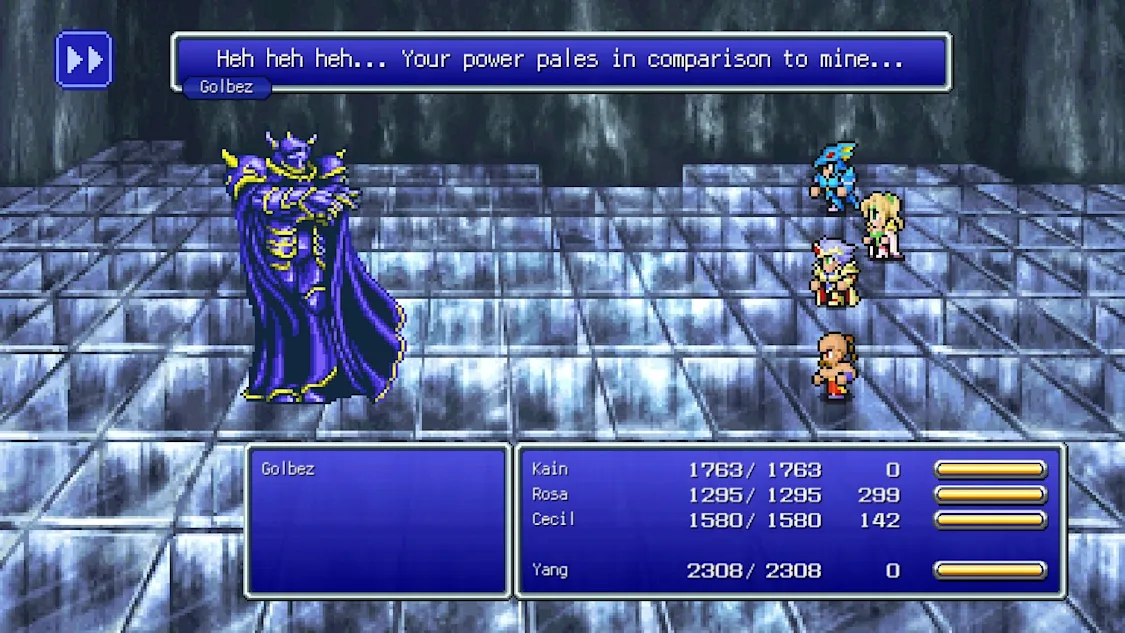
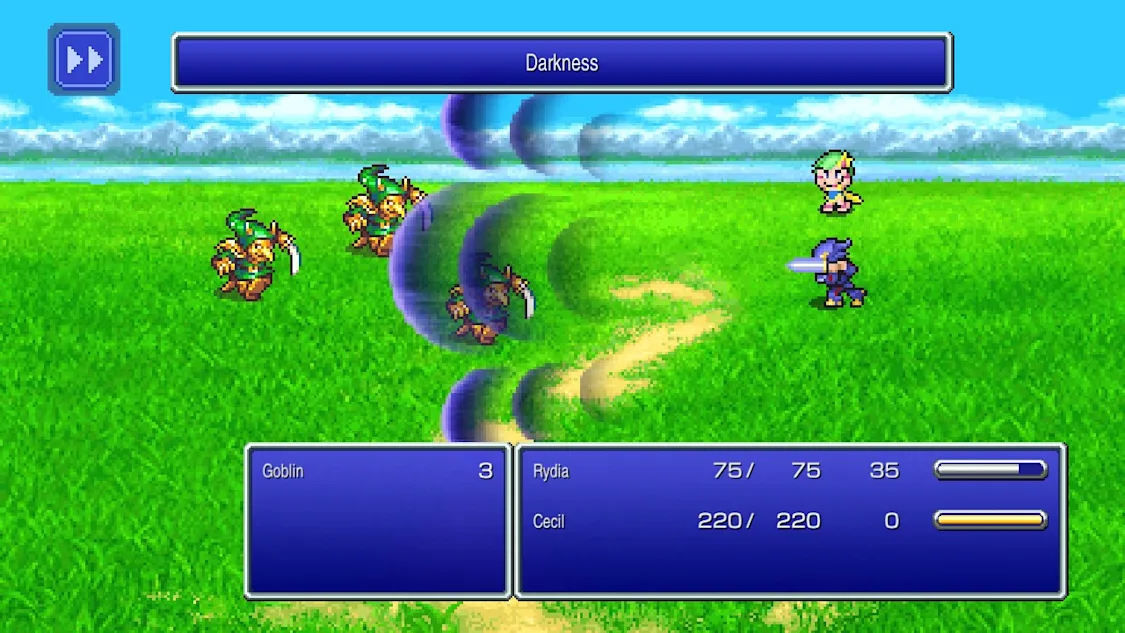
Final Fantasy IV uses turn-based foundations, but its Active Time Battle system gives encounters a more urgent rhythm. Instead of treating every choice as completely detached from time, characters act when their action timers fill. Players must make decisions as battle continues to move.
This structure makes the Final Fantasy IV ATB system especially important during tense fights. Selecting an attack, spell, item, or character-specific ability involves tactical consideration, but it also demands attention to timing. A delayed decision can affect the flow of an encounter, particularly when enemies are applying pressure.
The system supports a balance between accessibility and urgency. Players still consider party health, offensive options, and available resources, yet the timers discourage passive planning. Combat becomes an active exchange in which quick judgment matters alongside longer-term preparation.
Magic, Eidolons, and Party Strategy
Magic is central to the party’s options. Black magic provides offensive power, while white magic supports healing and recovery. These functions make party condition a constant concern: a group that can deal damage effectively may still struggle if it cannot recover from sustained attacks.
Character-specific abilities add another layer to planning. Since party members do not all contribute in the same way, the strongest response to a battle can depend on who is present and which resources remain available. Equipment also plays a practical role, with weapons, armor, and accessories used to improve character statistics.
Eidolons offer another source of powerful battle effects. Acquiring and using them can give the party access to dramatic support in difficult encounters, while leveling up improves statistics and opens additional abilities and spells. These progression systems encourage players to pay attention to preparation instead of relying on a single repeated tactic.
The strategic appeal of Final Fantasy IV Switch NSP lies in this combination: timely actions through ATB, varied party roles, magic for attack and healing, and powerful Eidolons for major moments. Bosses and demanding dungeon sections reward careful equipment choices and a willingness to adjust tactics.
Exploration Through Towns, Dungeons, and Airship Travel
Outside combat, the adventure moves across a world map through towns, dungeons, and eventually airship travel. Towns offer opportunities to find stronger equipment, while dungeons present hazards, enemies, hidden discoveries, and loot. The rhythm between these spaces gives progression a clear shape: prepare, travel, confront challenges, and return stronger.
Airships are particularly important because they open access to additional areas. Their arrival changes the sense of scale, making the world feel broader while supporting the story’s movement from one crystal-related crisis to the next. Exploration is not merely a break between battles; it feeds directly into character growth, equipment management, and the discovery of new routes.
This makes the game suitable for players who enjoy story-led RPGs with a classic structure, tactical combat that asks for quick choices, and exploration that steadily reveals more of the world. Its atmosphere comes from the contrast between intimate character struggles and a widening adventure involving kingdoms, crystals, and a looming cosmic danger.
Recommended Similar Games
 Ni no Kuni II: Revenant Kingdom PRINCE’S EDITION Switch NSP XCIView Game
 Damascus Gear Operation Tokyo Switch NSPView Game
 Dungeonoid 2 Awakening Switch NSPView Game
 South Park The Fractured but Whole Switch NSP XCIView Game
 Dying Light: Platinum Edition Switch NSP XCIView Game
 Valkyria Chronicles Switch NSPView Game
