Animal Farm Parking Switch NSP
Report Link Error
Select the broken download file, then submit the report.
Screenshots
About Game
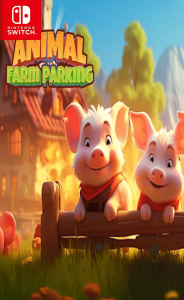
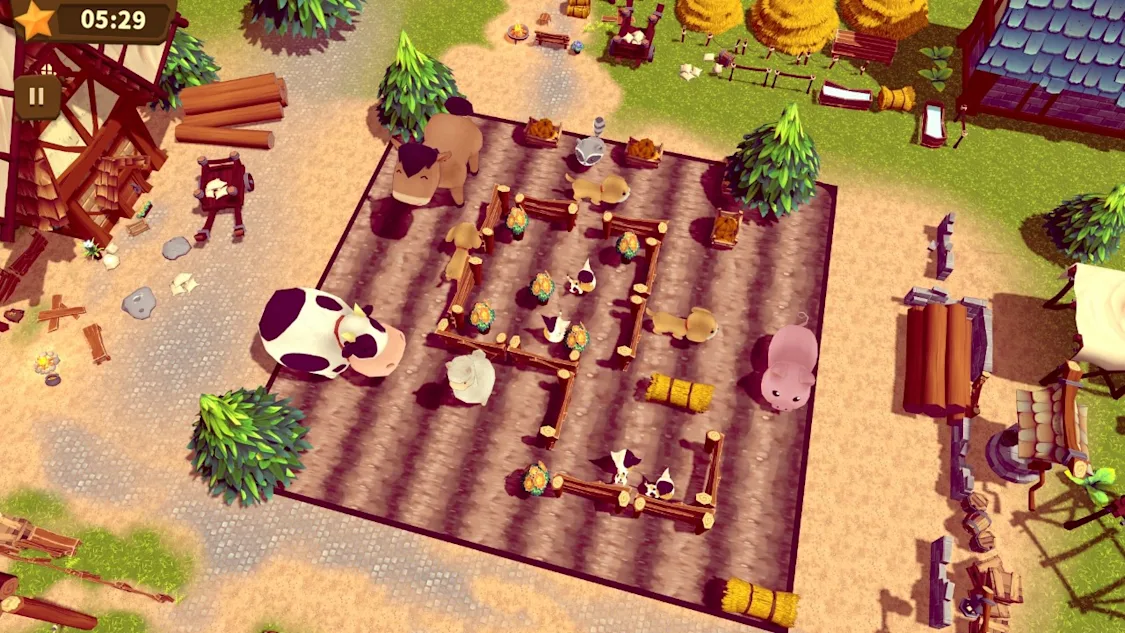
Animal Farm Parking Switch NSP places a playful farm theme around a familiar kind of traffic puzzle: a crowded grid, a designated vehicle, and just enough open space to make every move matter. Released on July 21, 2023, this Prison Games title combines Adventure, Puzzle, and Simulation labels in a light vehicle-sliding challenge built around restoring order to an increasingly busy farmyard.
Animal Farm Parking Switch NSP: Game Overview
Developed and published by Prison Games, Animal Farm Parking uses tractors, carts, and other farm vehicles to frame its parking scenarios. The premise is deliberately humorous. Farm animals have gained access to vehicles, but the result is a disordered lot where getting one vehicle out often means rearranging nearly everything around it.
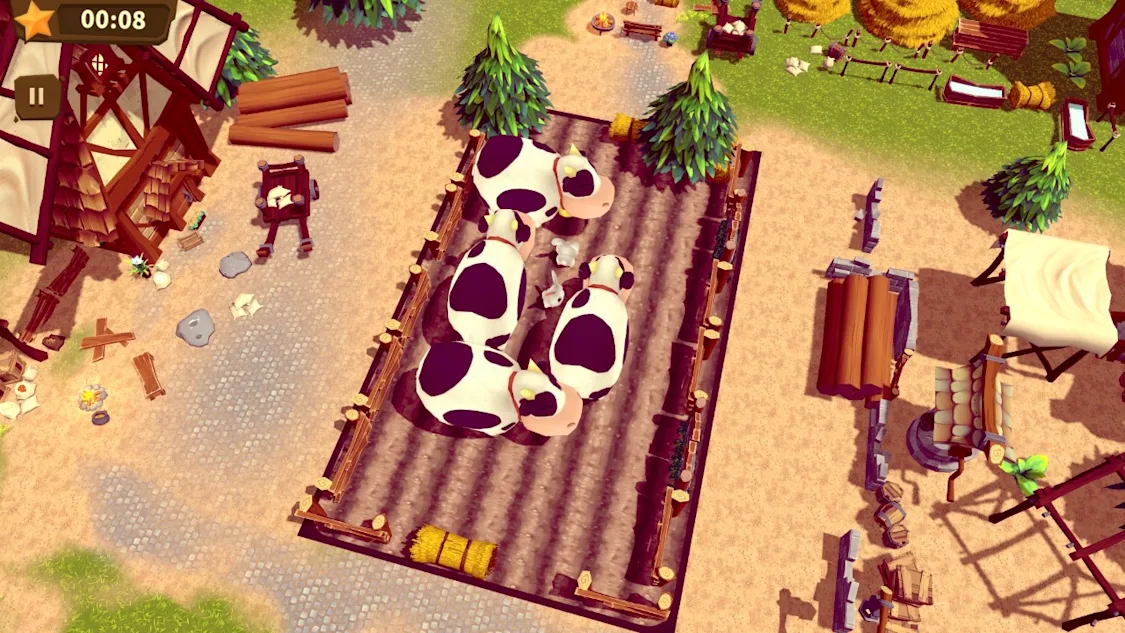
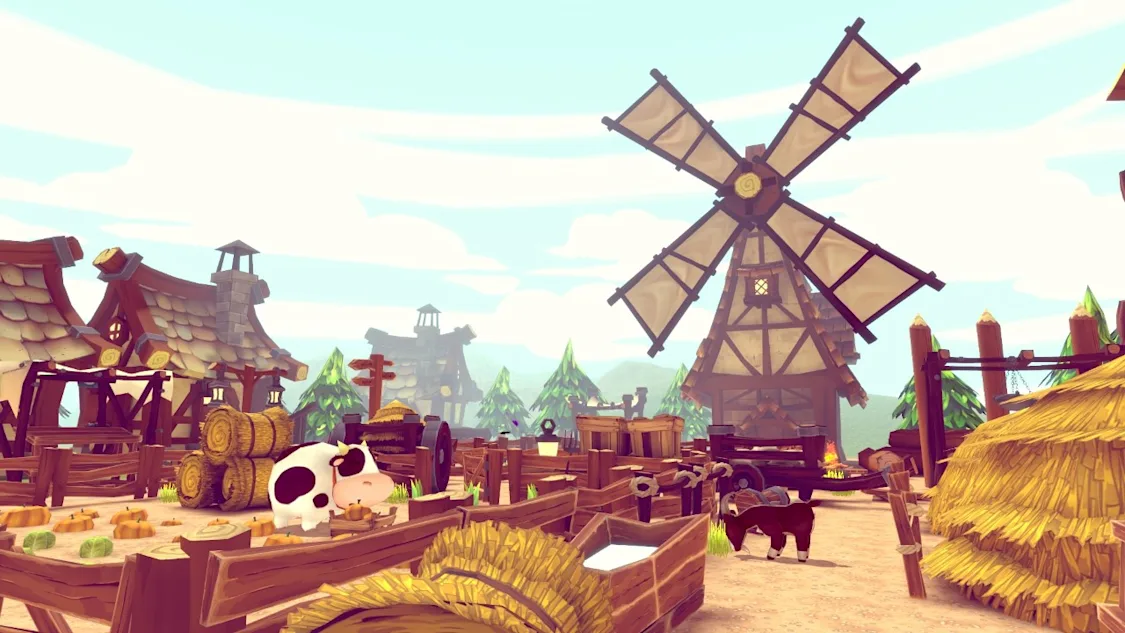
The game’s appeal comes from that contrast between its rural setting and its methodical puzzle design. Hay bales and muddy puddles can restrict movement, while tightly positioned vehicles turn simple-looking layouts into planning exercises. The farm setting gives the action a friendly, slightly chaotic atmosphere, but the objective remains clear: guide the highlighted vehicle toward the designated exit.
Its Adventure, Puzzle, and Simulation genre tags reflect a format that is less about speed than observation. Each parking area asks the player to read the available space, understand how vehicles are positioned, and make a sequence of moves without trapping the route needed later. The presentation supports that practical focus through farm-themed vehicles and situations rather than shifting attention away from the grid.
How the Vehicle-Sliding Puzzles Work
Animal Farm Parking Switch NSP centers on a sliding vehicle puzzle. A level begins with a parking grid filled by vehicles, obstacles, and limited open lanes. One vehicle is highlighted as the target, and the task is to create enough room for it to leave through its exit route.
That goal is uncomplicated in theory, but the available moves are interconnected. A tractor moved to open a lane may then block another vehicle. A cart that appears unimportant may need to shift first because it is preventing a larger vehicle from moving. Players are therefore encouraged to look beyond the first obvious obstruction and consider what each move makes possible afterward.
Blocked paths are the central source of difficulty. The target vehicle cannot simply pass through other vehicles, and environmental restrictions such as hay bales or muddy puddles further shape the parking grid. Success comes from moving vehicles deliberately, preserving usable space, and avoiding a deadlock where the necessary vehicle can no longer be repositioned.
The result is a puzzle format suited to short sessions as well as longer stretches of level-solving. A single layout has a direct purpose, yet its solution can require several stages of rearrangement before the final exit is clear.
Vehicles, Sizes, and Space Management
The game’s strategic layer depends heavily on vehicle footprints. Not every vehicle occupies the same amount of the grid, and those differences determine which lanes can be opened or closed. Examples include vehicles taking up 1x2, 2x2, and 1x3 spaces.
A 1x2 vehicle may be easier to reposition in a narrow section, while a 2x2 vehicle can dominate a central area and restrict several potential routes at once. A 1x3 vehicle introduces another kind of problem: its longer shape may block a lane even when there appears to be plenty of room elsewhere. These dimensions make space management more important than simply moving whatever is closest to the exit.
Players need to treat empty squares as valuable resources. An open area can serve as temporary parking for a blocking vehicle, but using it too soon may eliminate the flexibility required for a later move. This gives the farm parking puzzle a measured rhythm. Progress is often made by creating a small opening, using it to shift a larger obstruction, then reclaiming the space for the target vehicle’s route.
Ordered Steps for Approaching a Parking Puzzle
- Survey the grid. Before moving anything, look at the positions of vehicles, open spaces, obstacles, and the exit area.
- Find the target. Identify the highlighted vehicle and trace the route it would need in order to leave the parking area.
- Clear nearby space. Focus first on the vehicles immediately restricting the target or the lane leading to its exit.
- Move with purpose. Shift blocking vehicles only when the move opens space, creates a new route, or enables another necessary repositioning.
- Protect flexibility. Keep useful empty areas available when possible, especially around large vehicles that need more room to move.
- Complete the route. Once the key blockers have been relocated, guide the target vehicle through the newly cleared exit path.
This approach does not guarantee that every first attempt will be the most efficient one, but it reflects the structure of the puzzles. Random movement can quickly make a crowded lot more difficult to read. A deliberate sequence is better suited to the game’s emphasis on spatial planning.
Increasing Layout Complexity and Move Efficiency
Progression brings more intricate parking arrangements and new challenges. As layouts become more crowded, the interaction between vehicle size, available space, and restricted movement becomes more demanding. A route that looks straightforward can depend on several preliminary moves, particularly when a larger vehicle occupies a useful portion of the grid.
The game also gives players a reason to revisit solutions through move efficiency. Solving a parking puzzle in fewer moves can lead to higher scores, adding a replay-minded objective after the first successful exit. Finishing a level proves that a route exists; improving the move count asks a different question: was there a cleaner sequence?
That distinction is important for players who enjoy refining a solution. The initial challenge is to escape the parking jam. The follow-up challenge is to reduce unnecessary repositioning and find a more economical route through the same layout. This makes the puzzle structure suitable for players who prefer careful experimentation over quick reactions.
Nintendo Switch Release Details and Language Support
Animal Farm Parking was released for Nintendo Switch on July 21, 2023, with availability listed for Europe and the USA. Prison Games is credited as both developer and publisher.
Language support includes English, Dutch, French, German, Italian, Japanese, Korean, Portuguese, Russian, Simplified Chinese, and Spanish. That broad selection fits a game whose central rules are communicated through visible grid positions, vehicle movement, and a clear exit objective.
For players drawn to compact logic challenges, farm-themed presentation, and steadily more involved parking arrangements, the game offers a straightforward puzzle premise with room for efficient repeat solutions. Its vehicles, obstacles, and increasingly complex grids keep the focus on planning one careful move at a time.