Mega Man Legacy Collection 2 Switch NSP
Report Link Error
Select the broken download file, then submit the report.
Screenshots
About Game
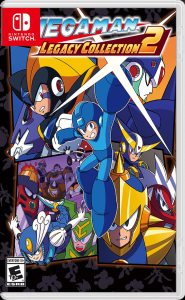
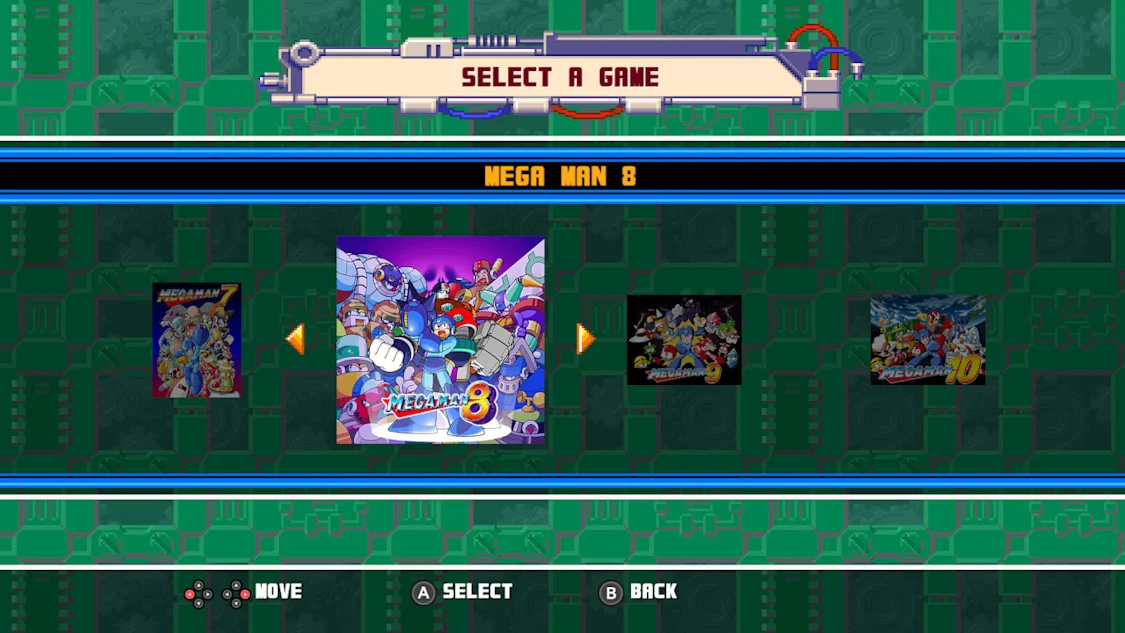
Mega Man Legacy Collection 2 Switch NSP gathers four Capcom action-platforming adventures on Nintendo Switch, bringing together Mega Man 7, Mega Man 8, Mega Man 9, and Mega Man 10. Released on May 22, 2018, the compilation presents a substantial stretch of the series’ history: two visually distinct 16-bit and 32-bit-era games alongside two later entries built around a deliberately classic pixel-art approach.
Mega Man Legacy Collection 2 on Nintendo Switch: Collection Overview
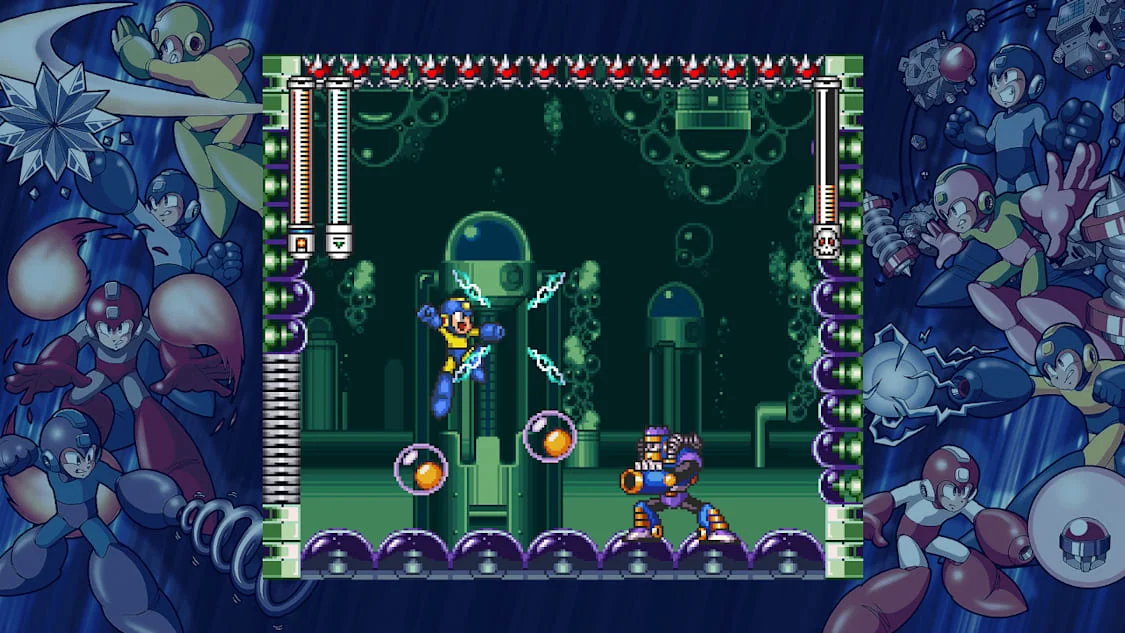
This Capcom collection is built around the enduring appeal of Mega Man’s stage-based structure. Players choose from a set of major stages, work through hazards and enemy-filled rooms, confront a Robot Master, then add that boss’s weapon to Mega Man’s growing toolkit. The formula remains recognizable across all four games, but the presentation and individual mechanics shift enough to give each adventure a separate identity.
The collection moves from the direct continuation found in Mega Man 7 to Mega Man 8’s more animated presentation, then back toward the visual language of the earliest games with Mega Man 9 and Mega Man 10. That range gives the package a changing atmosphere. Some entries feel colorful and expansive, while others use compact pixel-art environments and demanding stage layouts to create a more traditional retro tone.
Its appeal lies in both familiarity and variation. The core actions—running, jumping, firing the Mega Buster, avoiding traps, and learning enemy patterns—stay consistent, yet each game asks players to adjust to its own pacing, visual style, and challenge level.
The Four Games Included: Mega Man 7 Through Mega Man 10
Mega Man 7 follows Dr. Wily’s escape from prison and his return with a new group of Robot Masters. It continues the established conflict while introducing Bass and Treble. The game retains the side-scrolling action format, with the familiar search for boss weaknesses shaping progress through its stages.
Mega Man 8 begins with an alien energy source arriving on Earth. Dr. Wily attempts to use it, sending Mega Man into another campaign against Robot Masters and a larger threat to global peace. Its presentation differs from the surrounding titles through vibrant animation and voice acting, creating a noticeably different feel without leaving the series’ action-platforming foundation behind.
Mega Man 9 returns to an 8-bit visual style. Its story places Dr. Light under suspicion during a robot malfunction epidemic, giving Mega Man a reason to fight both for the world and for his creator’s reputation. The retro presentation is paired with a fresh set of stages and bosses, making the game feel deliberately tied to the older design tradition.
Mega Man 10 centers on Robotenza, a virus that causes robots to go berserk. Dr. Wily claims to possess a cure, but demands components in return. The resulting journey combines familiar foes and new threats while Mega Man searches for a real answer to the crisis.
- Choose a target: Each game presents Robot Master stages that can be tackled in different orders.
- Learn the stage: Traps, enemies, jumps, and hidden useful items reward careful observation.
- Win a new weapon: Defeating a Robot Master grants access to that boss’s signature power.
- Exploit the chain: Acquired weapons reveal boss weaknesses and can make later encounters more manageable.
- Refine the run: Challenge and time-trial activities encourage faster, cleaner play after the main stages are understood.
Robot Masters, Acquired Weapons, and Boss Weakness Strategy
Robot Masters are more than stage-ending obstacles. They define the collection’s progression loop. Every major boss has a distinctive weapon, and defeating that boss adds the power to Mega Man’s arsenal. These weapons are useful beyond the boss room: they can change how players handle regular enemies, navigate certain situations, or approach later levels.
The key strategic layer comes from boss weaknesses. A weapon earned from one Robot Master can be especially effective against another, which makes stage selection meaningful. Players can attempt a difficult boss with the Mega Buster alone, or leave that stage until they have found a more favorable weapon. This system turns a straightforward sequence of stages into a small planning puzzle.
That flexibility supports different play styles. Players who enjoy experimentation can test weapons and uncover the most efficient order. Players who want to focus on action can push through a preferred stage first and adapt when a boss proves difficult. The loop remains clear, but its decisions give the games replayable structure.
Precision Platforming and Combat Across the Collection
The action depends on control and timing. Mega Man must make precise jumps, shoot through crowded areas, slide through certain hazards, and manage limited space when enemies and traps overlap. Stages ask for steady movement rather than careless rushing. A missed platform, poorly timed shot, or mistimed slide can quickly turn a manageable section into a setback.
Combat is equally tied to awareness. Enemies appear in varied positions and stages include obstacles that force players to respond while moving. Energy pickups and power-ups can help sustain a run, while hidden secrets offer another reason to look beyond the obvious route. The result is classic 2D platforming with a strong sense of momentum: progress comes from reading the next obstacle, choosing an attack, and committing to a jump.
The visual treatment also shifts across the package. Mega Man 7 and Mega Man 8 are presented with high-definition graphics, while Mega Man 9 and Mega Man 10 retain faithful pixel art. That contrast makes the collection feel less like four identical games and more like a compact record of changing Mega Man styles.
Challenge, Time Trial, and Museum Content
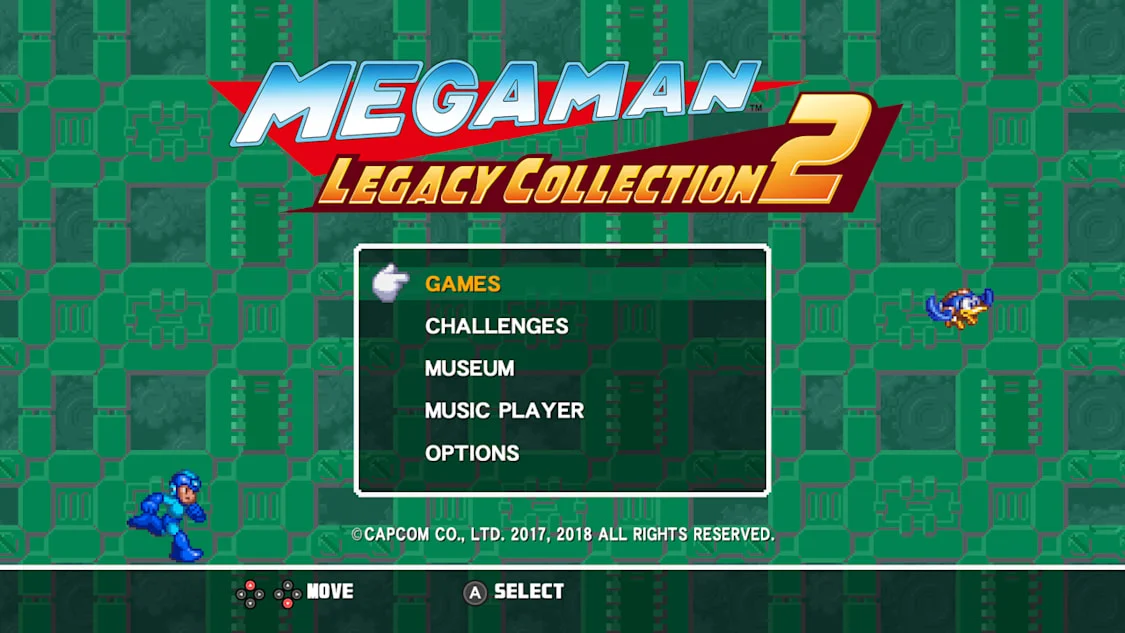
Beyond the four main adventures, the collection includes challenge and time-trial activities. These modes give experienced players focused objectives and opportunities to improve execution. Because the core games rely on stage knowledge, weapon use, and precise movement, time-oriented play has a natural fit: faster results come from cleaner platforming, fewer mistakes, and a better understanding of enemy placement.
A museum mode adds context away from the action. It includes concept art, sketches, and historical information, offering material for players interested in the design and presentation of these four entries. The feature complements the games rather than replacing them, but it gives the compilation value as a retrospective package as well as a playable one.
Accessibility options broaden the audience for the collection’s tougher sections. Save states and a rewind feature can help players recover from difficult mistakes, while Casual Mode reduces damage taken. Those tools do not remove the platforming or boss strategy; they provide more room to practice them.
Release and Technical Details for the Switch Edition
Mega Man Legacy Collection 2 Switch NSP was released on May 22, 2018. Capcom served as both publisher and developer. The Switch edition is listed for Europe, USA, Asia, and Japan, with language support for English, German, Spanish, French, Italian, Japanese, and Chinese.
The title is classified as an Action and Platformer release. Its base firmware requirement is v12.0.0, and its listed file size is 3.2GB. For players looking for challenging 2D platforming, deliberate boss-order strategy, and four connected but visually different Mega Man games, the collection offers a focused Capcom package with extra modes and archival material alongside the main campaigns.