Alien Hominid Invasion Switch NSP
Report Link Error
Select the broken download file, then submit the report.
Screenshots
About Game
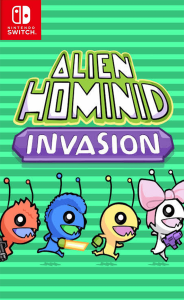
Alien Hominid Invasion Switch NSP arrived in the USA on November 1, 2023, bringing The Behemoth’s arcade-action sensibility to Nintendo Switch. Developed and published by The Behemoth, it turns an absurd extraterrestrial premise into a brisk, colorful invasion game: a small yellow alien and a mothership full of companions crash-land on Earth, then set about abducting humans and taking their secrets while human agents fight back.
Alien Hominid Invasion on Nintendo Switch: Release Details and Scope
This is an arcade action game built around direct, energetic encounters rather than a restrained science-fiction tone. The premise gives the action its comic edge. The aliens are not quietly observing Earth; they are causing conspicuous trouble, attracting resistance from agents, secret service forces, and other strange opponents along the way.
The November 2023 USA release supports a broad language selection: English, French, German, Italian, Japanese, Korean, Portuguese, Russian, Simplified Chinese, Spanish, and Traditional Chinese. That range suits a game whose appeal is rooted in immediate movement, readable visual chaos, and simple-to-grasp objectives. The fundamentals are clear, but the action has enough moving parts to reward players who learn when to push forward, retreat, or use a more unusual move.
How the Twin-Stick Shooting Action Shapes Every Encounter
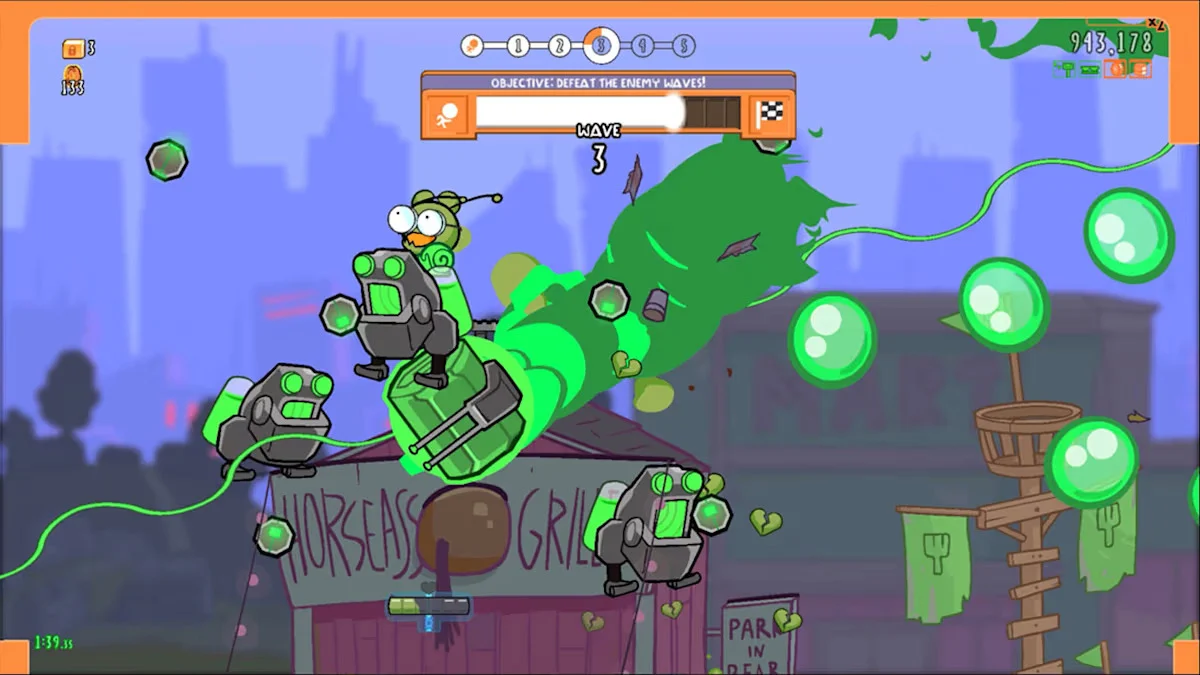
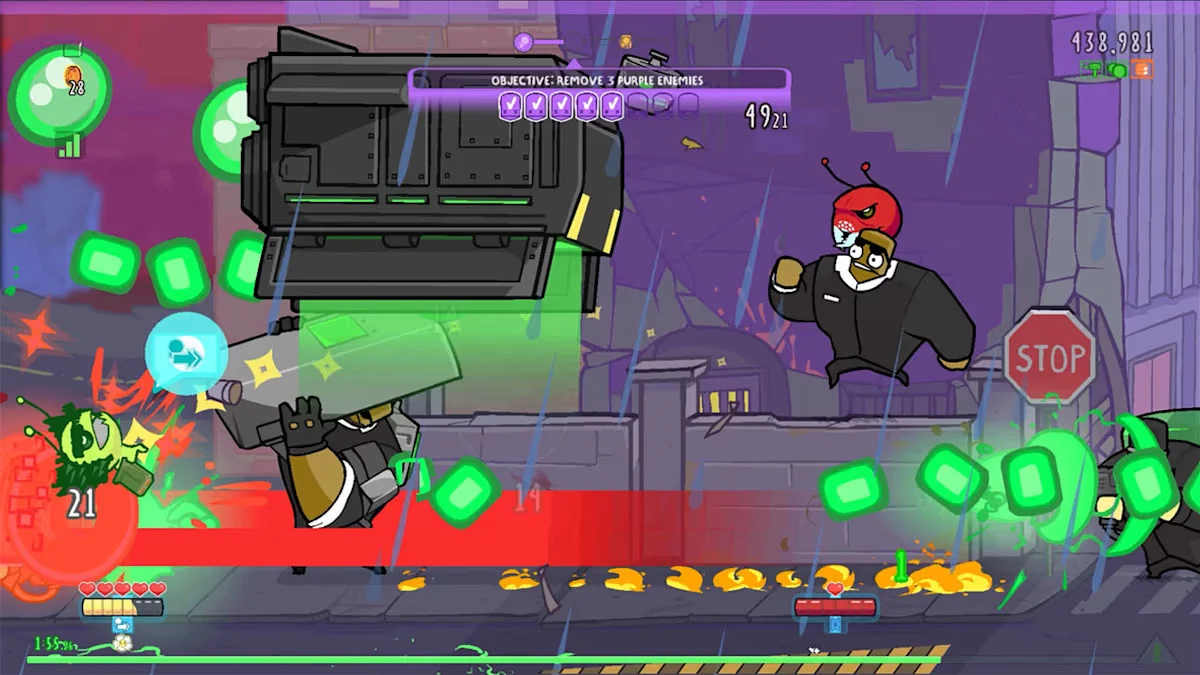
Alien Hominid Invasion uses a twin-stick shooter foundation, putting movement and aiming under constant pressure. Shooting is central, but simply firing into a crowd is not presented as the whole answer. Players dodge through hectic confrontations, blast hostile forces, and physically toss enemies when the moment calls for it. The result is arcade combat that asks for quick reactions and awareness of what is happening across the screen.
Responsive movement matters because fights can involve enemies, hazards, and objectives competing for attention. A player who can maintain distance, shift direction quickly, and keep an eye on enemy behavior has more options than one who remains fixed in place. That makes each encounter feel less like a shooting gallery and more like a fast-moving scramble for control.
The action also supports a useful rhythm of attack and repositioning. Fire can clear immediate space, dodging can avoid danger, and close-range interactions can turn a threatening enemy into a thrown obstacle. It is a deliberately busy formula, yet the variety of actions keeps the arcade combat from depending on one repeated tactic.
- Keep moving: Dodging and repositioning help manage crowded encounters and environmental hazards.
- Read the screen: Watching enemy patterns is more effective than firing without a plan.
- Use the ground: Digging underground offers a distinctive movement option when pressure builds.
- Throw with purpose: Tossing enemies adds another response beyond shooting them directly.
- Time special abilities: Powerful moves are most useful when used against a demanding situation rather than immediately.
Four-Player Co-op and the Value of Coordinated Alien Chaos
The game can be played solo or in co-op with up to four players. That flexibility matters for an arcade action game with so much happening at once. Solo players must carry the full burden of dodging, attacking, and pursuing objectives, while a group can divide attention across enemies, hazards, and the larger invasion effort.
Four-player co-op does not remove the pressure; it changes its shape. More players can create more firepower and more opportunities to recover from a difficult moment, but coordinated movement remains valuable. A group that recognizes threats, avoids clustering around danger, and uses its different actions at useful times can make the chaos feel purposeful rather than random.
The co-op format also fits the game’s mischievous tone. The aliens’ mission is already playful and destructive, and a full group gives that premise a social dimension. The appeal is not only surviving a fight but sharing the confusion of a crowded screen, an unexpected enemy toss, or a sudden shift in the objectives of an invasion.
Digging, Throwing, and Tactical Movement Beyond Shooting
What gives Alien Hominid Invasion Switch NSP more texture than a straightforward shooter is its focus on actions beyond firing weapons. Digging underground, throwing enemies, dodging, and activating special abilities all broaden the player’s choices. These moves support a style of play that values timing and observation as much as raw aggression.
Digging is especially notable because it changes how a player can navigate pressure. Rather than treating the battlefield as a flat space where every threat must be shot, the game provides another way to move through danger. Throwing enemies similarly turns close-range contact into an opportunity. Both mechanics encourage players to look for openings instead of relying entirely on distance.
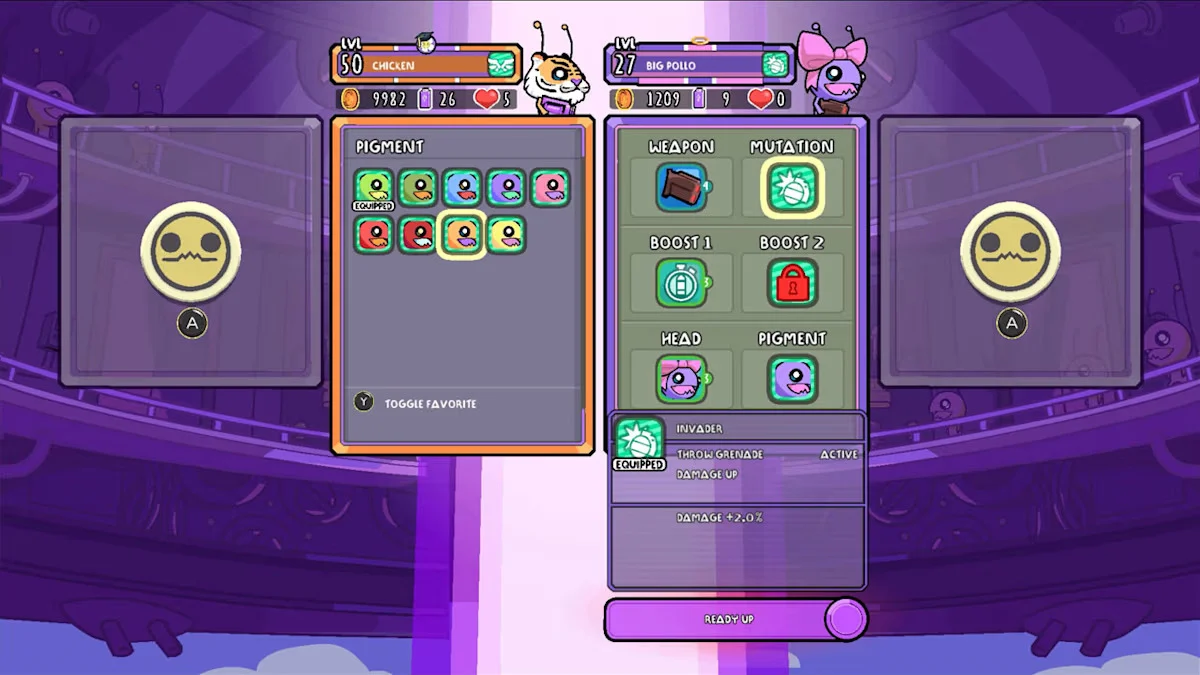
The mutation system adds a progression layer to this combat. Abducting humans contributes to evolving an alien with unusual abilities, with dozens of mutations and upgrades available. This links the invasion premise to gameplay advancement: the same human abductions that fit the story’s comic objective also feed into new powers and customization. Replay value comes naturally from that combination of shifting challenges, different abilities, and room to experiment with how an alien is built.
Non-Linear Overworld Challenges, Biomes, and Invasion Objectives
The structure extends beyond isolated levels through a non-linear overworld map. Instead of presenting every challenge as one uninterrupted route, the game sends players toward invasion-based objectives across distinct biomes. Each area brings its own challenges and human targets, helping the campaign maintain a changing sense of place without abandoning its central invasion theme.
Individual levels are framed as invasions with multiple objectives and plenty of destruction. Dynamic challenges can alter the demands from one area to the next, so success depends on more than memorizing a single combat routine. A player may need to adjust to a new enemy mix, changing hazards, or a different objective while still managing the rapid pace of twin-stick action.
This structure suits players who enjoy arcade games with repeatable pressure and progression between battles. It is also appropriate for groups looking for cooperative action that leaves room for coordination, experimentation with mutations, and a little disorder. The game’s premise never asks to be taken too seriously, but its movement tools and objective-driven invasions give its humor a practical gameplay framework.
Why The Behemoth’s Hand-Drawn Art Fits the Game’s Absurd Action
The Behemoth’s hand-drawn visual approach is a natural match for the game’s tone. Vibrant art and expressive animation make explosions, enemies, and bosses feel deliberately exaggerated rather than grim. Quirky opponents and formidable larger threats share a presentation that supports the aliens’ strange campaign on Earth.
That presentation also helps the action communicate its personality. A game about abducting humans, digging beneath danger, and tossing enemies needs an art style willing to embrace cartoonish destruction. The hand-drawn look gives each biome and confrontation a playful visual identity while keeping the mood aligned with the game’s fast, unruly pace.
For players drawn to arcade action, cooperative mayhem, and expressive animation, Alien Hominid Invasion offers a compact but layered mix of shooting, movement, mutations, and invasion objectives. Its strongest idea is simple: let the alien chaos be loud, strange, and active, then give players enough tools to navigate it with skill.
Recommended Similar Games
 Lines 98 Classic Switch NSPView Game
 Flight Simulator Delivery: Cargo Business Switch NSPView Game
 Kamiwaza: Way of the Thief Switch NSP XCIView Game
 Constance Switch NSPView Game
 Trails in the Sky 2nd Chapter Switch NSPView Game
 Is It Wrong to Try to Pick Up Girls in a Dungeon? ~Fullland of Water and Light~ Switch NSPView Game
