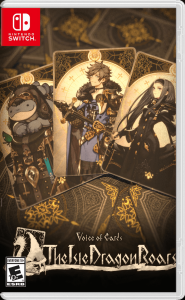
Voice of Cards: The Isle Dragon Roars Switch NSP
Report Link Error
Select the broken download file, then submit the report.
Screenshots
About Game
Voice of Cards: The Isle Dragon Roars Switch NSP frames a fantasy role-playing journey as an interactive tabletop session, replacing conventional character models and landscapes with illustrated cards. Its premise is familiar in broad strokes—a dragon has returned and the world needs saving—but the presentation gives that quest a notably intimate, storybook-like rhythm.
What Makes Voice of Cards: The Isle Dragon Roars a Card-Based RPG
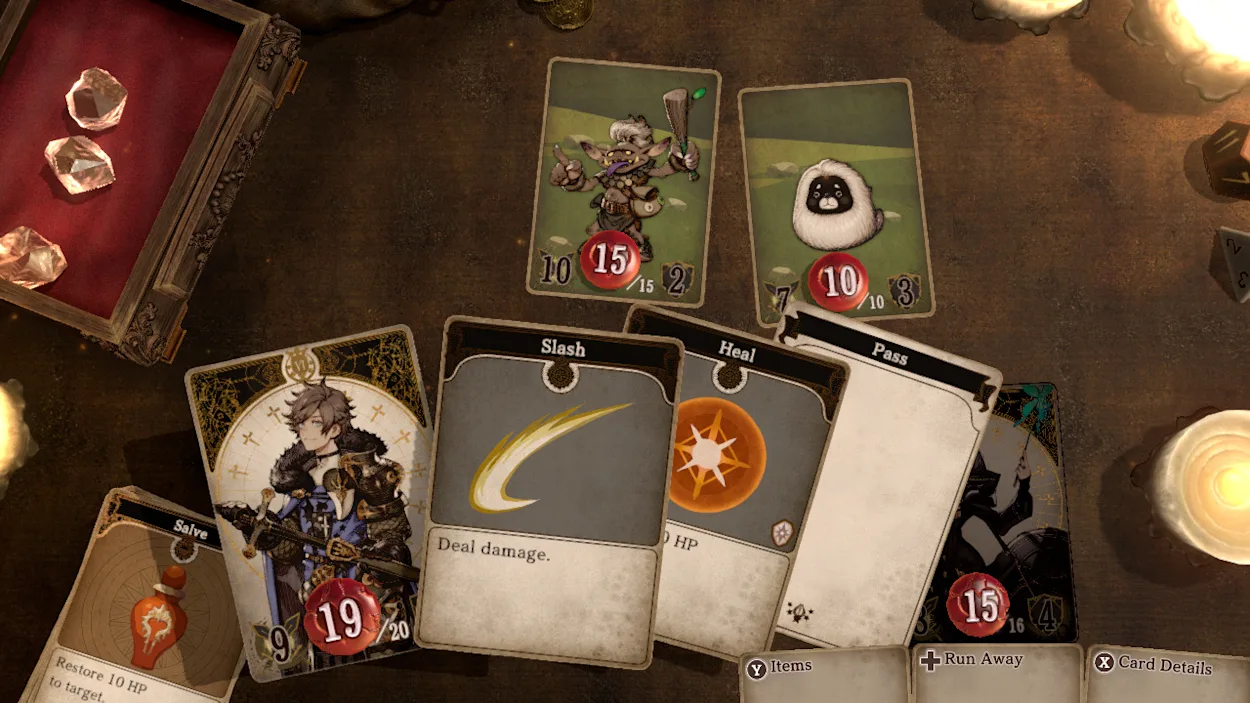
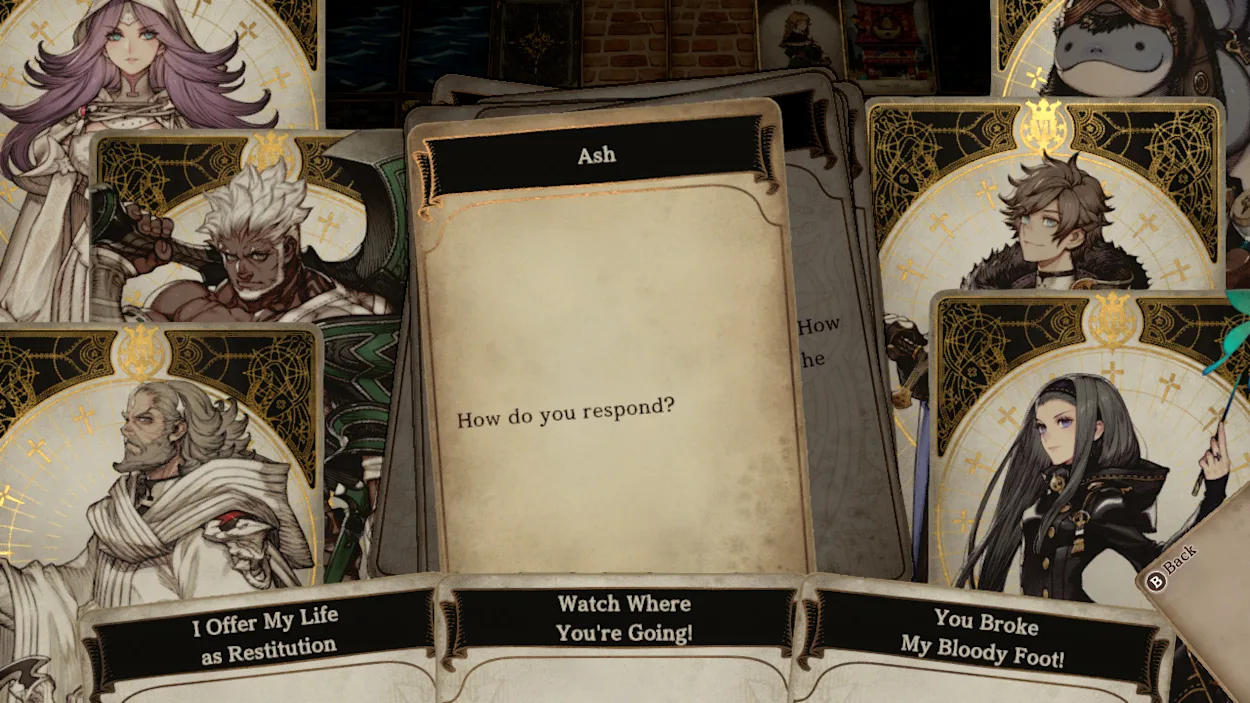
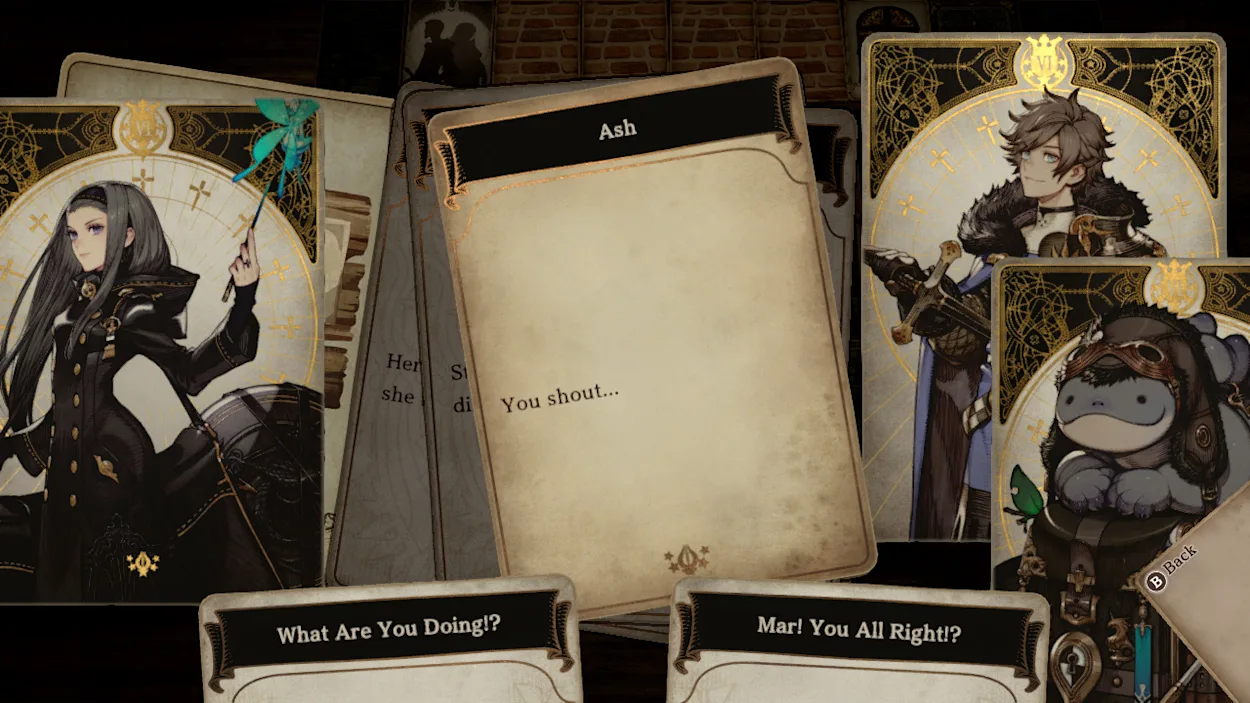
Voice of Cards: The Isle Dragon Roars turns nearly every part of its world into a card. Characters, enemies, locations, items, actions, and story events are presented through illustrated card faces, while exploration unfolds across a map that reveals towns, dungeons, treasures, and events. The result is less like navigating a conventional fantasy landscape and more like watching a Game Master arrange a living campaign on a tabletop.
That approach shapes the atmosphere as much as the mechanics. A new place arriving with the flip of a card gives exploration a measured sense of discovery. Story scenes are similarly filtered through the game’s card format, allowing the visual language to remain consistent from quiet conversations to dangerous encounters. The narration by a Game Master further supports the tabletop-inspired tone, guiding the journey in the manner of a narrated role-playing session.
For Nintendo Switch players, this is a role-playing experience whose identity comes from presentation as much as combat. The card-based format is not a brief visual novelty placed over familiar systems; it is the framework through which the game communicates its world, its party, and its challenges.
The Dragon Quest at the Center of the Story
The Voice of Cards story begins with a grave threat: a monstrous dragon has reawakened, bringing fear and disorder to the land. Legends recall heroes who faced such danger in the past, and the new adventure follows a self-proclaimed hero setting out to confront the dragon before the crisis worsens.
The protagonist does not travel alone. Mar, a monster companion, joins the quest, as does the enigmatic Ruz. Together, this small group moves through the card-built world in pursuit of the reawakened dragon, uncovering secrets and meeting formidable opponents along the way. The central goal is direct, but the card presentation gives each narrative turn the feeling of another piece being placed on the table.
Rather than relying on spectacle outside its chosen format, the game lets illustrated cards carry the mood. New locations, encounters, and story moments arrive as tangible elements of the same fantasy game board. That makes the journey particularly suited to players who enjoy a guided, narrated RPG atmosphere and a clear adventure built around a high-stakes threat.
Turn-Based Battles, Skills, and Dice Rolls
Combat uses a turn-based structure, asking the party to choose abilities and skills against monster opponents. Decisions matter because available actions, party capabilities, and the demands of each encounter need to be weighed carefully. These are card battles in presentation, but their foundation is RPG strategy: assess the opposition, select useful skills, and make the best use of the party’s resources.
Dice rolls add uncertainty to the formula. Chance can influence combat outcomes, meaning a sound plan still has to accommodate results that may not be fully predictable. This does not remove the importance of strategy; it changes its texture. Players are encouraged to think beyond a single perfect sequence and instead prepare for the possibility that an encounter may shift.
Skills and item cards provide room to tailor choices to the situation. The key is not simply to use an action when it becomes available, but to consider when it is most valuable. A difficult enemy can call for a different approach than a routine fight, and the dice-based element makes adaptability especially useful.
Monster Cards and Party-Building Strategy
Progression includes collecting and strengthening monster cards to form a more capable party. This gives the adventure a continuing strategic layer outside individual battles. As challenges change, players can consider which monster abilities and card options are best suited to the opponents ahead.
Party strategy is therefore not fixed. A combination that performs well in one situation may not be the ideal answer to another, particularly when different monsters place different demands on the group. Experimenting with card collection, abilities, skills, and items can help players find arrangements that fit their preferred approach.
The system also reinforces the game’s tabletop identity. Building a party is not separated from the card theme; it is another way of handling the pieces available on the table. For players who enjoy planning a group rather than relying only on a single character, that connection between collection and combat is a meaningful part of the experience.
5 Strategic Priorities for New Players
- Read the challenge. Pay attention to the monster opponents in front of the party and avoid treating every encounter as if it requires the same response.
- Know the party. Review available abilities and consider how each party member or monster card can contribute to the current fight.
- Spend skills with purpose. Skill choices are central to turn-based combat, so use them deliberately rather than automatically.
- Plan around uncertainty. Dice-based combat introduces chance, making flexible decisions more reliable than depending on one exact outcome.
- Test card combinations. Collecting and strengthening monster cards creates opportunities to adjust party strategy for different challenges.
These Voice of Cards tips are less about finding one universal solution than developing a useful habit: observe, choose carefully, and adjust when the cards or dice create an unexpected situation. That measured approach fits the game’s blend of turn-based encounters and tabletop-style chance.
Switch Release Details and Supported Languages
Voice of Cards: The Isle Dragon Roars Switch NSP was released for Nintendo Switch on October 28, 2021. Square Enix is listed as both publisher and developer. The Switch release is identified for the Europe and USA regions.
Supported languages are English, Japanese, French, German, Italian, and Spanish. The title is classified under Role-Playing, Simulation, and Strategy, a combination reflected in its fantasy quest, party management, card collection, turn-based encounters, and dice-driven decisions.
For players drawn to narrated tabletop atmosphere, illustrated card worlds, and strategic RPG encounters with an element of chance, Voice of Cards: The Isle Dragon Roars offers a focused fantasy adventure built around a distinctive visual and mechanical idea.