Terra Nil Switch NSP
Report Link Error
Select the broken download file, then submit the report.
Screenshots
About Game
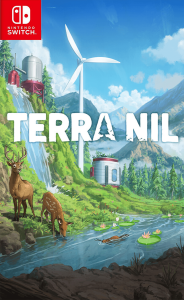
Terra Nil Switch NSP frames environmental repair as a thoughtful game of planning, patience, and departure. Rather than asking players to cover a map with roads and buildings, it presents a damaged landscape and asks them to return it to health. Its puzzle, simulation, and strategy elements support a quieter objective: create a living world, then remove the evidence that people were ever there.
Terra Nil on Nintendo Switch: A Reverse City-Builder About Restoration
Terra Nil takes the familiar logic of a city-builder and turns it in the opposite direction. There is no drive to establish a permanent settlement or keep expanding human infrastructure. The work begins on barren, polluted ground, where carefully placed structures begin the slow process of environmental restoration.
That reversal gives the game a distinct focus. Planning still matters, but success is measured through recovered land, clean water, returning plant life, and the conditions needed for biodiversity. The goal is not an ever-growing industrial footprint. It is a functional ecosystem able to continue without one.
The Nintendo Switch version suits this map-by-map structure. Each landscape presents a contained environmental puzzle, asking players to read the terrain, make efficient use of available resources, and guide the land through several stages of recovery. The result is a strategic experience built around transformation rather than conquest.
The Mission: Revive a Lifeless World and Leave No Trace
Terra Nil restoration follows a clear cycle. Players arrive at a lifeless region, cleanse the soil and water, create suitable conditions for plants and animals, and then prepare the area for life without further human intervention. The final stage is especially important: the structures used to repair the landscape must be removed through a recycling phase.
This final act changes the meaning of construction. Turbines, scrubbers, irrigators, and later tools are useful because of what they enable, not because they are meant to remain. A completed map is not a monument to engineering. It is a self-sustaining ecosystem left behind after the human presence has been dismantled.
- Clean first: Purify damaged land and water to make later ecological work possible.
- Build conditions: Place infrastructure that supports recovery across the map.
- Encourage life: Meet flora and fauna requirements as ecosystems become more diverse.
- Use advanced tools: Employ structures such as Hydroponium and beehives to support vegetation and insect life.
- Recycle everything: Deconstruct human-made structures before leaving the restored region.
The premise carries an unusually restrained sense of purpose. Terra Nil is concerned with renewal, but it also insists that restoration is incomplete until nature is allowed to continue on its own. That makes the recycling phase more than a tidy ending; it is the point toward which the earlier planning has been leading.
From Polluted Ground to Flourishing Biomes
The game’s progression moves through varied environments rather than treating every map as the same kind of wasteland. Its listed regions include arid deserts, volcanic archipelagos, and frozen tundras. Each setting brings a different visual and strategic context to the restoration process, while keeping the broader mission intact: turn depleted terrain into a healthy biome.
Desert restoration emphasizes the challenge of bringing life to dry ground. Volcanic archipelagos introduce a harsher setting shaped by ash and fragmented land. Frozen tundras offer another environmental condition to consider as players seek the right balance for ecological recovery. These locations give the game’s maps a changing identity without moving away from its central environmental puzzle.
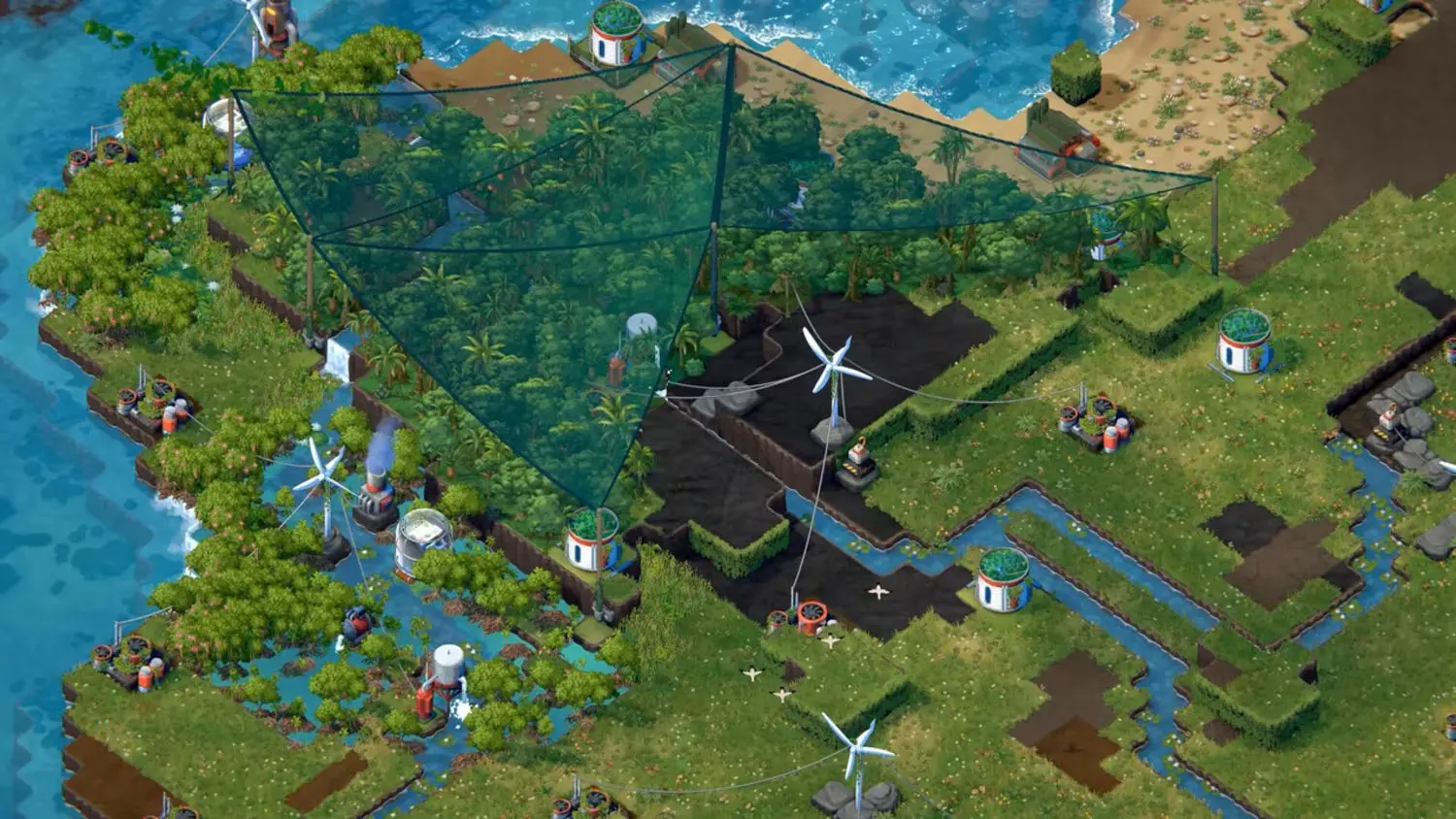
The transformation itself is a major part of Terra Nil’s atmosphere. A damaged map gradually gains clean terrain, water, vegetation, and the conditions needed to support wildlife. Because players see these changes emerge from their own decisions, the recovered world becomes a record of successful planning. The finished landscape is also temporary in a useful sense: once restoration is complete and equipment is recycled, the player moves on to another damaged place in need of care.
Strategic Infrastructure and Ecological Cause-and-Effect
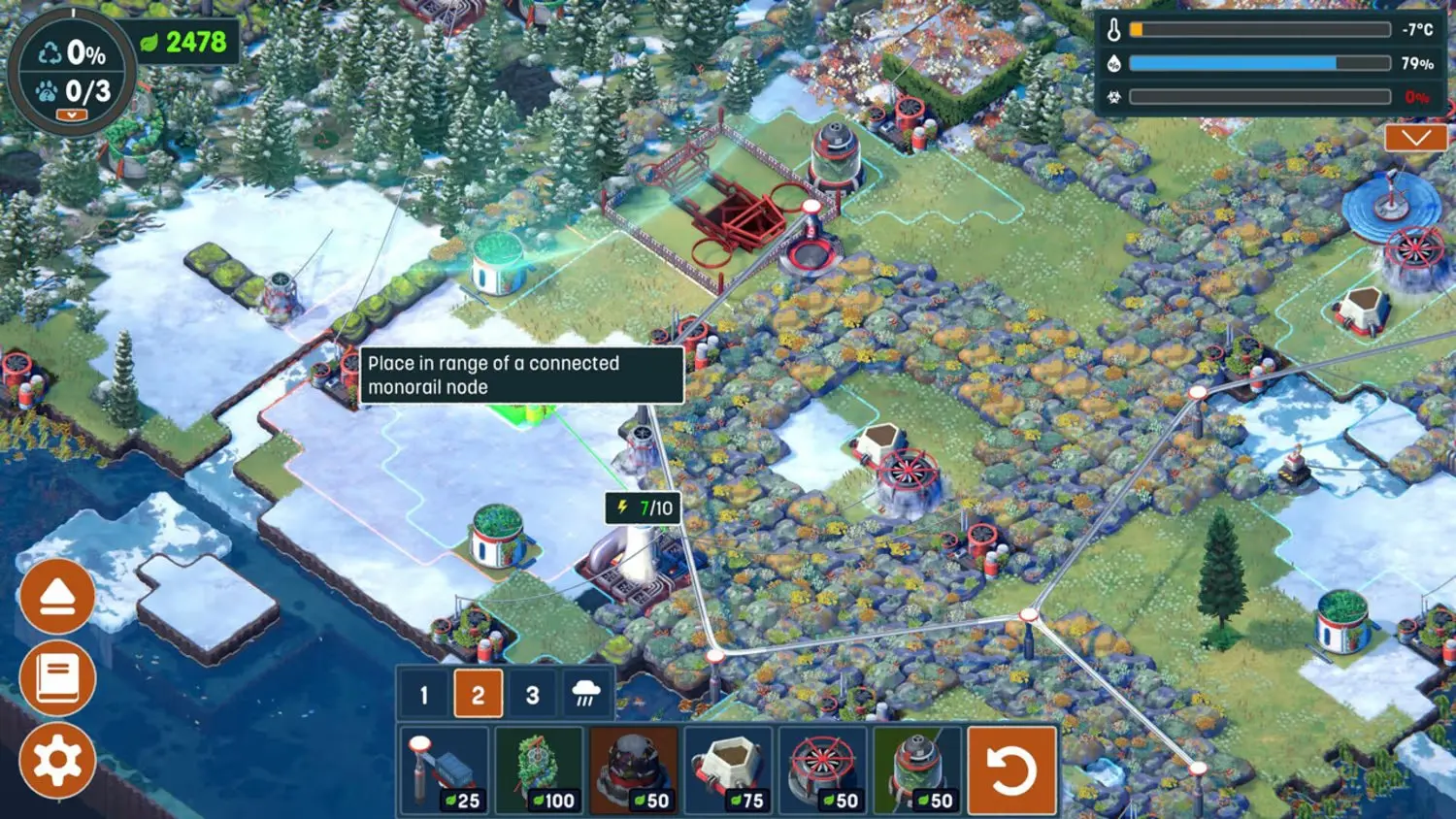
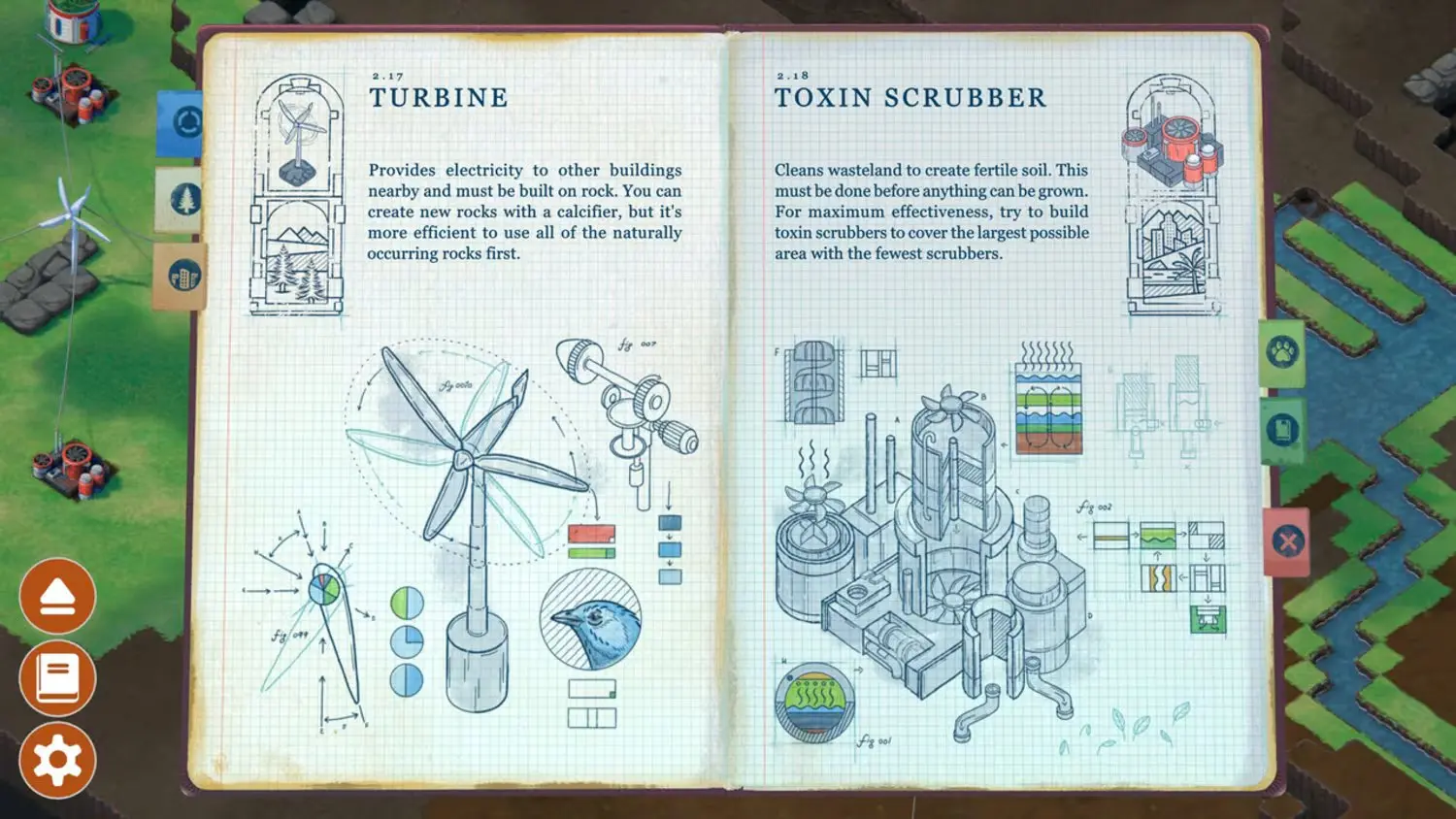
Terra Nil strategy depends on understanding how structures affect the land around them. Wind turbines generate power, toxin scrubbers help clean polluted soil and water, and irrigators support the environmental changes needed for further development. Placement is not simply a matter of filling open space. Each decision can influence the next options available across the map.
This ecological cause-and-effect gives the game its puzzle character. A wetland, for example, can increase humidity, and that humidity can be important for cultivating forests. Small changes can therefore have wider consequences, encouraging players to observe the map and think ahead rather than build without a plan.
Later structures add to that chain of relationships. Hydroponium can help foster lush vegetation, while beehives support insect life. Biodiversity targets also ask for specific flora and fauna conditions during map stages. The best approach is not merely to place every available tool, but to use infrastructure in an order that helps one restoration step unlock another.
For players drawn to methodical systems, this is where Terra Nil’s appeal is strongest. A map can invite experimentation, since an efficient solution depends on recognizing how terrain, resources, structures, and ecological requirements connect. The game rewards attention to the landscape and a willingness to revise a plan when a promising route does not create the conditions needed for the next phase.
Water, Ash, and the Challenge of Limited Resources
Limited resources keep restoration from becoming automatic. Water and ash must be gathered and used efficiently for building, making every placement part of a broader environmental budget. Early choices matter because the first structures establish the foundation for everything that follows.
Water is especially important because it supports multiple stages of recovery. Its use must be considered alongside the need to expand restoration options, create new environmental conditions, and meet biodiversity goals. Ash is also part of the resource picture, requiring players to weigh immediate construction needs against later possibilities.
This constraint gives each map a measured pace. Terra Nil does not ask players to rush through a landscape; it asks them to make deliberate decisions with what is available. The environmental puzzle comes from finding a route that cleans the world, supports life, and still leaves enough flexibility to complete the recycling phase.
Nintendo Switch Release Details for Terra Nil
Terra Nil Switch NSP refers to the Nintendo Switch release of Terra Nil, which launched on December 18, 2023. The game is published and developed by Devolver Digital and is listed for the Europe and USA regions. Its genre classification is Puzzle, Simulation, and Strategy.
The release supports English, French, German, Italian, Japanese, Korean, Portuguese, Russian, Simplified Chinese, Spanish, and Traditional Chinese. The stated firmware requirement is version 17.0.0 for the base release and version 17.0.1 for the update. Its Title ID is 01006D501D14A000, and the listed file size is 673MB.
For players interested in strategy games with a calmer, restoration-led premise, Terra Nil offers a focused alternative to conventional expansion games. Its audience includes those who enjoy planning systems, environmental themes, and puzzles where the most satisfying final move is to leave the landscape thriving without you.
Recommended Similar Games
 Tropico 6 – Nintendo Switch Edition NSP XCIView Game
 MotoGP 23 Switch NSP XCIView Game
 My Little Pony: A Zephyr Heights Mystery Switch NSPView Game
 Meta Meet Cute!!!+ Switch NSPView Game
 The Thief Simulator 2023 – From Crook to Boss Switch NSPView Game
 Avatar The Last Airbender: Quest for Balance Switch NSP XCIView Game
