Mario & Sonic at the Olympic Games Tokyo 2020 Switch NSP
Report Link Error
Select the broken download file, then submit the report.


Screenshots
About Game
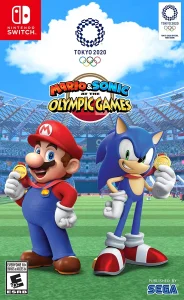
Mario & Sonic at the Olympic Games Tokyo 2020 Switch NSP frames Olympic competition as a lively meeting point for two long-running character worlds. Developed and published by SEGA, this sports game places Mario, Sonic, and a broad supporting cast around Tokyo 2020, where familiar sporting disciplines share space with more playful, exaggerated contests. Its appeal comes from that balance: recognizable events invite immediate participation, while the presentation shifts between a modern setting and a deliberately retro Olympic adventure.
Tokyo 2020 Olympic Competition With Mario and Sonic Stars
As a Tokyo 2020 Olympic sports game, the title uses the energy of major athletic events while keeping the tone approachable. Track competition, team sports, precision events, and performance-focused disciplines are all part of the lineup, giving players several different ways to engage with the contest. A short sprint asks for speed, while archery, fencing, gymnastics, and sport climbing place the focus elsewhere.
That variety suits the crossover premise. Mario and Sonic characters bring a recognizable animated character style to events that would otherwise be grounded in conventional sport. The setting is Tokyo 2020, but the mood is not intended as a strict simulation. This is a SEGA sports game built around accessible competition, changing challenges, and the simple satisfaction of pursuing a better result or a medal.
Events including the 100m Dash, karate, skateboarding, surfing, football, Rugby Sevens, and gymnastics establish a broad sporting range. Some are individual contests where timing and accuracy are central; others shift attention toward team play or more dynamic movement. The result is an Olympic-themed package that can support a brief session in a single event as readily as a longer run through multiple disciplines.
The Time-Travel Story Between Tokyo 2020 and Tokyo 1964
The Mario Sonic Tokyo 1964 story gives the sporting format a second setting and a clear narrative reason for its changing visual style. Mario, Sonic, Bowser, and Dr. Eggman are transported by a mysterious gaming device to the Tokyo 1964 Olympic Games. Their situation turns the past into more than a backdrop: they must take part in classic events as they seek a route back to the present.
Meanwhile, their friends remain in the modern Tokyo 2020 setting and compete in contemporary events while trying to help them return. This Tokyo 2020 time travel setup creates a dual structure rather than a single uninterrupted Olympic programme. One side follows a modern-day competition atmosphere; the other looks back to an earlier era through pixel-based challenges.
The storyline is light in premise but useful in function. It connects Mario, Sonic, Bowser, and Dr. Eggman to the game’s two periods, giving the retro material a place beside the modern events. Instead of treating nostalgia as a separate extra, the game uses its story to move between two versions of Tokyo Olympic competition.
Modern 3D Events and Retro 2D Olympic Challenges
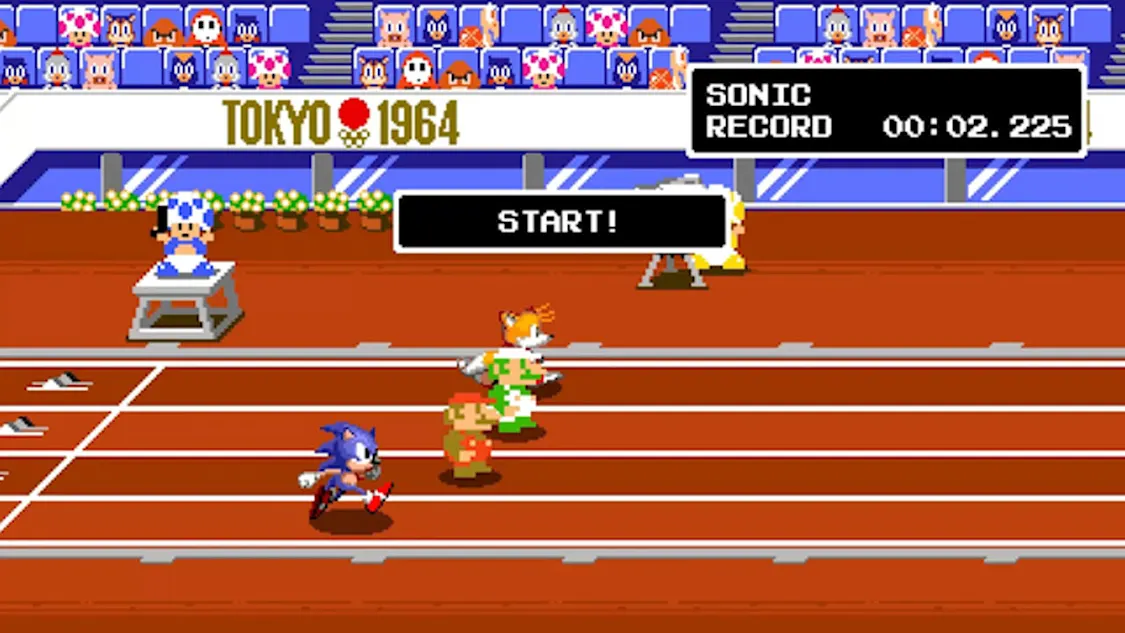
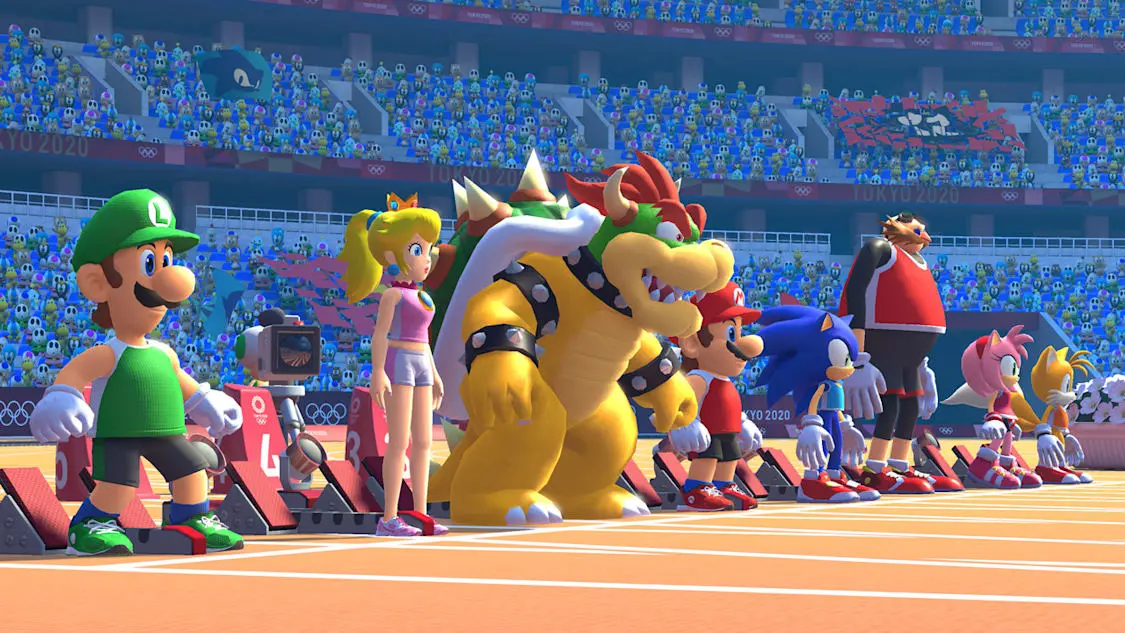
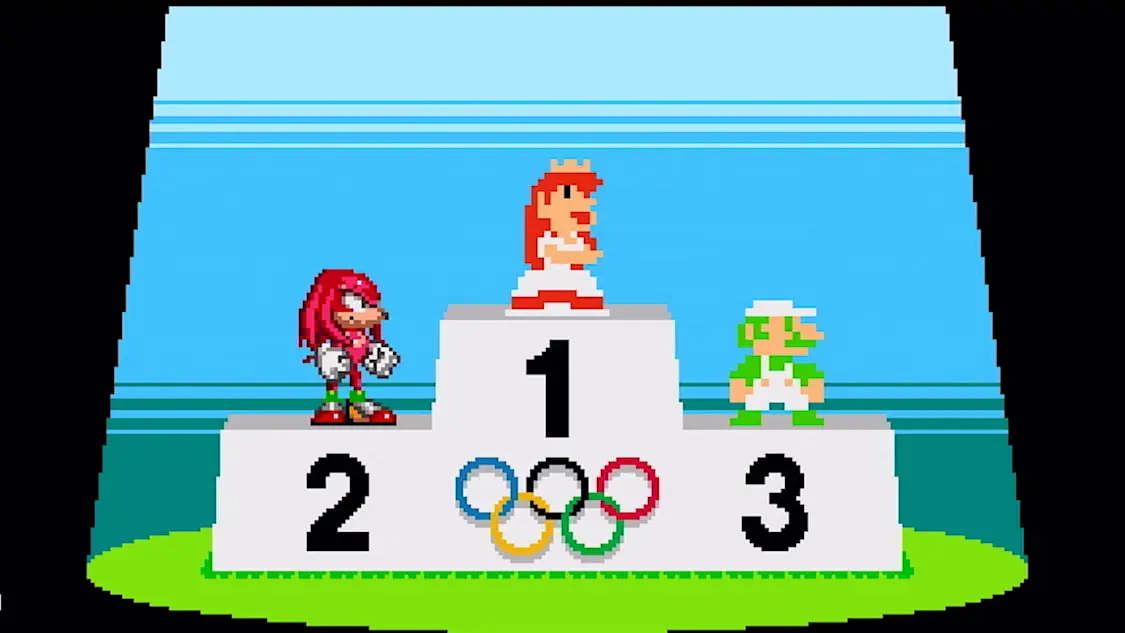
The contrast in presentation is one of the game’s most distinctive ideas. Modern Tokyo 2020 events are presented in 3D, matching the contemporary setting and its larger sporting programme. The Tokyo 1964 portion shifts into 2D pixel-styled challenges, using 8-bit and 16-bit graphics to create a different visual rhythm.
These Mario Sonic retro events are not simply a visual filter applied to the same atmosphere. Their place in the time-travel story gives them their own identity, with classic Olympic challenges presented through an intentionally older-looking style. Moving from modern 3D sports to Tokyo 1964 8-bit challenges changes the feel of the competition without leaving the broader Olympic theme behind.
That split also broadens the game’s atmosphere. The contemporary events carry the bustle of Tokyo 2020, while the retro sections lean into a compact pixel-art character. For players interested in Mario Sonic 3D sports, the modern side is central; for those drawn to the visual language of earlier games, the 1964 material supplies a contrasting mode of play.
More Than 30 Olympic Events to Explore
With more than 30 events, the game has enough range to avoid making every contest feel alike. The event selection spans direct races, tactical duels, target-focused challenges, routines, wall climbing, wave riding, and team matches. This Olympic event variety matters because the skills suggested by each discipline are different: speed may matter in a dash, while precision is more relevant in archery and fencing.
- Speed first: The 100m Dash offers a straightforward race built around the pursuit of the fastest finish.
- Precision counts: Archery and fencing bring aiming and tactical duels into the event roster.
- Movement changes: Skateboarding, surfing, and sport climbing expand the programme beyond the track.
- Performance matters: Gymnastics provides a discipline centered on routines across different apparatus.
- Teams compete: Football and Rugby Sevens add competitive team sports to the Tokyo 2020 sports challenges.
The format supports different levels of commitment. A player can focus on a single familiar discipline for a quick contest, then return to try another event with a different pace. Players interested in medal-focused competition have a reason to revisit events and improve their results, while the sheer number of activities gives casual sessions a changing selection of sports.
Replay value here comes from breadth rather than one uniform challenge. Switching from karate to surfing, or from a sprint to gymnastics, changes the immediate task and keeps the event rotation varied. The roster’s range also makes it possible to experiment with different characters across the competition.
Dream Events Bring a Fantastical Twist to Competition
Not every contest follows the expectations of conventional Olympic disciplines. Dream Racing, Dream Karate, and Dream Shooting take the Mario and Sonic crossover in a more imaginative direction. These Dream Events are designed as heightened alternatives to the standard sporting lineup, bringing fantastical elements into the competition.
Mario Sonic Dream Racing offers an over-the-top racing format, while Mario Sonic Dream Karate adds power-ups and special moves to combat. Mario Sonic Dream Shooting turns target shooting toward a more fantastical style. Together, they make room for a different kind of contest without replacing the main Olympic disciplines.
That distinction is important to the game’s tone. The standard events provide familiar sporting anchors, but the Dream Events acknowledge that Mario and Sonic are characters associated with playful game worlds. Players looking for recognizably athletic challenges can move through the main event roster, while those wanting a less conventional match can turn to these more exaggerated modes.
Release and Platform Facts for Mario & Sonic at the Olympic Games Tokyo 2020
Mario & Sonic at the Olympic Games Tokyo 2020 Switch NSP refers to the Nintendo Switch release of SEGA’s sports game. The title was released on November 5, 2019, developed by SEGA, and published by SEGA. It is listed as Region Free.
The game supports English, German, Spanish, French, Italian, Japanese, Korean, Dutch, and Chinese. That language range accompanies a sports format whose immediate event structure is easy to understand: race, score, aim, perform, or compete against another participant. Its mixture of modern 3D events, retro 2D Tokyo 1964 challenges, and Dream Events makes it suited to players seeking a character-led Olympic sports game with both casual variety and competitive medal pursuits.