Outlast Bundle of Terror Switch NSP XCI
Report Link Error
Select the broken download file, then submit the report.


Screenshots
About Game
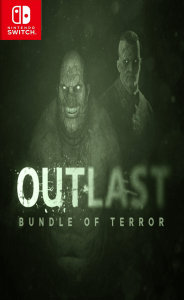
Outlast Bundle of Terror Switch NSP XCI brings Red Barrels’ severe brand of action horror to Nintendo Switch in a package built around vulnerability, darkness, and escape. Released on February 27, 2018, the bundle combines the original Outlast with its Whistleblower expansion, presenting two linked perspectives on the terror inside Mount Massive Asylum.
Outlast Bundle of Terror on Nintendo Switch: Release and Game Details
Published and developed by Red Barrels, Outlast Bundle of Terror is an action-horror release for Nintendo Switch. It is available across Europe, the USA, and Japan, with language support for English, Japanese, French, German, Italian, Spanish, Portuguese, and Russian.
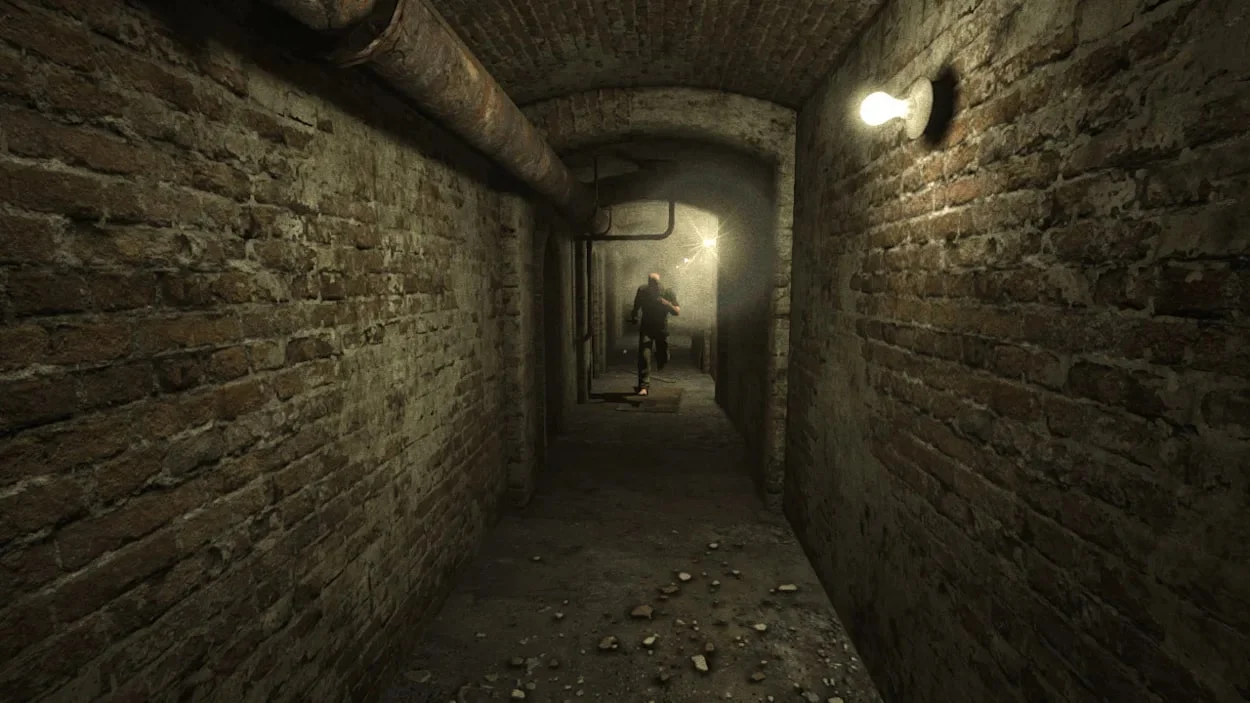
The game’s horror is not driven by weapons, character upgrades, or direct confrontation. Its action comes from movement under pressure: running through unfamiliar corridors, clearing obstacles, searching for routes forward, and attempting to disappear before a pursuer closes in. That focus gives the Switch release a clear identity. The player is placed inside a hostile institution with little protection and no dependable sense of safety.
Red Barrels frames the asylum as both a physical location and a source of mounting dread. Its rooms, wards, passages, and shadowed spaces are not simply scenery between story beats. They are the terrain of survival, often forcing careful observation when panic would be the easier response.
Miles Upshur’s Investigation at Mount Massive Asylum
The original Outlast story follows Miles Upshur, an investigative journalist who receives an anonymous tip concerning horrific experiments at Mount Massive Asylum. The facility is a remote psychiatric hospital, and Miles enters it with a camera, intending to uncover what has been hidden inside.
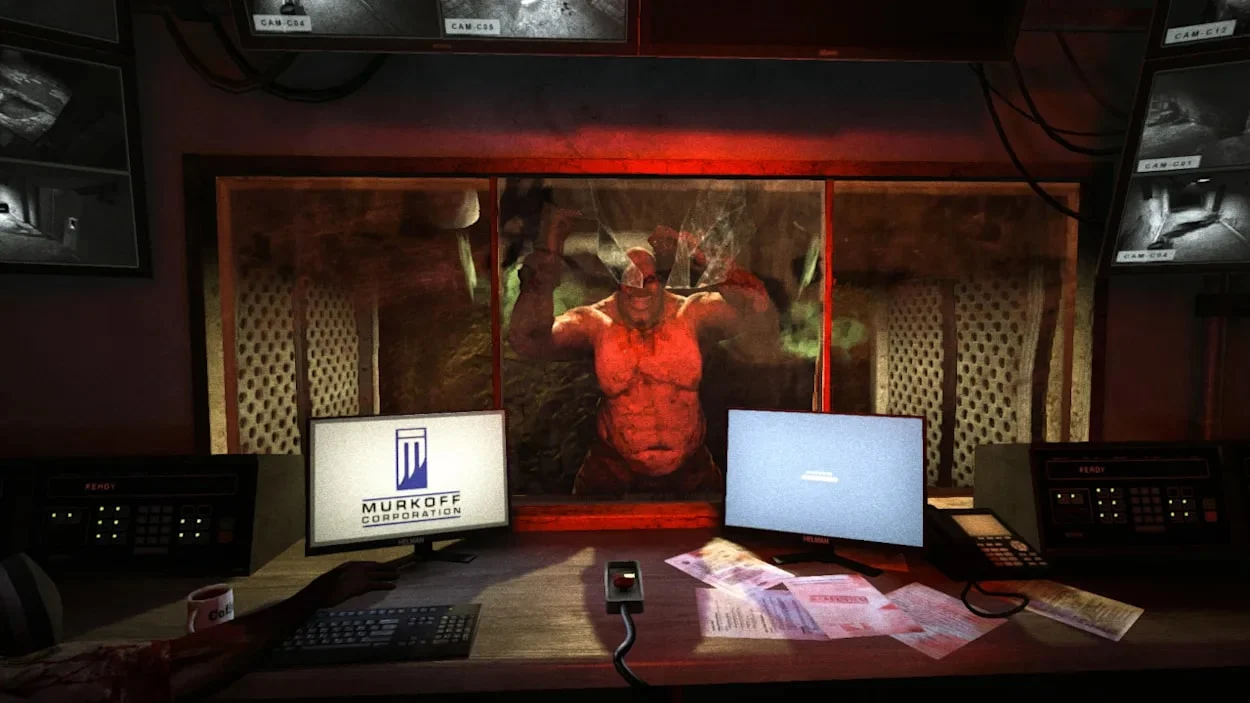
What begins as an investigation quickly becomes a fight to survive. The asylum’s inhabitants have been altered by extreme experimentation, while the Murkoff Corporation remains tied to the disturbing secrets behind the institution. Miles is not arriving at an orderly hospital with a mystery to solve from a safe distance. He is walking into an already collapsed environment, where the evidence is inseparable from the danger.
This premise gives the story a useful investigative structure. Progress means moving deeper into the facility, learning more about its past and its abuses, and confronting the cost of Murkoff’s actions. The camera is central to that perspective: Miles is trying to document a truth that the corporation has concealed, even as the act of looking exposes him to more of the asylum’s horrors.
Why Being Defenseless Defines Outlast’s Horror
Outlast makes its survival-horror rules clear through absence. Miles cannot fight the enemies he encounters. There is no combat option to restore control when a situation turns hostile. Instead, survival depends on stealth, evasion, hiding, running, and vaulting over obstacles when an escape route opens.
That restriction makes even ordinary decisions feel exposed. A locker or a bed can become temporary shelter. A corridor may be a route forward or a trap. When an enemy is nearby, the player must judge when to stay hidden, when to move, and when a full sprint is the only remaining choice.
- Stay unseen: Hiding in available cover is often safer than trying to force a path through an occupied area.
- Listen closely: Footsteps, voices, and other unsettling sounds can signal that danger is near before it appears on screen.
- Use the camera: Night vision helps reveal pitch-black spaces, making the camcorder a vital survival tool.
- Protect battery life: Batteries are needed for night vision, so using the camera carelessly can leave crucial areas in darkness.
- Keep moving when found: Running and vaulting can create distance during a pursuit, but safety is never guaranteed.
The result is stealth horror with a deliberately personal sense of panic. The player is not expected to overpower the asylum’s residents. They are expected to endure them, find a way around them, and keep moving despite the uncertainty.
Exploring the Decaying Corridors of Mount Massive
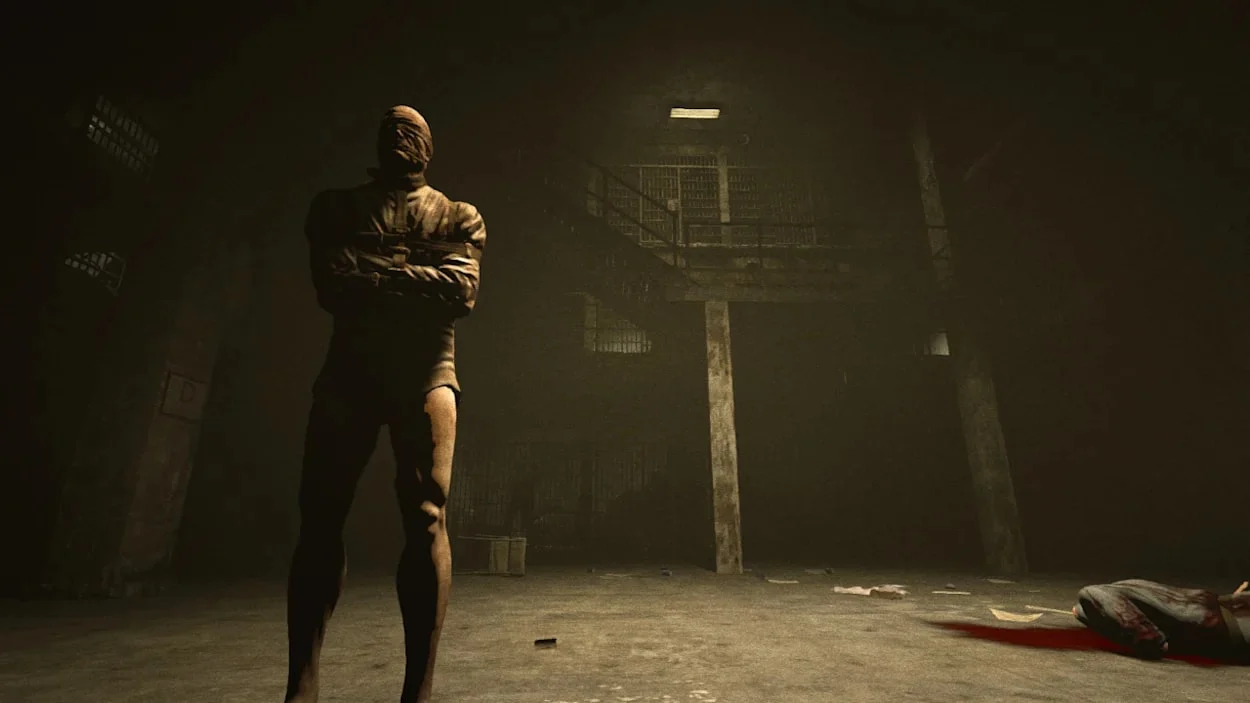
Mount Massive Asylum provides the game’s oppressive setting: a decaying institution shaped by darkness, confinement, and visible neglect. Exploration moves through claustrophobic corridors and damaged interior spaces where visibility is limited and every new room can suggest a fresh threat.
The camcorder’s night-vision function is especially important in areas without light. It allows the player to navigate darkness, but it also turns sight into a resource. Battery conservation matters because the asylum does not always offer a clear view of the path ahead. Looking into the dark can be necessary, yet the need to conserve power adds another layer of pressure.
Progression also involves environmental puzzles. These obstacles ask players to examine surroundings and find ways through the facility rather than simply rush from one encounter to the next. Documents scattered through the asylum deepen that exploration. They provide lore discoveries and disturbing context around the people, experiments, and corporate wrongdoing connected to Mount Massive.
Those materials give the asylum a history beyond its immediate scares. The more players uncover, the clearer the scale of Murkoff’s secrecy and unethical conduct becomes. Exploration is therefore tied to both navigation and narrative discovery.
Psychological Dread, Pursuit, and Jump Scares
The fear in Outlast is sustained through anticipation as much as shock. Enemy footsteps can transform a quiet stretch of exploration into a tense waiting game. Whispers and other unsettling sounds make the asylum feel occupied even when no one is visible. Darkness limits certainty, while the lack of combat ensures that an encounter remains threatening from beginning to end.
Jump scares have their place, but the game’s larger effect comes from its pursuit sequences and prolonged vulnerability. When an enemy begins chasing Miles, the goal is not to win a confrontation. It is to identify a route, clear an obstacle, lose sight of the threat, and reach cover before the situation ends badly.
This is psychological horror built from restricted control. The player can observe, run, hide, and improvise, but cannot remove the danger permanently. For an audience comfortable with intense imagery, sudden scares, and pressure-heavy stealth, that design makes the experience especially direct. Players seeking combat-driven action may find the game’s refusal to provide a weapon more demanding than familiar.
A Complete Two-Part Asylum Narrative
Outlast Bundle of Terror Switch NSP XCI is structured as a connected two-part account of Mount Massive. The original game follows Miles as he investigates the asylum after receiving the anonymous tip. Whistleblower, a prequel expansion, shifts the perspective to Waylon Park, the Murkoff software engineer who sent that tip.
Waylon witnesses the corporation’s unethical procedures firsthand, giving his story a different place within the same disaster. His role helps explain events leading to Miles’ arrival and provides further context for the asylum’s origins, Murkoff’s experiments, and the human cost of its secrecy.
Together, the two stories create a broader horror narrative about corruption, scientific abuse, and survival inside a place designed to conceal its own crimes. The bundle’s appeal lies in that continuity as much as in its scares: one asylum, two connected viewpoints, and a grim record of what happens when the truth is buried in the dark.