Disco Elysium – The Final Cut Switch NSP

Report Link Error
Select the broken download file, then submit the report.


Screenshots
About Game
Disco Elysium – The Final Cut Switch NSP places a damaged, confused detective in a city that feels as unstable as his own mind. Its investigation begins in a derelict hostel room, but the case quickly opens into a wider examination of identity, ideology, memory, and the people living amid Revachol’s decay.
A Memory-Lost Detective in Martinaise
The detective wakes with a monumental hangover and no memory of who he is. From that disorienting beginning, he is assigned to investigate a murder in Martinaise, a troubled district whose crumbling streets and political friction give the case its uneasy weight.
This is not simply a matter of collecting evidence and naming a suspect. The Martinaise murder investigation develops through conversations, observations, failed assumptions, and decisions about how the detective presents himself to other people. His missing past is part of the mystery, so the search for answers moves outward into the district and inward into his fractured sense of self.
Martinaise is populated by characters with distinct views, histories, and secrets. Their responses can depend on the player’s choices, making each exchange feel connected to the detective being shaped along the way. The result is a role-playing mystery in which personal conduct matters alongside investigative progress.
The 24-Skill System and the Detective’s Inner Voice
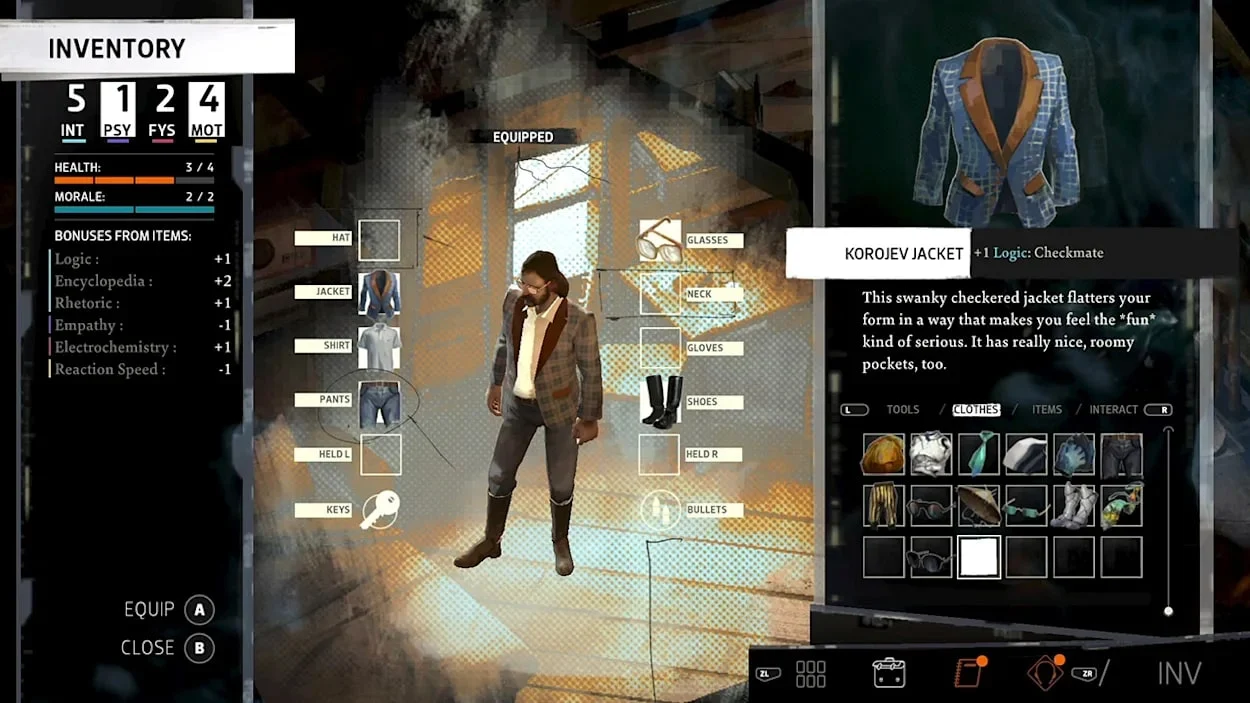
The role-playing system is built around 24 skills divided into four categories: Intellect, Psyche, Physique, and Motorics. These are not limited to background statistics. Individual skills act as competing voices in the detective’s mind, responding to people, places, clues, and conversations.
Intellect concerns mental abilities, while Psyche addresses the detective’s inner life and interpersonal instincts. Physique represents bodily capability and endurance, and Motorics covers practical senses and coordination. Investing in these areas influences what the detective notices, how he interprets a situation, and which options may become available.
The system gives the investigation an unstable, personal texture. A skill may offer a useful observation, push an interpretation, or pull the detective toward an unhelpful conclusion. That tension supports the game’s focus on an amnesiac detective whose thoughts cannot always be treated as neutral advice.
Thought Cabinet: Building a Distinct Detective
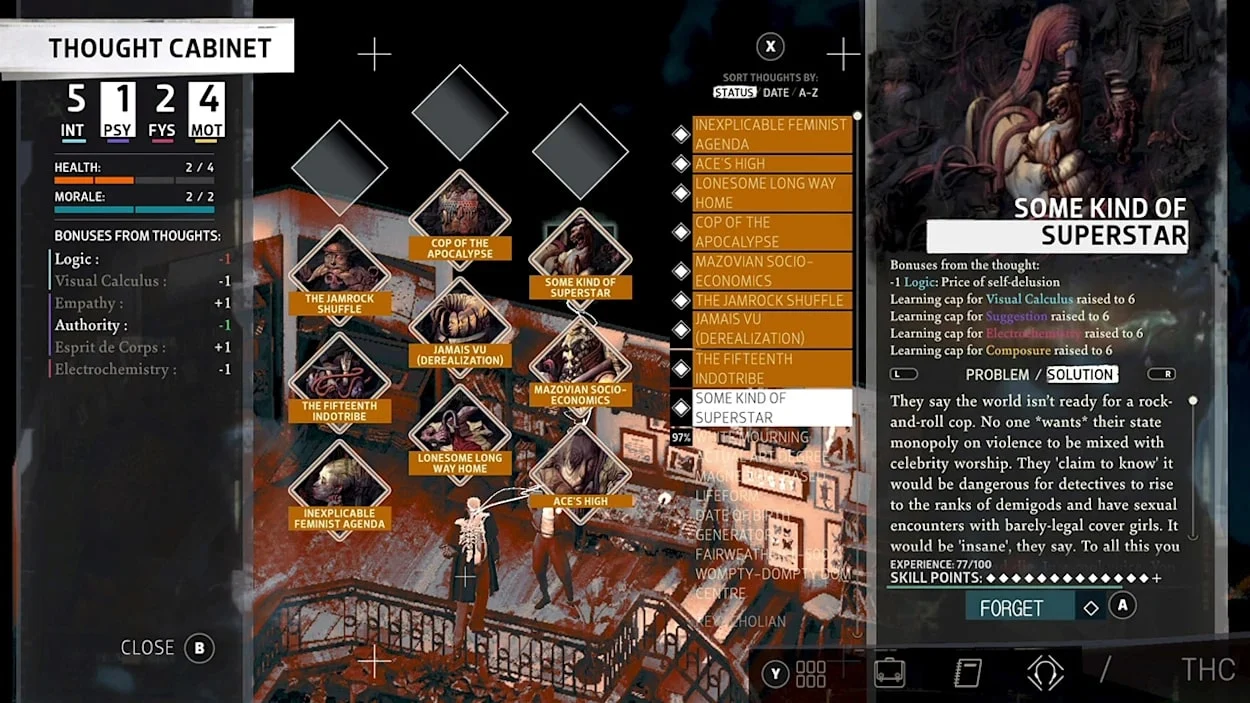
The Disco Elysium Thought Cabinet expands character customization beyond straightforward skill allocation. During the investigation, the detective can encounter ideas and internalize them. Once processed, those thoughts can change him through passive bonuses and penalties.
This approach makes progression feel closely tied to the game’s themes. The detective is not only becoming more capable; he is also absorbing beliefs, reactions, and ways of understanding the world around him. A thought can be beneficial in one area while creating a drawback somewhere else, encouraging players to consider the consequences of their chosen direction.
Because ideas are part of the build, two detectives can approach the same setting with notably different instincts. One may lean into a particular line of reasoning, while another may prioritize a different set of strengths and internal perspectives. It is character development expressed through both mechanics and personality.
Revachol’s Hand-Painted Urban Setting
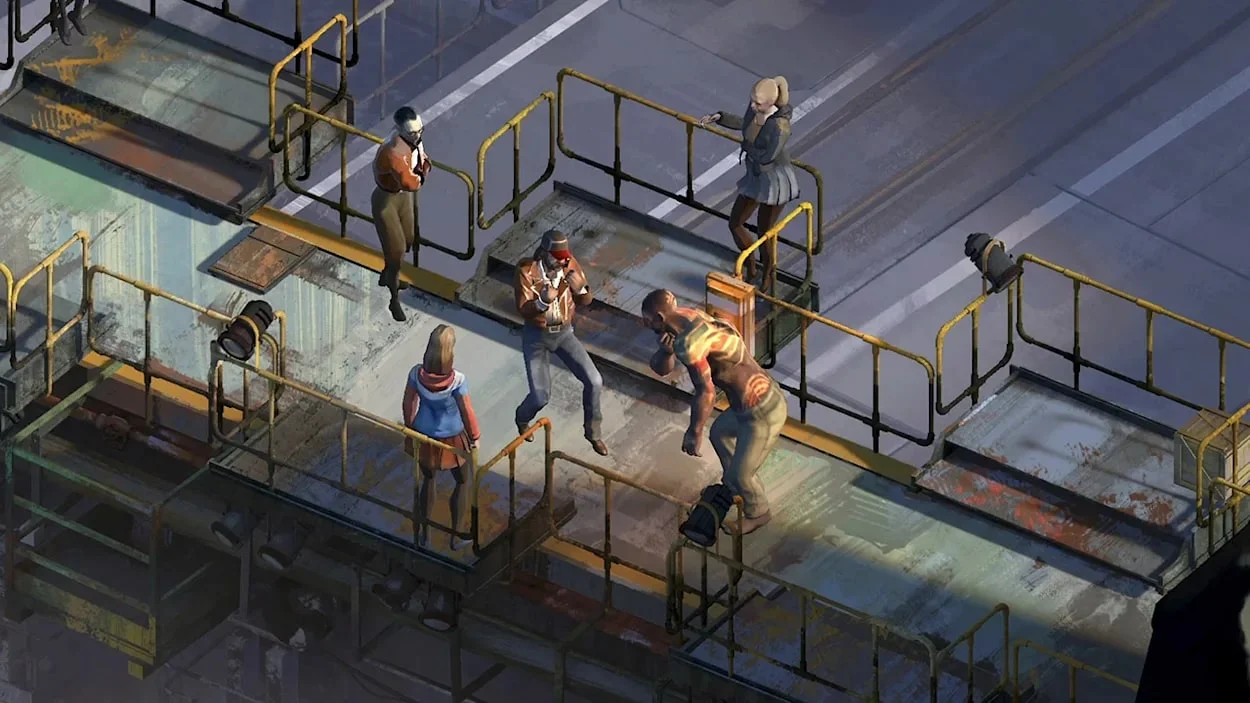
Revachol is more than a backdrop for the case. Its hand-painted city spaces support the mystery through visual detail, worn architecture, hidden elements, and an atmosphere of decline. Martinaise feels politically charged and physically weathered, giving the detective’s investigation a setting that is difficult to separate from its social tensions.
Exploration invites attention to the spaces between major conversations. Details in the environment can add context to the district, while the city’s condition reinforces the sense that the murder is part of a larger, unsettled world. Revachol’s presentation is therefore closely tied to the game’s investigative mood: beautiful in its painted detail, yet marked by damage and uncertainty.
7 Gameplay Elements That Define Disco Elysium – The Final Cut
- Branching conversations: Dialogue is central to the experience, with choices shaping how the detective interacts with people and how the narrative develops.
- Twenty-four skills: The four categories of Intellect, Psyche, Physique, and Motorics provide a broad framework for building the detective’s abilities and personality.
- Skill checks: Conversations and investigations can involve checks that create different outcomes when they succeed or fail.
- Thought Cabinet: Internalized ideas modify the detective through passive bonuses and penalties, adding another layer to progression.
- Character encounters: The people of Martinaise have their own perspectives and secrets, making interaction a major part of uncovering the case.
- City exploration: Revachol’s detailed, hand-painted environments contain context and discoveries that support the investigation.
- Consequential decisions: Moral, ethical, and personal choices affect the detective’s path and the way the world responds to him.
These elements make replay value relevant without reducing the game to a simple set of alternate routes. Different skills, thoughts, conversations, and decisions can change the texture of an investigation. The experience is particularly suited to players who enjoy text-heavy role-playing, character-driven mysteries, and systems where failure can be as revealing as success.
Nintendo Switch Release Details for The Final Cut
Disco Elysium – The Final Cut Switch NSP was released for Nintendo Switch on October 12, 2021. Its Title ID is 01006C5015E84000, and the listed regions are Europe, USA, and Asia.
The release supports English, French, German, Spanish, Korean, Russian, Chinese, and Portuguese. ZA, UM is listed as both publisher and developer. Its genres are identified as Role-Playing, Adventure, Lifestyle, and Party.
For system metadata, the base version is listed with firmware v12.1.0, while the update is listed with firmware v16.0.0. The stated file size is 6.4GB. These release details frame a Switch edition built around the same core appeal: a deeply individualized detective story where dialogue, thought, and perception are the most important tools in the case.