The Legend of Zelda: Link’s Awakening Switch NSP XCI
Report Link Error
Select the broken download file, then submit the report.
Screenshots

About Game
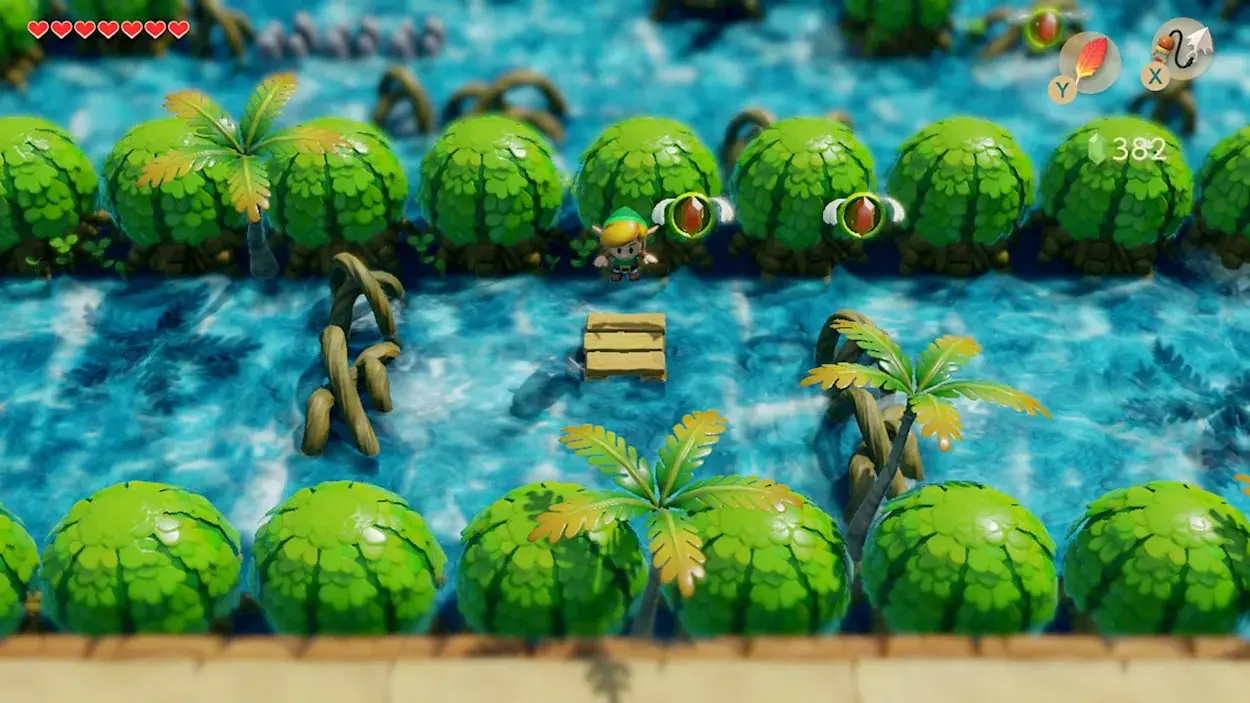
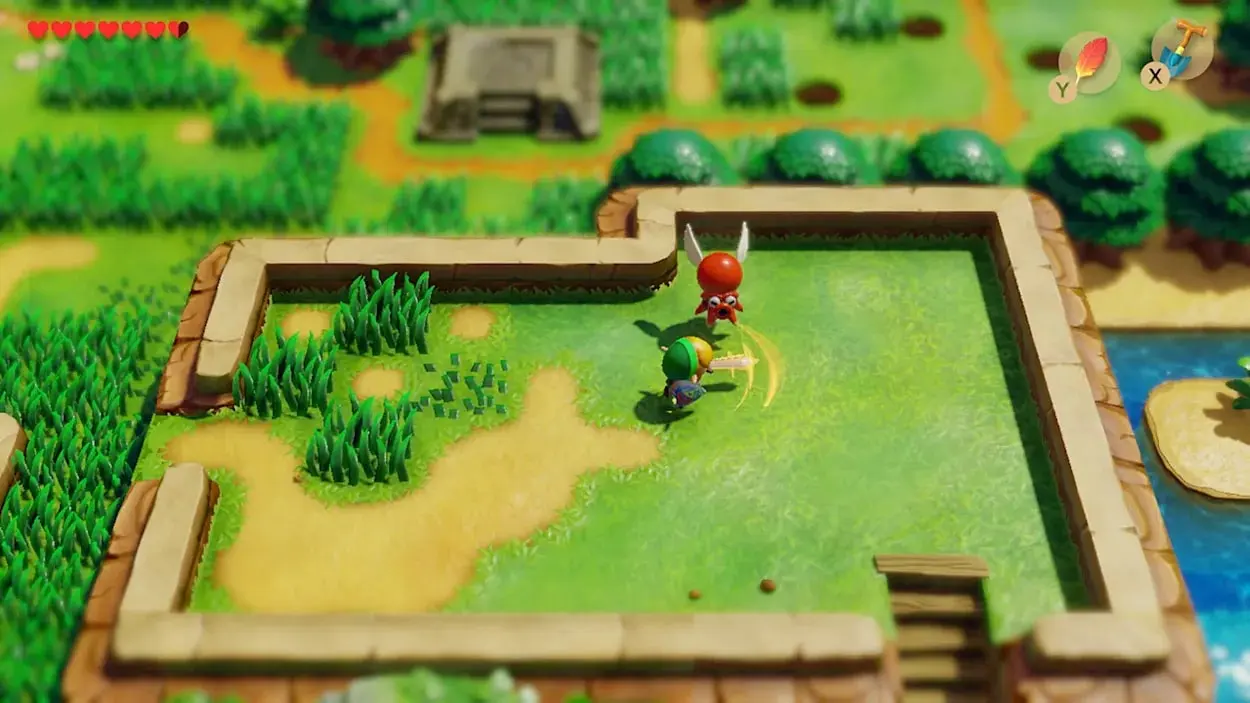
The Legend of Zelda: Link’s Awakening Switch NSP XCI brings a distinctive Zelda adventure back to Nintendo Switch in a 2019 remake developed and published by Nintendo. Released on September 20, 2019, this action-adventure retains the compact, top-down shape of Link’s journey while presenting Koholint Island in a colorful, diorama-like style. Its bright surfaces and toy-like characters lend warmth to a story that gradually becomes far more melancholy than its opening suggests.
A Return to Koholint Island in the 2019 Remake
The 2019 remake begins after Link is caught in a fierce storm and shipwrecked on Koholint Island. The island is unfamiliar territory: a place of beaches, woods, mountains, strange creatures, and residents whose conversations often carry an offbeat sense of humor. Link’s immediate aim is simple enough—find a way to leave—but the path soon leads toward the huge sleeping being known as the Wind Fish.
Nintendo’s remake gives the adventure a fresh visual identity without leaving behind its classic structure. The overhead viewpoint keeps the world readable, while the revised presentation makes each screen feel carefully arranged. Villages, caves, shorelines, and dungeon rooms have a compact, handcrafted quality. The orchestral music also supports the island’s mixture of cheerfulness, mystery, and unease.
For players returning to the adventure, the appeal lies in seeing familiar locations reframed through this polished presentation. For newcomers, it offers a self-contained Zelda quest whose world is easy to enter but rewarding to examine closely.
The Eight Instruments and Koholint’s Emotional Truth
Link’s larger mission is to collect eight magical instruments hidden across Koholint’s dungeons. Each instrument brings him closer to waking the Wind Fish, which appears to be his only route away from the island. This gives the adventure a clear progression: explore the overworld, locate the next dungeon, overcome its puzzles and boss, then claim the instrument needed to advance.
The Link’s Awakening story gains its force from what Link learns along the way. Koholint Island and its inhabitants exist within the Wind Fish dream. Waking the Wind Fish means the island and everyone on it will disappear. The objective therefore carries a difficult emotional consequence. Escape requires ending a dream world that has become real in the player’s experience through its people, places, and small encounters.
That revelation gives the quest unusual weight. The game does not treat Koholint merely as a sequence of routes to clear; it asks players to consider reality, sacrifice, and what it means for a place to matter even when it cannot last.
Top-Down Exploration Across a Charming Island
Its top-down Zelda gameplay makes Koholint an island best explored a screen at a time. Routes across sunny beaches, dense forests, and dangerous mountains are continually reshaped by the equipment Link finds. A blocked ledge, a gap, or an obstacle that seems unimportant early on may become a useful route once the right tool has been collected.
This structure makes curiosity valuable. The overworld contains secrets, quirky characters, collectible seashells, and tradeable items, encouraging players to look beyond the direct route to the next dungeon. Koholint exploration is not simply about following a marker from one objective to another. It is about noticing suspicious spaces, returning to earlier paths, and connecting item discoveries with places that previously seemed inaccessible.
The island’s relatively focused scale helps its locations remain memorable. A beach is not just a beach, for instance; it may contain a route, an item, a character, or a clue that changes the player’s understanding of where to go next. This gives exploration a satisfying rhythm of discovery and return.
Combat, Items, and Puzzle-Solving Tools
Link’s sword and shield form the foundation of combat, but the game’s variety comes from its item-based design. Enemies and obstacles often invite a specific response, and new tools serve both combat and traversal purposes. The result is a progression system where gaining an item changes the range of possible actions across the island.
Roc’s Feather lets Link clear gaps and navigate spaces built around jumping. The Hookshot opens up further movement possibilities, while the Pegasus Boots add speed and can help break through certain barriers. These tools are not isolated rewards; they are keys to revisiting Koholint with new options.
The Legend of Zelda: Link’s Awakening Switch NSP XCI also streamlines item management in its remake form, helping the focus remain on movement, fighting, and puzzle-solving. Combat can be direct, but it is often most effective when players read the room, use the appropriate equipment, and take advantage of the environment.
Dungeons, Bosses, and Environmental Challenges
The dungeons provide the main framework for Link’s progress. Each one has its own theme, enemies, layout, and boss encounter, with the eight instruments serving as major rewards. Rooms frequently combine combat with environmental and item-based puzzles, requiring players to operate mechanisms, find routes, and use recently acquired tools in practical ways.
Good dungeon progress depends on observation. A locked route might require a key found elsewhere; a barrier may be solved with an item whose purpose first seemed limited; and a room can change meaning once a switch, passage, or obstacle is understood. These challenges give the adventure a deliberate pace, alternating between exploration, confrontation, and problem-solving.
Bosses act as the final tests of each dungeon’s lessons. They are formidable obstacles, but their presence also gives each completed dungeon a sense of closure before the next area of Koholint opens up.
6 Exploration Tips for Koholint Island
- Inspect every screen. Beaches, forests, mountains, caves, and side paths can hold secrets, characters, collectibles, or clues that are easy to miss when moving quickly.
- Return with new tools. If a ledge, gap, barrier, or distant path seems unreachable, remember it and revisit after finding items such as Roc’s Feather, the Hookshot, or Pegasus Boots.
- Follow the seashell trail. Collectible seashells reward careful overworld searching and provide a useful reason to examine areas beyond the main route.
- Keep trade items in mind. Tradeable items can lead to rewards and upgrades, so speak with Koholint’s unusual residents and pay attention to what they may need.
- Read dungeon rooms creatively. Environmental puzzles often depend on more than defeating enemies. Check for mechanisms, alternate passages, blocked routes, and ways to apply a newly found item.
- Let the island set the pace. The story’s emotional impact grows through time spent with its places and people, making detours and revisits part of the experience rather than a distraction from it.