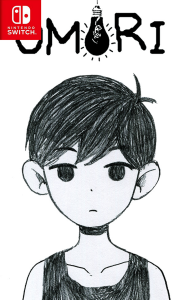
OMORI Switch NSP
Report Link Error
Select the broken download file, then submit the report.
Screenshots
About Game
OMORI Switch NSP refers to the Nintendo Switch version of OMOCAT’s psychological role-playing adventure, a game built around a deliberately uneasy contrast: bright dreamlike spaces, familiar everyday places, and a mystery that gradually links them. Its mix of traditional turn-based battles, exploration, puzzles, and emotionally charged storytelling gives the journey a distinctive rhythm.
OMORI on Nintendo Switch: Release Details and Verified Metadata
OMORI arrived on Nintendo Switch in the USA region on June 17, 2022. OMOCAT published this English-language release, which carries the title ID 010014E017B14000. The listed required firmware version is 13.1.0, while the listed file size is 1.7 GB.
Classified here as a Puzzle title, the game also draws extensively on party-based RPG ideas. That combination is reflected in its structure: players explore, speak with unusual characters, solve obstacles, locate hidden material, and enter battles against creatures that can look playful one moment and unnerving the next. The presentation supports that shifting mood through a colorful, stylized world whose cheerfulness does not entirely erase a persistent feeling of concern.
For players looking up OMORI Switch NSP, the relevant release information is straightforward: this is the June 17, 2022 Nintendo Switch edition published by OMOCAT for the USA region, with English language support.
Sunny, Omori, and the Mystery Between Two Worlds
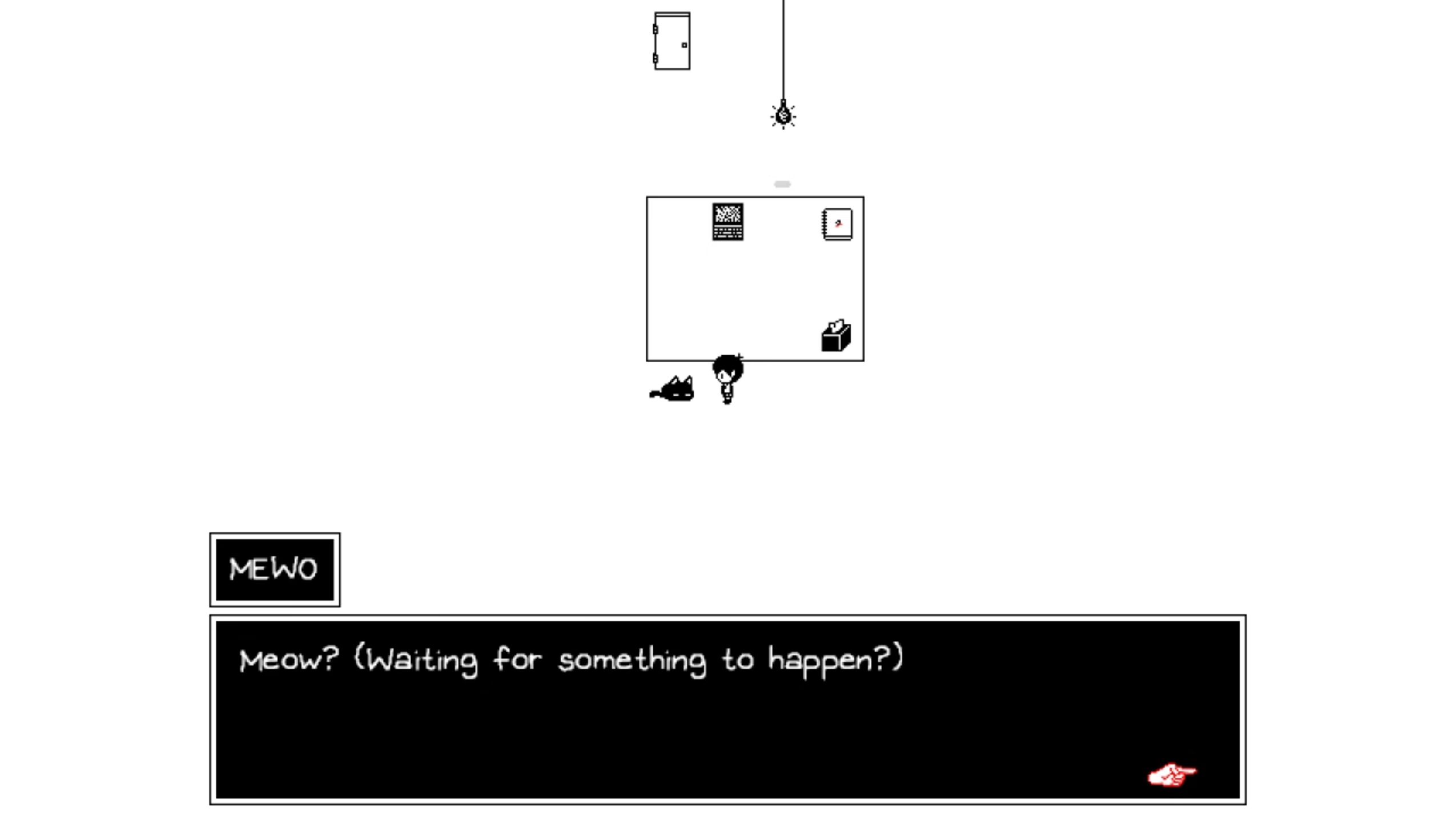
The story follows Sunny, a reclusive boy, and Omori, his counterpart in a dream world known as Headspace. The two settings create the game’s central contrast. Headspace is whimsical, vivid, and shaped like an extended summer adventure, while Faraway Town is more grounded and somber. Moving between those spaces gives the narrative its unusual texture.
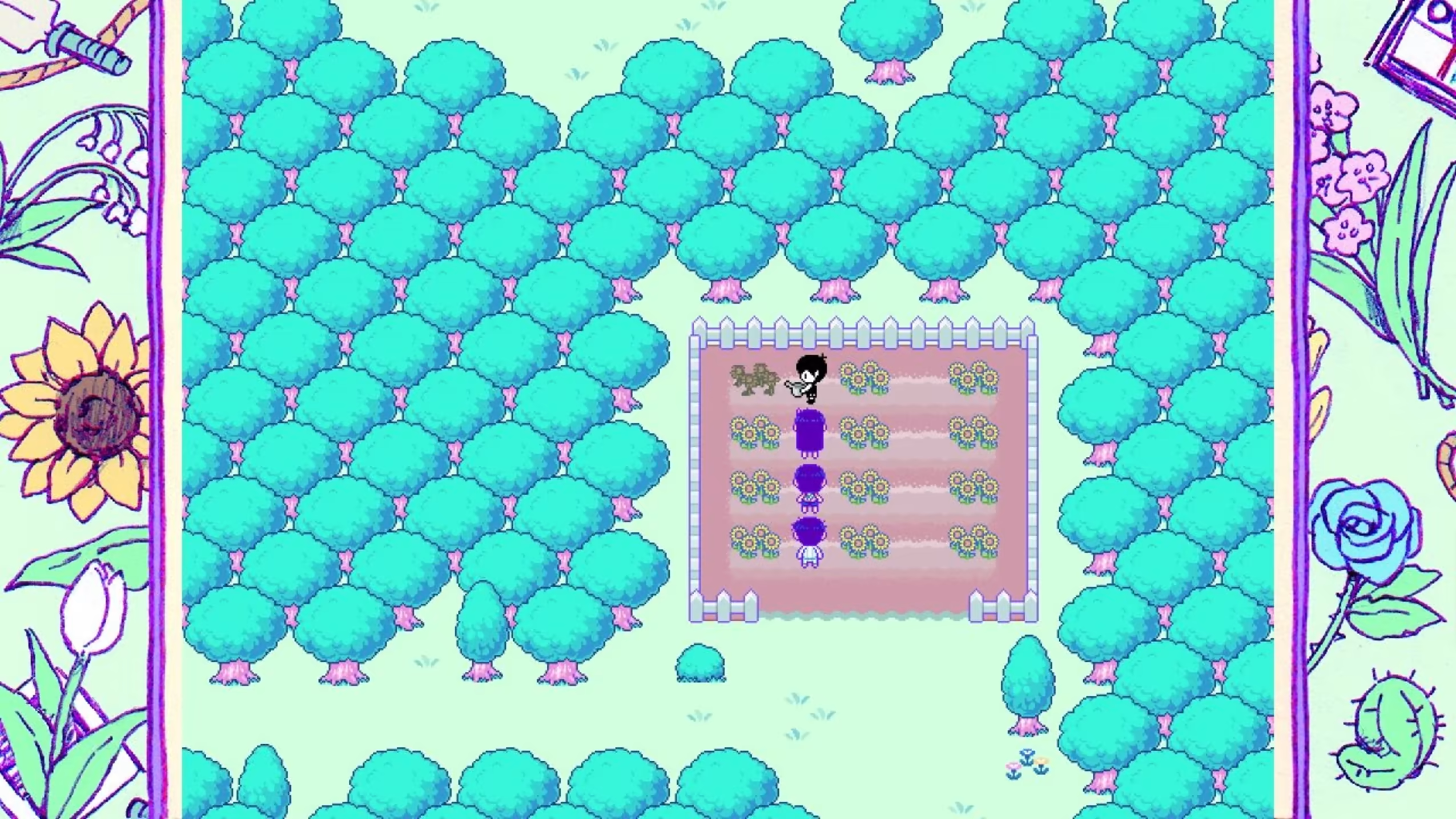
In Headspace, Omori travels with Aubrey, Kel, and Hero. Their journey includes fantastical opponents, quirky puzzles, and the kind of strange encounters that suit a dream world. Yet the brighter scenes are regularly touched by unease. The world can feel inviting, but it also suggests that something important has been left unresolved.
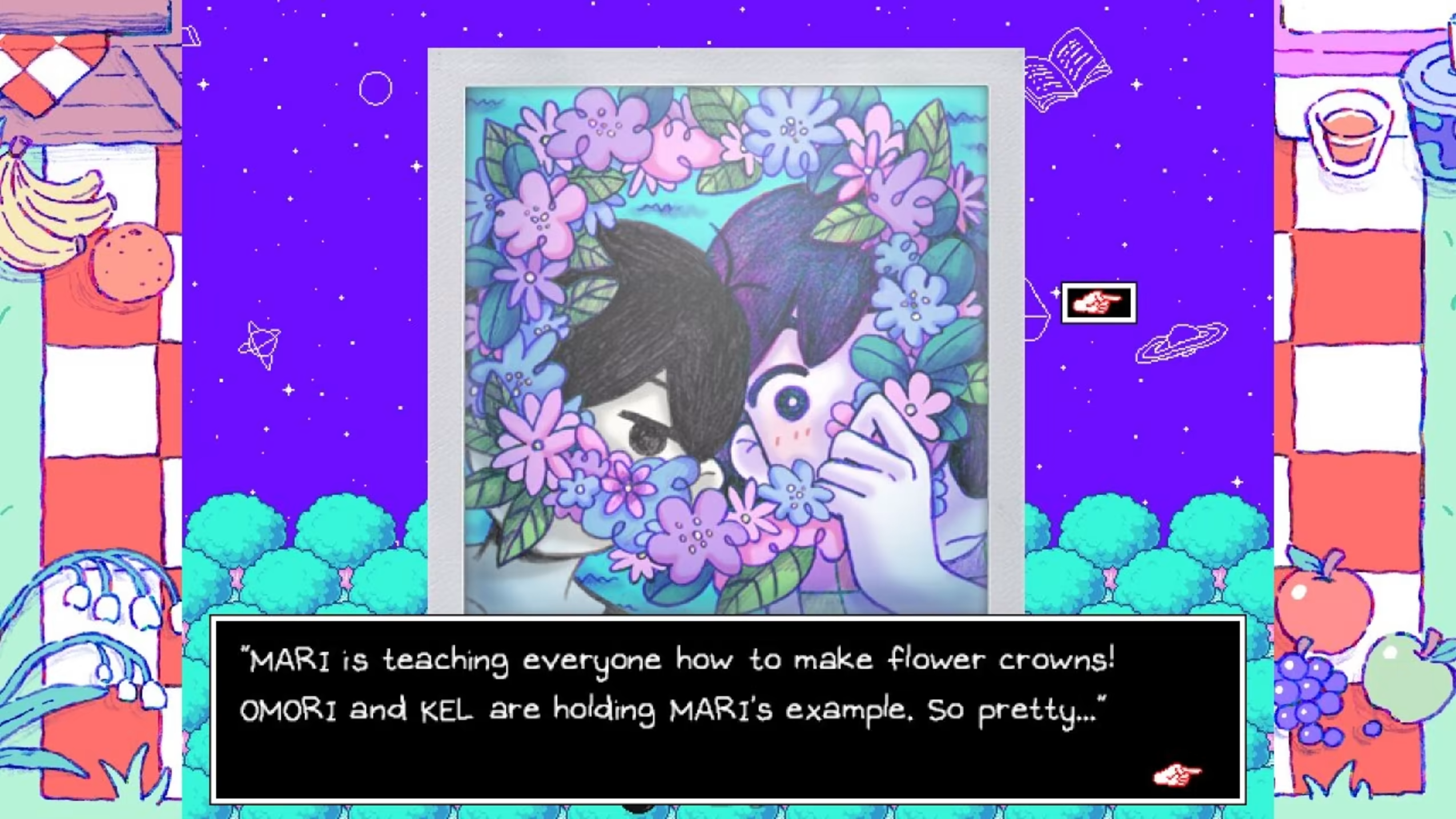
Faraway Town places greater focus on Sunny’s isolation and the weight of a tragic event involving his older sister, Mari. The game does not rush to explain every connection. Instead, it lets the contrast between Sunny’s reality and Omori’s dream world carry the mystery forward. Themes of grief, guilt, memory, friendship, and self-forgiveness are part of that progression, making this an experience better suited to players comfortable with psychological and melancholic material.
How Turn-Based Battles Work in OMORI
Combat uses a familiar turn-based RPG format. Omori and his friends form a party, and each character brings distinct skills and abilities into encounters. Players choose actions, consider the opposition, and coordinate the group against enemies ranging from whimsical to frightening.
That traditional foundation keeps battles readable, but the game asks for more than simply selecting the strongest option. Different actions can create tactical openings, and party composition matters because every companion contributes something individual. Encounters reward attention to the current state of both sides rather than a purely automatic approach.
The battle system also fits the atmosphere. Fights in Headspace can carry the same imaginative energy as the environments, even when the enemies become unsettling. The result is a combat loop that supports exploration rather than separating it from the game’s tone: each new location can bring fresh characters, puzzles, secrets, and threats.
The Emotion System: Happy, Sad, and Angry in Battle
The defining wrinkle in OMORI combat is its Emotion system. Party members and enemies can become Happy, Sad, or Angry. These emotional states influence stats, so they are not merely visual labels or story flavor. They alter the tactical situation and can change how a difficult fight should be approached.
The system works through a rock-paper-scissors-style relationship. Understanding that relationship allows players to seek favorable emotional matchups and avoid leaving their own party in a disadvantageous state. Skills and items that alter emotions therefore become meaningful tools, particularly when an enemy’s current condition creates a problem for the team.
- Read the field: Check the emotions affecting both allies and enemies before committing to a plan.
- Change the balance: Use emotion-altering skills or items when a matchup is working against the party.
- Use each role: Distinct character abilities give the group more options than repeated basic actions alone.
- Think ahead: A useful emotional advantage can matter as much as immediate damage.
- Stay observant: Battles reward careful responses to changing conditions rather than a fixed routine.
This mechanic gives the turn-based structure a more personal vocabulary. Happiness, sadness, and anger become practical battle states, while still echoing the game’s broader interest in emotional experience.
Follow-Up Attacks and Party Coordination
Follow-Up attacks provide another reason to treat the party as a coordinated group. These are character-specific actions that can add damage and expand the tactical choices available during encounters. Rather than viewing Omori and his companions as interchangeable units, the system encourages players to consider how their individual contributions work together.
Because Follow-Ups are tied to particular characters, they help give the party its own identity in battle. Combining those options with the Emotion system can make encounters feel more deliberate: the player is not only choosing an attack, but also considering party coordination, potential status changes, and the opponent’s condition.
This approach is especially fitting for a story centered on relationships among Sunny, Omori, Aubrey, Kel, and Hero. The same group that explores the strange spaces of Headspace also has to function together when danger appears.
Puzzles, Side Quests, Secrets, and Collectibles Across Both Worlds
Exploration is a major part of the experience across both Headspace and Faraway Town. Headspace offers surreal landscapes and unusual characters, while Faraway Town provides a more familiar setting with a very different emotional atmosphere. The contrast makes each return between worlds feel significant without requiring the game to abandon its focus on discovery.
Players can solve puzzles, pursue side quests, interact with a quirky cast, and search for hidden paths and secret areas. Collectibles add another reason to look beyond the most direct route. These activities give progression a broader shape: movement through the story is joined by optional discoveries that encourage close observation of locations and conversations.
The game’s presentation is especially effective in these exploratory moments. Bright, imaginative scenes can invite curiosity, while the surrounding melancholy keeps the tone from becoming simple escapism. For players interested in a story-led puzzle RPG with strategic battles and secrets to uncover, OMORI offers a carefully balanced trip through two connected worlds.