Damascus Gear Operation Tokyo Switch NSP
Report Link Error
Select the broken download file, then submit the report.


Screenshots
About Game
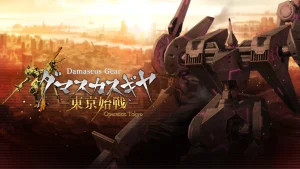
Damascus Gear Operation Tokyo Switch NSP places a mech-focused action RPG inside a Tokyo facing disaster. Set in 2097, the game frames its conflict around the Rage, a mysterious force that has devastated cities worldwide and pushed humanity toward a desperate response. Tokyo remains a symbol of hope, but it is also close to collapse, giving each operation the weight of a larger fight for survival.
Tokyo in 2097: The Threat of the Rage
The setting begins with a world already under pressure. The Rage has appeared without a clear explanation, leaving destruction in its wake and turning Tokyo into a crucial front in humanity’s defense. Rather than presenting a distant sci-fi war, the premise keeps the danger focused on a recognizable city divided into mission areas and threatened locations.
The story follows a specialized unit assigned to resist the Rage through direct action. Its sci-fi mystery develops as missions reveal more about the enemy’s origins and the purpose of the player’s own organization. Allies and rivals enter the conflict with their own motivations, while conspiracies and major decisions add another layer to the struggle. The central question is not simply how to win a battle, but what the Rage is and why this unit was created to confront it.
That tension gives Tokyo 2097 a grim but purposeful atmosphere. Humanity is not presented as secure or dominant; it is trying to hold ground against an enemy powerful enough to reduce cities to ruins.
Piloting Gears in Humanity’s Counterattack
The player takes control of a member of the anti-Rage mech unit, deploying advanced machines known as Gears. These combat machines are the foundation of the game’s action and progression. A Gear is not a fixed vehicle with one prescribed role. It can be adjusted with different components, weapons, and upgrades to better suit the demands of a mission.
That focus makes Damascus Gear Operation Tokyo Switch a game about both piloting and preparation. Combat skill matters, but so does deciding what kind of machine to bring into the field. One assignment may favor a tougher build designed to endure pressure, while another may call for different equipment based on enemy behavior and the stated objective.
The Gears also give the game its visual identity. Their interchangeable structure means performance choices can affect appearance, allowing a player’s mech to develop a more personal silhouette as new parts are collected and installed.
Action RPG Combat Built Around Tactical Positioning
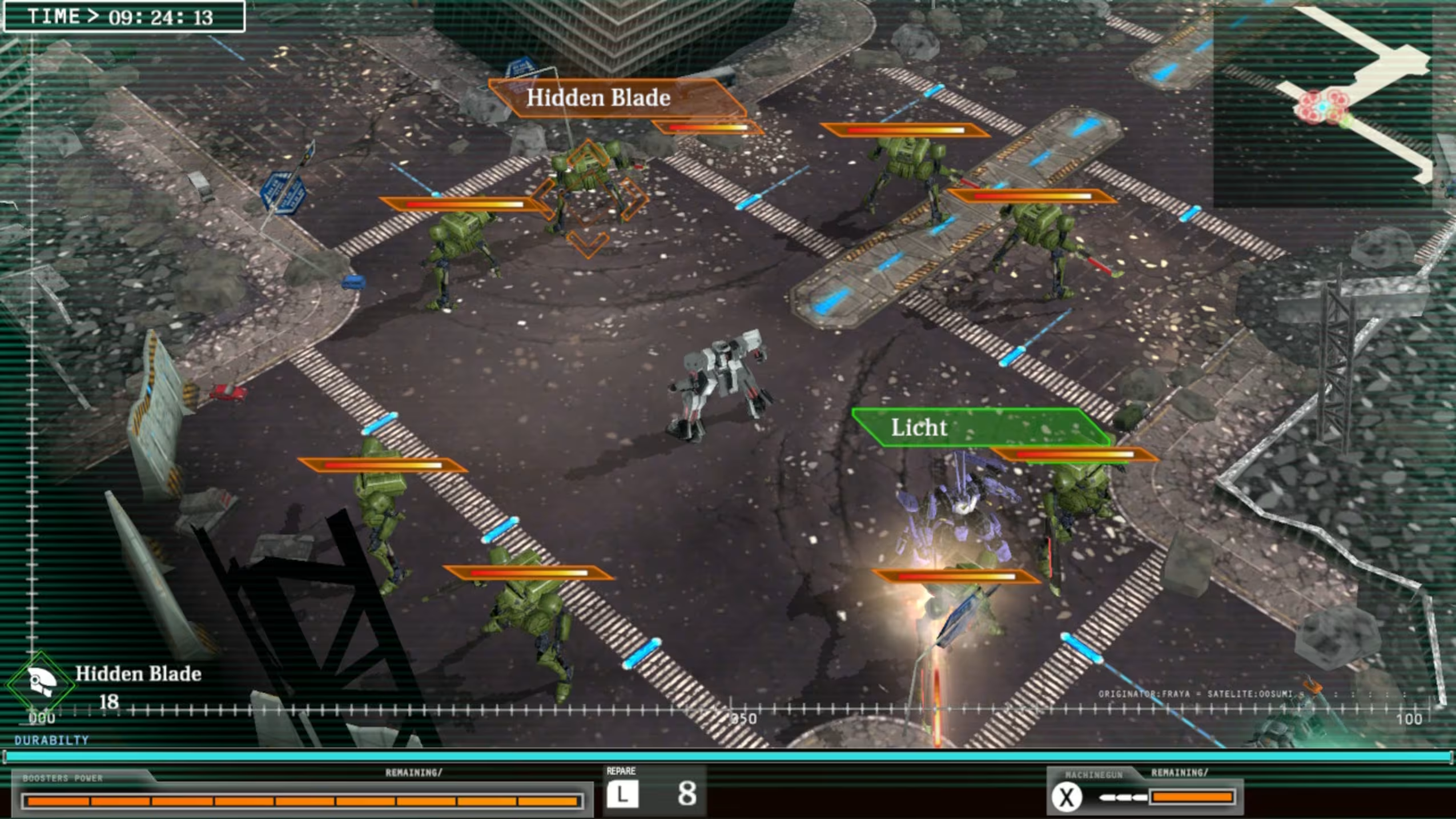
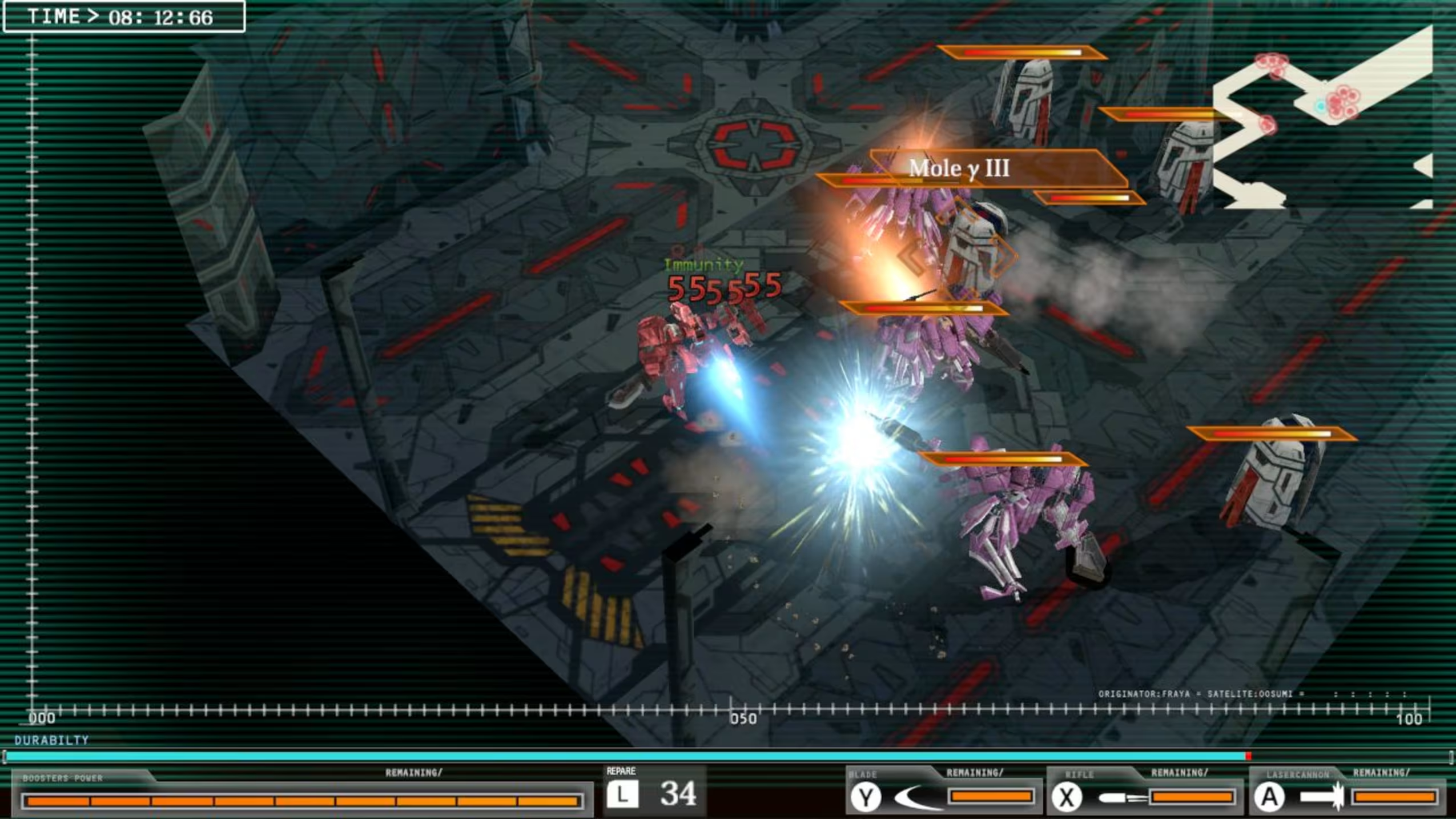
Battle takes place in fast-paced, arena-style encounters where reflexes and tactical positioning are both important. The action RPG framework does not reduce success to raw equipment strength. Players are encouraged to study enemy patterns, react to attacks, and choose safer or more effective positions in the middle of an engagement.
Mission preparation supports that combat rhythm. Reviewing objectives and enemy information before deployment can help shape a more suitable Gear setup. Different enemy types and assignment goals may demand a change in weapons, body parts, or general approach. Direct combat is only one part of the structure; defensive situations require attention to the location being protected as well as the opposition attacking it.
- Read the objective. Mission goals can range from combat assignments to defending critical locations, so the job should inform the loadout.
- Study enemy behavior. Recognizing enemy patterns creates openings and helps avoid treating every encounter the same way.
- Position with intent. Arena battles reward quick responses, but movement and placement are part of the tactical challenge.
- Adjust the machine. Changing Gear parts and weapons can prepare a mech for a different enemy type or objective.
- Build from rewards. Scrap, materials, new parts, and blueprints feed back into future upgrades and experimentation.
This loop gives missions a practical sense of replay value. Returning to the hangar is not merely a pause between fights; it is where collected resources become new options for the next deployment.
Building a Gear: Parts, Stats, and Visual Identity
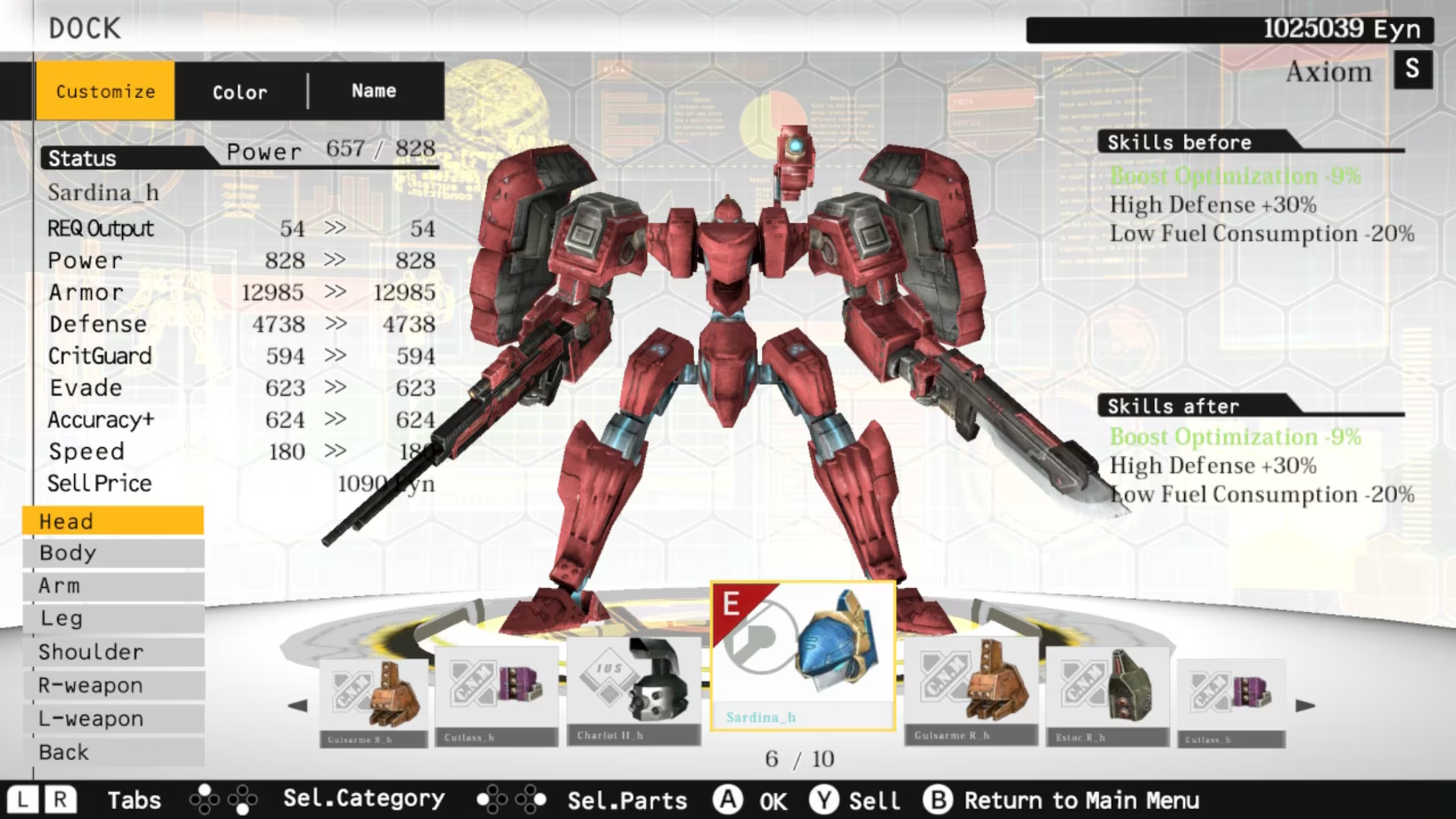
Gear customization is built around interchangeable body components: head, core, arms, and legs. These parts change a mech’s stats and appearance, creating room to shape a machine around a preferred combat role. The system supports more than cosmetic adjustment, since part selection directly relates to performance in the field.
The hangar becomes a major part of progression. New parts and blueprints can be collected, while scrap and other materials recovered from fallen enemies can be used to craft equipment or upgrade existing components. This provides a steady reason to refine a Gear rather than relying on a single setup throughout the campaign.
There is also a clear appeal in building a specialized machine for a particular problem. A player may experiment with body combinations after encountering a difficult mission, then return with a revised Gear designed around the challenge. The process connects progression to decision-making instead of treating upgrades as automatic rewards.
Melee and Ranged Weapons for Different Combat Roles
Weapon variety expands the customization system beyond the mech frame itself. Gears can equip both melee weapons and ranged weapons, with each option offering its own attack patterns and special abilities. This gives loadouts a meaningful impact on how a battle unfolds.
Melee equipment suits close engagements, while ranged choices offer a different way to approach threats. The important point is not that one category replaces the other, but that weapon selection can be matched to a mission’s enemies and demands. A carefully chosen Gear loadout can support a preferred style while still responding to tactical needs.
Pilot progression adds another layer through a skill tree. As the pilot levels up, new skills and abilities can be unlocked to improve combat effectiveness. Together, pilot development, weapon choices, and mech parts create several connected paths for strengthening a unit.
Mission Objectives Across Tokyo’s Districts
The campaign is organized through missions set across different Tokyo districts. Each assignment brings specific objectives and enemy types, giving the action a changing context rather than repeating one identical battlefield task. Some missions focus on direct confrontation with the Rage, while others center on defending important locations from attack.
This structure keeps the game’s tactical preparation relevant. The same Gear may not be the best answer for every district, enemy group, or defense objective. Collecting materials, improving parts, experimenting with weapons, and learning combat patterns all support the effort to meet new conditions.
For players drawn to action RPG progression, customizable mechs, and mission-based combat, the game offers a focused blend of science-fiction conflict and mechanical experimentation. Its strongest pull lies in the relationship between the threatened city, the ongoing mystery of the Rage, and the evolving Gear built to fight back.