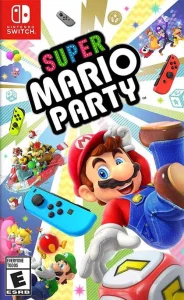
Super Mario Party Switch NSP
Report Link Error
Select the broken download file, then submit the report.


Screenshots
About Game
Super Mario Party Switch NSP refers to Nintendo’s 2018 entry in its long-running party series, released on October 5, 2018 for Nintendo Switch. Developed and published by Nintendo, it is built around a straightforward appeal: multiplayer board-game competition, quick mini-games, and a familiar Mushroom Kingdom cast competing for the top spot. Its format favors lively group sessions, where planning matters, but unexpected outcomes remain part of every match.
Super Mario Party on Nintendo Switch: A 2018 Multiplayer Party Game
Released in Europe, the USA, Asia, and Japan, Super Mario Party is a Party and Multiplayer game designed around shared competition. The central board-game format puts players on a course to collect Stars, while mini-games regularly interrupt the board action with short skill-based contests. That structure gives matches a changing rhythm: one moment is spent considering routes and resources, while the next calls for quick reactions or careful timing.
As a Nintendo Switch party game, it leans into accessible rules rather than a dense campaign structure. Players can gather for standard four-player board matches, switch to cooperative options, or take on modes with different goals. The result is a game shaped less by one fixed route through its content and more by repeat play, different board situations, and the unpredictable effects of chance.
The game includes more than 80 new mini-games that make creative use of the Joy-Con controllers. These contests help prevent the board from becoming a purely turn-based exercise. A player can make smart movement decisions across several turns, then see the balance shift after a mini-game. That tension between long-term planning and short-term performance is fundamental to the party-game atmosphere.
The Superstar Competition in the Mushroom Kingdom
The Super Mario Party story is deliberately light. Familiar characters gather in the Mushroom Kingdom to decide who deserves to be called the true Superstar. Rather than presenting a traditional narrative campaign, the game uses this premise to frame a friendly rivalry centered on collecting Stars.
Each board match becomes its own small contest for that title. Players pursue Stars, collect coins, respond to changing circumstances, and try to stay ahead of rivals. Bowser and his minions are part of the fun as well, appearing as playable characters in some cases and as obstacles in others. The premise leaves room for the competition itself to supply the drama: a well-timed detour, a surprise event, or a mini-game result can quickly alter the standings.
This Superstar competition suits the game’s social tone. There is a clear objective, but the route toward it is rarely completely controlled. Friendly rivalry, sudden reversals, and the pressure of chasing the next Star give every board a sense of movement without requiring a large story to hold it together.
How the Classic Board Game Matches Work
The main Super Mario Party board game format follows the familiar turn-based structure. Players roll dice, move across a board, collect coins, and work toward acquiring Stars. The player who can combine movement, resource management, and successful mini-game performances has more opportunities to build an advantage.
Coins and Stars serve different purposes in the match. Coins are collected while moving through the board, while Stars are the principal goal of the competition. That makes route planning important: it is not enough to move as far as possible if a different path offers a better chance to reach a Star or collect useful resources. Chance remains a factor, however, so even a careful plan has to adapt to what happens on the board.
Mini-games occur between turns, giving all players a chance to compete outside the board’s movement system. These short challenges can provide an advantage in the larger match and bring a faster, more immediate kind of contest to the table. The board game and the mini-games therefore support each other: the board rewards planning, while the mini-games test practical performance in the moment.
Partner Party’s Team-Based Grid Maps
Super Mario Party Partner Party provides a different approach to board competition. Instead of the standard four-player race, it divides participants into two teams of two. The focus shifts from individual placement to cooperation, since teammates are working toward a shared result.
This team board mode uses distinct grid-based maps, creating an alternative to the usual board layout. That change encourages players to think about team positioning and shared priorities rather than treating every turn as a purely personal decision. It also gives groups a useful option when they want the Mario Party format but prefer a cooperative edge to the rivalry.
The wider selection of modes reinforces that variety. River Survival is a four-player cooperative adventure involving paddling down a river and completing mini-games together. Sound Stage is rhythm-based and uses Joy-Con actions for musical tasks. Toad’s Rec Room includes mini-games built around the Nintendo Switch screen-pairing feature. These modes do not replace the board game, but they broaden the kinds of sessions the game can support.
Why Character Dice Blocks Add a Strategic Choice
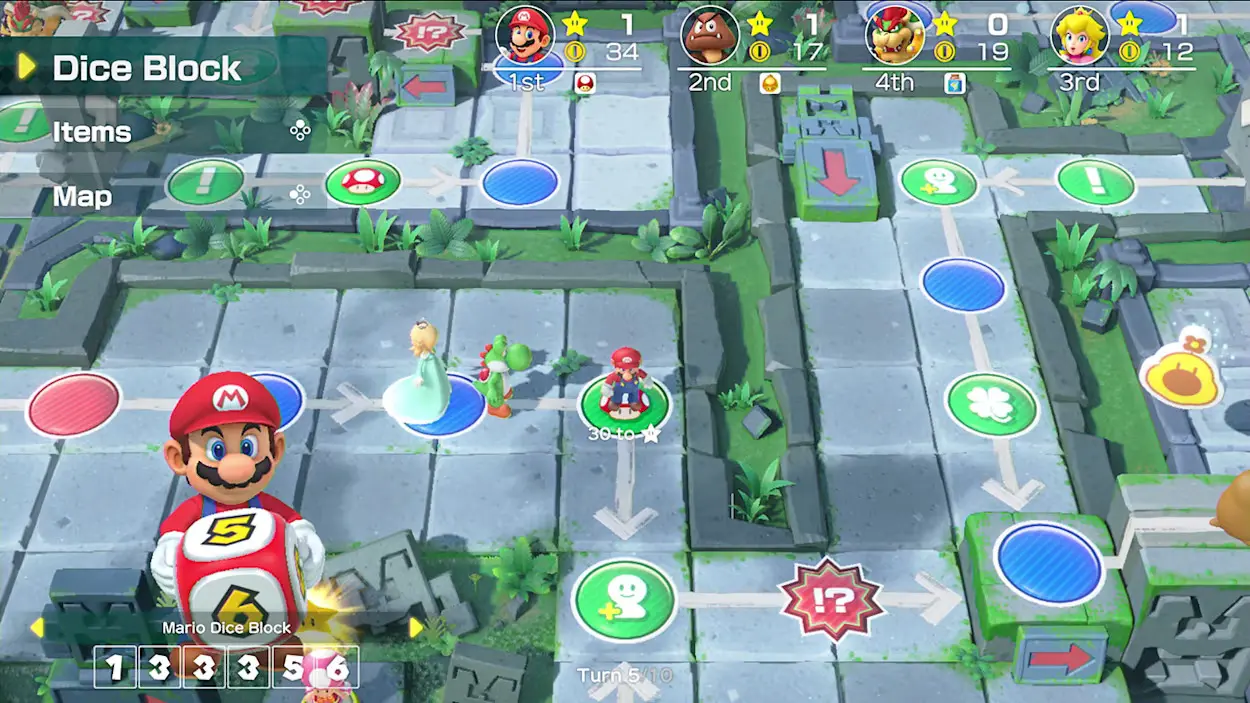
Movement is not limited to a single standard roll. Each character has a unique dice block, adding an extra decision to every board match. A Super Mario Party character dice block can influence how a player approaches movement, making the choice of character relevant beyond appearance.
This system adds another layer to Mario Party movement strategy. A player may weigh the value of a particular dice block against the position of a Star, the direction opponents are taking, or the risks involved in reaching a desired space. Since board matches also include chance and mini-games, character dice do not remove uncertainty. Instead, they give players another way to shape their own plans within it.
That is why the system works well with the game’s broader design. The rules remain easy to follow—roll, move, gather coins, chase Stars—but there is room for more considered choices. Players who pay attention to movement options can find advantages without turning the party format into something overly complicated.
5 Ways to Improve Your Super Mario Party Match Strategy
Good results still depend partly on luck, but a few habits can make a difference in Super Mario Party Switch NSP matches. The best approach is to balance board awareness with mini-game readiness, rather than concentrating on only one part of the game.
- Practice mini-games. Repeated play helps build familiarity with their challenges, making it easier to react quickly when a mini-game can influence the board match.
- Watch rival routes. Keep an eye on where opponents are moving and how close they may be to a Star. Their position can affect which path is worth taking next.
- Plan for Stars. Coins matter, but Stars define the contest. Consider movement choices in relation to the next available Star rather than focusing only on immediate distance.
- Use dice thoughtfully. Character-specific dice blocks add meaningful movement options. Think about the board position and your goal before deciding how to roll.
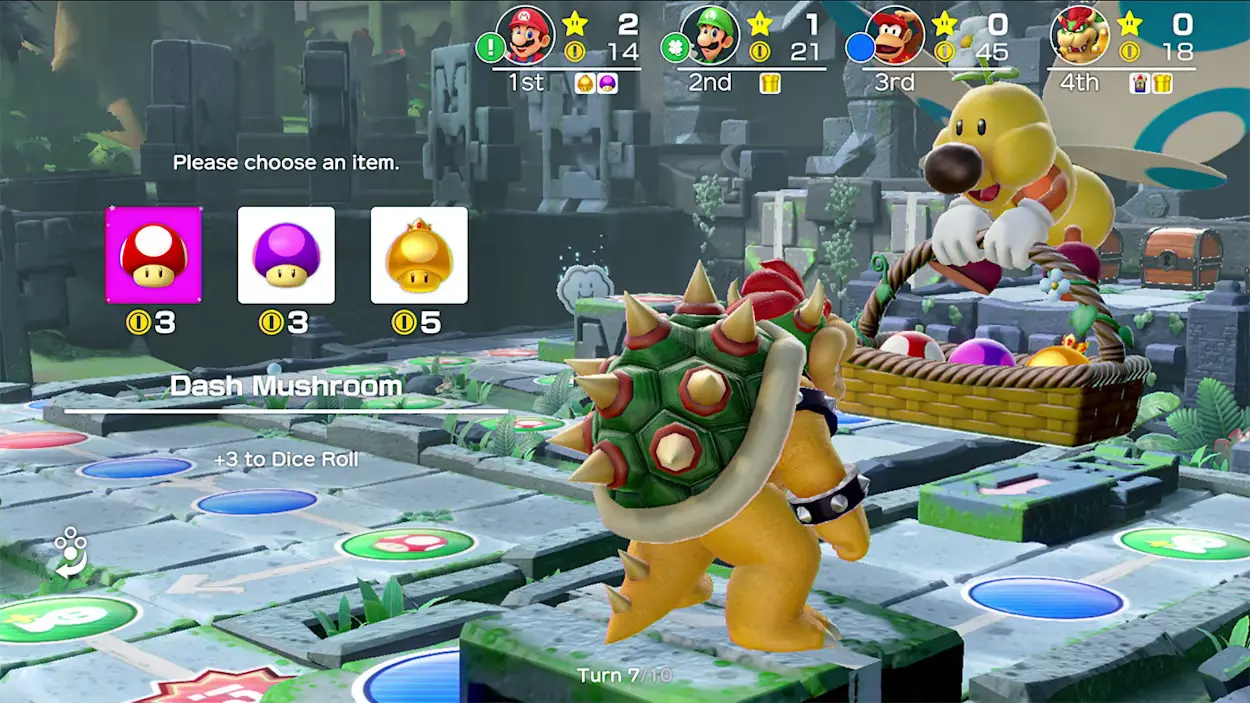
- Make item choices carefully. Items can create an edge, so their value depends on timing and the current state of the match. Avoid treating every option as equally useful.
The game is particularly well suited to groups that enjoy quick competitive challenges alongside a board-game framework. Its mix of individual rivalry, team play, cooperative modes, character dice choices, and a large mini-game selection gives sessions room to change from one match to the next.