Tomb Raider I-III Remastered Starring Lara Croft Switch NSP

Report Link Error
Select the broken download file, then submit the report.


Screenshots
About Game
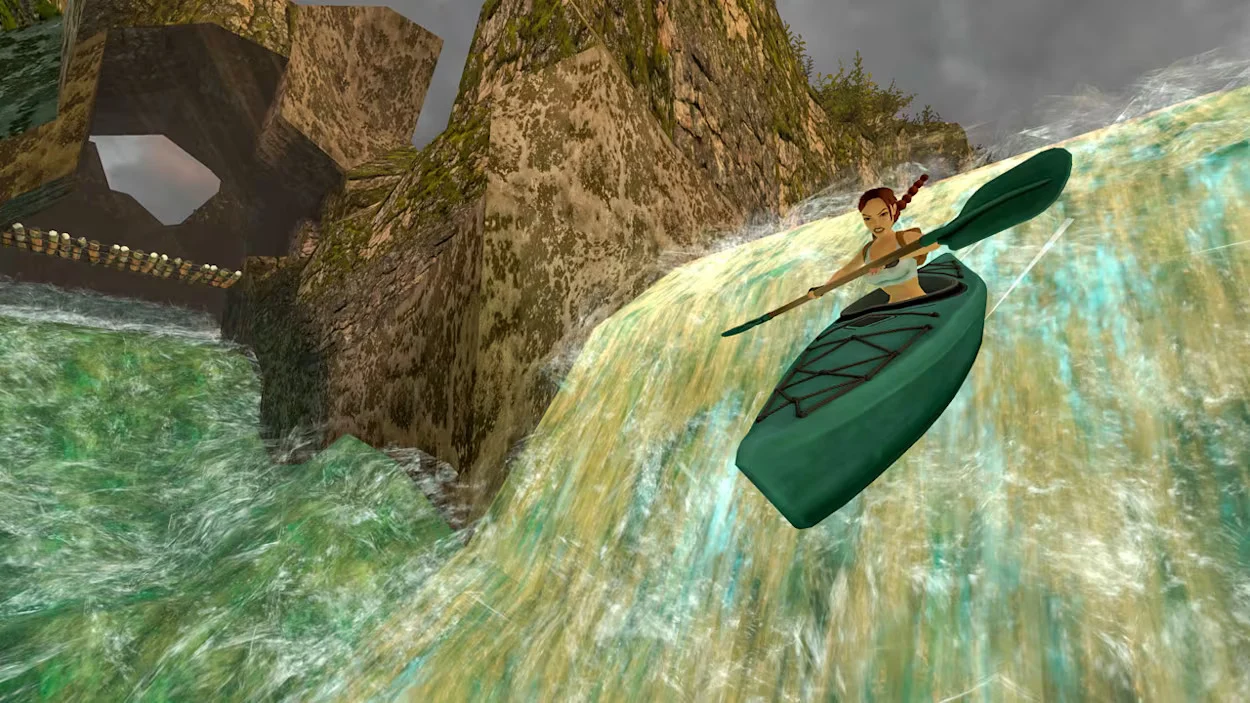
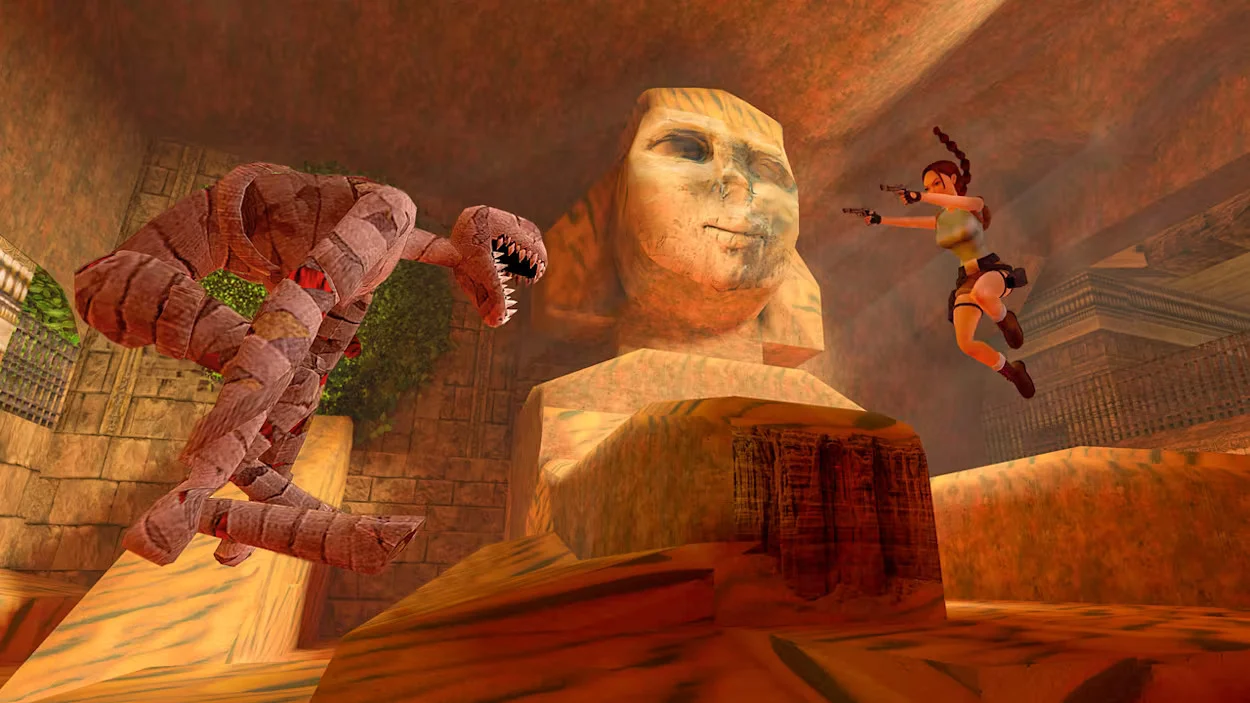
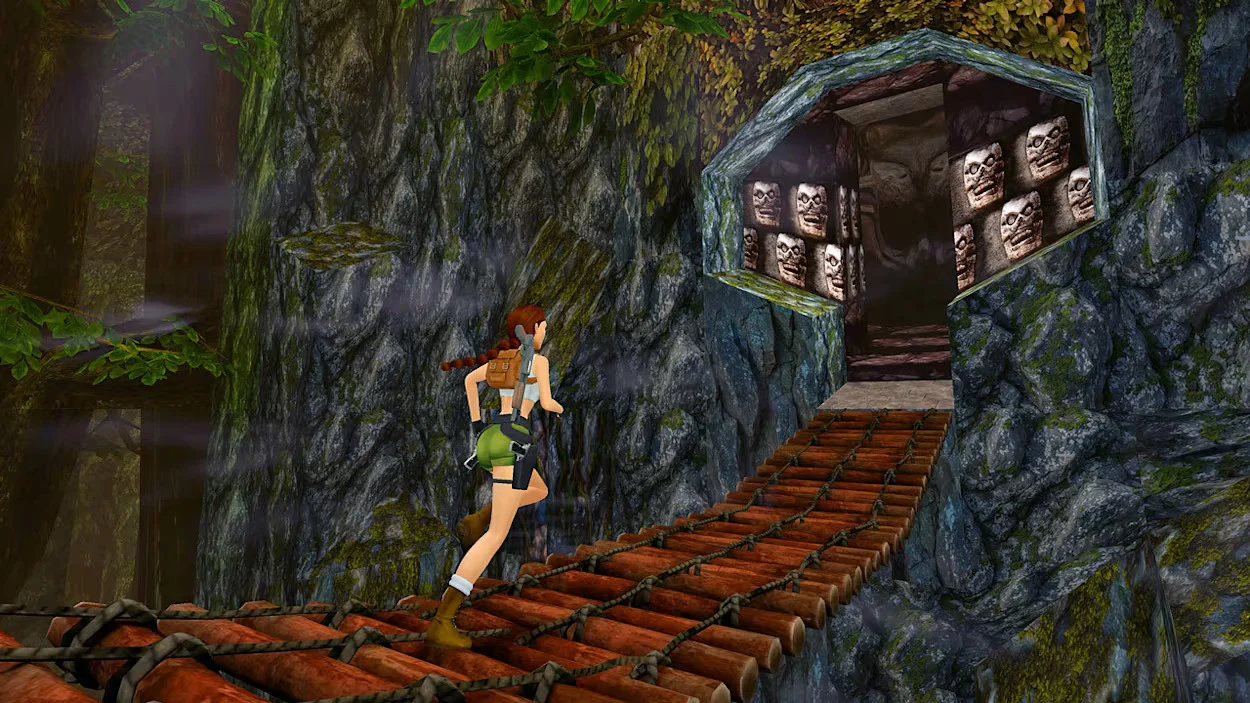
Tomb Raider I-III Remastered Starring Lara Croft Switch NSP brings Lara Croft’s original three adventures to Nintendo Switch in a collection built around exploration, traps, combat, and demanding environmental puzzles. Published and developed by Aspyr, it revisits the classic action-adventure formula while offering a modern visual option and improved camera controls alongside the original polygonal presentation.
A Remastered Return to Lara Croft’s First Three Adventures
This Aspyr remaster collection gathers Tomb Raider I, Tomb Raider II, and Tomb Raider III, preserving the structure that made the early games distinctive. These are adventures driven less by a straight path than by careful movement through large ruins, dangerous terrain, hidden routes, and puzzle-filled spaces. Lara’s journeys ask players to read each location closely, looking for a ledge, switch, doorway, or underwater passage that may be easy to miss.
The collection’s action, adventure, and puzzle identity is central to its appeal on Nintendo Switch. Players can move between classic and enhanced graphics during play, letting the original geometric look sit alongside a more modern presentation. That choice is meaningful for a trilogy whose atmosphere comes from cavernous chambers, ancient architecture, remote landscapes, and the sense that progress must be earned one careful step at a time.
Each game gives Lara a separate artifact hunt and a different set of environments. Tomb Raider II follows her search for the Dagger of Xian, taking her from the Great Wall of China to Venice, a sunken ocean liner, and a Tibetan monastery. Together, the three games offer a broad travelogue of ruins and hazards, with exploration remaining the thread that connects them.
Tomb Raider I: The Search for the Scion
Lara Croft’s first adventure begins with the Scion, a mysterious artifact that sends her into an international search shaped by ancient secrets and hostile encounters. The route reaches Peru, Greece, Egypt, and a hidden valley, with each setting supplying a different kind of ruin to investigate. The premise is simple but effective: an artifact of great importance has been lost, and Lara’s pursuit brings her into places that do not yield their answers easily.
The journey’s character comes from its locations. Peru introduces an isolated and hazardous setting; Greece and Egypt place Lara among old structures and buried mysteries; the hidden valley reinforces the game’s interest in spaces beyond ordinary maps. These environments support the first game’s deliberate pace. A chamber may contain danger, a route may be concealed above the player’s view, and an apparent dead end may instead be the beginning of a puzzle.
As a Lara Croft first adventure, Tomb Raider I establishes the series’ familiar balance: artifact hunting, physical problem-solving, dangerous foes, and environments that reward attention. Its progression is closely tied to discovering how spaces connect, rather than simply reaching the next combat encounter.
Tomb Raider III: The Hunt for Four Meteorite Artifacts
Tomb Raider III: Adventures of Lara Croft raises the stakes through a search for four powerful meteorite artifacts. These objects are scattered across India, the Nevada desert, London, and Antarctica, giving the adventure a particularly varied range of locations. Lara is not alone in seeking them: a sinister corporation also wants to use their power.
The story’s global structure helps distinguish the third game. India’s jungles, Nevada’s desert, London, and Antarctica each bring their own dangers and atmosphere, while the meteorite hunt gives the journey a clear purpose. The locations are not merely scenery; they frame the obstacles Lara has to navigate, from hazardous terrain to hostile opponents and trap-laden areas.
For players drawn to the globe-spanning side of the Adventures of Lara Croft, this entry offers a focused artifact chase with a corporate threat in the background. It retains the series’ emphasis on searching environments, solving routes, and surviving places designed to test movement as much as combat skill.
Platforming, Puzzles, and Combat in the Classic Trilogy
The trilogy’s core mechanics remain rooted in precision. Lara climbs, swims, grabs ledges, and makes carefully judged jumps through large levels packed with secrets, pathways, and traps. Movement is not just a way to travel between objectives. It is often the puzzle itself, especially when a narrow ledge, a difficult landing, or a submerged route determines what can be reached next.
Environmental puzzles shape progression throughout the collection. Players search rooms for mechanisms, examine the layout of ruins, and work out how a change in one area opens a route elsewhere. That process makes the games methodical in a useful way. Rushing forward can lead to missed paths or sudden hazards, while patient observation can reveal the intended route.
Combat adds pressure to the exploration. Lara’s third-person dual-pistol combat is used against animals and human foes, while health packs, ammunition, and new weapons can be collected during the journey. Swimming sections and treacherous currents further vary the challenge. The result is a progression loop that moves between quiet discovery, physical platforming, puzzle-solving, and moments of danger.
The remastered presentation supports replay value through its graphics toggle. Players can switch between original and enhanced visuals at any time, revisiting familiar chambers with either presentation. The collection is especially suited to players who enjoy classic action-adventure design, deliberate platforming, and exploring intricate levels for secrets and alternate paths.
Five Practical Ways to Approach Lara Croft’s Toughest Ruins
- Look before leaping. Pause to study the room, surrounding walls, high ledges, and distant openings. Careful observation is useful when puzzles and hidden paths are not immediately obvious.
- Trace every possible route. Search for climbable surfaces, ledges to grab, underwater passages, and connected rooms. The trilogy’s levels often reward players who treat exploration as part of progression.
- Respect the traps. Ancient ruins and dangerous terrain can punish careless movement. Approach unfamiliar areas with attention, particularly when a jump, corridor, or mechanism seems risky.
- Watch supplies. Collect and manage health packs, ammo, and new weapons as you explore. These resources matter when combat encounters interrupt a longer stretch of platforming or puzzle-solving.
- Use the camera to plan. Improved camera controls can make it easier to judge routes and navigate difficult platforming sections. Take time to line up Lara’s movement before committing to a jump.
Nintendo Switch Release Details for Tomb Raider I-III Remastered
Tomb Raider I-III Remastered Starring Lara Croft Switch NSP released on February 14, 2024. Aspyr serves as both publisher and developer for the Nintendo Switch collection. The listed regions are Europe and USA, with English language support.
The release is listed under the Action, Adventure, and Puzzle genres. Its firmware requirement is v17.0.1 for both the base release and update. For players returning to Lara Croft’s earliest expeditions or approaching these classic games for the first time, the collection presents three artifact-focused adventures centered on exploration, demanding ruins, and the enduring challenge of finding the next way forward.
Recommended Similar Games
 Brain Memory Training Academy Switch NSPView Game
 Vivitter for Nintendo Switch NSPView Game
 Rough Justice 84 Switch NSPView Game
 Bike Courier: Bistro Express Delivery Switch NSPView Game
 Muv-Luv Muv-Luv Alternative REMASTERED DOUBLE PACK Switch NSP XCIView Game
 Song of Nunu: A League of Legends Story Switch NSPView Game