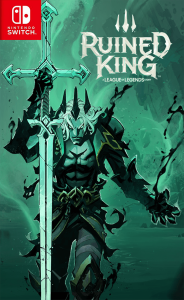
Ruined King: A League of Legends Story Switch NSP
Report Link Error
Select the broken download file, then submit the report.


Screenshots
About Game
Ruined King: A League of Legends Story Switch NSP brings Runeterra to Nintendo Switch in a narrative-led role-playing format, shifting the focus away from competitive matches and toward a guided adventure through familiar regions. Developed by Airship Syndicate and published by Riot Forge, the game released on November 16, 2021, pairing a story about the spreading Black Mist with deliberate party combat, exploration, and character-driven scenes. Its European and USA release supports a broad language selection, including English, Japanese, Portuguese, French, German, Russian, Chinese, Spanish, Italian, and Korean.
A Runeterra Adventure Beyond the Rift
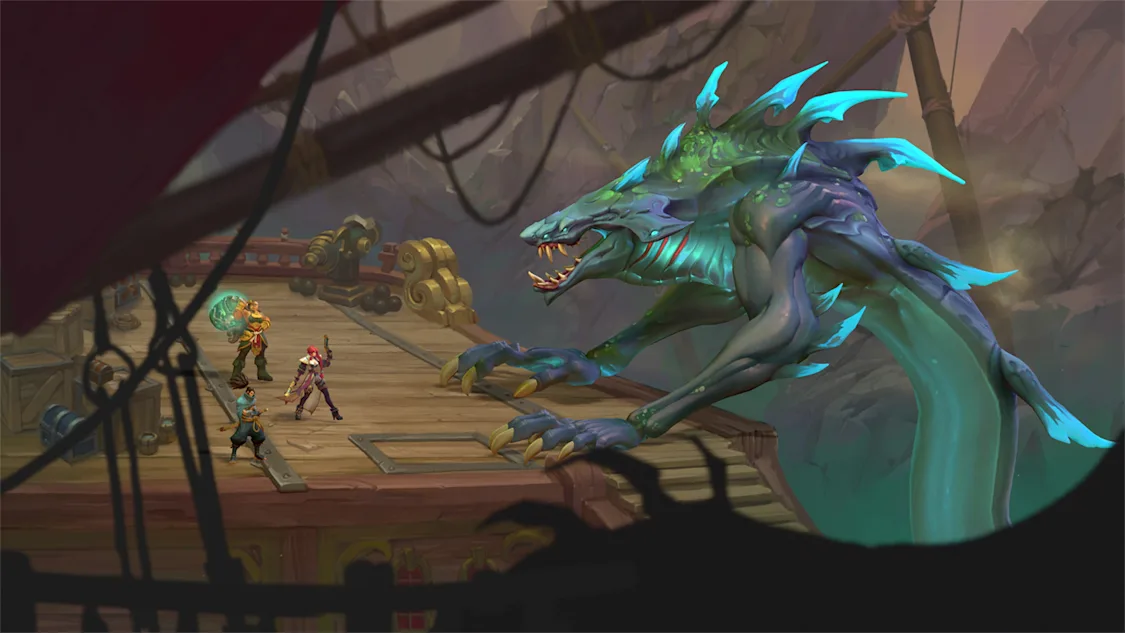
Ruined King: A League of Legends Story approaches Runeterra as a self-contained RPG journey. The central threat comes from the Shadow Isles, where the Black Mist threatens to spread its corruption beyond the cursed region. Bilgewater, a busy port city marked by pirate activity, becomes one of the key places caught in that danger.
This setup gives the game room to contrast two strong settings: Bilgewater’s dangerous streets and the unnerving expanses of the Shadow Isles. One feels lived-in and volatile; the other is defined by a haunting curse. The movement between them supports the game’s atmosphere while giving the story a clear sense of escalation as the heroes pursue answers about the Ruined King and the threat facing the wider world.
For newcomers, the format offers an accessible way into Runeterra through dialogue, in-game documents, and a focused quest. Players already familiar with these champions can see them outside their usual battlefield roles, with the narrative making space for personal revelations, disagreements, and shared pressure as the stakes rise.
The Six Champions at the Heart of the Quest
The party brings together six champions whose reasons for confronting the Black Mist are not identical: Braum, Miss Fortune, Illaoi, Yasuo, Ahri, and Pyke. That mix is important because the game is not built around a single hero. Instead, it asks a group with very different personalities and priorities to face a common crisis.
Braum adds a protective presence to the group, while Miss Fortune is closely tied to Bilgewater and its tensions. Illaoi carries her own spiritual perspective into the conflict, and Yasuo, Ahri, and Pyke each arrive with personal concerns that shape their place in the journey. Their conversations and emotional moments help the story explore more than the immediate danger.
That ensemble structure also matters in play. Each champion has a distinct role and set of abilities, so party selection is both a narrative pleasure and a tactical decision. The heroes may be united by necessity, but their differences give the adventure its texture.
How Turn-Based Battles Build Tactical Momentum
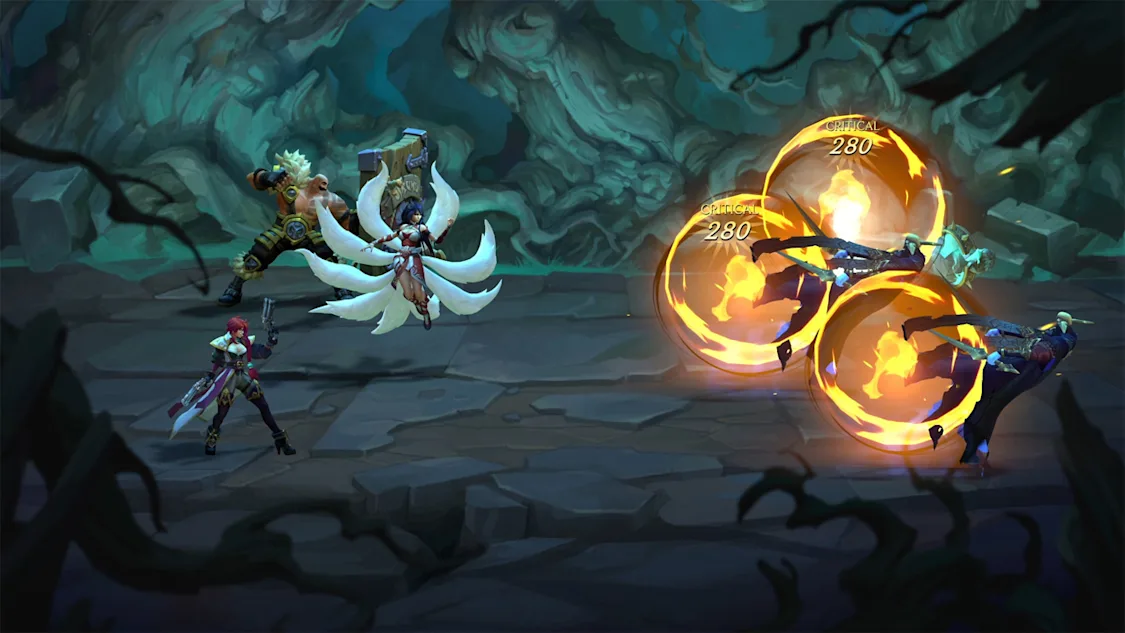
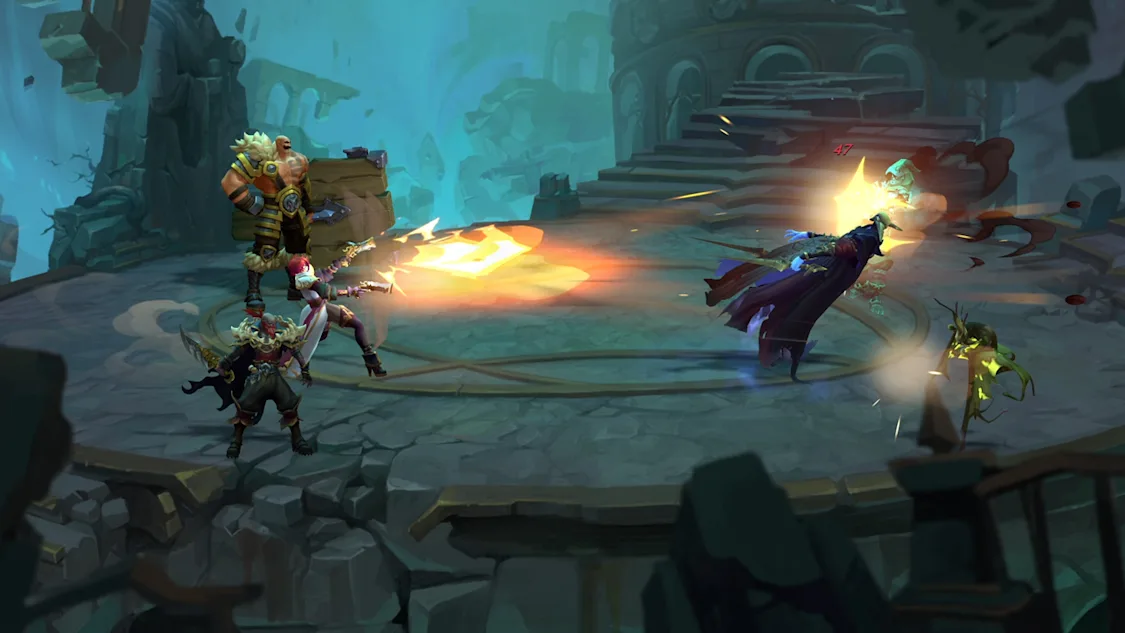
Combat uses a party-based, turn-based system in which players control three champions at once. Encounters against varied enemies require more than repeatedly selecting the strongest-looking attack. The useful question is often how the current three-champion party can combine abilities, respond to incoming pressure, and set up a more favorable next turn.
This emphasis on party synergy makes the six-character roster more than a collection of familiar faces. Different combinations can be tested against different situations, and challenging boss battles put combined strength and tactical planning under closer scrutiny. A party choice that feels comfortable in one encounter may not be the best answer in another.
The pace is measured rather than rushed. Players have room to consider ability use and turn order, but those choices still create momentum: an effective action can prepare an ally’s follow-up, while poor timing can leave a group less prepared for an enemy response. The result is a combat structure that rewards attention without leaving the player with only one fixed solution.
Understanding the Lane Initiative System
The Lane Initiative System is the game’s defining combat wrinkle. Rather than treating every ability as a simple immediate command, it allows abilities to be placed in different lanes. Those lanes affect speed and power, creating a direct trade-off between a faster action and a stronger effect that takes longer to resolve.
That choice gives ability timing real weight. A quick action may be preferable when a threat needs to be answered promptly, while a more powerful lane can be worth the delay when the party has an opening. The system turns turn order into an active part of combat strategy instead of a background detail.
Its value is clearest when paired with the three-champion party structure. One champion can act sooner to influence the flow of battle, while another prepares a heavier move. Learning when to prioritize speed and when to accept delay is a practical part of mastering encounters, especially as enemy groups and bosses demand more careful coordination.
Exploration, Puzzles, and Hidden Rewards
Outside battle, exploration carries the adventure through Bilgewater and the Shadow Isles. These regions are not only backdrops for the story; they contain hidden paths, environmental puzzles, collectible resources, and loot. Taking time to inspect the route forward can reveal useful materials as well as additional details about the world.
The search for resources feeds directly into progression. Materials found during the journey can be used to craft powerful items and upgrade champion equipment, giving exploration a practical payoff beyond simple completion. Loot discovery therefore supports preparation for harder fights, while puzzles and alternate routes break up the rhythm between combat encounters.
The two regions also provide a strong visual and tonal contrast for the quest. Bilgewater’s pirate-infested setting supplies a different kind of danger from the cursed, eerie Shadow Isles. Together, they give the Runeterra RPG a sense of travel and discovery while keeping the Black Mist threat present in the background.
5 Tactical Priorities for New Ruined King Players
- Test the roster. Experiment with different three-champion party combinations instead of relying on one arrangement for every encounter. Distinct roles and abilities can change how a battle unfolds.
- Watch the timing. Pay attention to when abilities will resolve. A powerful move is not always the best immediate answer if an enemy threat requires a faster response.
- Use the lanes deliberately. Treat the Lane Initiative System as a central combat tool. Choose faster lanes when urgency matters and stronger lanes when the situation allows time to build impact.
- Improve equipment. Gather resources during the journey, then use them for item crafting and equipment upgrades. Progression is more effective when the party’s gear keeps pace with tougher foes.
- Explore carefully. Look for hidden paths, environmental puzzles, and loot rather than moving only along the obvious route. Those discoveries can provide resources and deepen the sense of place.
Ruined King: A League of Legends Story Switch NSP is best suited to players looking for a turn-based Runeterra adventure built around tactical decisions, party management, and a story that lets six champions interact beyond the Rift. Its strongest appeal lies in the meeting of character-focused storytelling, atmospheric exploration, and a battle system where speed, power, and coordination are constantly linked.
Recommended Similar Games
 Shin Megami Tensei V Switch NSP XCIView Game
 That Time I Got Reincarnated as a Slime ISEKAI Chronicles Switch NSP XCIView Game
 Romancing SaGa -Minstrel Song- Remastered Switch NSPView Game
 Manafinder Switch NSPView Game
 The Legend of Fireball Switch NSPView Game
 Monster Hunter Stories 2: Wings of Ruin Switch NSP XCIView Game