The Entropy Centre Switch NSP
Report Link Error
Select the broken download file, then submit the report.


Screenshots
About Game
The Entropy Centre Switch NSP brings a science-fiction puzzle adventure to Nintendo Switch built around a focused idea: changing the past of objects without changing the player’s own timeline. Released on July 27, 2023, this Adventure and Puzzle title is both published and developed by Playstack. Its setting, a colossal research facility orbiting above a ruined Earth, gives the game’s logical challenges a persistent sense of urgency and mystery.
The Entropy Centre on Nintendo Switch: Release and Game Details
The Entropy Centre Switch arrived on July 27, 2023, with Playstack handling both publishing and development. The game sits between adventure storytelling and environmental puzzle solving, using an abandoned facility as its central location and a time-focused tool as its defining mechanic.
The premise begins with Aria awakening inside the facility while Earth below appears devastated. She is presented as the sole human survivor in a vast orbiting research centre, with little immediate clarity about the catastrophe or the purpose of the place around her. That uncertainty is important to the game’s mood: puzzle rooms are not simply disconnected tests, but parts of a larger structure whose history must be uncovered.
The Switch release is available across Europe, the USA, Asia, and Japan. The portable format suits a chamber-based adventure in which individual puzzles can be approached one problem at a time, while the wider mystery encourages continued exploration through the facility’s different areas.
ASTRA and the Object Time-Reversal Mechanic
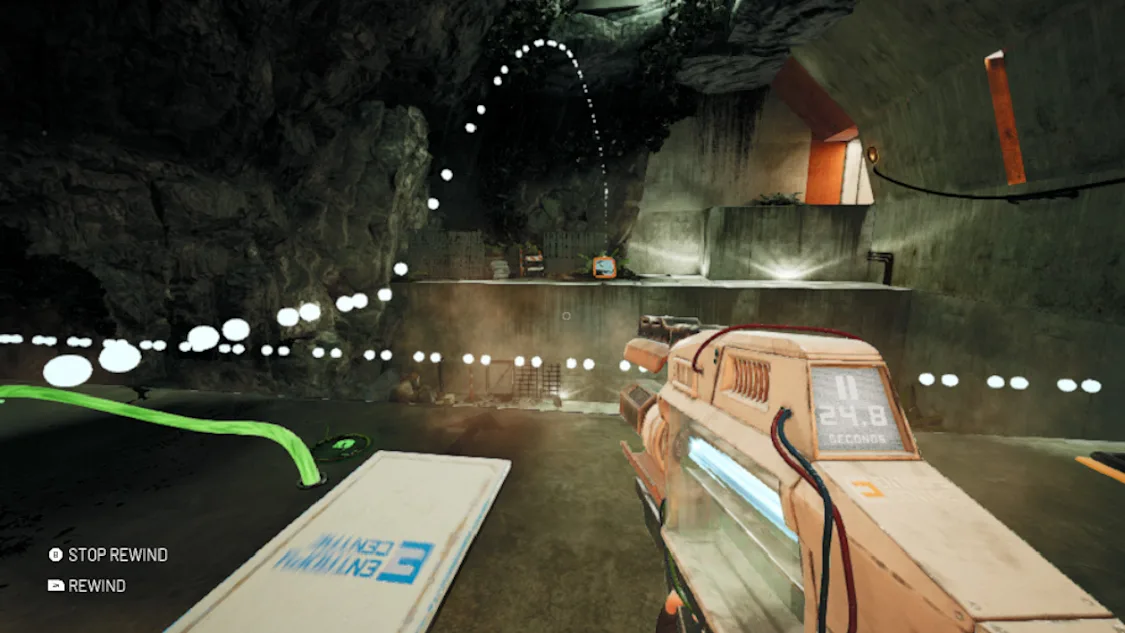
ASTRA is the game’s key companion and tool: a sentient, talking device with the ability to reverse the timelines of individual objects. The distinction matters. Aria does not rewind her own actions or reset the world wholesale. Instead, ASTRA lets players target an object and return it to an earlier state, opening up a different kind of spatial reasoning.
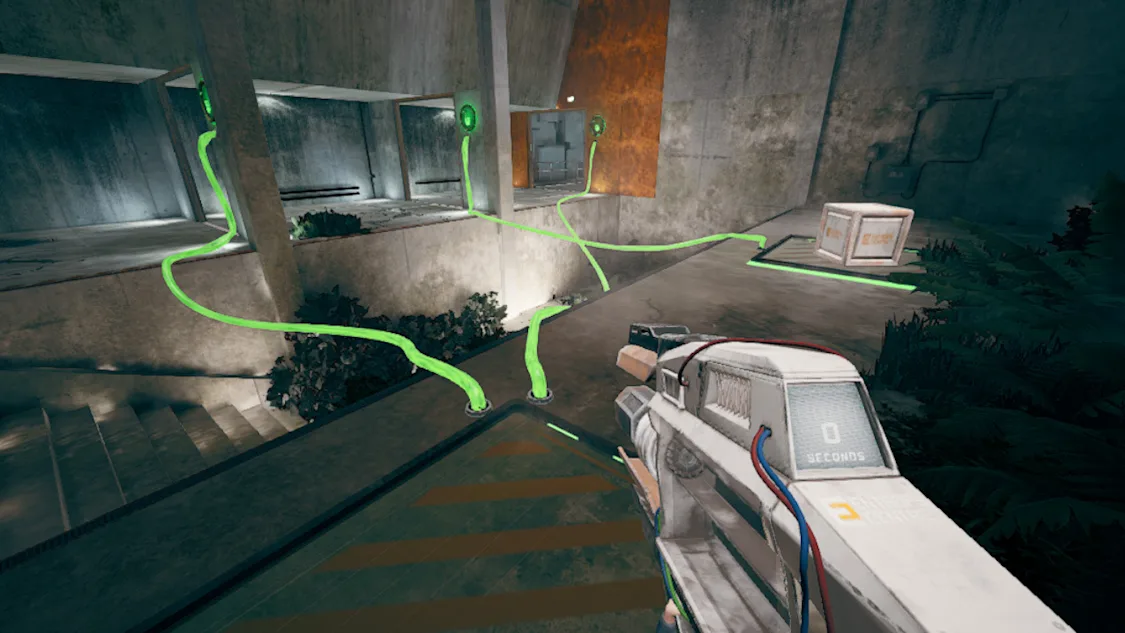
A collapsed bridge section, for example, can be restored to where it was before it fell. A broken platform can be returned to a usable condition. These are not merely visual reversals; they change how a room can be crossed and how its mechanisms can interact. The mechanic asks players to consider not only an object’s present position, but also the sequence of events that may have brought it there.
ASTRA also gives the facility a more conversational texture. The device’s humorous dialogue contrasts with the damaged, isolated setting, preventing the journey from becoming entirely bleak. That balance between witty commentary and an ominous situation supports the game’s mystery without removing the stakes surrounding Earth’s destruction.
- Restore the past: Reverse damaged objects to recover earlier, useful states.
- Read the room: Broken machinery, collapsed structures, and environmental details can suggest what needs to change.
- Plan sequences: One reversed object may create the conditions needed to reach or affect another.
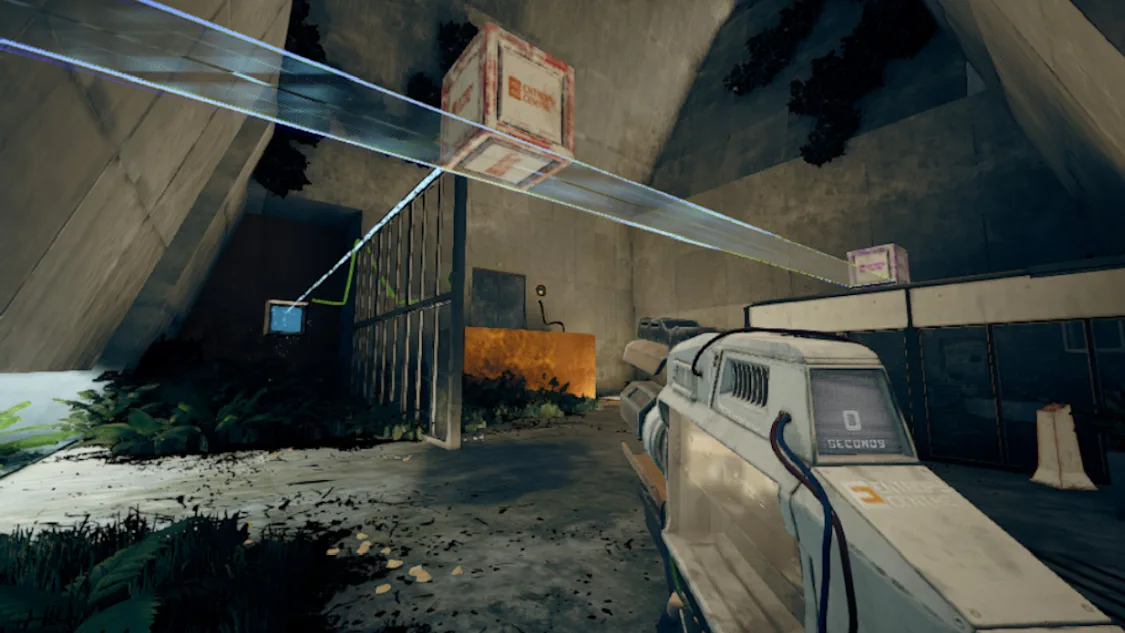
- Use the environment: Platforms, gravity-related elements, and laser beams become parts of the solution.
- Follow the clues: Audio logs and environmental details add context to the facility’s larger mystery.
How Environmental Puzzles Use Time, Physics, and Logic
The Entropy Centre puzzles are designed around the relationship between time reversal and environmental interaction. The player is not simply looking for a switch or carrying an item from one point to another. A solution may require rebuilding a route, moving a platform into a useful position, or understanding how an object’s former state affects the room’s current layout.
This approach brings physics, logic, and spatial awareness together. Gravity, platforms, and laser beams are among the environmental elements that can become part of the puzzle language. The game repeatedly asks a practical question: what did this object look like before it was broken, displaced, or changed, and what would that restored state allow?
The result is a progression built on experimentation. Observing a chamber before acting can reveal clues in damaged surfaces or machinery. Thinking through the order of actions also matters, since reversing one object can alter access to another. The strongest moments are likely to come from recognizing that a room’s apparent obstacle is also evidence of its past configuration.
Exploring the Abandoned Facility’s Puzzle Chambers
The Entropy Centre facility is more than a backdrop for isolated challenges. It is a vast abandoned space station made up of varied zones and puzzle chambers, each supplying new environmental problems while contributing to the sense that Aria is moving through the remains of an important research site.
The facility’s scale supports the adventure side of the game. Its spaces are desolate, its machinery is damaged, and its chambers invite questions about who built them and what occurred before Aria woke up there. New mechanics and environmental conditions are introduced as progress continues, giving the central time-reversal ability fresh applications rather than leaving it fixed in one form.
This structure also creates a measured form of replay value through discovery. Players can revisit the game’s ideas mentally as they learn more about the facility, its hidden secrets, and the lore scattered through environmental clues and audio logs. The emphasis is not on speed or competition, but on understanding how each chamber, object, and story fragment connects to the wider situation.
Languages and Regional Availability for The Entropy Centre Switch
The game is listed for Europe, the USA, Asia, and Japan, giving The Entropy Centre regions broad coverage. Its supported language selection includes English, French, German, Italian, Japanese, Portuguese, Russian, Simplified Chinese, Spanish, and Traditional Chinese.
That range is particularly relevant for a puzzle adventure where written and spoken context helps frame the larger mystery. Dialogue from ASTRA, environmental storytelling, and audio logs all contribute to the player’s understanding of Aria’s situation and the facility’s history. Nintendo Switch language support across ten listed options makes the game accessible to players in multiple regions without changing its core mechanics.
Why the Time-Reversal Concept Supports a Mystery-Driven Adventure
The Entropy Centre gameplay connects its narrative and puzzle design through the same central idea: the past is visible in the present, if players know how to restore it. Aria’s path through the facility is a search for answers about a ruined Earth, while each puzzle offers a smaller version of that search. A broken structure, displaced platform, or damaged machine can be treated as a problem to solve and as a trace of what happened before.
The combination of object-focused time manipulation and a post-apocalyptic setting gives the adventure a clear identity. ASTRA’s humor adds relief, but the abandoned orbiting facility and the destruction below keep the mood pointed toward discovery. For players drawn to mystery puzzle adventure games, logical environmental challenges, and a science-fiction story told through spaces, objects, and clues, the experience offers a deliberate journey through a world trying to reveal its own past.
Later in the adventure, The Entropy Centre Switch NSP remains grounded in that same appealing tension: every restored object may help solve a chamber, but it may also bring Aria closer to understanding the catastrophe surrounding her.