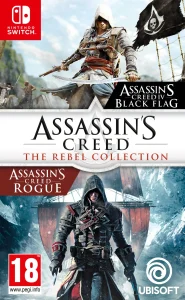
Assassin’s Creed: The Rebel Collection Switch NSP XCI
Report Link Error
Select the broken download file, then submit the report.
Screenshots
About Game
Assassin’s Creed: The Rebel Collection Switch NSP XCI brings two connected chapters of Ubisoft’s long-running Assassin-Templar conflict to Nintendo Switch. Released on December 6, 2019, the bundle pairs the sunlit piracy of Assassin’s Creed IV: Black Flag with the colder, more severe journey of Assassin’s Creed Rogue, giving players two distinct settings, protagonists, and approaches to the same historical struggle.
What Assassin’s Creed: The Rebel Collection Includes on Switch
This Nintendo Switch collection contains Assassin’s Creed IV: Black Flag and Assassin’s Creed Rogue. The two games share familiar series foundations—exploration, stealth, parkour, sword combat, naval encounters, and the continuing conflict between Assassins and Templars—but they frame those ideas through very different journeys.
Black Flag follows Edward Kenway, a privateer who becomes a pirate while moving through the dangerous politics and rivalries of the Caribbean. His story places ambition, betrayal, and self-discovery alongside encounters with pirate figures including Blackbeard and Calico Jack. Its setting supports a sense of open-sea possibility, from islands and cities to waters filled with ships worth pursuing.
Rogue, by contrast, shifts the focus toward a protagonist whose relationship with the Brotherhood changes completely. The result is a companion game with a more wintry atmosphere and a perspective that directly questions the usual Assassin viewpoint. Taken together, Black Flag and Rogue offer connected themes without repeating the same setting or character path.
Shay Patrick Cormac and the Templar Perspective in Rogue
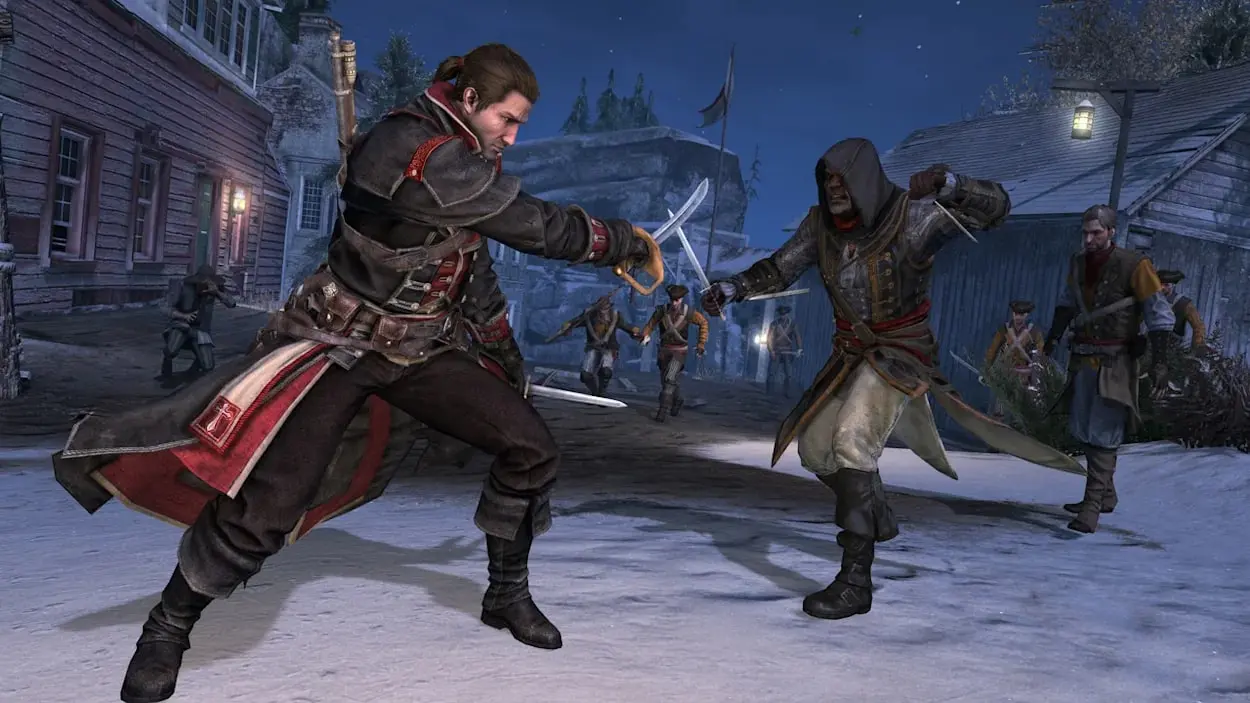
Assassin’s Creed Rogue centers on Shay Patrick Cormac, a former Assassin whose tragic mission leads him to leave the Brotherhood and become a Templar. That reversal is the game’s defining narrative idea. Rather than serving the Assassins, Shay pursues the people who had once been his allies, bringing loyalty, betrayal, and vengeance to the foreground.
The Templar perspective gives Shay’s campaign a different emotional direction from Edward Kenway’s pirate story. Shay is not simply travelling through a new map or commanding a different ship; he is acting from a changed understanding of the conflict around him. His pursuit of former Brotherhood members provides the story with a personal through-line as it moves between several regions of colonial North America.
For players interested in the wider Assassin-Templar struggle, this perspective is especially useful. It shows how the same conflict can be experienced from another side, while keeping the action rooted in missions, exploration, combat, and movement through historical environments.
From Caribbean Waters to the North Atlantic
The collection’s strongest contrast comes from geography. In Black Flag, the Caribbean supplies tropical islands, pirate activity, open water, and bustling locations shaped by the golden age of piracy. The region supports Edward’s life at sea, where travel, combat, treasure hunting, and exploration all feed into the rhythm of the campaign.
Rogue moves into the icy waters of the North Atlantic, where the environment gives Shay’s story a much colder mood. Its journey also extends through the Appalachian River Valley and New York. These areas broaden the game beyond sea routes, allowing its atmosphere to move between frozen waters, inland spaces, and a major city.
The Caribbean, North Atlantic, Appalachian River Valley, and New York are more than a list of destinations. They shape how each chapter feels in motion. One game emphasizes pirate-era freedom and warmer waters; the other moves through harsher climates and a more troubled personal mission. The changing landscapes help the collection avoid a single-note sense of exploration.
Stealth, Parkour, and Land-Based Assassinations
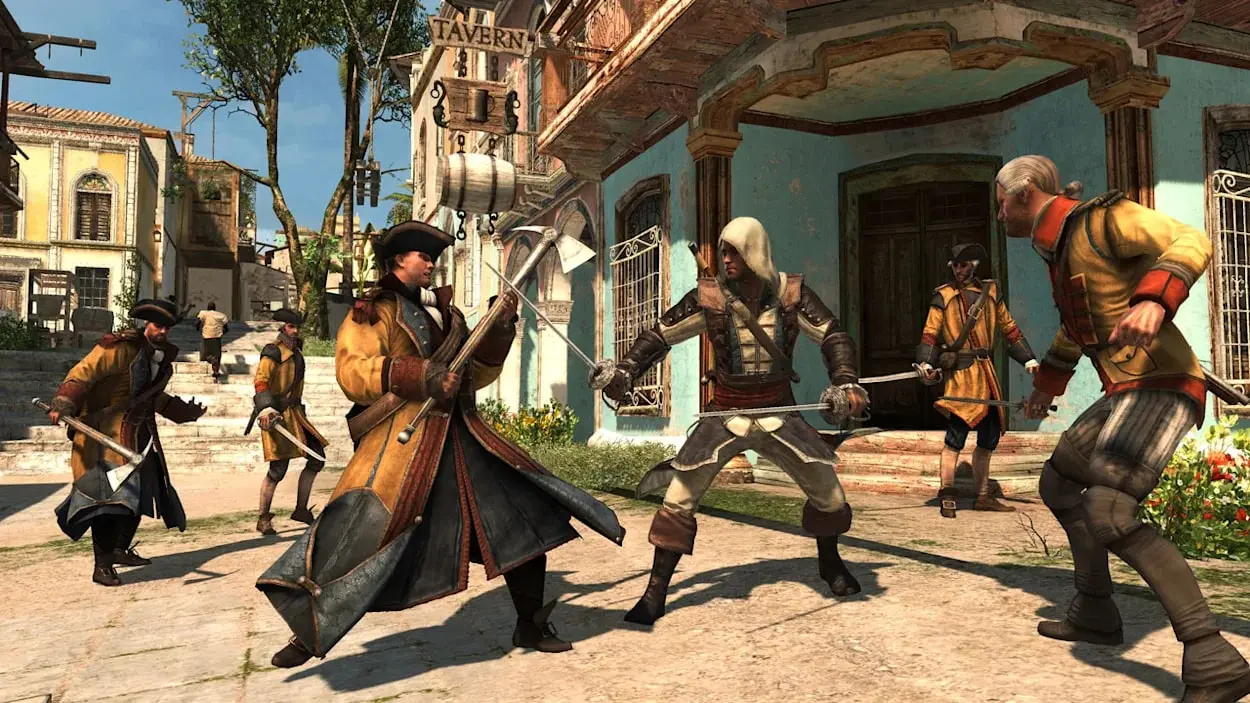
Sea travel is a major feature, but the games also rely on the on-foot activities associated with the series. Land-based missions include stealth assassinations, sword fights, parkour, exploration, and side quests. Detailed locations give players room to move through rooftops, streets, islands, and other spaces while deciding when to approach quietly and when to fight directly.
Parkour supports both traversal and mission planning. Moving across the environment can create routes toward objectives, while stealth challenges reward a more careful approach. Assassination missions place the emphasis on reaching a target, and sword fights provide a more immediate alternative when subtlety breaks down.
Outside the main story, players can search for collectibles, uncover ancient secrets, hunt animals, pursue treasure, and complete side activities for rewards. This mix gives progression a practical role: exploration can supply resources, while completed activities add reasons to revisit parts of the map. The collection is best suited to players who enjoy alternating between deliberate stealth and more active action-adventure play.
5 Gameplay Priorities for New Captains
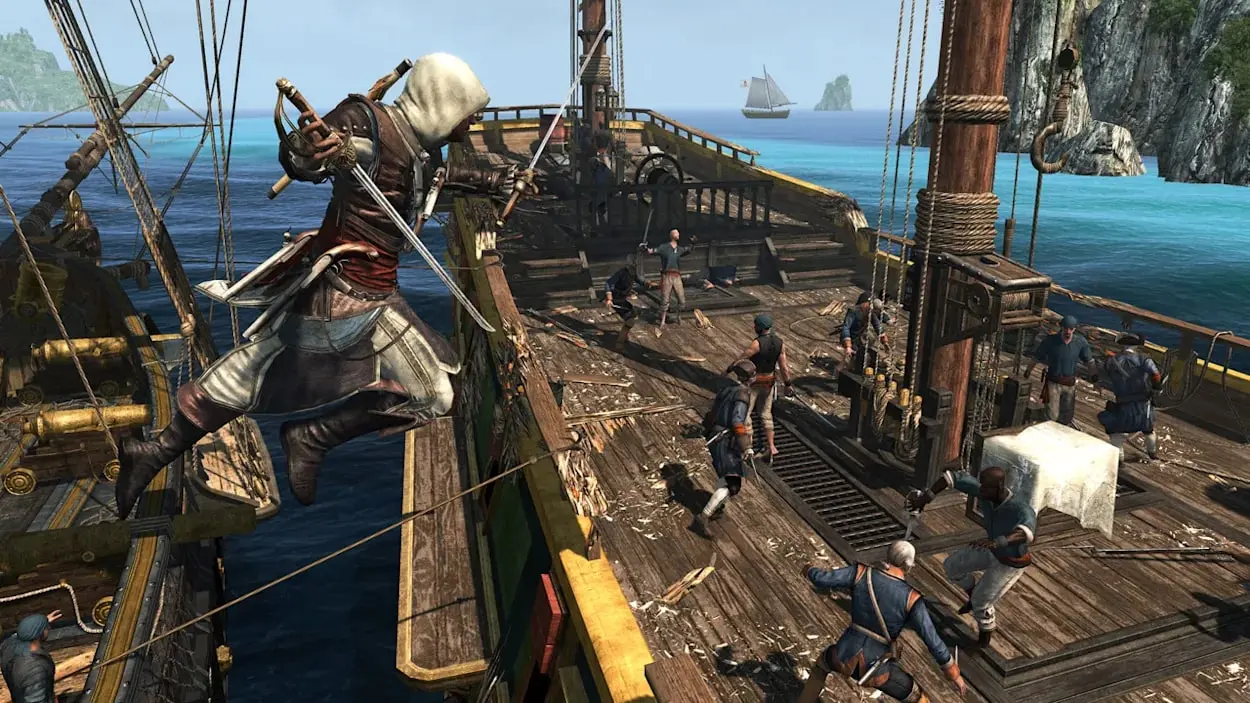
- Learn the waters: Spend early time understanding naval combat, including enemy encounters and ship boarding. Sea battles are central to both games’ exploration and action.
- Gather useful resources: Resource gathering supports progress and gives island visits, enemy ships, and exploration a clear purpose beyond the main missions.
- Upgrade the ship: The Jackdaw in Black Flag and the Morrigan in Rogue can be improved, making ship progression an important part of naval strategy.
- Explore side activities: Treasure hunting, collectibles, hunting, and side quests add variety between story missions and encourage fuller use of the open-world maps.
- Balance sea and land: Do not treat sailing as the only priority. Land-based stealth missions, parkour routes, and sword fights remain essential to the experience.
These gameplay tips reflect the collection’s broad structure. Ship customization and resource gathering reinforce time spent at sea, while side activities add replay value through places and objectives that may not be part of the main narrative route. The best pace comes from moving between naval travel and land-based missions rather than focusing exclusively on one style.
Release and Supported Language Details
Assassin’s Creed: The Rebel Collection Switch NSP XCI is associated with a Nintendo Switch release date of December 6, 2019. Ubisoft served as both publisher and developer. The release is listed as Region Free, with Title IDs 010044700DEB0000 and 010044700DEB1001.
The supported languages are English, German, Spanish, French, Italian, Japanese, Korean, Dutch, and Chinese. Classified as an action-adventure game, the collection brings together two Ubisoft-developed stories that travel from pirate-era Caribbean waters to the North Atlantic, Appalachian River Valley, and New York.