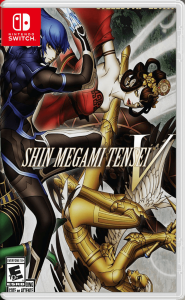
Shin Megami Tensei V Switch NSP XCI
Report Link Error
Select the broken download file, then submit the report.


Screenshots


About Game
Shin Megami Tensei V Switch NSP XCI places a modern Tokyo student in a hostile world where familiar urban life has been swallowed by sand, ruins, and demons. Released for Nintendo Switch on November 12, 2021, Atlus’s role-playing and strategy game frames its large-scale conflict through demanding exploration, tactical battles, and decisions with consequences for humanity’s future.
Tokyo’s Descent into the Demon-Filled World of Da’at
The adventure begins when present-day Tokyo suddenly intersects with Da’at, an alternate realm overrun by demons. A fateful tunnel encounter pulls the protagonist away from ordinary life and into a transformed landscape that is both desolate and dangerous. Tokyo is no longer simply a city; it becomes part of a demon-infested world shaped by towering ruins, hazardous routes, hidden items, and powerful enemies.
Da’at supplies much of the game’s atmosphere. Its open-ended areas invite players to move off the main path, inspect difficult terrain, and search for secrets, but exploration is rarely carefree. New demons can appear around the next corner, while a poorly prepared party can quickly be exposed by an unexpected fight. The setting supports the game’s sense of unease: survival depends on attention, resources, and a willingness to learn what the landscape is hiding.
That tension also gives travel a practical purpose. Da’at is not only a backdrop for the story’s conflict between angels and demons. It is a place to gather allies, find collectibles, locate useful crossings, and prepare for encounters that demand more than simple persistence.
The Nahobino and a Story Shaped by Major Choices
After entering Da’at, the high school protagonist becomes the Nahobino, a powerful being able to confront demons directly. This transformation places the player in the middle of a wider struggle tied to Da’at’s connection with Tokyo and a cosmic war involving angels and demons. Questions of creation, destruction, and moral responsibility sit behind that conflict.
The narrative does not treat the Nahobino as a passive observer. Significant story choices influence humanity’s fate, the future of the world, and the game’s ending. Those decisions give the journey a measured replay value: players interested in seeing how different choices affect the final outcome have a reason to return with another perspective on the central conflict.
The story’s scale is deliberately large, but its stakes remain grounded in the protagonist’s position between competing forces. The Nahobino’s power is valuable, and the decisions attached to it carry weight beyond a single battle or immediate objective.
Recruiting Demons to Build a Flexible Party
Demon recruitment is central to surviving Da’at. Players encounter demons throughout the world and can bring them into a demon party, creating a roster that can change as new threats appear. More than 200 unique demons are available, each with its own abilities, resistances, and personality.
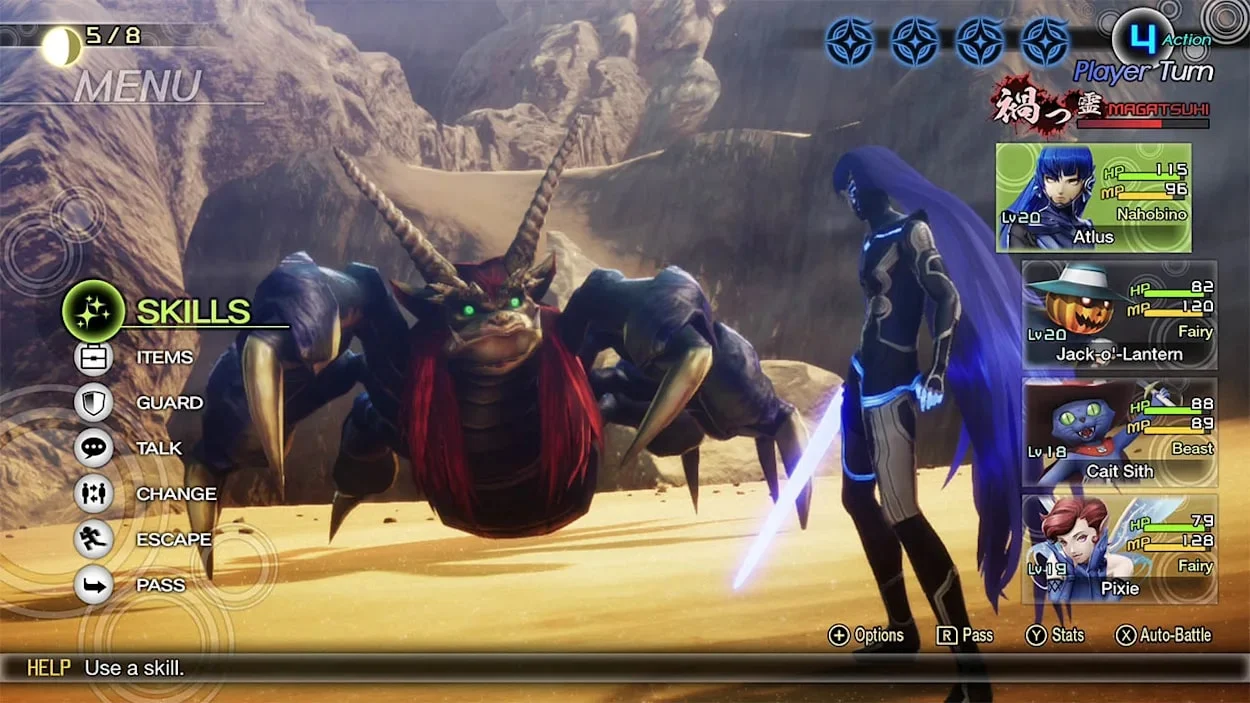
That variety matters because battles reward careful planning. A demon with the right resistance can protect the party from an enemy’s preferred attack, while a useful skill can open a weakness and create an advantage in the Press Turn Battle System. The strongest-looking lineup is not automatically the most dependable one; a flexible party is often better equipped to meet changing situations.
Fusion expands those options. By combining demons, players can create stronger or more specialized allies, then adjust the roster around the challenges ahead. This makes party-building a continuing strategic process rather than a one-time task. An ally that helped during one stretch of Da’at may eventually be fused into something better suited to a later area or boss battle.
Miracles, Essences, and Nahobino Customization
The Nahobino is not fixed to a single combat role. Miracles and essences provide progression choices that allow players to adapt the protagonist to different needs. These tools can be used alongside the demon party rather than apart from it, encouraging players to consider how the Nahobino’s capabilities fit with the skills and resistances already present in the group.
Essences add another layer to Nahobino customization, helping players respond to specific combat situations. A difficult enemy can expose weaknesses in a previously successful setup, making adjustment more important than relying on one familiar approach. Miracles offer upgrades purchased with Glory, while essences support further adaptation for the threats encountered across Da’at.
This progression system reinforces the game’s tactical identity. The Nahobino is powerful, but the most useful build is shaped by the demands of the next fight and the strengths of the current team.
Why Miman and Leyline Crossings Matter During Exploration
Exploration rewards attention to the details of Da’at. Miman collectibles are scattered through its environments, and finding them earns Glory, a valuable resource used for Nahobino upgrades. Their placement gives players a reason to investigate side paths and less obvious corners instead of moving only from objective to objective.
Leyline crossings are equally important during travel. Da’at’s ruined spaces can be dangerous, and resource management matters as players push deeper into new territory. Seeking out leyline crossings helps structure exploration around dependable points in an otherwise hazardous world, especially before moving toward tougher encounters.
Together, Miman and leyline crossings make discovery part of preparation. One provides Glory for long-term growth; the other supports safer movement through Da’at. Neither replaces strong combat decisions, but both can make a meaningful difference before the next major challenge.
5 Preparation Steps for Tough Battles in Shin Megami Tensei V
Boss battles demand planning, a balanced demon roster, and a clear understanding of the Press Turn system. These practical Shin Megami Tensei V tips focus on reducing avoidable risks before confronting powerful enemies.
- Save first. Save frequently before exploring unfamiliar areas and before major fights, so a difficult loss does not erase unnecessary progress.
- Check weaknesses. Identify enemy weaknesses and use them to gain extra turns through the Press Turn Battle System.
- Balance resistances. Review the demon party’s resistances as well as its attacks, since a poorly matched roster can be vulnerable to an opponent’s strengths.
- Consider fusion. Look over available fusion options when the current team lacks a useful skill, resistance, or specialized role.
- Prepare for the boss. Adjust the Nahobino, demons, and available abilities before committing to a major encounter rather than treating it like a routine battle.
Shin Megami Tensei V Switch NSP XCI is best suited to players who enjoy strategic role-playing systems, difficult combat encounters, and party management with real room for experimentation. Its demon-filled Tokyo and unstable Da’at setting provide the pressure, while recruitment, fusion, Miracles, essences, and story choices provide the tools to meet it on the player’s own terms.