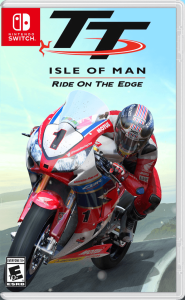
TT Isle Of Man: Ride on the Edge Switch NSP
Report Link Error
Select the broken download file, then submit the report.
Screenshots
About Game
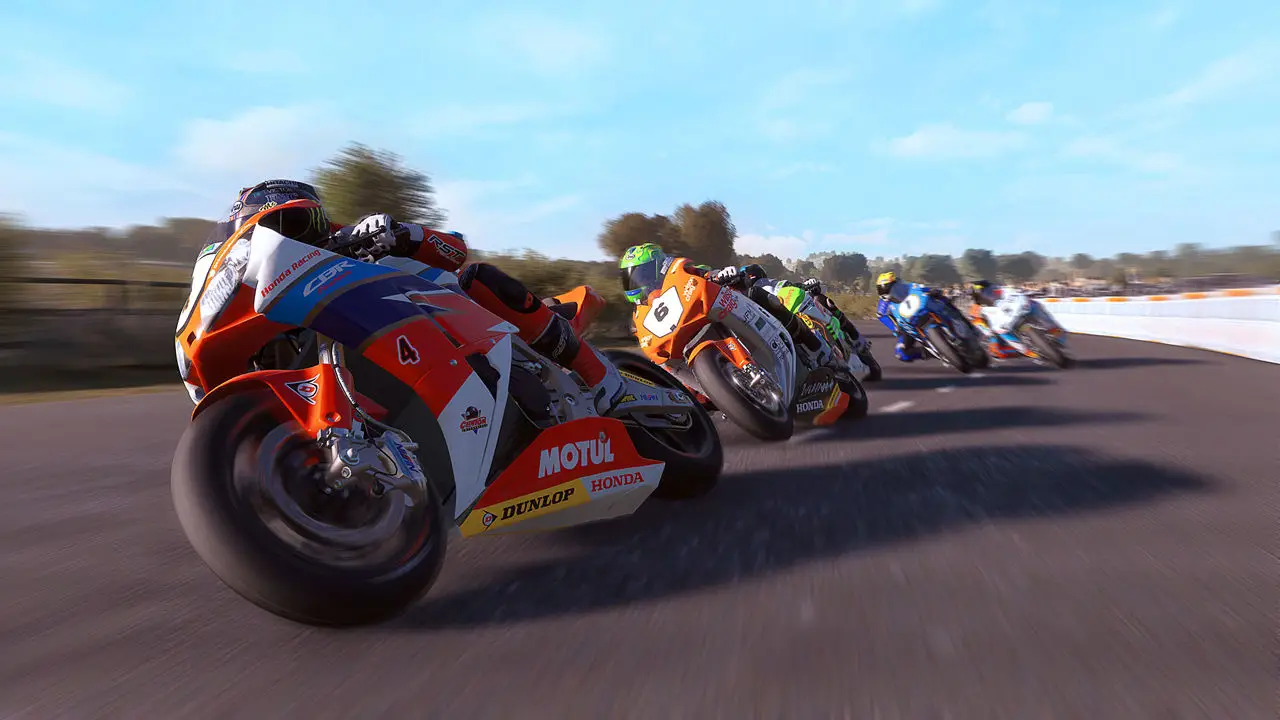
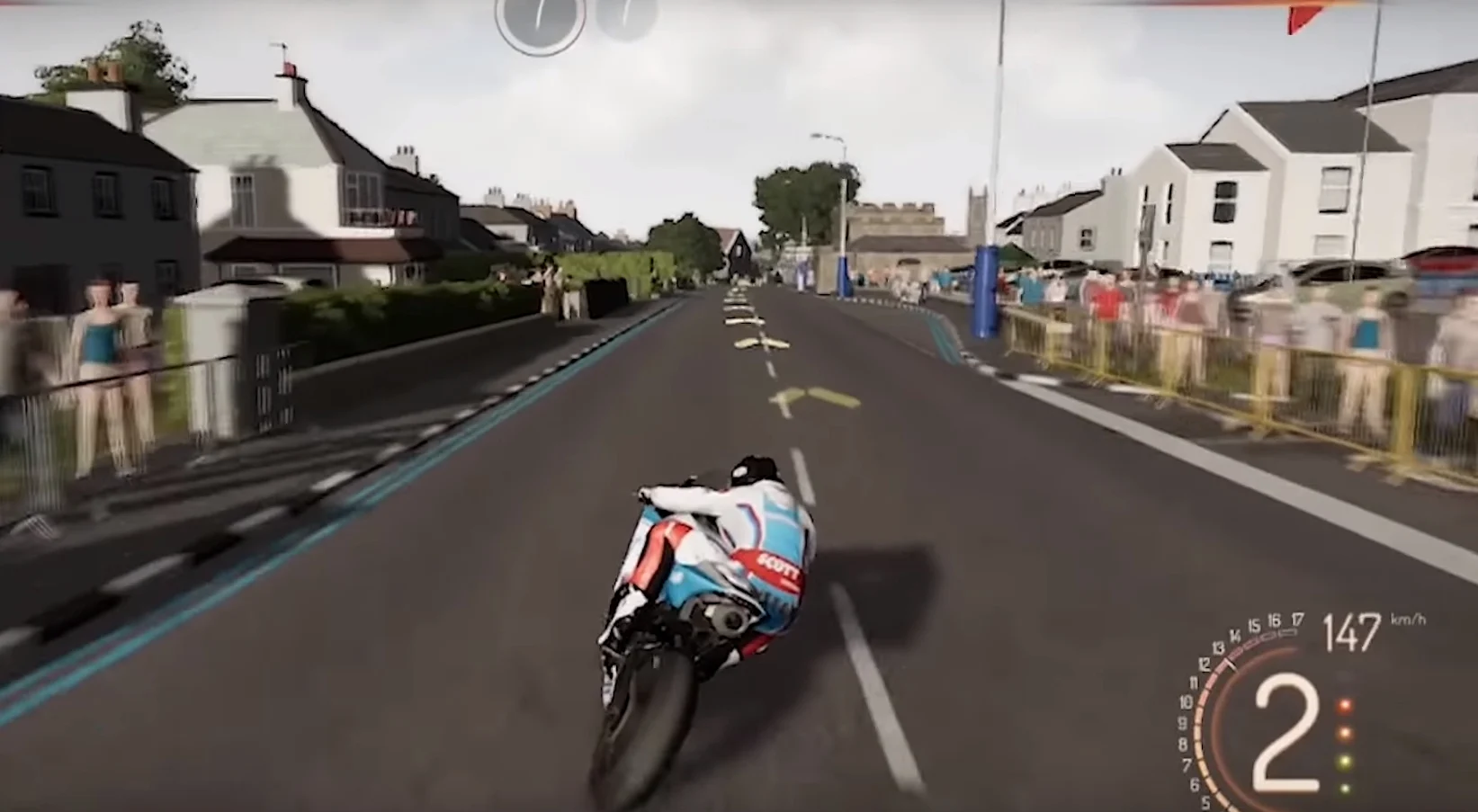
TT Isle Of Man: Ride on the Edge Switch NSP brings high-speed motorcycle competition to Nintendo Switch with a focus on precision, course knowledge, and the demanding character of Isle of Man TT racing. Released in 2019, it combines racing, simulation, and sports elements in an experience built around controlling a powerful bike through long straights, tight corners, changing braking zones, and unforgiving sequences of turns.
TT Isle Of Man: Ride on the Edge on Nintendo Switch: Game Overview
Developed by Kylotonn and published by Bigben Interactive, TT Isle Of Man: Ride on the Edge on Nintendo Switch approaches motorcycle competition as a test of concentration as much as speed. The rider is not simply pointing a bike toward a finish line; each run asks for careful acceleration, controlled braking, and confident cornering.
The simulation focus is apparent in the need to manage the bike through the course rather than relying on constant maximum speed. A fast straight may offer an opportunity to gain time, but the next braking zone can quickly punish an uncontrolled approach. The game’s motorcycle racing simulation structure encourages players to think ahead, study their position on the road, and refine their lines through difficult sections.
Its atmosphere comes from the scale and intensity of the event it represents. The emphasis is on the sensation of committing to a long, challenging route where small mistakes can disrupt a run. Career and Time Trial modes provide different ways to engage with that challenge, while bike setup options create room to adjust performance for particular circuit demands.
The Snaefell Mountain Course as the Central Challenge
The full 37.73-mile Snaefell Mountain Course is the heart of the experience. Its size alone changes the rhythm of play. Instead of learning a brief loop after a few laps, players are asked to build familiarity with a huge route made up of corners, straights, braking points, and transitions that demand attention over an extended distance.
Learning the Snaefell Mountain Course means recognizing where speed can be carried and where caution is needed. A familiar corner can become manageable with repetition, but a long course places added value on memory and consistency. The challenge is not limited to one difficult turn: it is maintaining control across a complete run while preserving the confidence needed to keep pushing forward.
This is where the game’s Isle of Man TT racing premise has its strongest effect. The course is not merely a backdrop for races. It is the opponent players gradually come to understand. Faster times depend on building a reliable mental map of its layout and then applying that knowledge with increasingly precise inputs.
Career Progression and the Rider’s Road to Reputation
Rather than presenting a traditional narrative, the game frames progression around the path of an aspiring racer. In the TT Isle Of Man career mode, the player works toward a stronger reputation through races and championship results. That premise gives each event a practical role in a wider attempt to develop as a rider.
Progression includes the opportunity to unlock bikes and take on demanding circuits as experience grows. The structure suits a game centered on repetition and improvement: a difficult result can become a reason to return, practice, make adjustments, and try again. Race outcomes contribute to the rider’s path, turning performance into a measure of steady development rather than a one-off finish.
This approach also supports replay value. Time Trial gives players a direct way to chase better runs, while Career provides a longer route through races and championships. The appeal is strongest for players who enjoy measuring improvement in small gains: a cleaner entry, a more controlled exit, or a few seconds recovered by handling a section with greater confidence.
Official Riders, Bikes, and Performance Customization
The available roster of official riders and bikes gives the game a clear connection to its motorcycle racing subject. Players can select from these riders and machines while working through the game’s modes, then focus on the practical question that follows: how should the bike be prepared for the circuit ahead?
Bike customization and fine-tuning are part of that process. Different circuit demands call for attention to performance, and adjustments can help players seek a setup that fits their own approach to acceleration, braking, and cornering. These options matter because the game’s challenge is grounded in control. A setup is useful only when it supports a rider’s ability to place the bike accurately and manage it consistently.
Performance tuning therefore works best as a complement to practice, not a replacement for it. The course still requires knowledge, and strong results still depend on knowing when to brake, when to lean, and when to apply throttle smoothly. For players interested in both riding technique and machine adjustment, the combination adds another layer to the racing format.
How to Learn the Course Without Chasing Speed Too Early
The most useful early goal is not a record time. It is a controlled run. The Snaefell route is long enough that rushing into every section can make it difficult to learn what caused an error. Repeating difficult areas, observing the road ahead, and establishing dependable braking points gives practice a clearer purpose.
- Read the layout: Treat the course as a sequence of recognizable sections rather than one overwhelming distance. Learn where straights lead into corners and where braking must begin.
- Repeat problem areas: Return to difficult sections and practice them until corner entry and exit become more predictable.
- Mark braking points: Identify reliable places to slow down before a turn instead of braking late in the hope of recovering time.
- Use smooth throttle: Controlled acceleration helps avoid losing traction and makes it easier to preserve a stable line.
- Build consistency first: A clean, repeatable run teaches more than an aggressive attempt that ends in a mistake.
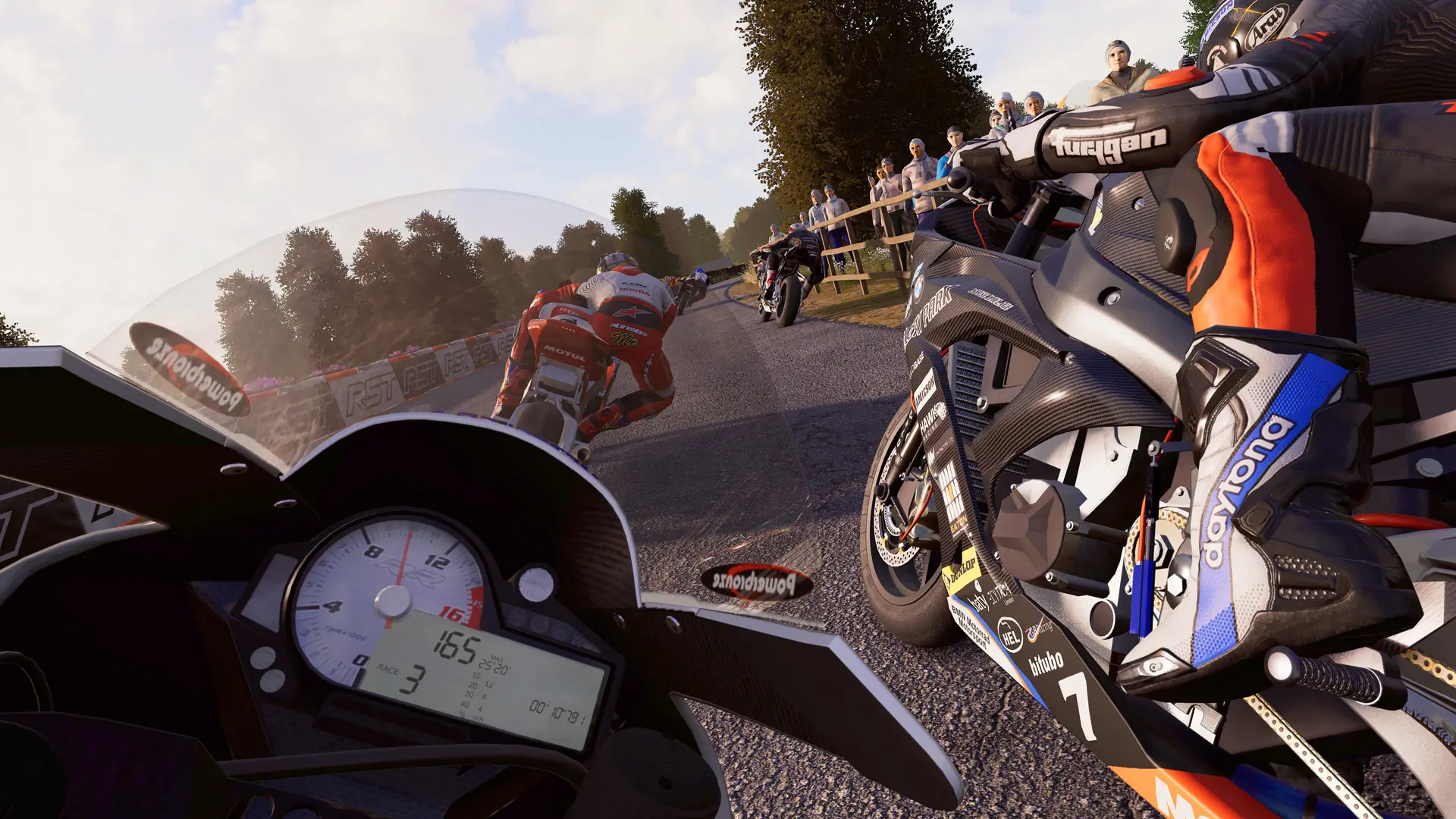
- Test camera views: Cockpit and third-person perspectives can offer different ways to judge bike position; use the view that best supports your riding style.
This motorcycle racing practice mindset is particularly valuable in Time Trial, where the goal naturally becomes improving a previous effort. Before searching for maximum pace, it is worth making every major section understandable. Speed becomes more useful once the rider can anticipate what is coming next.
Switch Release Details: Regions, Languages, and Technical Metadata
| Title | TT Isle Of Man: Ride on the Edge |
|---|---|
| Nintendo Switch release date | May 23, 2019 |
| Publisher | Bigben Interactive |
| Developer | Kylotonn |
| Genres | Racing, Simulation, Sports |
| Regions | Europe, USA, Asia |
| Nintendo Switch languages | English, German, Spanish, French, Italian, Korean, Portuguese, Russian, Chinese |
| Title ID | 010099900CAB2000 |
| Listed firmware requirement | v9.1.0 |
| File size | 10GB |
For players drawn to demanding road-racing simulation, TT Isle Of Man: Ride on the Edge Switch NSP is best approached with patience. Its central reward comes from turning an intimidating course into a series of learned decisions, then putting those decisions together into a faster and more controlled ride.