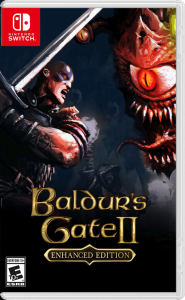
Baldur’s Gate & Baldur’s Gate II: Enhanced Editions Switch NSP XCI
Report Link Error
Select the broken download file, then submit the report.
Screenshots
About Game
Baldur’s Gate & Baldur’s Gate II: Enhanced Editions Switch NSP XCI brings together two connected role-playing adventures set in the Forgotten Realms. Built around a custom hero, a party of companions, difficult choices, and tactical encounters, the collection follows a personal story that grows from an uncertain escape near Candlekeep into a far larger struggle involving divine ancestry, power, and destiny.
Two Connected Adventures in the Forgotten Realms
Baldur’s Gate Enhanced Edition establishes the beginning of the larger Bhaalspawn saga. It starts on an intimate scale, placing an orphaned protagonist in a sheltered home before mysterious events force them into the wider world. From there, the journey expands through wilderness, cities, dungeons, quests, companions, and confrontations that reveal why the protagonist’s past matters.
Baldur’s Gate II Enhanced Edition continues that same personal arc shortly after the first adventure. The second game does not simply revisit the setting; it pushes the Bhaalspawn story into more dangerous territory, with the protagonist facing the consequences of a heritage connected to Bhaal, the dead god of murder. Together, the two games form a long-running fantasy narrative in which political schemes, moral dilemmas, character relationships, and major decisions all have room to shape an individual playthrough.
The Forgotten Realms setting supports that scale well. It is a place of sprawling cities, remote wilderness, hidden quests, powerful enemies, and lore waiting beyond the most direct route. The mood can shift from the quiet uncertainty of travel to the pressure of a party-wide battle, giving the collection an atmosphere driven as much by exploration as by its central story.
From Candlekeep to a Dangerous Personal Destiny
The first Baldur’s Gate story begins near Candlekeep, where the protagonist has lived as an orphan. That life is disrupted by mysterious events, setting in motion a dangerous journey beyond the only home they have known. What begins as a search for answers gradually becomes a discovery about identity and the source of unusual power.
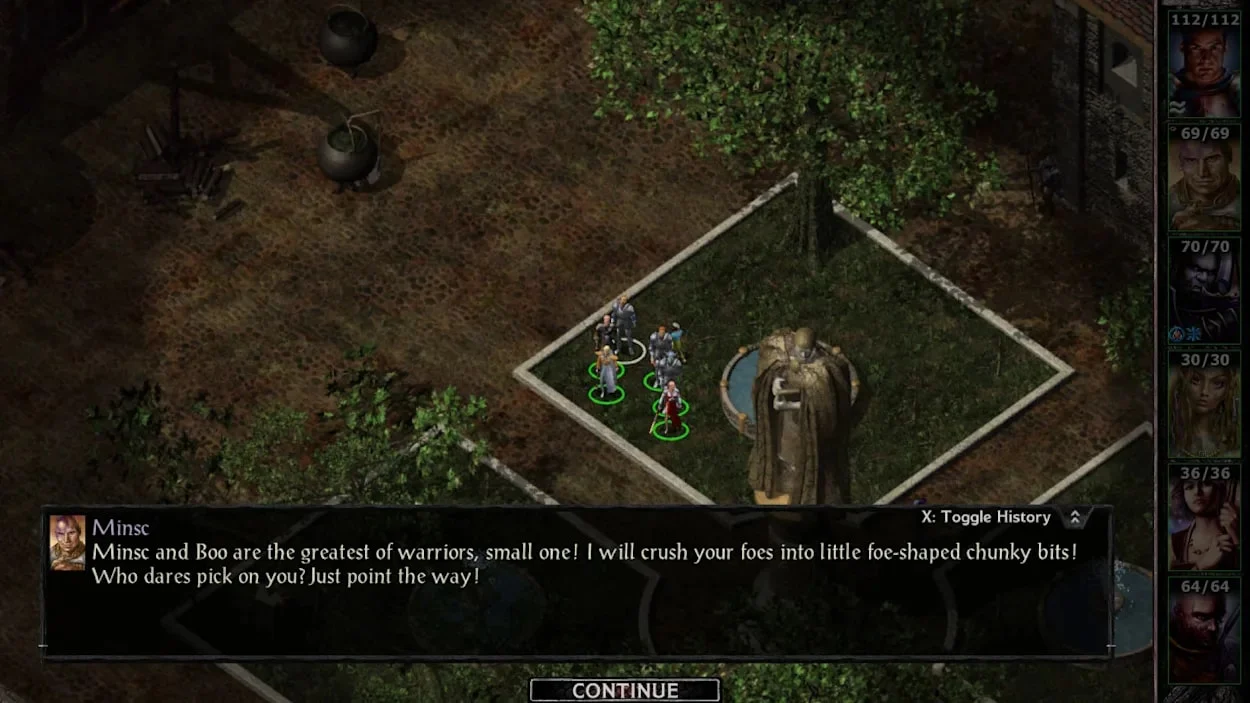
The key revelation is that the hero is a Bhaalspawn: a child of Bhaal. This connection turns the journey into more than a conventional search for safety. The protagonist must gather allies, contend with monsters and hostile forces, and make choices that influence their developing destiny. Companions are an important part of that process, bringing their own personalities, quests, and backstories into the party.
The result is a role-playing premise with room for both grand events and smaller decisions. Dialogue and relationships can matter alongside combat, while exploration offers opportunities to find items, quests, and further pieces of the world’s history. The first game’s journey lays the groundwork for the greater conflicts to come.
Shadows of Amn and the Escape from Jon Irenicus
Shadows of Amn begins after the first adventure, placing the protagonist in immediate danger. Captured and experimented upon by the mage Jon Irenicus, the hero must escape captivity before reaching the sprawling city of Athkatla, located in Amn.
This opening gives the sequel a more urgent starting point while keeping the focus on the Bhaalspawn’s identity. The connection to Bhaal is no longer only a mystery to uncover; it is a source of immense power with consequences that cannot be ignored. The story explores destiny, free will, and what it means to live with divine ancestry, even as Jon Irenicus remains a direct threat.
Athkatla and the surrounding journey provide a setting for deeper character encounters, powerful entities, and complicated schemes. Players still create and guide their own protagonist, but the personal stakes are heightened by the knowledge carried over from the first adventure. That continuity is a major part of the appeal: decisions, companions, and progression make the saga feel like one extended campaign rather than two unrelated quests.
How Real-Time-with-Pause Combat Shapes Each Battle
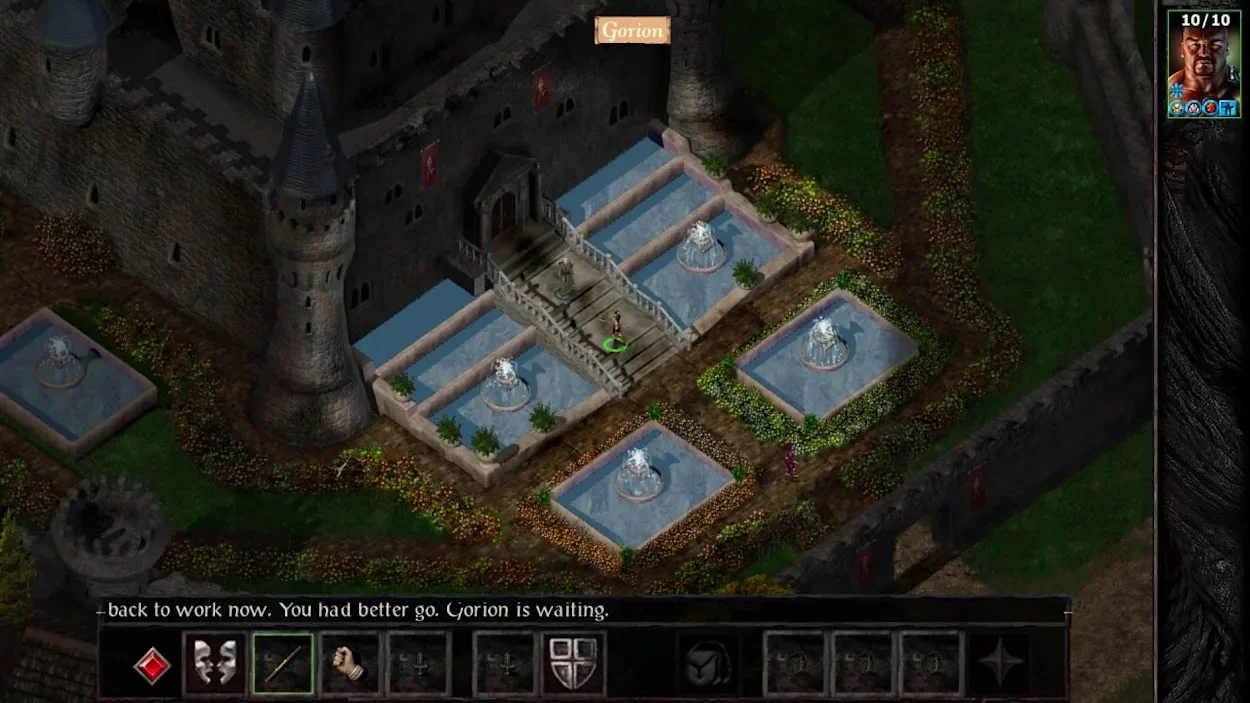
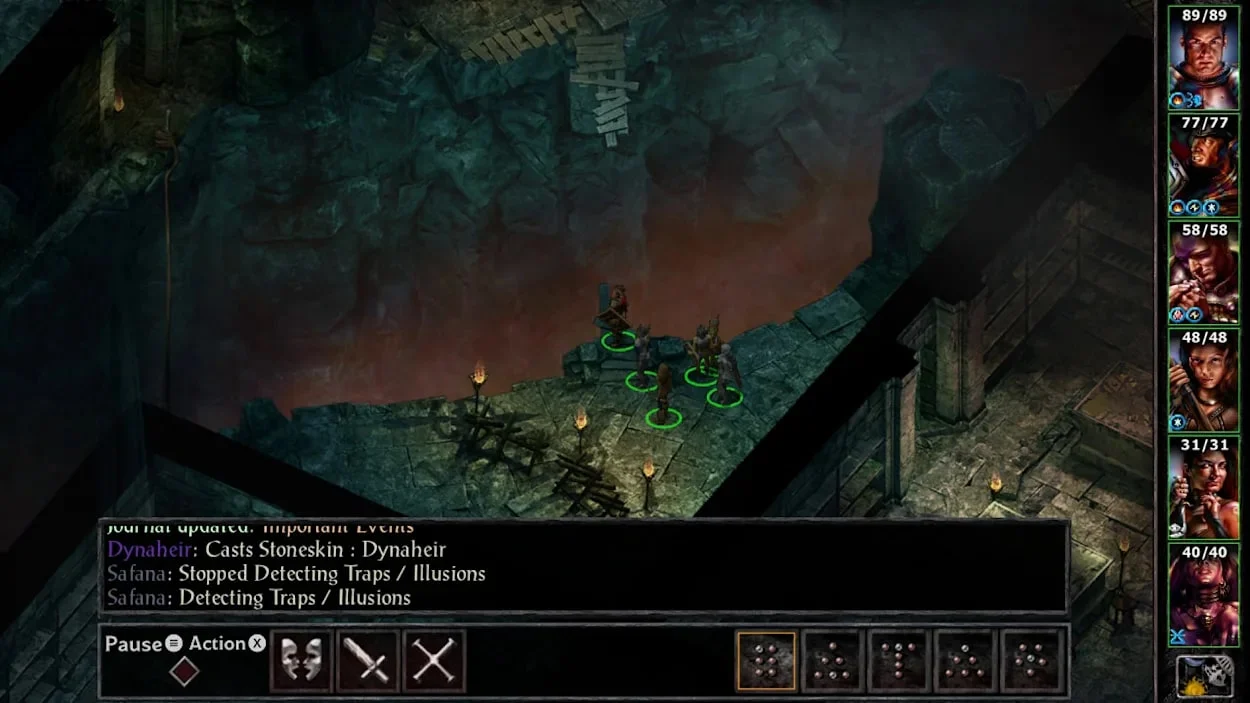
Combat uses a real-time with pause system. Action moves forward in real time, but the player can stop it at any moment to assess the battlefield and issue instructions across the full party. This makes encounters less about reacting instantly and more about planning a sequence of actions before letting events play out.
That pause function is central to the games’ tactical combat. A party can include up to six characters, each with different abilities and equipment needs. One character may rely on spells, another on weapons or defensive gear, while others contribute through their class abilities. Because combat can become busy, pausing creates space to select targets, reposition party members, manage abilities, and avoid treating every fight as a simple rush forward.
Character creation uses classic Dungeons & Dragons 2nd Edition rules, with different races and classes providing distinct options. Progression comes through leveling characters and gaining access to new spells, feats, and class abilities. Equipment, spell choices, skills, and inventory management all feed into the same tactical rhythm. A difficult fight can reward preparation as much as raw strength.
Ordered List: 6 Early Priorities for New Adventurers
- Build a balanced party. Recruit companions with different abilities so the group is better prepared for combat, exploration, and changing situations.
- Pause before problems escalate. Use the pause function to issue party commands, choose targets, and organize actions when battles become crowded.
- Watch spells and equipment. Manage spells, weapons, gear, and inventory across the entire group rather than focusing only on the protagonist.
- Meet companions early. New allies can bring useful abilities as well as their own quests, personalities, and backstories.
- Explore beyond the main route. Cities, dungeons, wilderness areas, and less obvious paths can hold hidden quests, items, and Forgotten Realms lore.
- Plan character progression. Leveling unlocks spells, feats, and class abilities, so consider how each character’s growth supports the rest of the party.
Nintendo Switch Version Details at a Glance
This Nintendo Switch edition is listed as a Role-Playing release, with BioWare credited as both publisher and developer. Its language listing is English [Multi], and the verified version is 1.0.2. The listed file size is 5.6GB.
For players interested in long-form fantasy role-playing, Baldur’s Gate & Baldur’s Gate II: Enhanced Editions Switch NSP XCI offers a connected pair of adventures with a custom protagonist, party-based planning, and a story that develops across both games. It is particularly suited to players who enjoy deliberate tactical combat, dialogue-driven choices, detailed character progression, and taking time to explore a large fantasy setting instead of following only the most direct path.