Assassin’s Creed III Remastered Switch NSP XCI

Report Link Error
Select the broken download file, then submit the report.
Screenshots
About Game
Assassin’s Creed III Remastered Switch NSP XCI places a personal struggle inside one of the most turbulent periods in American history. Developed and published by Ubisoft, this Action Adventure release arrived on May 21, 2019, bringing Connor’s story to Nintendo Switch with enhanced visuals and refined gameplay. Its broad setting, from crowded streets to remote wilderness, supports a story concerned with loyalty, conflict, and the cost of pursuing justice.
Connor’s Story During the American Revolution
The central figure is Ratonhnhaké:ton, better known as Connor, a half-Mohawk, half-British assassin whose life is shaped by the escalating American Revolution. His purpose is not simply tied to the larger political conflict. Connor is driven by a need to protect his people and their land as outside forces, including Templar influence, threaten to reshape the world around him.
That perspective gives the historical setting a more personal weight. The American Revolution is present as a defining backdrop, but Connor’s concerns remain close to home: the security of his tribe, the preservation of land, and the challenge of acting according to his own convictions. His journey also brings him into contact with figures including George Washington and Benjamin Franklin, connecting his path to the era’s larger events without losing sight of the stakes that matter most to him.
Connor is not presented as a distant observer of history. He moves through its conflicts while trying to decide what justice means in a world where powerful groups promise different versions of liberty. This tension helps make his mission feel more than a series of battles or assignments. It is a search for a place and a purpose amid a nation taking shape.
Freedom, Identity, and Sacrifice in the Narrative
The narrative returns repeatedly to freedom, identity, and sacrifice. Connor’s background and circumstances place him between competing worlds, while the war around him raises difficult questions about who benefits when a cause succeeds. The story does not reduce conflict to a simple choice between clear heroes and villains. Instead, it acknowledges the moral uncertainty of fighting for an ideal when the reality of war can be brutal.
Connor’s effort to define his own path gives the story its emotional direction. He is surrounded by expectations: those of his heritage, those of the conflict, and those created by the forces trying to control events. His decisions carry a sense of pressure because the consequences extend beyond his own future.
This approach also gives the setting a sober atmosphere. Colonial streets, political conversations, and violent confrontations all sit beneath the shadow of a changing country. The game’s story is interested in grand causes, but it also considers what those causes demand from individuals. Sacrifice is not treated as an abstract virtue; it is part of the burden Connor carries as he pursues protection and justice.
Desmond Miles and the Modern-Day Thread
Connor’s eighteenth-century journey is accompanied by the continuing modern-day story of Desmond Miles. This thread expands the scope beyond the American Revolution and connects the events to the wider Assassin’s Creed narrative. Desmond faces the looming 2012 catastrophe, giving the game a second source of urgency alongside Connor’s historical mission.
The contrast between periods is important to the game’s structure. Connor’s world is shaped by revolution, wilderness, and colonial power, while Desmond’s modern-day story carries the pressure of an approaching disaster. The two narratives create a dual focus: one rooted in a pivotal moment of the past and one concerned with a threat hanging over the present.
For players invested in the series’ larger lore, the Desmond Miles material provides continuity. For those drawn primarily to Connor’s chapter, it reinforces the sense that individual lives and historical struggles are part of a broader conflict.
Exploring Cities, Frontier, and Wilderness
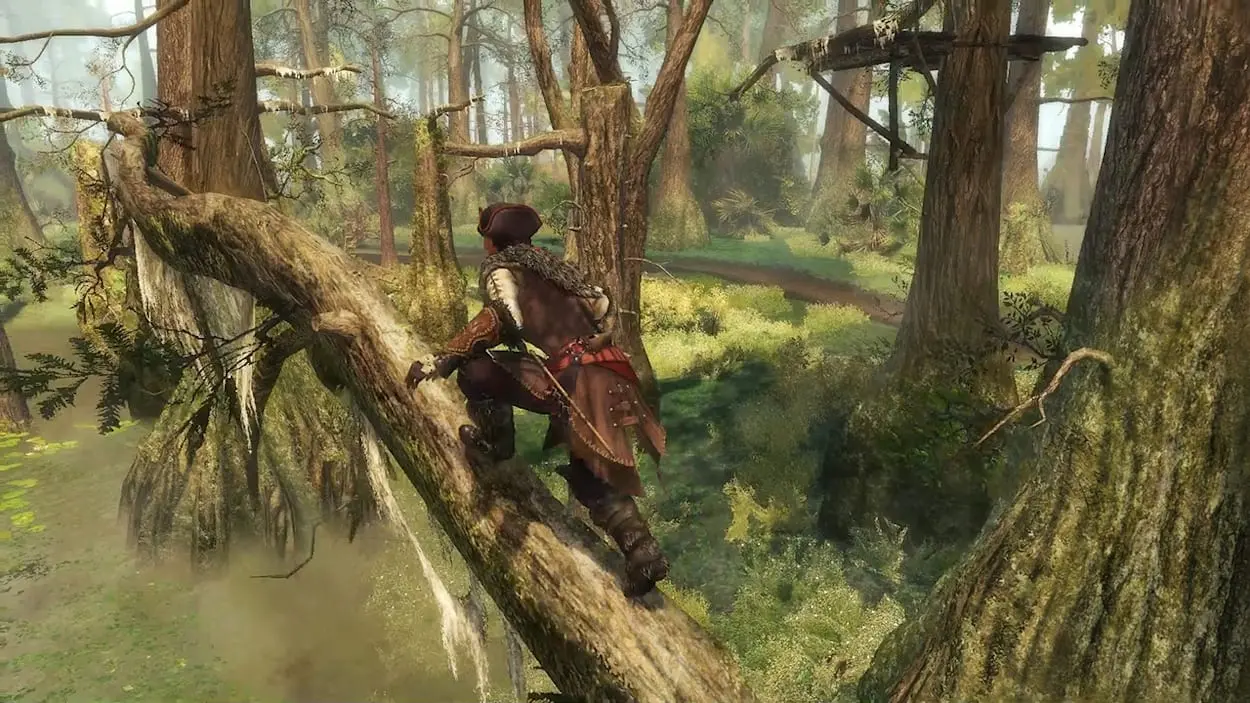
The game’s open world supports a strong contrast between built environments and untamed spaces. Colonial cities offer rooftops, streets, and dense activity, while the American frontier opens into forests and wider wilderness. This variety changes not only the scenery but also the feel of movement and exploration.
Urban areas encourage players to look upward and across the skyline, using rooftops to move through the city. The wilderness has a different rhythm, defined by dense forests, wild animals, and opportunities to hunt and gather resources. Side missions and hidden secrets add reasons to stray from the main route, making exploration part of progression rather than a simple distraction.
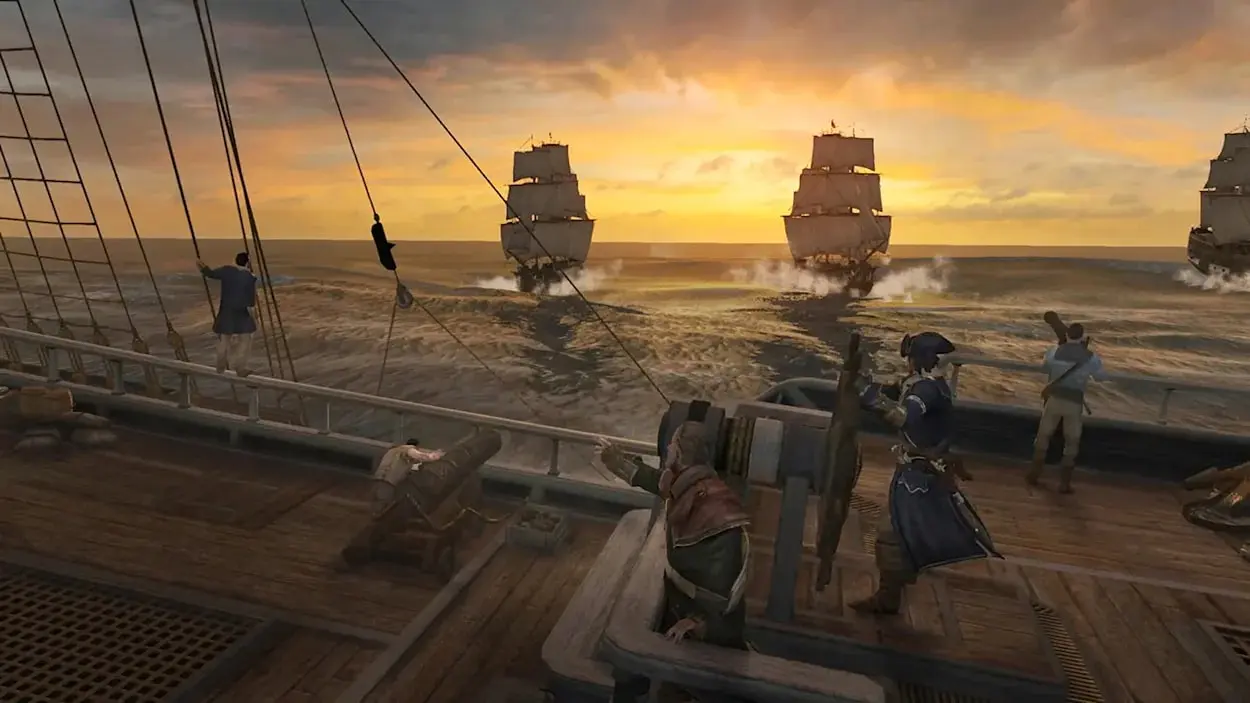
The Aquila adds another dimension through naval warfare. Commanding the ship in sea battles broadens the adventure beyond streets and forest paths, while hunting and resource gathering strengthen the frontier’s role as more than visual scenery. These activities give the world a varied sense of place and help sustain replay value for players who enjoy searching beyond the central narrative.
Combat, Stealth, and Parkour Traversal
Assassin’s Creed III Remastered Switch NSP XCI combines combat, stealth, and parkour in ways that suit its changing environments. Combat is described as refined, fluid, and brutal, with a wide selection of weapons available for direct confrontations. When force is the right answer, Connor can meet enemies head-on with equipment suited to a more aggressive approach.
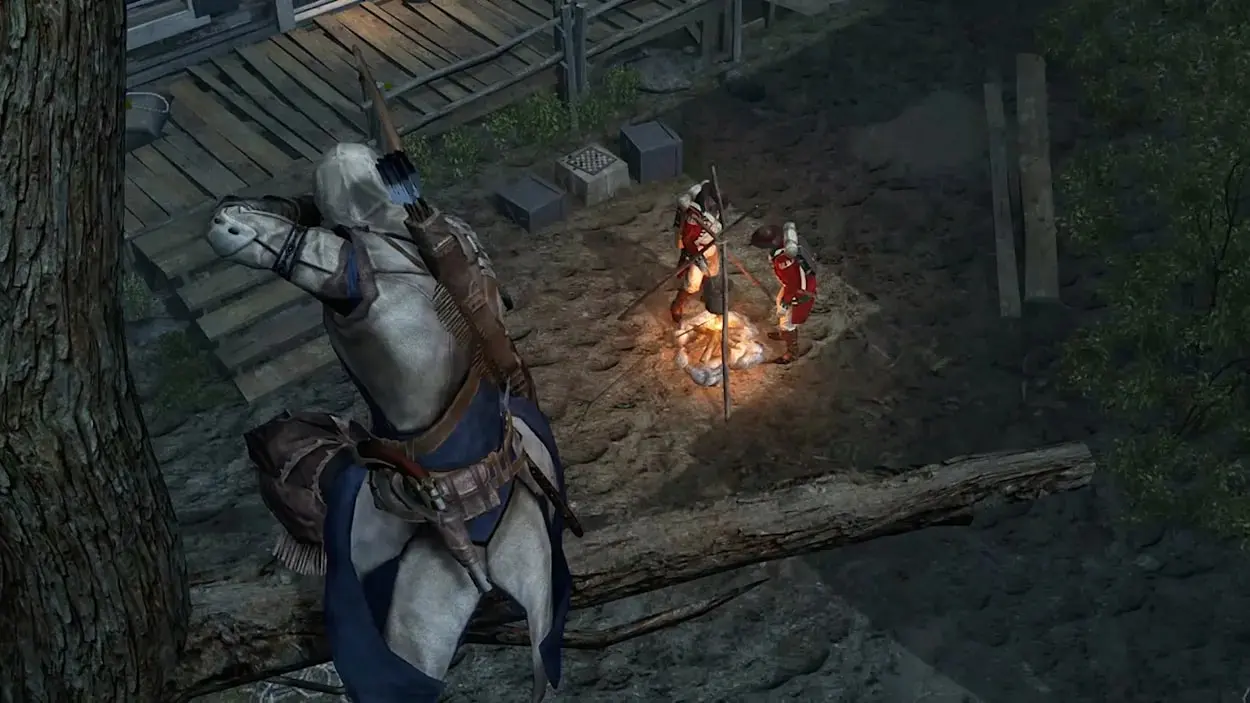
Stealth offers a different route. Players can use stealth and disguise to outsmart enemies, making it possible to approach challenges with more care. This flexibility matters because the game does not ask for a single fixed style. Some encounters suit a quiet approach, while others may call for direct action.
Parkour ties those options together. Movement across colonial rooftops feels distinct from travelling through dense forests, yet both environments support seamless traversal. The remastered presentation helps the world’s details read more clearly, while the combination of urban routes, wilderness paths, combat encounters, hunting, and naval battles keeps the experience from settling into one routine.
5 Practical Ways to Approach Connor’s Challenges
- Strengthen early: Focus on equipment upgrades and weapons early, as stronger gear can make combat encounters more manageable.
- Check outfit bonuses: Purchase new outfits and consider the bonuses they provide when preparing for different challenges.
- Explore beyond objectives: Search cities, the frontier, and wilderness areas for side missions, hidden secrets, hunting opportunities, and resources.
- Choose the right combat strategy: Use stealth and disguise when avoiding attention is useful, but shift to direct combat when the situation demands it.
- Adapt to the environment: Treat rooftops, forests, and naval encounters as different kinds of spaces, each with its own movement and tactical possibilities.
These gameplay tips suit players who enjoy historical action with room for exploration and experimentation. The game is especially appropriate for those interested in the American Revolution, Connor’s personal story, and a mix of city traversal, wilderness activity, combat, stealth, and sea battles. Its progression encourages attention to gear and outfits, while its range of environments offers reasons to revisit areas and pursue content outside the main path.