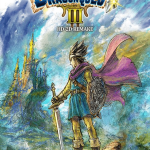
Pokémon Let’s Go Eevee Switch NSP XCI

Report Link Error
Select the broken download file, then submit the report.
Screenshots
About Game
Pokémon Let’s Go Eevee Switch NSP XCI places a familiar Pokémon journey in a more immediate, companion-led format. Set in Kanto, the adventure follows a new Trainer working toward the Pokémon League while Eevee travels outside its Poké Ball at their side. The result combines turn-based Trainer battles and Gym challenges with a capture system built around spotting Pokémon in the field and making each throw count.
A Kanto Adventure Built Around Partner Eevee
Kanto provides the structure for the game’s adventure: travel through the region, build a team, challenge Gym Leaders, and pursue the title of Pokémon League Champion. Eight Gym badges mark that progress, giving the journey a clear series of goals before the final push toward the League.
Eevee is central to the experience rather than simply another party member. The partner Pokémon stays with the Trainer during exploration and can be interacted with through petting and feeding. That relationship also has practical value. Eevee can learn special moves exclusive to it, find hidden items, and warn the player about nearby Pokémon. These abilities make the partner feel connected to both the journey’s atmosphere and its moment-to-moment play.
The game’s appeal comes partly from that steady companionship. Kanto is still a region of Trainer battles, collection, and milestone-driven progression, but partner Eevee gives the trip a more personal focus. Players are not only assembling a wider team; they are also traveling with one Pokémon that remains visibly present through the adventure.
Revisiting the Pokémon Yellow Storyline
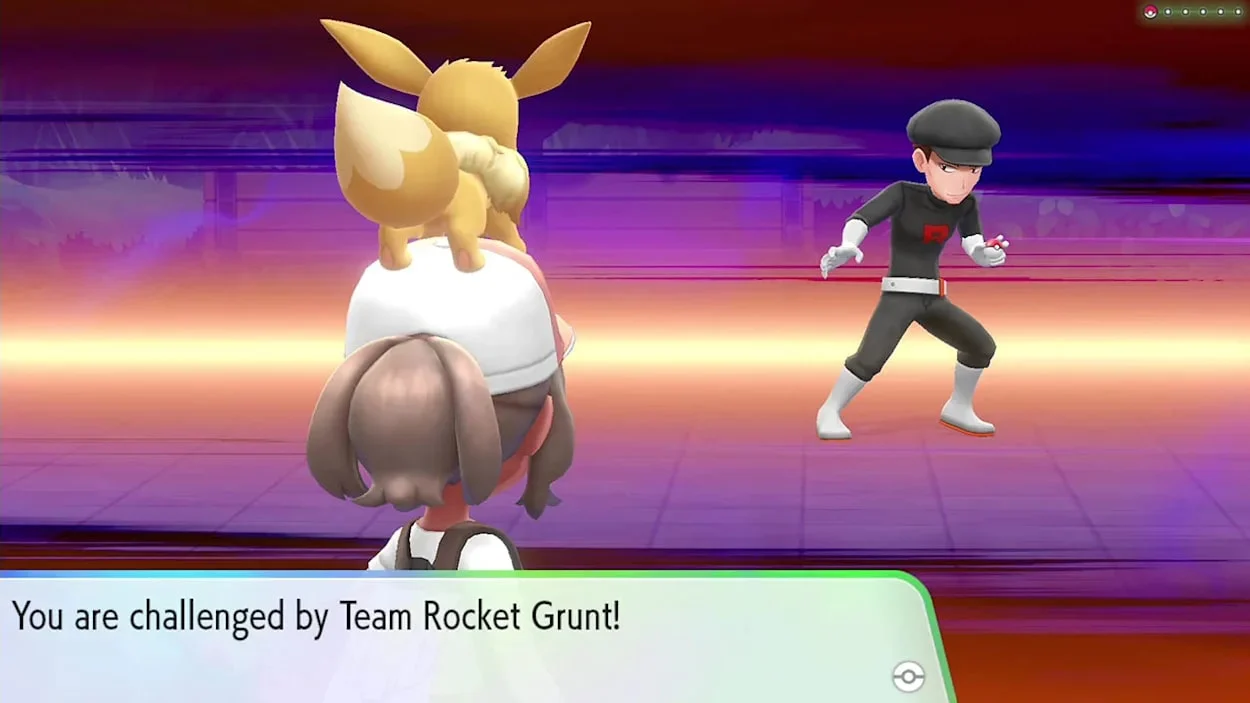
The story reimagines the premise of Pokémon Yellow while retaining many of its recognizable foundations. Professor Oak is part of the journey from the beginning, a friendly rival provides another recurring presence, and Team Rocket appears as the disruptive force encountered along the way. Gym challenges and the Pokémon League remain the major steps in the player’s rise as a Trainer.
This approach makes the game approachable for players who know the original Kanto story as well as those meeting it for the first time. Familiar narrative pieces are not replaced; they are presented alongside mechanics that change how Kanto is explored and how Pokémon are caught. The game keeps the traditional RPG framework where Trainer battles are turn-based, while making the route between those battles more visibly active.
Team Rocket’s role helps maintain a sense of interruption and conflict beyond the badge quest. Meanwhile, the League goal gives each Gym victory lasting weight. The story does not lose sight of its simple objective: keep moving through Kanto, become stronger, and earn the right to challenge the Pokémon League.
Visible Wild Pokémon Change Exploration
One of the clearest changes to Kanto exploration is the presence of wild Pokémon directly in the overworld. Instead of relying on random encounters, players can see Pokémon on the map and approach the ones they want to catch. This creates a more deliberate rhythm for building a collection.
The absence of random encounters means exploration can be guided by visible choices. A player can continue toward the next destination, pause to pursue a particular Pokémon, or look around an area for more opportunities. Kanto exploration becomes less about waiting for an encounter and more about reacting to what appears in the environment.
This system also supports the game’s accessible tone. New players can immediately understand what they are seeing and decide when to begin a catch attempt. More experienced players still have a reason to search carefully, particularly when expanding a team or collection. Pokémon encountered in the overworld are part of the route itself rather than a surprise transition away from it.
Catching Pokémon with Motion Controls or Buttons
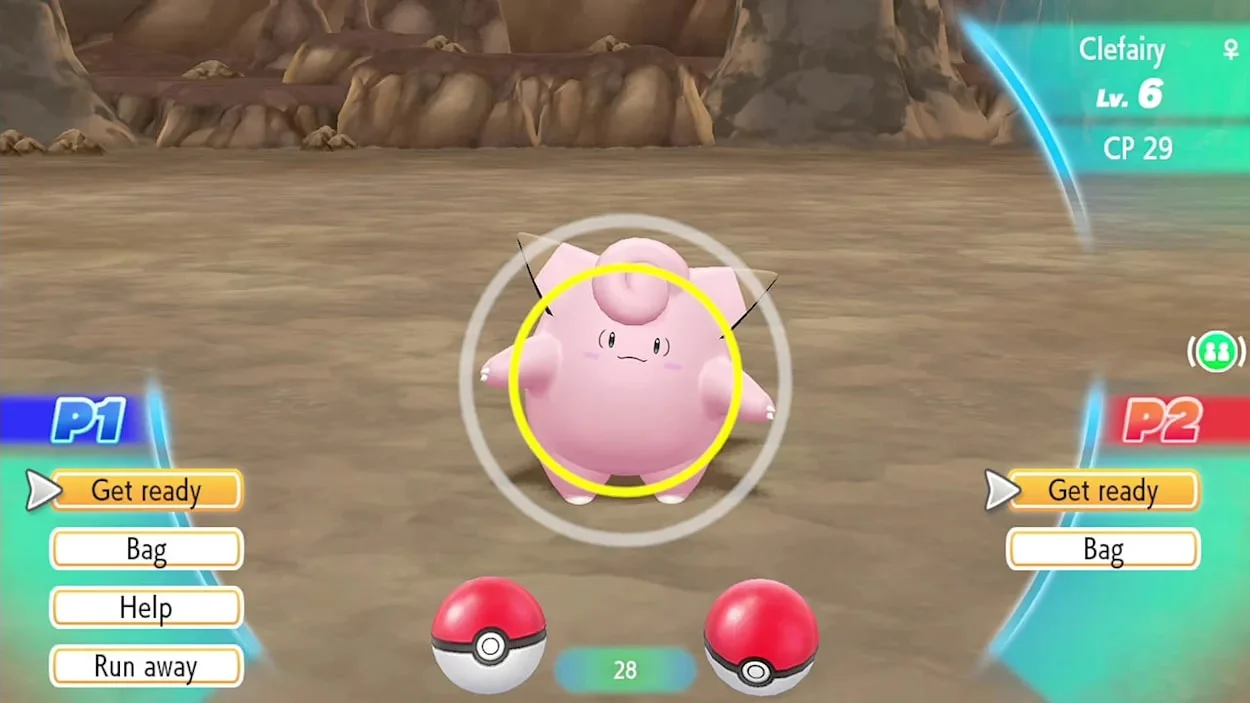
Pokémon catching mechanics are built around aiming and throwing Poké Balls rather than beginning with a traditional wild battle. Once a player approaches a wild Pokémon, the capture attempt asks for timing and accuracy. A well-placed throw improves the chance of a successful catch, making each attempt a small test of control.
Poké Ball throwing can be handled with Joy-Con motion controls or with button inputs. The two options allow players to use the approach that feels more comfortable while preserving the same capture-focused structure. Motion controls make the act of throwing more physical, while button inputs provide an alternative for those who prefer a conventional control method.
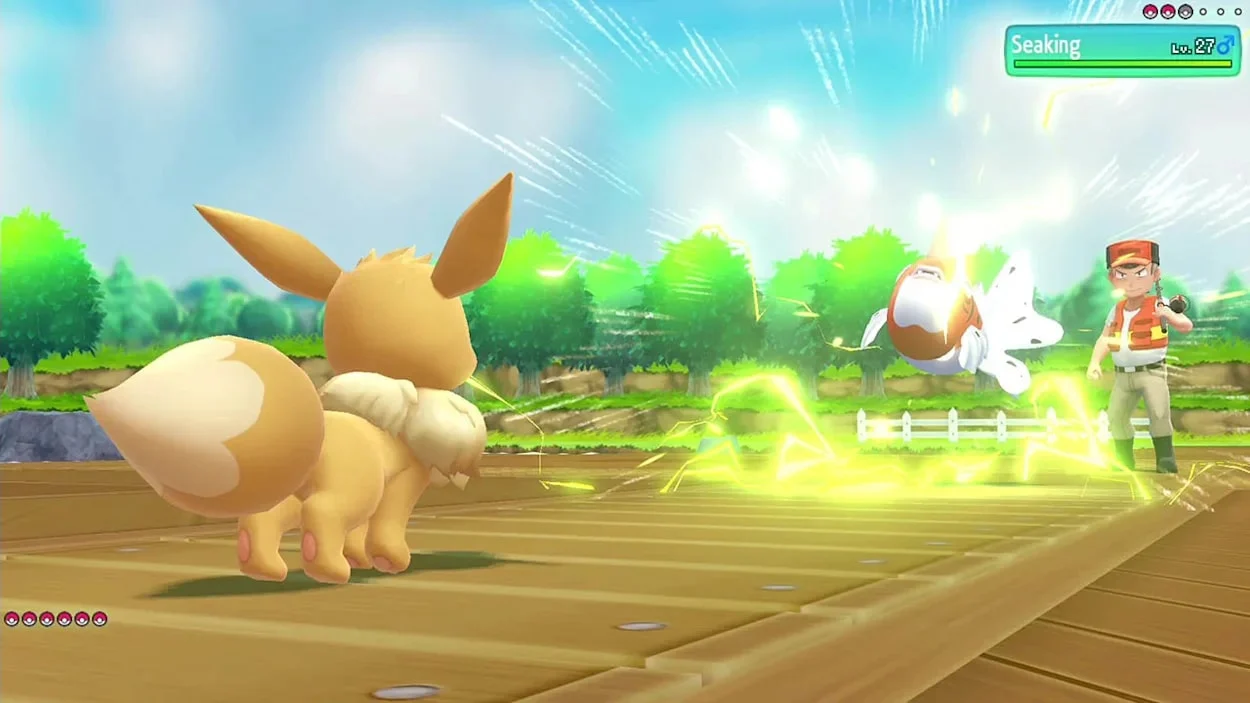
Trainer battles remain a separate and important part of the adventure. Those encounters use classic turn-based combat, requiring players to choose moves and prepare their team for other Trainers and Gym Leaders. The contrast is intentional: catching centers on throws, while battles continue to emphasize planning and team use.
Pokémon Let’s Go Eevee Switch NSP XCI also supports transferring Kanto-region Pokémon from Pokémon GO, providing another way to expand a collection. That feature fits the game’s broader interest in catching and gathering Pokémon without changing the importance of progressing through Kanto’s battles and Gyms.
Co-Op Play, Rideable Pokémon, and Custom Looks
A second player can join at any time with another Joy-Con. This two-player co-op option allows both players to help with catches or take part in battles together. It gives the adventure a shared-play option without changing the main Kanto journey or its badge progression.
Certain large Pokémon can also be ridden through the overworld. Rideable Pokémon offer faster travel and add a visible sense of scale while moving across Kanto. It is a simple feature, but one that changes the feel of travel between towns, routes, and objectives.
Customization extends to both the Trainer and partner Eevee. Outfits and accessories let players change their appearance, while Eevee can also be dressed for a coordinated or distinct look. These options do not replace the game’s progression systems, but they give the player another way to personalize a journey built around a highly visible partner.
5 Gameplay Priorities for a New Kanto Trainer
- Watch the overworld. Visible wild Pokémon make exploration an active part of collecting. Look around routes and approach the Pokémon you want rather than waiting for random encounters.
- Refine each throw. Practice Poké Ball throwing with Joy-Con motion controls or button inputs. Timing and accuracy improve the likelihood of a successful catch.
- Prepare for Trainer battles. Catching is handled differently here, but Trainer and Gym Leader battles still use turn-based combat. Keep a capable team ready for those encounters.
- Use Eevee’s help. Partner Eevee can learn special moves, locate hidden items, and warn of nearby Pokémon. Interacting through petting and feeding also strengthens the bond with the companion.
- Follow the badge path. Gym badge progression is the route to the Pokémon League. Treat each Gym challenge as both a story milestone and a test of battle preparation.
For players seeking a Kanto adventure with direct exploration, visible Pokémon, and a constant partner presence, the game offers a clear balance of collection and progression. Its familiar League challenge, Team Rocket encounters, co-op support, and companion-focused features give the journey reasons to continue beyond a first set of catches.