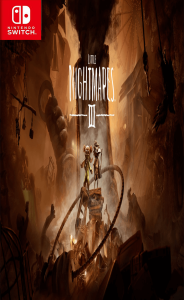
Little Nightmares III Switch NSP
Report Link Error
Select the broken download file, then submit the report.
Screenshots
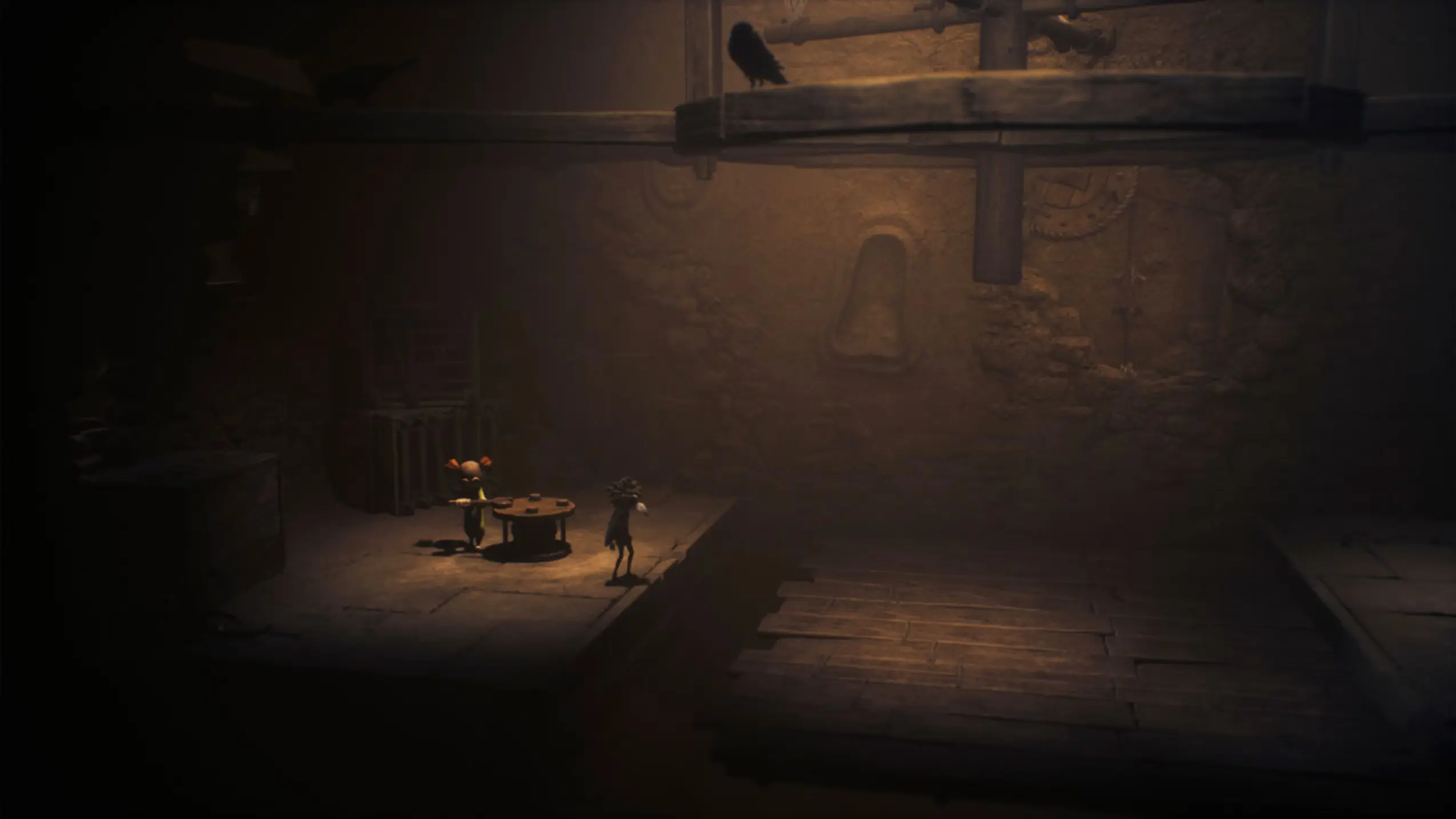
About Game
Little Nightmares III Switch NSP brings the series’ uneasy puzzle-platforming sensibility to Nintendo Switch with a new pair of protagonists, a hostile shifting realm, and a greater emphasis on cooperation. The USA release is dated October 10, 2025, with Bandai Namco Entertainment publishing this Action and Adventure entry. Its listed file size is 7.44 GB, and the stated firmware requirement is 20.3.0.0.
Little Nightmares III on Nintendo Switch: Key Release Details
Little Nightmares III is positioned as a tense journey through a world shaped by childhood fears, where movement, observation, and timing matter as much as solving a puzzle. Bandai Namco Entertainment is the publisher for the USA release, scheduled for October 10, 2025.
The Nintendo Switch version supports a broad language selection: English, Japanese, Spanish, French, German, Italian, Russian, Portuguese, Korean, Simplified Chinese, and Traditional Chinese. The listed firmware requirement is 20.3.0.0, while the game’s file size is 7.44 GB. Those practical details sit alongside a familiar series identity: small figures navigating oversized, grotesque spaces where danger is rarely far away.
Rather than centering the experience on direct combat, the game’s Action and Adventure framing comes through traversal, environmental problem-solving, evasive movement, and the pressure of surviving spaces built to overwhelm its child-sized leads.
The Spiral’s Unsettling Worlds and Hidden Mysteries
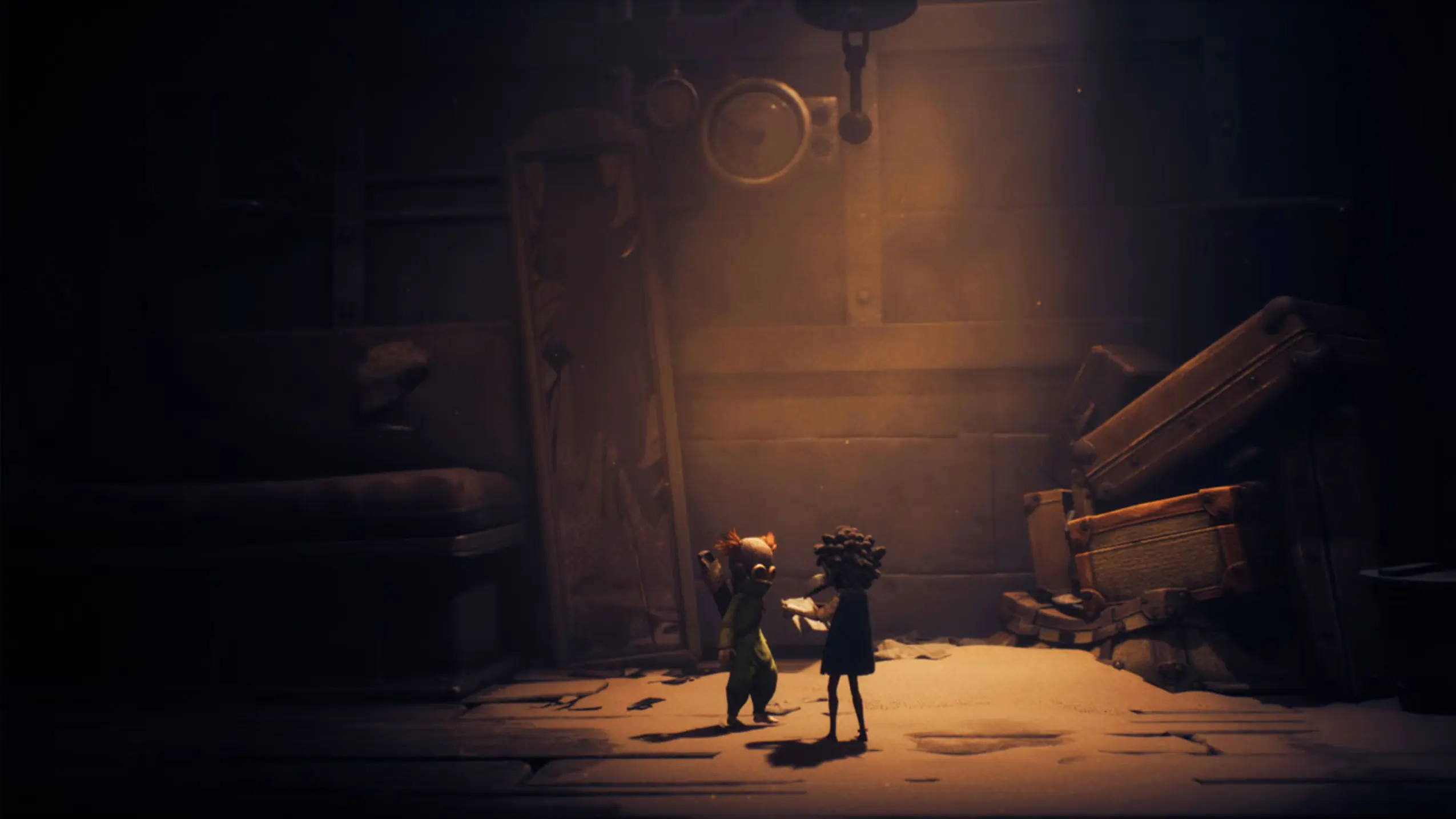
The story follows Low and Alone, two new protagonists caught inside a bizarre realm called The Spiral. It is not presented as a single coherent place. Instead, it is a fractured collection of locations with distinct threats, monstrous inhabitants, and a sense that the world itself cannot be trusted.
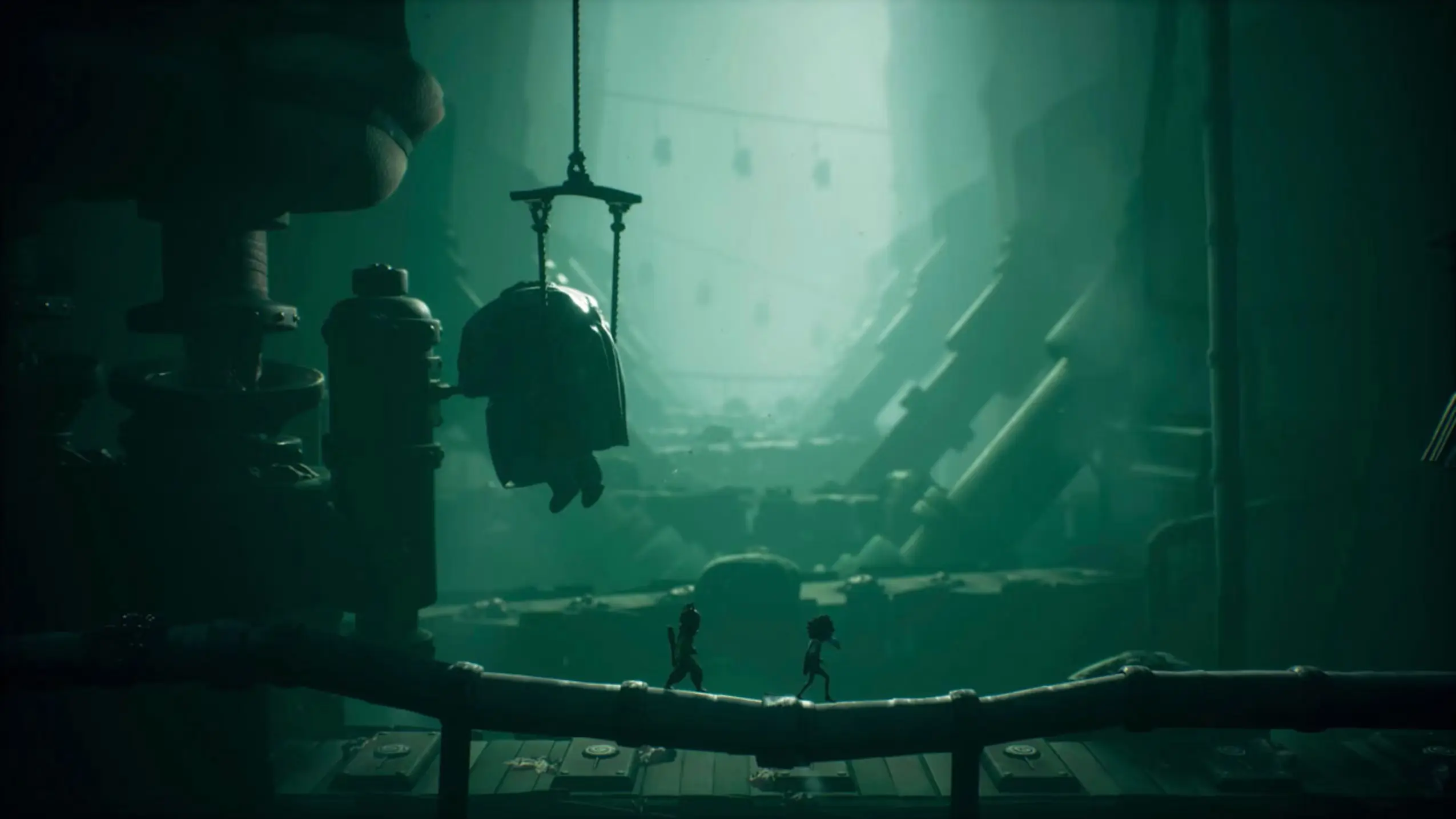
Their route begins in a dusty, forgotten desert before moving into decaying industrial areas and unnervingly quiet settlements. That contrast gives the setting a useful instability. A wide, empty landscape can feel exposed and isolating; rusting machinery and enclosed structures can make every passage feel like a trap. The changes in location are not simply visual variety. They reinforce the idea that The Spiral is constantly shifting, revealing new dangers as Low and Alone try to understand it.
The realm functions as more than a backdrop for the Little Nightmares III story. Its changing fabric is a central threat, placing the pair against environments and entities that seem determined to keep them from escaping. Low seeks a glimmer of light, while Alone carries an unclear past, giving their journey an emotional thread beneath the physical hazards. Answers about The Spiral’s creation may be tied to their only route out.
Co-op Puzzle-Platforming With a Companion Option
Cooperation is central to progression. Two players can take the roles of Low and Alone, working together to negotiate puzzles, obstacles, and deadly environments. The structure asks players to pay attention not only to their own position, but also to what the other character can reach, activate, distract, or break open.
Solo players are not left without a partner. The journey can also be played with a companion-controlled character, preserving the two-character design even when only one person is playing. This is important because many challenges are built around paired actions rather than a lone protagonist’s toolkit.
Little Nightmares III Switch NSP gives each lead a different practical role. Low has a bow and arrow for distant interactions and distractions, while Alone uses a wrench to operate mechanisms and break barriers. The division keeps teamwork tangible: a blocked route may require Alone’s force, while an out-of-reach target or a dangerous foe may call for Low’s ranged tool.
5 Gameplay Elements That Build Tension in Little Nightmares III
- Shared solutions: Cooperative puzzle solving makes coordination part of the challenge, with both characters contributing to movement and progress.
- Reactive environments: Mechanisms, barriers, machinery, and distant objects invite players to read each space before acting.
- Distinct tools: Low’s bow and Alone’s wrench create different options for distraction, ranged interaction, mechanism use, and opening pathways.
- Careful evasion: Grotesque residents are often threats to avoid rather than enemies to confront, making hiding and timing essential.
- Hidden discoveries: Side routes, collectibles, and lore pieces reward cautious exploration and add context to The Spiral and its inhabitants.
These elements work together to produce a rhythm of uncertainty. A player may first scan a room for a mechanism, then identify a possible escape route, then decide which character’s ability can alter the space safely. The puzzles are not detached pauses between danger; they are bound to the environments and the creatures inhabiting them.
Environmental Puzzles That Demand Teamwork
The game’s environmental puzzles are built around obstacles that cannot always be addressed from a single position. A mechanism may be located behind a barrier. An object may need to be reached from afar. A passage may require one character to manipulate the environment while the other moves through the newly opened route. In more dangerous spaces, solving the puzzle also means staying out of sight.
Low’s bow supports distant interaction and can distract foes, offering a way to influence a situation without moving directly into it. Alone’s wrench is suited to manipulating machinery and breaking through barriers. Neither ability is framed as a complete answer on its own. Their usefulness comes from combining them at the right time.
That design can make even a simple route feel uneasy. The objective may be clear, but the route to it can be blocked by machinery, distance, or a creature that turns delay into risk. Cooperative gameplay gives the puzzles an additional layer of communication and timing, while solo play retains the paired structure through the companion character.
Atmospheric Horror Through Exploration and Lore
Little Nightmares III draws its horror from scale, silence, grotesque opponents, and spaces that seem hostile before anything begins to move. The desert, industrial complexes, and quiet settlements create different forms of unease, but all belong to a realm where safety appears temporary. The presentation favors suspenseful discovery over certainty, encouraging players to proceed carefully through unfamiliar places.
Exploration has value beyond finding the next path. Hidden collectibles and lore pieces provide additional insight into the mysterious world and its characters, giving attentive players more context around The Spiral’s secrets. This also adds a measured form of replay value: revisiting areas or taking extra time to investigate can uncover details missed during a more urgent first pass.
The most suitable audience is likely players drawn to atmospheric horror, environmental storytelling, stealth-driven tension, and puzzle-platforming that rewards patience. The game’s threat comes from vulnerability and escape rather than direct dominance, making its most memorable moments likely to emerge from a narrow hiding place, a barely opened path, or a puzzle solved just before The Spiral closes in again.