TRON Catalyst Switch NSP
Report Link Error
Select the broken download file, then submit the report.
Screenshots
About Game
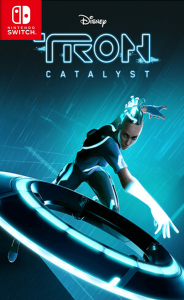
TRON Catalyst Switch NSP is listed for Nintendo Switch in the USA with a June 19, 2025 release date. Published by Good Shepherd and classified as an action game, it frames its digital-world adventure around swift light cycle encounters, disc-led arena fighting, exploration, and logic puzzles. The available details point to a game built around changing pace: a dangerous track duel may give way to a combat arena or a locked-off sector that asks for a more considered solution.
TRON Catalyst on Nintendo Switch: Release Details at a Glance
TRON Catalyst arrives on Nintendo Switch on June 19, 2025, according to the verified USA release information. Its Title ID is 01002B102116A000, and Good Shepherd is listed as the publisher. The genre designation is action, fitting the game’s emphasis on quick movement, combat timing, and high-pressure digital races.
The Nintendo Switch release supports En, Ja, Pt, Es, fr, De, Ru, Ko, Zh, and Tw language options. It requires firmware version 19.0.0. The listed file size is 1.29 GB. Those practical details accompany an adventure set in the Grid, where a newly digitized program called Cipher is drawn into sectors affected by corrupted data streams.
That setting gives the action a clear sense of purpose. Cipher’s route through the Grid involves rogue programs, security barriers, fragmented clues, and areas whose corruption must be confronted to continue. The material describes an entity known as the Architect as a force threatening the Grid’s fundamental code, placing the game’s races, battles, and puzzles within a wider push to restore stability.
Action Gameplay: Light Cycles, Discs, and Puzzles
TRON Catalyst gameplay is described as a combination of several complementary disciplines rather than a single repeated activity. Light cycle sequences bring speed and reflexes to the foreground. Disc combat shifts the focus toward measured throws, blocking, and deflections. Exploration slows the tempo further, asking players to navigate complex environments and solve logic puzzles that open routes or bypass security systems.
This mix suits the Grid setting. Digital tracks call for immediate decisions, while corrupted sectors create room for searching, route-finding, and problem-solving. The result is an action structure where progress is not presented solely as defeating an opponent. Reaching a new area can also depend on understanding an obstacle or working through a puzzle.
The game also references upgrades to Cipher’s abilities and disc customization for stronger combat options. These elements suggest progression that is tied to the journey through the Grid, giving later challenges a practical reason to revisit how Cipher approaches enemies and encounters. Hidden secrets and challenges in the broader digital world further support exploration beyond the most direct route forward.
Light Cycle Duels Across Digital Tracks
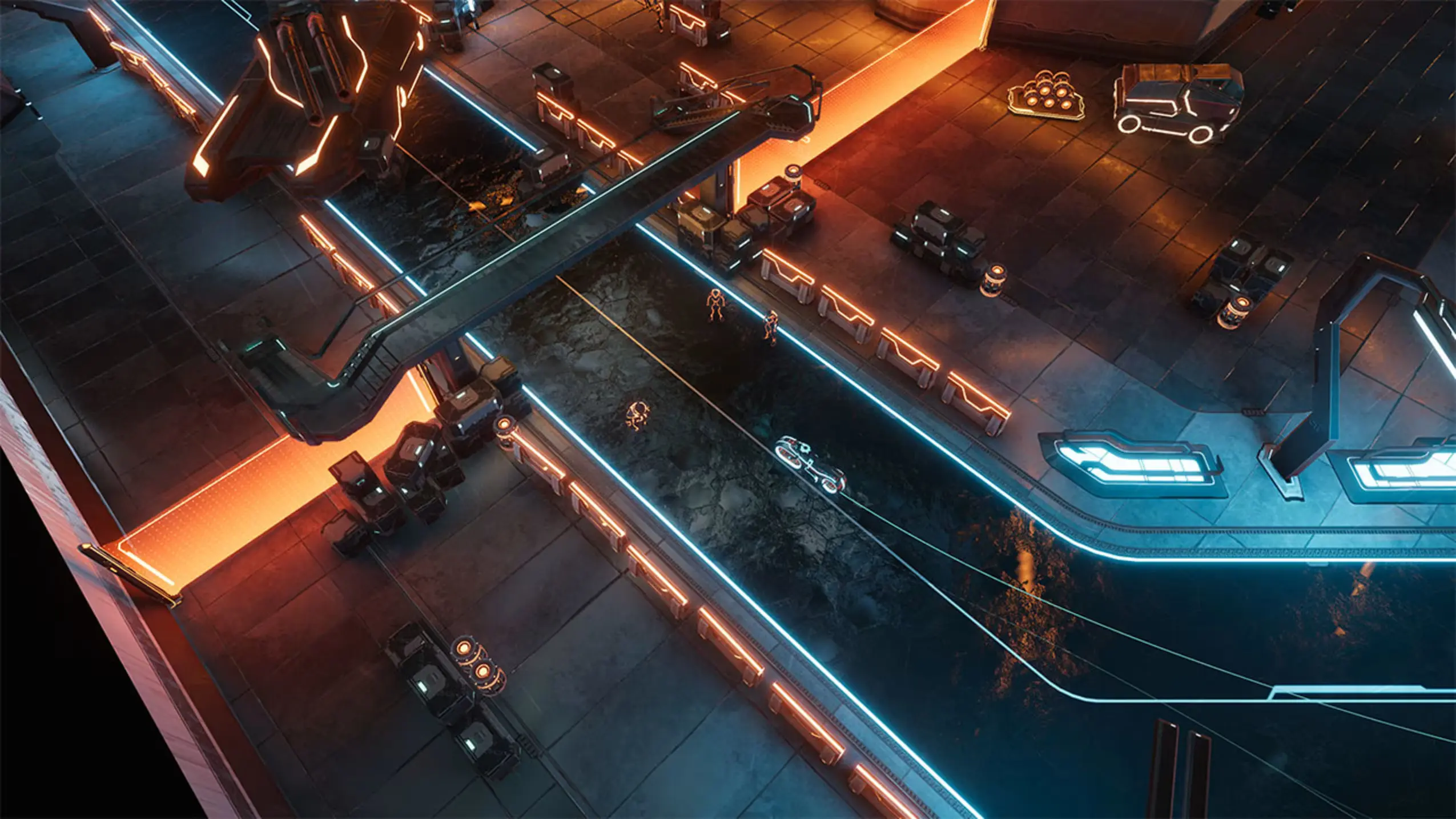
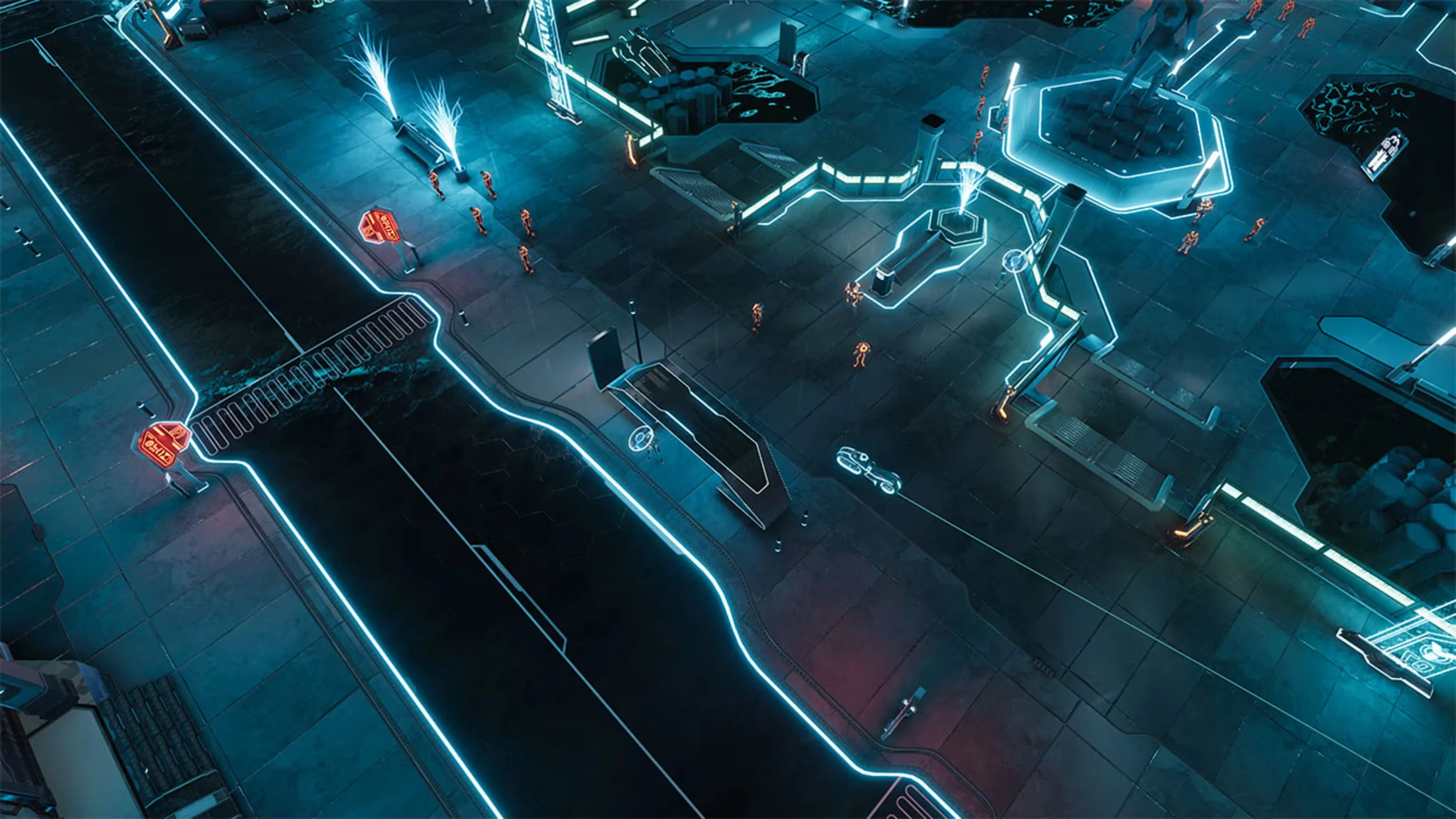
TRON Catalyst light cycle races are built around glowing digital circuits and multi-layered tracks. These encounters ask for precise movement, quick reflexes, and an awareness of where rivals are heading. Light trails are not just visual decoration: they create danger, turning a successful line through the track into a potential trap for an opponent.
The stated approach to these duels favors anticipation over pure reaction. A player who reads a rival’s path can attempt to corner them, but this requires planning ahead through several turns. Positioning matters because a move that looks safe in the moment may close off an escape route seconds later.
Boost use adds another decision. It can provide a quick escape from a tightening situation or help secure a stronger position on the track. Used without care, however, it may carry Cipher into a less favorable line. That balance gives the light cycle action a tactical edge beneath its high-speed presentation: the goal is not simply to move quickly, but to make the track work against the opposing rider.
For players drawn to reflex-driven action, these digital track duels appear to be a central attraction. They also reinforce the atmosphere associated with the Grid: bright circuitry, restrictive pathways, and constant pressure from rivals whose movements can reshape the space around them.
Disc Combat and Strategic Arena Encounters
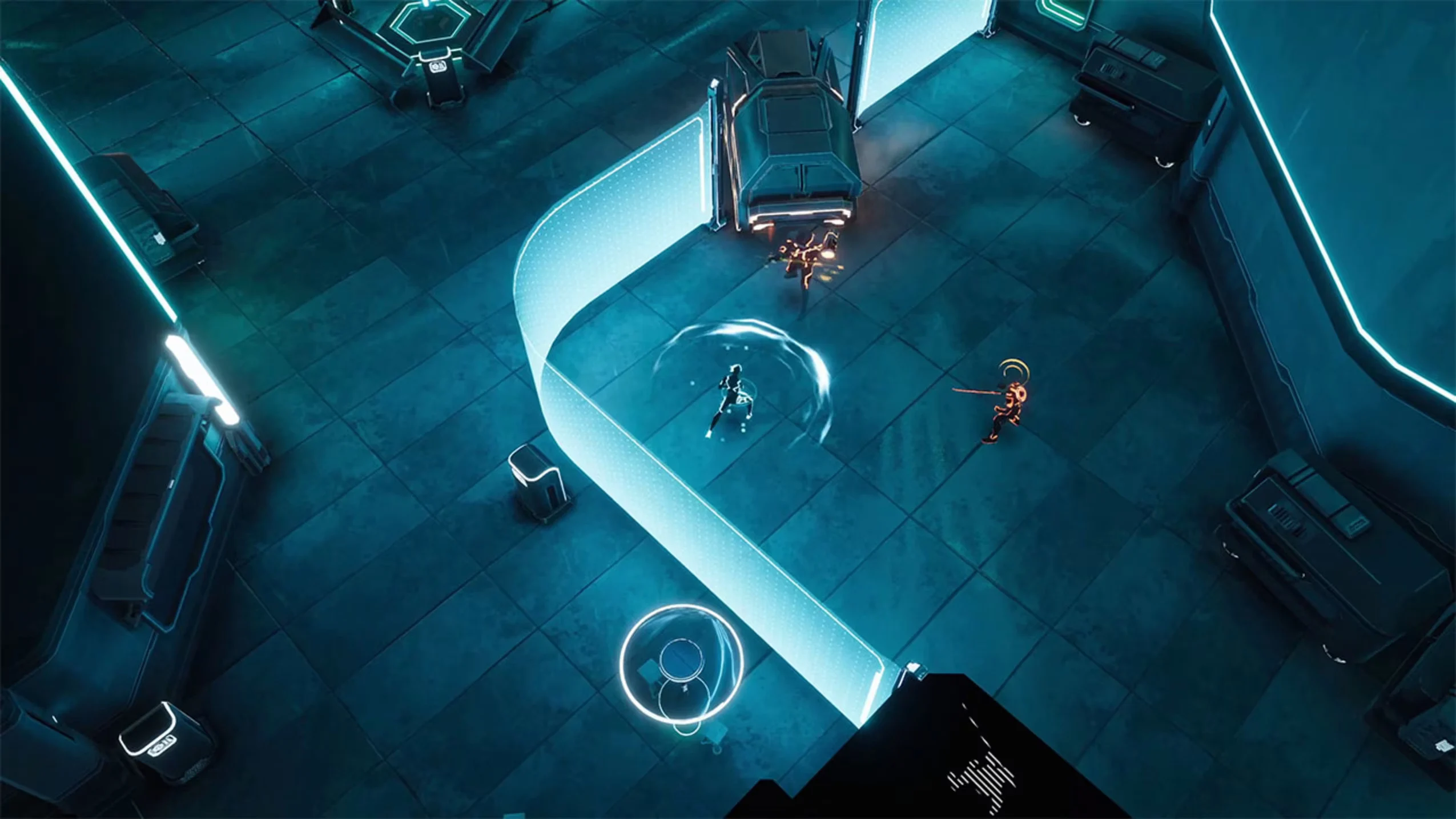
TRON Catalyst disc combat brings a different kind of precision to the adventure. Fast-paced arena battles against different program types are said to rely on skilled disc throws, blocks, and deflections. The emphasis is not merely on launching an attack, but on making each throw count and responding to what an opponent does next.
That foundation leaves room for strategic encounters even when the pace is fast. A well-timed block can preserve an opening, while a deflection can alter the momentum of a fight. Studying the attack patterns of enemy programs is particularly relevant in harder sectors, where knowing when to act may be more valuable than rushing forward.
Disc customization and ability upgrades offer another layer to this combat loop. The supplied details do not define individual upgrade paths, but they do establish that Cipher’s combat tools can be improved. In practical terms, that makes the arena battles part of the game’s progression rather than isolated tests of timing. TRON Catalyst Switch NSP therefore presents its disc encounters as an active counterpart to the navigation and puzzle-solving found elsewhere in the Grid.
Exploring the Grid’s Corrupted Sectors
TRON Catalyst exploration extends through a sprawling digital world containing hidden secrets, challenges, new areas, and corrupted zones. Cipher’s movement through this world is connected to the search for clues about the Architect and the effort to address damaged data streams. The Grid is not described as a passive backdrop; its security systems and blocked paths create obstacles that must be understood and overcome.
Logic puzzles support that progression. Solving them can unlock access to new areas or provide a way around security measures, making careful observation part of the adventure’s rhythm. These puzzles also create breathing room between races and battles, maintaining the contrast between velocity, combat focus, and deliberate problem-solving.
The presence of allies, adversaries, secrets, and sector-based challenges gives exploration a useful role for players who enjoy looking beyond the immediate objective. Replay value is not specified, but the combination of hidden content, combat customization, and multiple gameplay styles may make thorough exploration appealing to players who want to engage closely with the Grid’s available challenges.
Five Practical Strategies for Tougher Grid Challenges
- Read enemy patterns. Before entering difficult sectors, take time to recognize how different enemy programs attack. This can improve survival in fast arena battles.
- Predict the next turn. During light cycle sequences, anticipate where rivals intend to move instead of responding only after they commit.
- Build a trap. Plan several turns ahead when attempting to corner an opponent. A light trail becomes more useful when it limits their future options.
- Save boost for purpose. Use boost carefully for an escape or to claim an advantageous track position, rather than treating it as a constant-speed tool.
- Respect difficult sectors. Approach corrupted areas strategically, using exploration and puzzle-solving to identify routes, security bypasses, and the next accessible objective.