Chained Climb Together Switch NSP
Report Link Error
Select the broken download file, then submit the report.
Screenshots
About Game
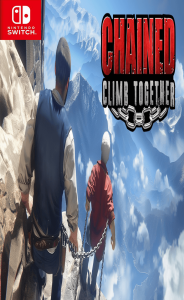
Chained Climb Together Switch NSP frames cooperative platforming as a shared physical problem. Pip and Finn are two adventurers who awaken in a desolate, towering world with no memory of how they arrived, bound by an ancient chain that cannot be broken. A shimmering beacon above them offers the only apparent direction: climb, survive, and discover what connects their past to the strange world around them.
A Cooperative Climb Built Around One Unbreakable Chain
Released on January 10, 2024, Chained Climb Together is an action game from Dezvolt Games built around a simple but demanding condition: neither character moves freely for long. Pip and Finn are linked, and that connection governs every attempt to cross a gap, reach a ledge, or escape a hazardous stretch of the ascent.
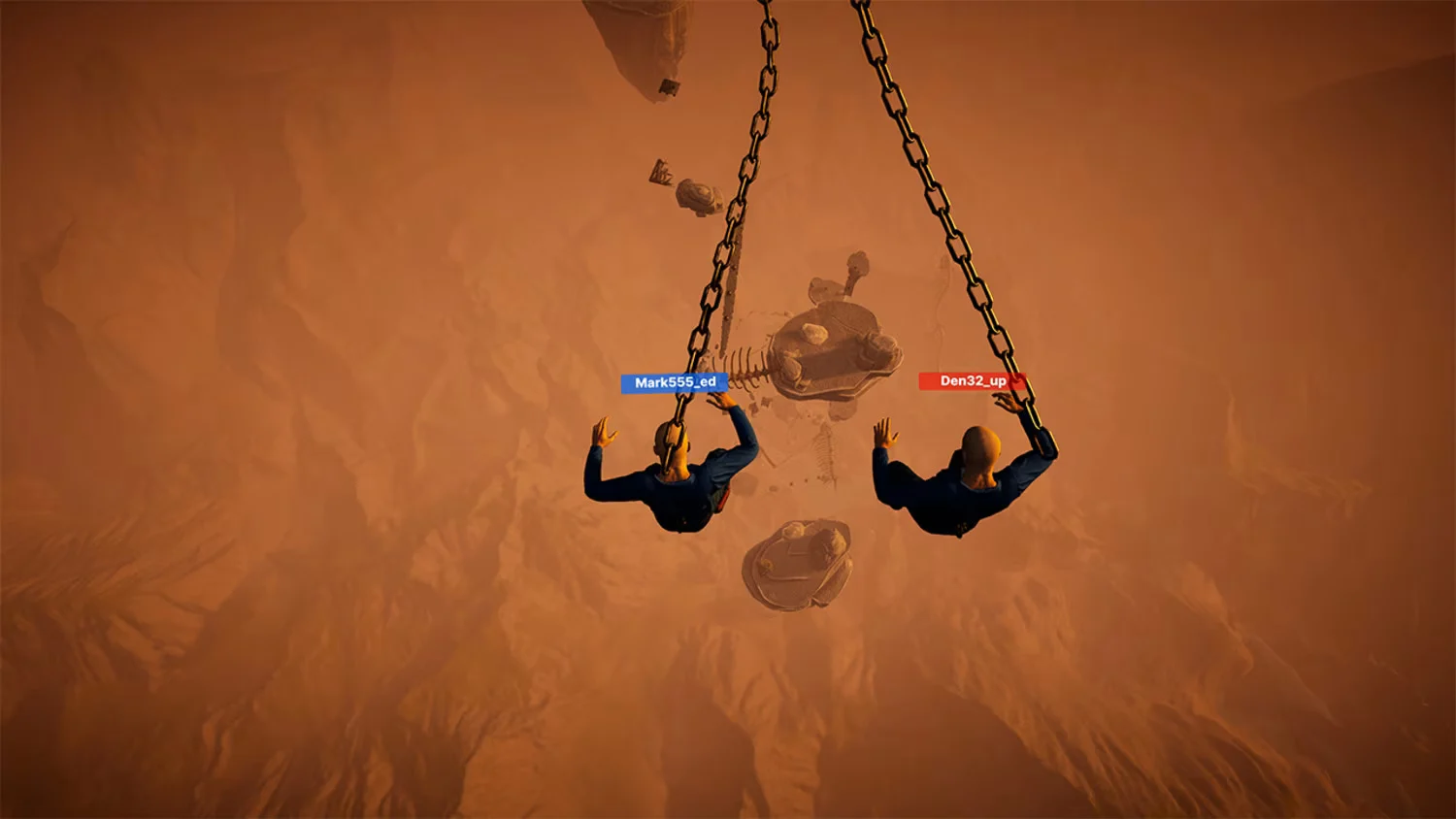
The chain is more than a story device. It gives the climb its cooperative identity. One player’s position affects the other player’s options, so an ambitious leap can become a rescue attempt, a setback, or the beginning of a carefully planned swing. Progress depends on treating the two characters as partners with a shared problem rather than as separate platforming heroes moving toward the same goal.
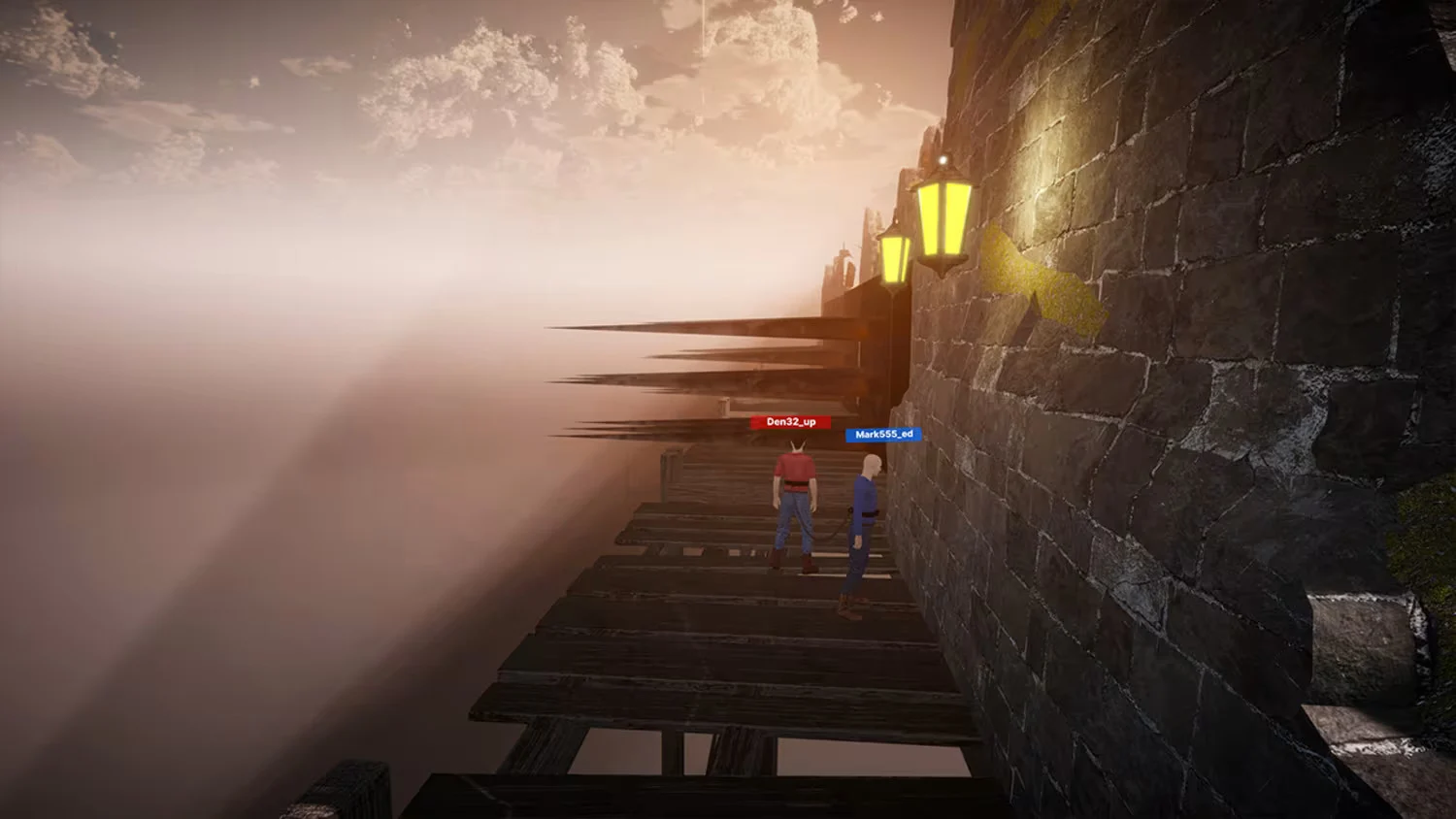
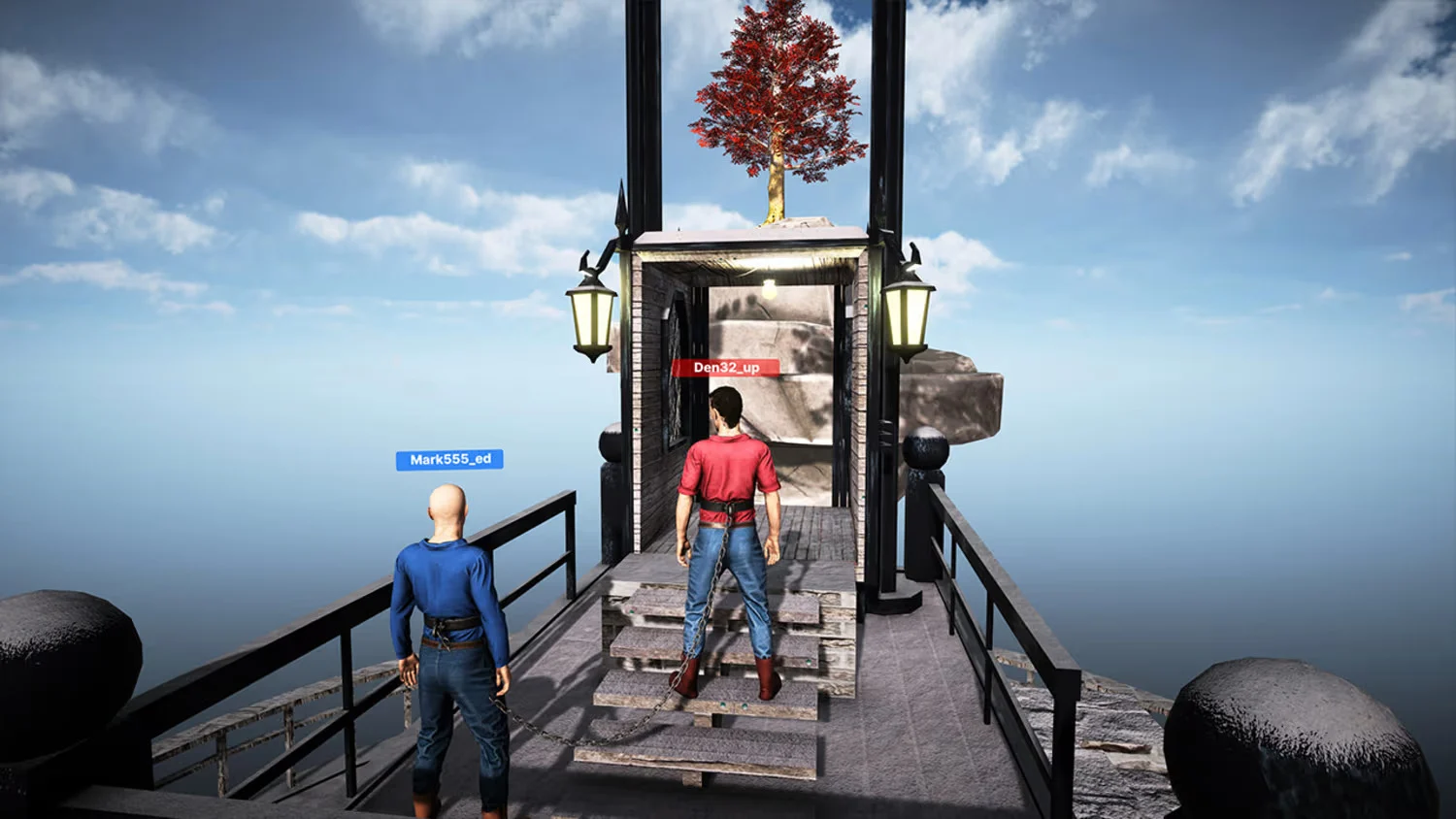
The setting supports that tension. Pip and Finn travel through dangerous heights in search of the beacon on the highest peak, encountering signs of a forgotten civilization and guardian spirits along sacred paths. The world’s ruined remains and remote vertical spaces give the journey an isolated atmosphere, while the chain ensures that the pair never face that isolation alone.
How Chain Physics Shapes Every Jump and Swing
The game’s physics-based platforming asks players to pay attention to chain length and tension at all times. If Pip and Finn move in conflicting directions, the connection can restrict momentum or put one partner in a dangerous position. If they move with purpose, the same chain can help create a route through an obstacle.
This makes synchronized movement essential. Players need to judge when to jump together, when one character should hold position, and when a pull or swing will create enough momentum to carry the other player forward. A wide chasm is not simply a test of timing; it becomes a question of where both adventurers should stand, how much slack is available, and what happens after the landing.
The chain can also be used more directly. It may latch onto objects, pull levers, activate switches, and create tension for catapult-style jumps. In certain situations, it can serve as a temporary bridge. These uses give the central mechanic a practical range: the chain is a restraint, a tool, and a source of risk depending on how the team handles it.
That design leaves little room for independent play. Fast reflexes can help, but they are most useful when paired with communication and a shared read of the next obstacle. A player who jumps without warning may leave their partner with no safe response. A player who waits, calls the movement, and manages the tension can turn the same obstacle into a controlled sequence.
Environmental Puzzles That Demand Clear Communication
The climb mixes movement challenges with environmental puzzles that require both players to take part. Crumbling platforms demand careful timing, while larger gaps can call for one adventurer to swing the other across. Switches, levers, and chain interactions introduce another layer: reaching an object is only part of the task if the other player must remain in position to make the solution work.
Clear co-op communication matters because the pair must often make decisions before moving. One player may need to announce a jump, ask for slack, or signal that they are ready to pull. The most effective approach is not necessarily constant talking, but useful information at the right moment: where to stand, when to release, and when to stop.
The puzzles also make the characters’ shared path feel more deliberate. Instead of encountering a series of isolated platforms, Pip and Finn work through spaces designed around their connection. The game’s obstacles repeatedly ask the same broad question in different forms: can two people coordinate their movement well enough to turn one unbreakable chain into an advantage?
The Escalating Challenge of the Ascent
As the climbing adventure continues, new mechanics and environmental hazards increase the demands placed on the partnership. Early situations establish the importance of movement, pulls, and swings. Later challenges combine those ideas with more complex conditions, asking players to apply familiar chain mechanics under greater pressure.
This progressive challenge is important to the game’s rhythm. The chain does not change from one area to the next, but the way it must be used does. A technique learned while crossing a smaller gap may become necessary during a more hazardous sequence involving unstable ground, distance, or a puzzle that requires precise positioning.
The ascent also carries narrative momentum. The beacon remains the pair’s destination, while remnants of the lost civilization and guardian spirits offer pieces of the world’s history. Pip and Finn’s journey is therefore both physical and personal: they are climbing toward answers about the world, their forgotten past, and the bond that began as an unwanted constraint.
7 Teamwork Habits for Surviving Difficult Climbs
- Call the jump. Agree on the timing before either player leaves a platform, especially when a missed landing could pull the partner off course.
- Watch the slack. Keep track of the chain’s available length so neither character is surprised by sudden tension.
- Choose an anchor. When a swing is needed, decide who will hold position and who will use the movement before committing.
- Pull with purpose. Use chain tension deliberately for pulls, lever interactions, and catapult-style jumps rather than creating force at random.
- Pause near hazards. Crumbling platforms and dangerous routes reward a brief plan more than hurried movement.
- Use short signals. Simple calls such as “jump,” “hold,” or “pull” can keep both players focused during demanding platforming challenges.
- Recover together. When one attempt fails, identify what happened to the chain position or timing and adjust as a pair.
Why Trust Is Central to Chained Climb Together
Chained Climb Together Switch NSP uses its shared movement system to reinforce the story’s themes of reliance and partnership. Pip and Finn begin as strangers in a difficult situation, physically linked without an explanation. Their route to the beacon requires more than reaching higher ground; it requires learning how to depend on someone whose choices immediately affect their own survival.
That makes trust a gameplay requirement rather than a background theme. Each coordinated jump, pull, and swing reflects the growing need to read a partner’s intentions and act in step. The journey presents cooperation as something built through repeated effort, mistakes, and successful recoveries.
For players looking for an English-language cooperative action experience in the USA region, the game’s appeal lies in that focused structure. Its vertical world, chain-driven puzzles, and increasingly demanding hazards are suited to two players willing to communicate closely and accept that progress belongs to both adventurers. Pip and Finn can only reach the peak by treating the chain not as a limitation to escape, but as the bond that makes the climb possible.