How 2 Escape: Lost Submarine Switch NSP
Report Link Error
Select the broken download file, then submit the report.
Screenshots
About Game
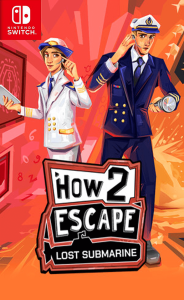
How 2 Escape: Lost Submarine Switch NSP frames its puzzle adventure around a tense cooperative premise: one player is confined within a damaged submarine, while a second player works from outside with information the trapped explorer cannot access. The vessel is deteriorating, the clock is a constant concern, and progress depends less on individual brilliance than on clear, careful communication between two people.
A Two-Player Escape Mission Beneath the Surface
How 2 Escape: Lost Submarine is built as a cooperative submarine escape rather than a conventional solo adventure. Its central situation is immediately pressing. A player is trapped aboard a mysterious submarine that is rapidly worsening, while their partner is positioned outside the vessel and must help direct the attempt to escape.
That division gives the two-player adventure its character. The player inside has the physical perspective: rooms, objects, mechanisms, and whatever details can be observed in the submarine’s interior. The partner outside has access to crucial supporting material on a separate device, such as a phone or tablet. Neither side has the complete answer alone. One sees the immediate problem; the other interprets the information needed to solve it.
The result is an escape-room structure shaped by conversation. A vague description of a dial, a symbol, or a room layout can send a team in the wrong direction. A precise explanation can turn external schematics or cryptic messages into an actionable solution. The premise makes cooperation feel necessary rather than decorative, with both players contributing to the same escape effort from very different positions.
The Asymmetric Roles: Inside Explorer and Outside Guide
The asymmetric co-op design gives each participant a distinct responsibility. The submarine explorer directly controls the character inside the vessel, moving through its spaces and interacting with objects. This player is responsible for noticing what is present in the environment and reporting it accurately: the arrangement of a panel, the marking on a mechanism, or the details of a puzzle element.
The outside guide works with separate information that supports the explorer’s decisions. Their role includes reading schematics, decoding messages, and turning those findings into instructions. The guide may understand the larger logic of a puzzle without seeing the exact room in which it must be carried out. That makes listening as important as speaking.
Communication is therefore the game’s most consistent mechanic. Successful teams need to compare details, clarify uncertain descriptions, and avoid assuming that both players are looking at the same information. The design asks for a practical rhythm: observe, describe, interpret, confirm, and act.
- Name the details. The explorer can describe objects, symbols, and room positions as specifically as possible.
- Check the schematics. The outside guide can study external information before giving a sequence of instructions.
- Confirm each step. Repeating a key instruction can prevent a small misunderstanding from costing time.
- Search beyond the obvious. Seemingly minor objects and environmental details may contain useful clues.
- Keep the exchange focused. The worsening submarine makes clear, concise coordination especially valuable.
Exploring the Lost Submarine Room by Room
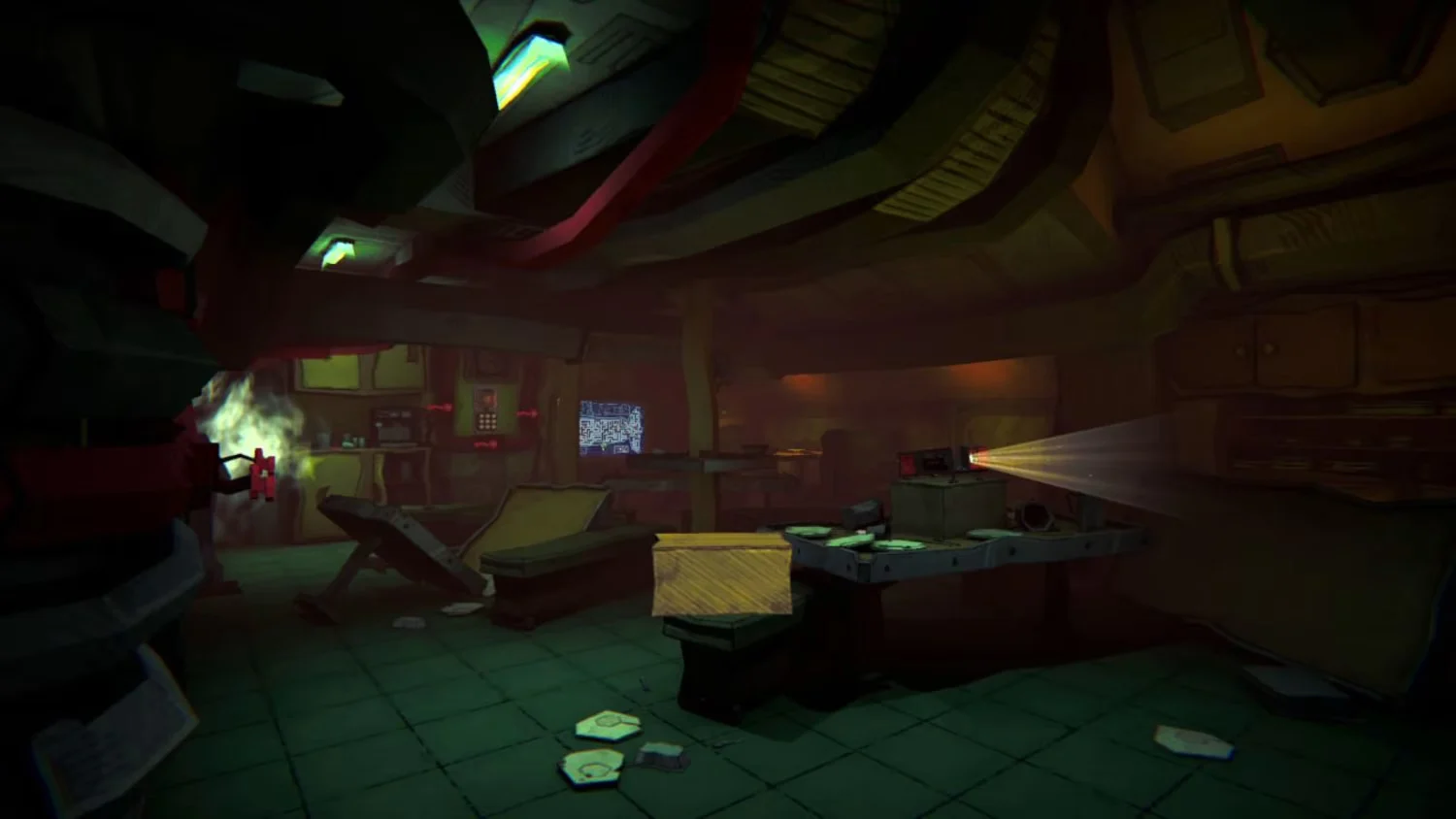
Submarine exploration supplies the physical side of the experience. The trapped player moves through varied rooms within the lost vessel, examining the spaces for clues and tools that may advance the escape. These are not merely corridors between isolated puzzles. The rooms contain interactable objects, hidden details, and mechanisms that help establish both the next task and the larger mystery.
Environmental puzzles reward observation. A useful clue may be concealed in plain sight, connected to an item that initially appears unimportant, or understandable only when combined with information held by the outside guide. The explorer’s job is not simply to locate an object and use it. It is to make the room legible to another player who is not physically present in it.
This room-by-room approach also supports the game’s atmosphere. The submarine is a confined setting, and its deteriorating condition gives every new space a sense of uncertainty. Players are not exploring an empty environment for its own sake; they are tracing a route through a vessel that may be failing around them. Each discovery has two possible meanings: it may be a practical answer to a puzzle, and it may also reveal more about the submarine itself.
Valves, Control Panels, and Failing Submarine Systems
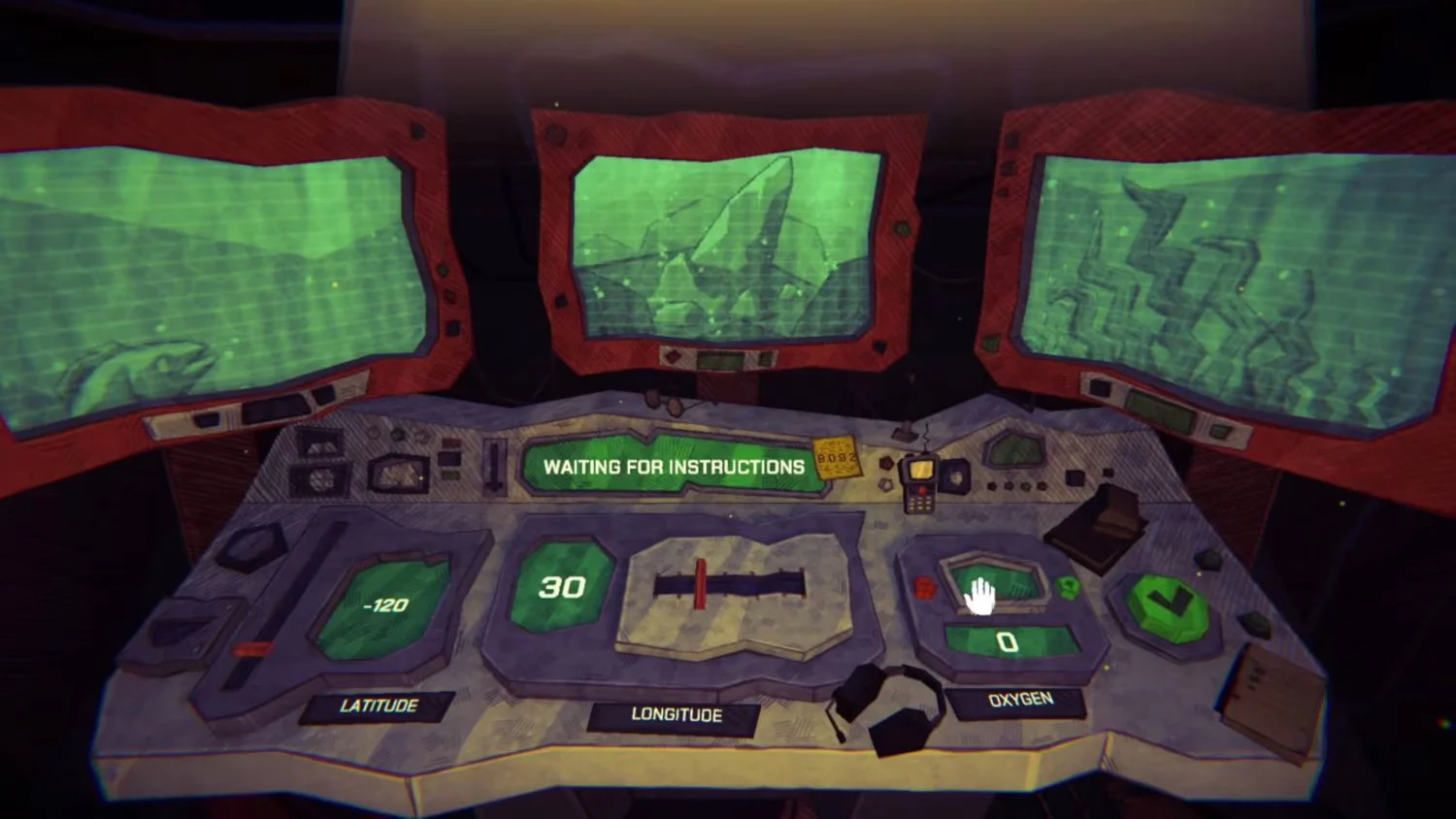
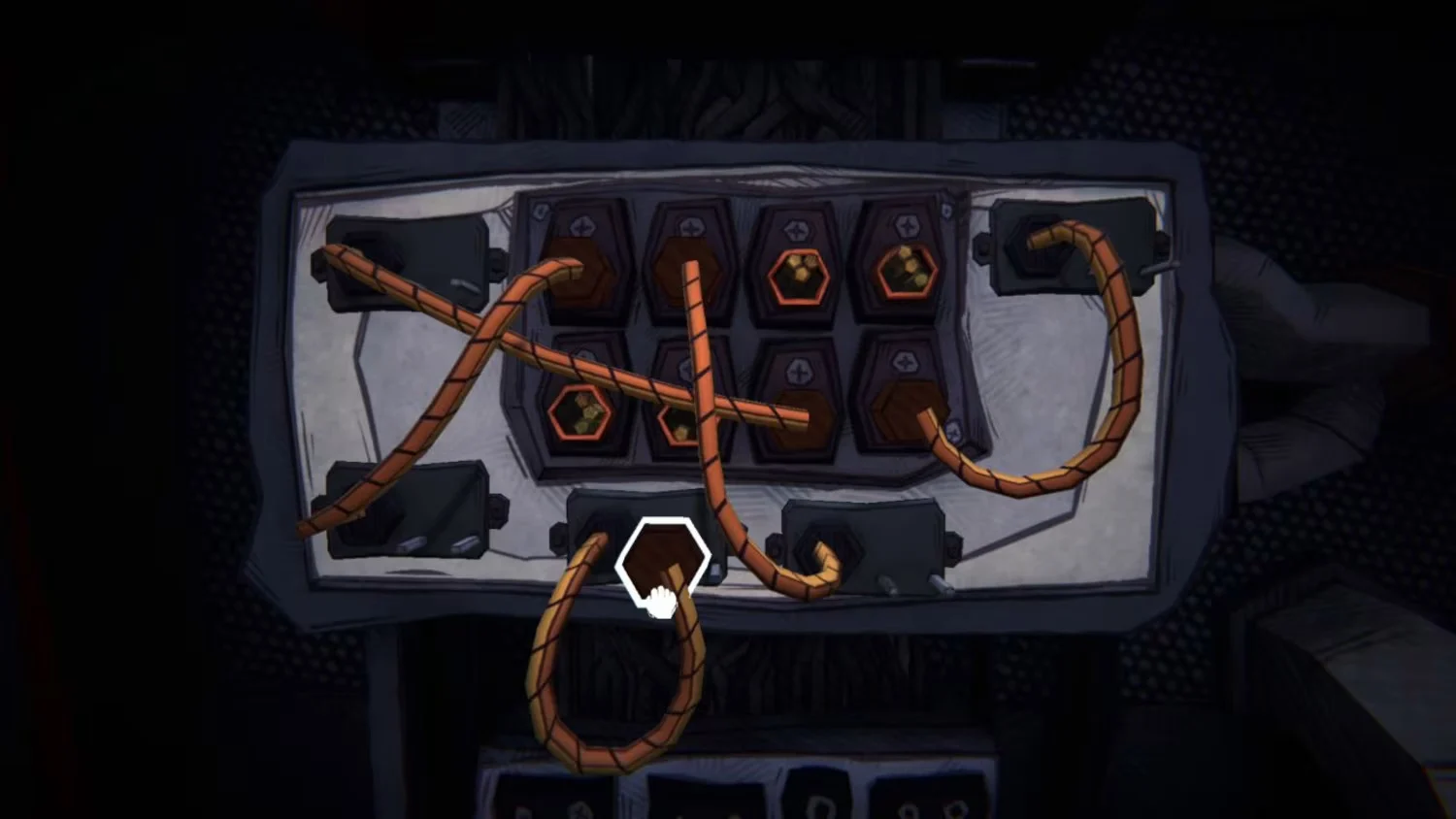
The game’s hands-on challenges draw directly from the setting. Submarine mechanisms include valves and control panels, turning the vessel’s systems into the basis for escape room puzzles. The player inside must operate these elements, while the outside guide helps determine what should be adjusted, activated, or interpreted.
That connection between puzzle and place matters. Rather than presenting abstract challenges detached from the environment, the game asks players to deal with equipment that belongs aboard a submarine. A valve is not just an object to turn; it is part of a larger system whose function must be understood through the clues available to both partners. A control panel may require external instructions, careful observation, and accurate execution under pressure.
The cooperative structure also keeps these interactions from becoming a one-sided exercise. The explorer provides the immediate visual information and carries out the action. The guide supplies context from blueprints, messages, or schematics. A solution emerges through the exchange between those perspectives, making the mechanisms feel like shared problems rather than individual tasks handed off between players.
The Countdown Pressure Behind the Escape
Time pressure gives the puzzle-solving a more urgent tone. The submarine’s integrity continues to deteriorate, so players are working against a limited window rather than solving each room at an entirely leisurely pace. This does not change the need for careful thinking, but it changes how each decision feels. A missed detail or confused instruction can carry more weight when the situation is worsening.
The suspenseful co-op format relies on that contrast between haste and precision. Teams need to act quickly enough to keep moving, yet slowly enough to read a clue correctly and communicate it without ambiguity. The most effective approach is not panic but discipline: describe what is visible, compare it with the external information, and make sure both players agree before operating an important mechanism.
For players who enjoy puzzle games as a conversation, this pressure can make routine problem-solving more dramatic. The tension does not come only from the submarine setting. It comes from knowing that one player may be ready to act while the other is still piecing together the necessary instructions.
Uncovering the Mystery of the Submarine’s Disappearance
Escape is only one part of the narrative puzzle adventure. The story also asks why the players are connected to this submarine, what happened to the vessel, and why one of them is trapped inside it. Those questions give the environmental clues a broader purpose beyond opening the next door or operating the next system.
As players move through the submarine’s rooms, the clues and mechanisms gradually contribute to the Lost Submarine story. The vessel’s disappearance is not presented as a background detail alone; it is a mystery that develops through exploration and discovery. Each room can offer another fragment, encouraging teams to pay attention not only to what solves the immediate puzzle but also to what it suggests about the situation.
How 2 Escape: Lost Submarine Switch NSP is suited to two players who enjoy communicating through complex puzzles, comparing separate pieces of information, and working through a suspenseful scenario together. Released on June 25, 2025, it is an Adventure title from MAXIMUM ENT FRANCE with support for English, Spanish, French, German, Italian, and Portuguese. Its strongest appeal lies in the shared process: two viewpoints, one deteriorating submarine, and a mystery that can only be untangled through cooperation.