Trident’s Tale Switch NSP
Report Link Error
Select the broken download file, then submit the report.
Screenshots

About Game
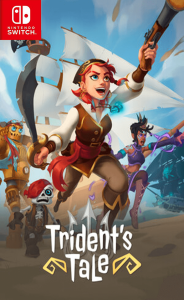
Trident’s Tale Switch NSP brings an underwater action-adventure to Nintendo Switch, placing exploration, combat, puzzles, and character growth within an ocean kingdom threatened by darkness. The game follows young merman Finn as a danger rising from the deep pushes him beyond his peaceful home and toward the secrets of an ancient world.
Trident’s Tale on Nintendo Switch: Release Details and Supported Languages
Trident’s Tale is a USA-region Nintendo Switch release from publisher 3DClouds, dated May 22, 2025. It is classified in the Action and Adventure genres and carries the Switch Title ID 01009DF020FBA000. The listed firmware requirement is version 19.0.0, and the file size is 2.45 GB.
Language support is broad, with English, French, German, Italian, Japanese, Korean, Portuguese, Chinese, Spanish, and Taiwanese listed among the available options. That range suits a game built around story beats, environmental clues, conversations, riddles, and lore connected to the ocean’s forgotten history.
The premise gives the adventure a clear sense of direction. Finn is not simply roaming a colorful sea in search of treasure: his village is endangered, his own lineage carries significance, and ancient prophecies point toward the Trident of Aethel as the artifact capable of restoring balance.
The Kraken and the Threat Beneath the Sea
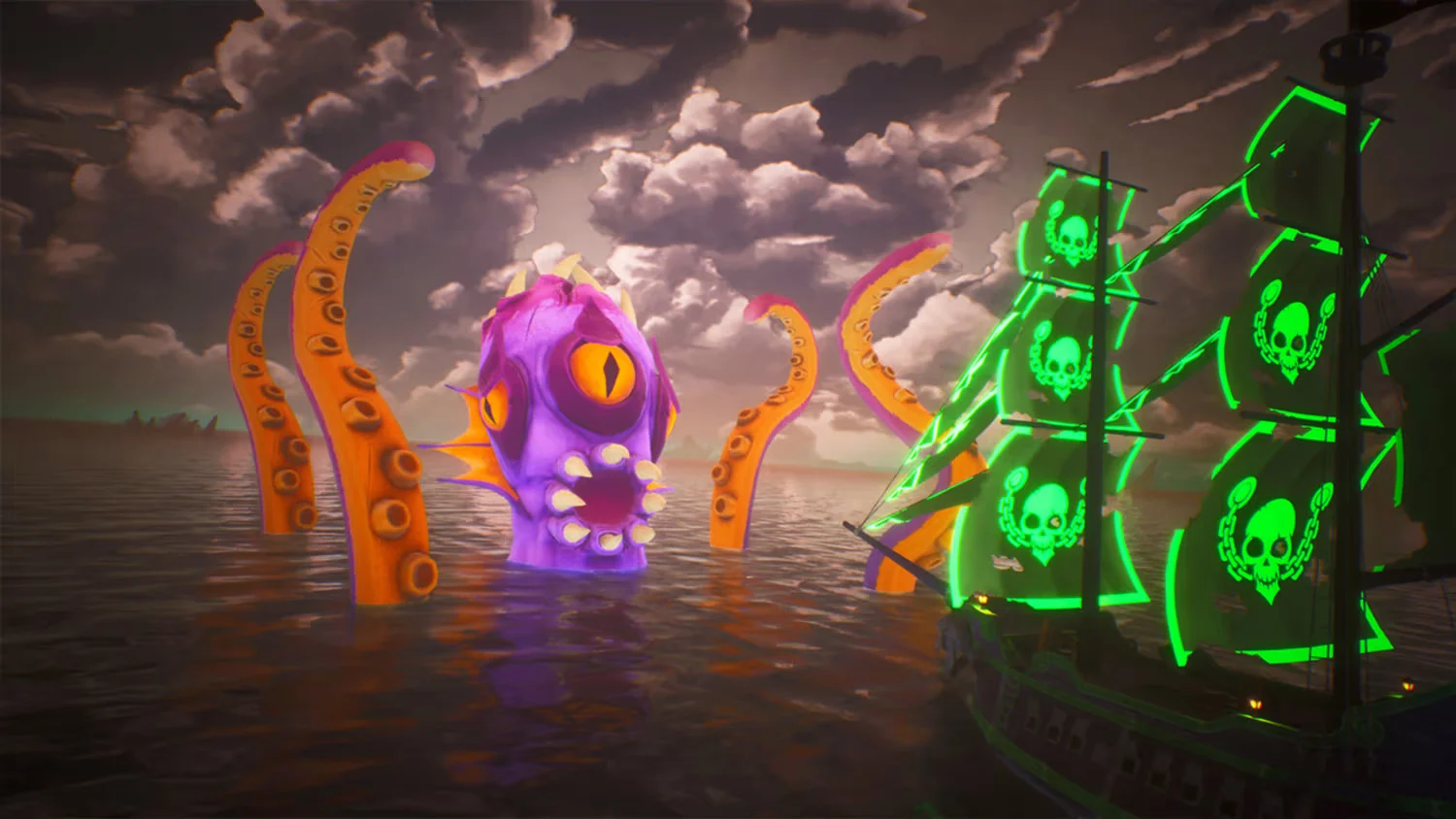
The central threat in Trident’s Tale comes from the Abyssal Trench, where a creeping darkness begins to spread toward Finn’s home. Behind that danger is the malevolent Kraken, released through an ancient spell and intent on plunging the ocean into eternal night. The stakes are therefore larger than a single village, extending across the wider underwater realm.
Finn’s journey leads him into treacherous currents and toward forgotten creatures as he searches for answers. The Trident of Aethel is presented as the key to restoring order, but the quest also asks Finn to uncover the meaning of his heritage and confront the responsibilities tied to it.
This setup gives the underwater adventure game a mix of immediate peril and archaeological mystery. Ancient maps, riddles left by earlier heroes, and traces of a lost civilization all point toward a world with a past that must be understood before its future can be secured.
Exploring Trident’s Tale’s Ocean Environments
Trident’s Tale exploration moves between contrasting parts of the sea. Finn can travel through sunlit shallows before descending into deeper, more dangerous waters, creating a natural shift in atmosphere as the route carries him farther from familiar territory. Coral-filled areas, hidden grottoes, ancient ruins, and secret-bearing ocean spaces provide the main settings for discovery.
The game’s ocean is described as open world, encouraging players to look beyond the most direct route. Exploration is linked to practical rewards as well as scenery: hidden pathways, treasure, puzzle elements, side activities, and upgrades can all be found by searching carefully. Ancient ruins in particular serve as places where environmental puzzles and old lore meet.
- Sunlit shallows: Early-looking ocean spaces contrast with the darker waters that lie farther from Finn’s village.
- Hidden grottoes: Secluded areas support the search for secrets, treasure, and routes beyond the obvious path.
- Ancient ruins: Old structures contain gates, riddles, and clues tied to the world’s history.
- Treacherous currents: Hazardous waters make the journey feel more demanding as Finn ventures deeper.
- The Abyssal Trench: The source of the creeping darkness gives the expedition a defining destination and threat.
The result is an ocean setting designed around movement and attention. Players are asked to read their surroundings, notice symbols and passages, and treat the environment as part of the adventure rather than a backdrop between story scenes.
Underwater Combat, Movement, and Finn’s Abilities
Action is a major part of Finn’s route through the sea. Combat uses his merman abilities and tools, with encounters becoming more demanding when larger or more formidable creatures appear. The game frames these battles as strategic rather than purely automatic, asking players to consider how they approach dangerous foes.
Movement is equally important. Finn can use swift dashes to cross space quickly and stealthy glides to move with greater care. Those options support both combat and exploration: speed can help during a risky encounter or while navigating a dangerous current, while a quieter approach may be useful when avoiding attention or searching an enclosed space.
Puzzles break up the action. Opening ancient gates and progressing through ruined locations requires more than fighting ability, as players must work through environmental obstacles and interpret the clues left behind. This combination gives the game a varied pace, moving from navigation to combat, then from discovery to problem-solving.
For players searching for Trident’s Tale Switch NSP information, the key gameplay identity is this blend of underwater movement, action encounters, exploration, and puzzle-based progression. Finn’s abilities are not isolated systems; they support the same journey through increasingly secretive and dangerous ocean territory.
Pearls, Relics, and Character Progression
Finn’s progression is tied to collecting ocean treasures, especially pearls and ancient relics. These resources support upgrades to health, speed, attack power, and resilience. The system gives exploration a concrete purpose: taking time to investigate a grotto or less obvious route can make Finn better prepared for the threats ahead.
Pearls and relics also reinforce the game’s theme of recovering what the ocean has hidden. Relics connect character advancement with the wider history of the setting, while health and resilience upgrades help Finn withstand the hazards that become more severe deeper in the sea. Speed improvements naturally complement dashes and broader navigation, and attack upgrades provide greater strength for difficult combat situations.
This structure can add replay value for players who prefer to revisit areas, search for missed treasure, or pursue side content after following the main path. Because collectibles and upgrades are spread through secret-filled environments, thorough exploration is rewarded without separating progression from the world itself.
Ocean Allies, Side Quests, and Deep-Sea Lore
Finn does not face the ocean’s mysteries alone. His journey includes encounters with wise sea turtles, mischievous dolphins, and other ocean characters. These interactions can provide clues, open side quests, and reveal more about the underwater world beyond the central conflict with the Kraken.
Side quests expand the narrative while offering valuable rewards, making conversations with friendly characters worth pursuing. They also help give the ocean a lived-in quality: its inhabitants are not only obstacles or enemies, but sources of guidance, personality, and local knowledge.
The lore surrounding a lost civilization is particularly important to the game’s mood. Remnants of that civilization, old maps, symbols, relics, and the riddles of forgotten heroes create a sense that Finn is traveling through a place shaped by earlier eras. For players drawn to action-adventures with an exploratory rhythm, environmental puzzles, collectible upgrades, and an underwater story about courage and friendship, Trident’s Tale presents a focused journey beneath the waves.
Recommended Similar Games
 Harry Potter: Quidditch Champions Switch NSPView Game
 The Caligula Effect 2 Switch NSP XCIView Game
 Mario + Rabbids Kingdom Battle Switch NSPView Game
 The Legend of Heroes: Trails beyond the Horizon Switch NSP XCIView Game
 World War Z Switch NSP XCIView Game
 Heroine Anthem Zero 2: Scalescars Oath Switch NSPView Game
