RollerCoaster Tycoon Classic Switch NSP
Report Link Error
Select the broken download file, then submit the report.
Screenshots
About Game
RollerCoaster Tycoon Classic Switch NSP places players in charge of an amusement park from the ground up, turning open land into a busy destination through construction, planning, and close management. Released for Nintendo Switch on December 5, 2024, this Atari simulation focuses on the small decisions behind a successful park: where rides go, how guests move around, what facilities they can find, and how well the budget holds together.
RollerCoaster Tycoon Classic on Switch: The Core Park-Building Premise
The central appeal is the connection between creative building and practical decision-making. A player can begin with an empty site, then gradually add paths, attractions, shops, scenery, and the support systems that allow the park to operate. A gentle carousel may suit one corner of the map, while a custom roller coaster can become the visual and financial focus of another.
This is a park management simulation as much as a construction game. Building a ride is only one part of the job. It must fit into a usable layout, be accessible to guests, and contribute to a wider mix of attractions. Food, drinks, restrooms, and souvenir shops also need thoughtful placement. The strongest parks feel planned rather than simply filled with objects.
The Nintendo Switch version brings this classic management format to a handheld and home-console setting. Its appeal lies in the steady rhythm of expansion: add an attraction, observe the effect on the park, make adjustments, and use the results to guide the next stage of development. The park becomes a visible record of those choices.
Scenario Goals Create Each Park’s Story
There is no fixed protagonist or pre-written narrative directing the experience. Instead, RollerCoaster Tycoon Classic scenarios provide the structure. Each one sets a particular situation and asks the player to reach defined management outcomes. Those targets can involve park value, guest numbers, or ride excitement ratings.
This approach gives progression a practical shape. A scenario with a park value requirement encourages careful investment and expansion. A target based on guest numbers can make capacity, attraction choice, and facilities more important. Requirements tied to ride excitement place greater weight on building a compelling selection of rides. The objectives are straightforward, but the route to success can differ from park to park.
That flexibility gives each scenario its own story. One park may develop slowly around affordable family attractions and efficient services. Another may rely on more ambitious coaster construction and a broader entertainment offering. The game supplies the conditions, while the player creates the identity of the park through management choices.
Building a Park Layout That Guests Can Use
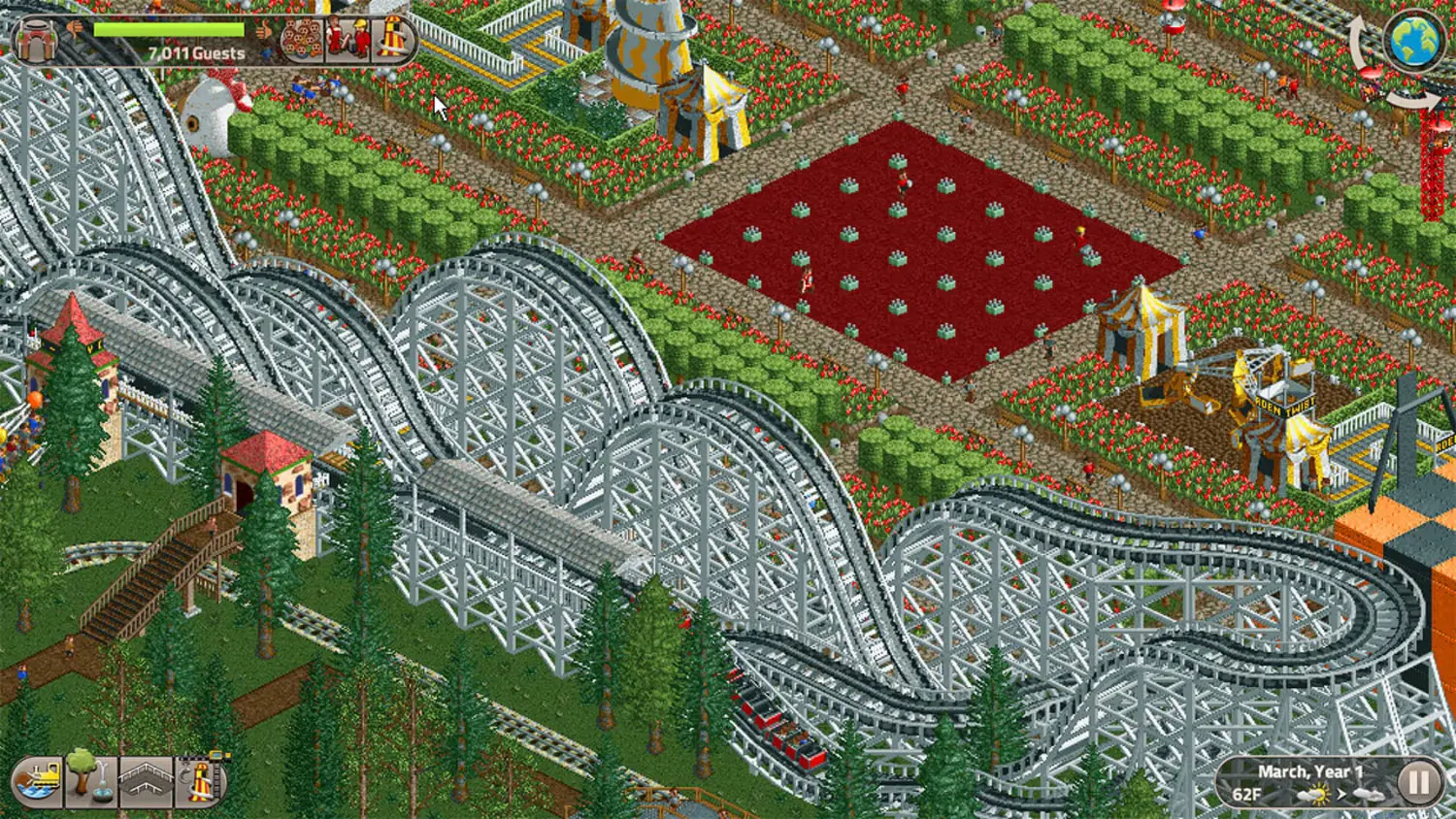
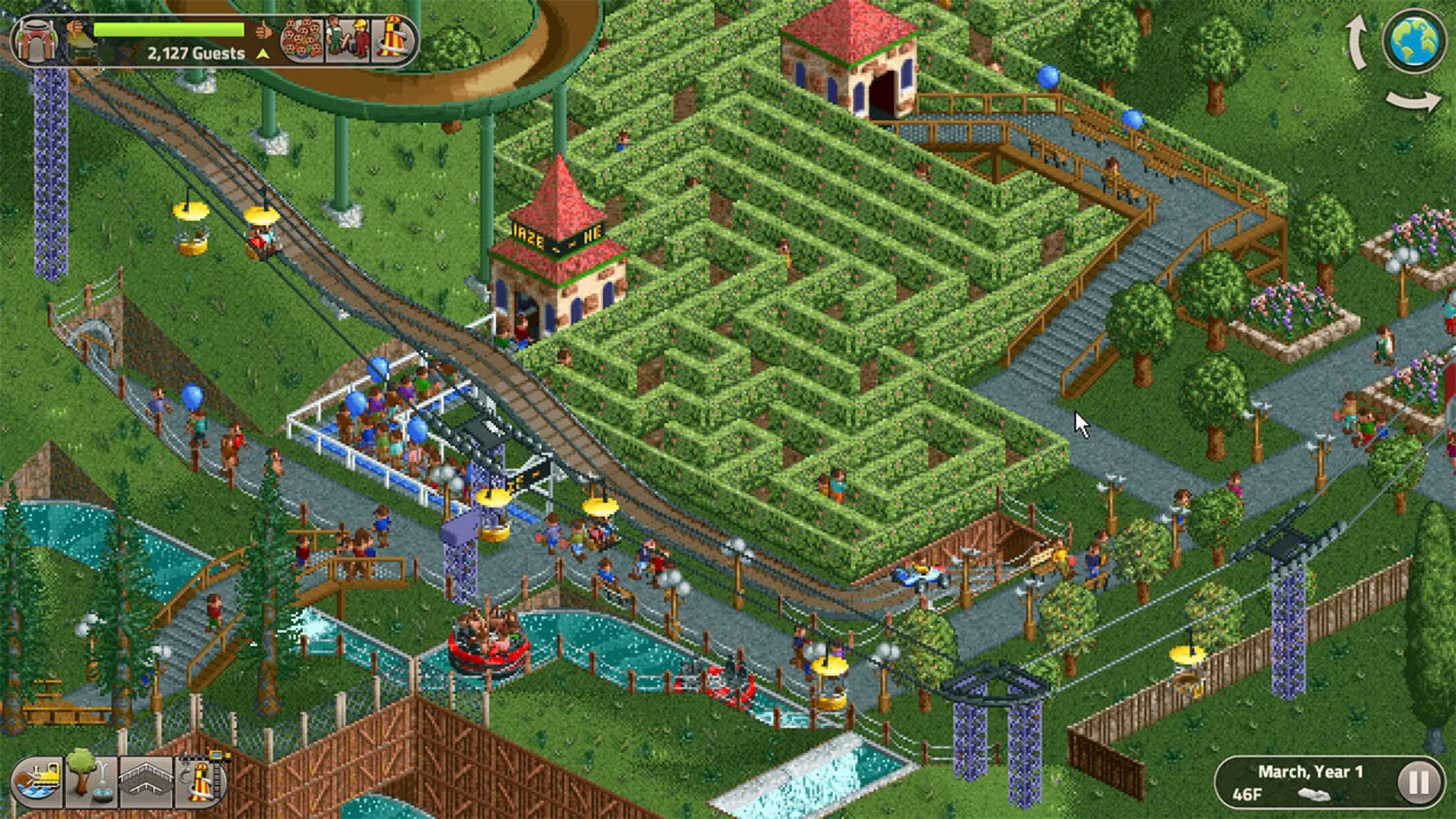
A good park layout needs to be attractive without becoming difficult to navigate. Paths connect every major part of the park, so their placement affects how guests reach rides, shops, and other facilities. A compact route can make services easier to find, while a poorly connected area may leave useful attractions isolated from the rest of the park.
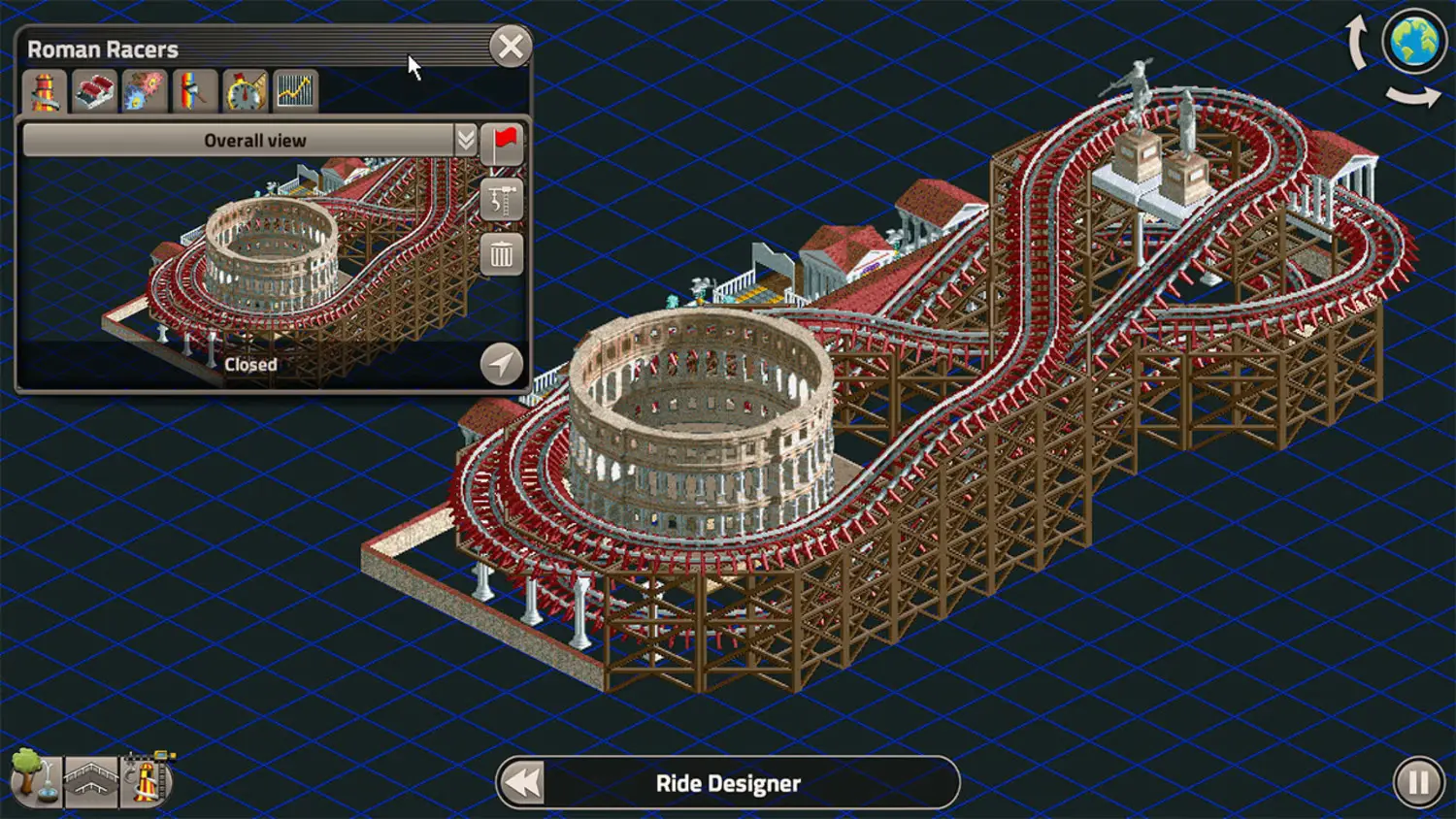
Rides form the main reason guests visit, but the surrounding space matters. Scenery can help shape a more appealing environment, while paths and scenery together can make a park feel organised instead of scattered. The game supports both pre-built rides and custom roller coaster design, giving players room to mix dependable attractions with more personal creations.
Guest facilities help the layout function beyond the rides themselves. Food stalls, drink stalls, restrooms, and souvenir shops should be part of the wider plan rather than late additions. Their value comes from being available where guests need them. Prices also require attention, since the player controls items such as ticket and shop pricing while monitoring the broader financial picture.
The presentation is tied closely to this readable, top-down management view. The player is not only designing attractions but also looking for patterns: crowded areas, distant facilities, rides that need attention, and spaces that could be expanded. That clarity suits a game built around observation and adjustment.
Staff Management Keeps the Park Running
Even an impressive park can lose momentum if everyday upkeep is ignored. Staff management is therefore a major part of maintaining guest satisfaction. Mechanics are responsible for repairing rides, making them essential when an attraction needs attention. Janitors keep the grounds cleaner by dealing with spills, while entertainers can improve the mood of unhappy guests.
These roles reinforce the game’s sense of a living park. Construction may be the most visible activity, yet staffing handles the routine work that makes construction worthwhile. A ride can be exciting, but it still needs to function. A busy path can lead guests to many attractions, but it also creates a space that needs cleaning. The different systems are connected.
This makes staff more than a background expense. They are part of the player’s response to problems as they appear. Hiring and managing the right people supports ride reliability, cleanliness, and guest morale, all of which help the park remain inviting as it grows.
Sandbox Creativity Versus Objective-Based Challenges
Scenario play and sandbox mode serve different moods. Scenarios create management challenges through specific conditions and goals. They encourage efficient spending, sensible expansion, research choices, and attention to guest needs. Success depends on reaching the stated result, not just making a park that looks impressive.
Sandbox mode removes financial constraints and shifts the emphasis toward theme park creativity. It is a place to experiment with a detailed layout, test ride combinations, or build custom coaster designs without the pressure of a scenario target. That freedom can be especially useful for players who enjoy the construction side more than the budget side.
Together, the two approaches support replay value. Structured scenarios offer repeated management tests with changing goals, while sandbox mode allows an idea to develop at its own pace. RollerCoaster Tycoon Classic Switch NSP is therefore suited to players who enjoy both deliberate planning and open-ended building, rather than those looking for a story-led simulation.
7 Practical Priorities for a Stronger Theme Park
- Build variety: Offer a range of rides, from gentler attractions to more thrilling options, so the park is not defined by a single type of experience.
- Maintain facilities: Keep food stalls, drink stalls, restrooms, and souvenir shops available as the park expands, rather than treating them as secondary additions.
- Hire useful staff: Mechanics, janitors, and entertainers each support a different part of the guest experience, from repairs to cleanliness and morale.
- Watch the finances: Ticket prices, shop prices, loans, expenses, and new construction all affect how much room there is for future development.
- Research improvements: New rides, shops, and park improvements can broaden the park’s offerings and create new options for growth.
- Plan efficient paths: Connect attractions and services clearly so guests can move through the park and reach what they need.
- Respond to guests: Guest numbers, needs, and reactions provide useful direction when deciding what the park should add or improve next.
