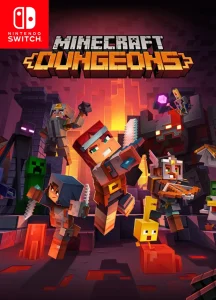
Minecraft Dungeons Switch NSP XCI
Report Link Error
Select the broken download file, then submit the report.
Screenshots
About Game
Minecraft Dungeons Switch NSP XCI refers to Mojang’s action-focused role-playing adventure set in the familiar block-built world of Minecraft. Released for Nintendo Switch on May 26, 2020, it shifts the series away from crafting and survival toward isometric combat, treasure hunting, and dungeon exploration. The result is a game built around accessible action, recognizable enemies, and a steady search for stronger gear.
Minecraft Dungeons on Nintendo Switch: A Dungeon-Crawling Take on Minecraft
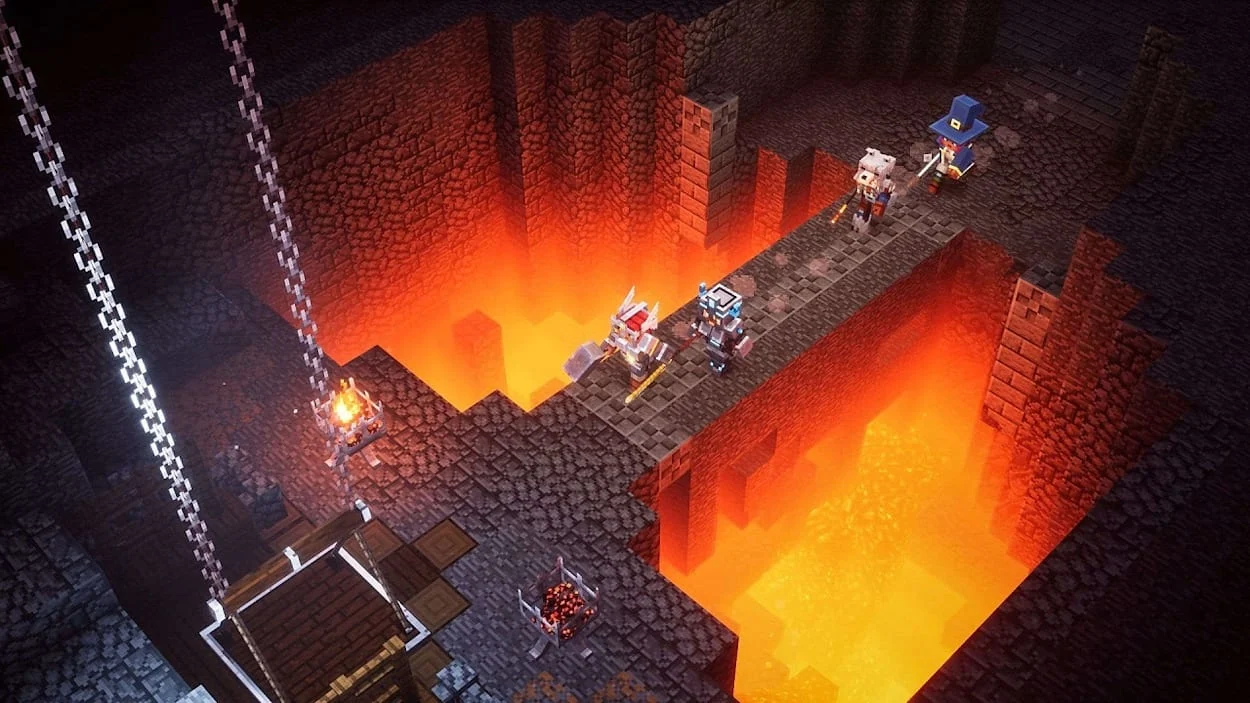
Minecraft Dungeons brings Minecraft’s visual identity into the shape of a traditional action RPG. The world still features squared-off environments, villages, forests, caves, and dangerous mobs, but the player’s focus is no longer on building a shelter or gathering materials for crafting. Instead, the adventure moves through combat-heavy stages viewed from an isometric perspective.
That change gives the Nintendo Switch version a different rhythm from the main Minecraft game. Each area is designed as a route through hostile territory, with groups of enemies, branching paths, environmental details, and rewards waiting away from the main route. Zombies, creepers, spiders, and other familiar foes appear alongside new threats, creating an experience that remains visually connected to Minecraft while playing like a straightforward dungeon crawler.
The presentation is approachable rather than grim. Its danger comes from swarming enemies, boss encounters, and the uncertainty of what may be hidden ahead, while its blocky landscapes preserve the bright, readable look associated with the wider Minecraft universe. For players looking for an action RPG without an elaborate crafting system, the game keeps its priorities clear: explore, fight, collect equipment, and continue onward.
The Arch-Illager and the Quest to Save the Overworld
The Minecraft Dungeons story begins with Archie, a lonely Illager who has been treated as an outcast. His fortunes change after he discovers the Orb of Dominance, a powerful artifact that corrupts him and grants him immense power. Under its influence, Archie becomes the Arch-Illager, turning his anger outward and beginning a campaign of control across the Overworld.
Villages fall under his rule, residents are enslaved, and the land becomes the setting for the hero’s response. The player’s mission is to confront the Arch-Illager and his forces, moving through varied biomes and dangerous locations in pursuit of that goal. It is a simple good-versus-evil setup, but it gives the journey a clear direction and places familiar Minecraft imagery within a more focused adventure narrative.
The Orb of Dominance is central to that conflict. It explains Archie’s transformation and provides the threat behind the campaign against the Overworld. Along the way, the hero faces enemy groups, bosses, and the consequences of the Arch-Illager’s growing rule. The story does not depend on complicated choices; its momentum comes from advancing through locations and becoming strong enough to free the land.
How Combat and Exploration Work in Minecraft Dungeons
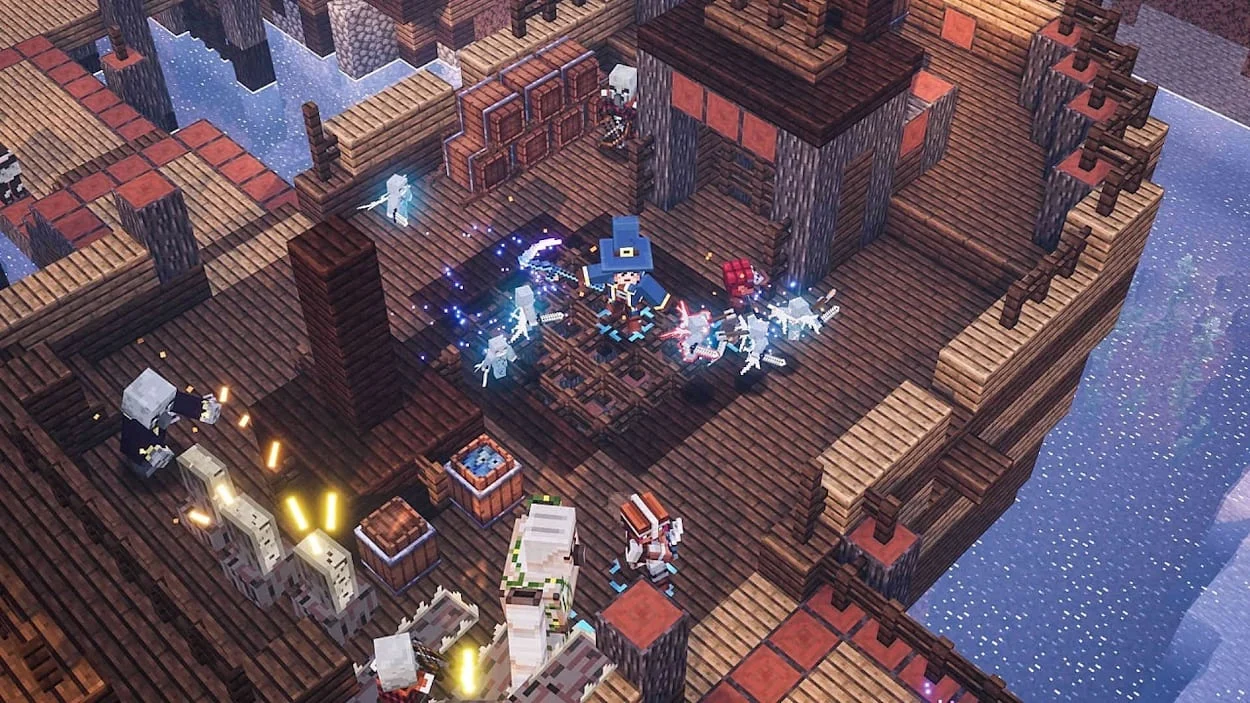
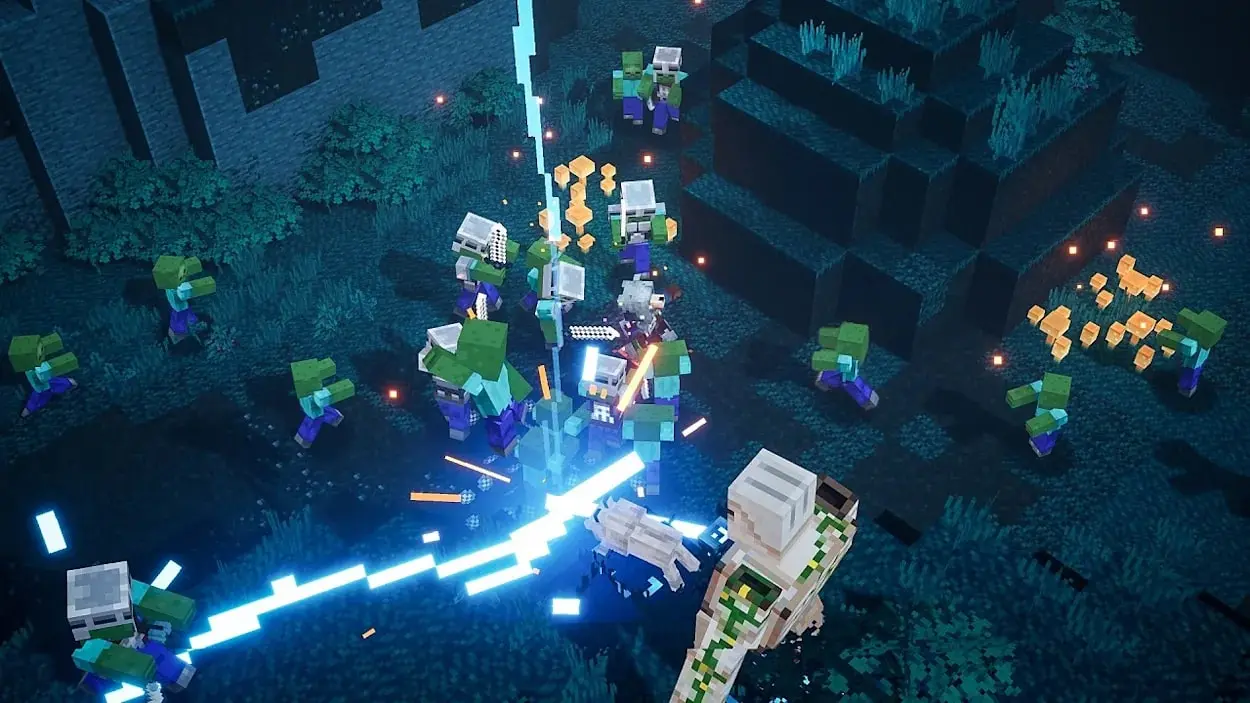
Minecraft Dungeons gameplay is built around hack and slash combat that is easy to understand. Players move through dungeon areas, attack enemies in close quarters or from range, avoid danger, and use the equipment they find. Combat often means dealing with groups rather than isolated foes, so positioning and timing matter when enemies begin to gather around the hero.
Weapons, armor, and artifacts form the core of progression. Instead of placing a major emphasis on crafting, the game rewards combat and exploration with gear that can change how a character approaches a challenge. Equipment can carry enchantments and abilities, allowing players to shape a preferred style through the items they collect.
- Clear the crowd: Encounters regularly place the hero against groups of familiar mobs, making quick responses and movement important.
- Search beyond the route: Side paths and less obvious spaces can lead to secrets, hidden chests, and additional rewards.
- Use found gear: Weapons, armor, and artifacts offer new options without requiring a complex crafting process.
- Watch for puzzles: Simple puzzles break up the fighting and encourage players to pay attention to their surroundings.
- Prepare for bosses: Major encounters add pressure to the journey and test the gear gathered along the way.
This structure makes dungeon crawling feel active without becoming difficult to read. A newcomer can understand the immediate goal—defeat enemies and move forward—while players who enjoy loot-driven RPGs can spend more time considering equipment, enchantments, and the rewards found in optional spaces.
Procedurally Generated Levels and Replayable Adventures
One of the game’s important replay features is its use of procedurally generated levels. Repeated visits are not intended to unfold in exactly the same way each time. Routes, exploration opportunities, enemy encounters, hidden areas, and loot discoveries can vary, encouraging players to revisit locations instead of treating each mission as a single fixed trip.
That variability suits the game’s emphasis on treasure. A run can bring a different combination of weapons, armor, artifacts, or hidden chests, while alternative paths can reward players willing to explore beyond the most direct objective. The appeal is not simply finishing a mission, but seeing what equipment and secrets may appear during another attempt.
Replayability also comes from progression. As the hero gains gear and unlocks new skills through the game’s streamlined system, the next expedition can feel different from the previous one. The loop remains focused: enter a dungeon, face enemies, discover loot, improve the hero, and return to new or familiar areas with more options available.
Solo Play and Four-Player Cooperative Sessions
Minecraft Dungeons supports a flexible approach to its adventure. It can be played solo by those who prefer to explore at their own pace, but its dungeon-crawling structure also suits cooperative sessions. Up to four players can take part together, meaning a hero can be joined by as many as three friends.
Both local and online cooperative play are supported. In a group, the game’s enemy encounters, exploration, and loot-focused progression become a shared activity, with players moving through the same dangerous environments and taking on bosses together. The cooperative format is especially natural for players who enjoy discussing routes, searching for hidden spaces, and fighting through large groups of mobs as a team.
For solo players, the same campaign remains centered on personal equipment choices and direct control of the action. That balance makes the game suitable for a wide audience: Minecraft fans curious about an action RPG, players new to dungeon crawling, and groups seeking a cooperative adventure with familiar visual elements.
Release Details, Regions, and Supported Languages
Minecraft Dungeons Switch NSP XCI is listed with a May 26, 2020 release date. Mojang served as both publisher and developer. The listed regions are USA, EUR, JPN, and Asia.
Supported languages include English, Japanese, German, Spanish, Portuguese, French, Italian, Russian, and Chinese. The base version is listed for firmware v10.2.0, while the update is listed for firmware v15.0.0. With its familiar Minecraft setting, direct action RPG structure, procedural level variation, and options for solo or four-player cooperative play, the Nintendo Switch release presents dungeon crawling in a form that remains closely tied to Mojang’s blocky world.
Recommended Similar Games
 Darksiders Genesis Switch NSP XCIView Game
 DRAGON QUEST XI S: Echoes of an Elusive Age – Definitive Edition Switch NSP XCIView Game
 Shining Resonance Refrain Switch NSP XCIView Game
 Chocobo’s Mystery Dungeon Every Buddy! Switch NSPView Game
 Disgaea 6: Defiance of Destiny Switch NSP XCIView Game
 Yo-kai Watch 1 for Nintendo Switch NSPView Game
