Mario vs. Donkey Kong Switch NSP XCI
Report Link Error
Select the broken download file, then submit the report.
Screenshots
About Game
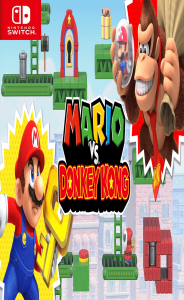
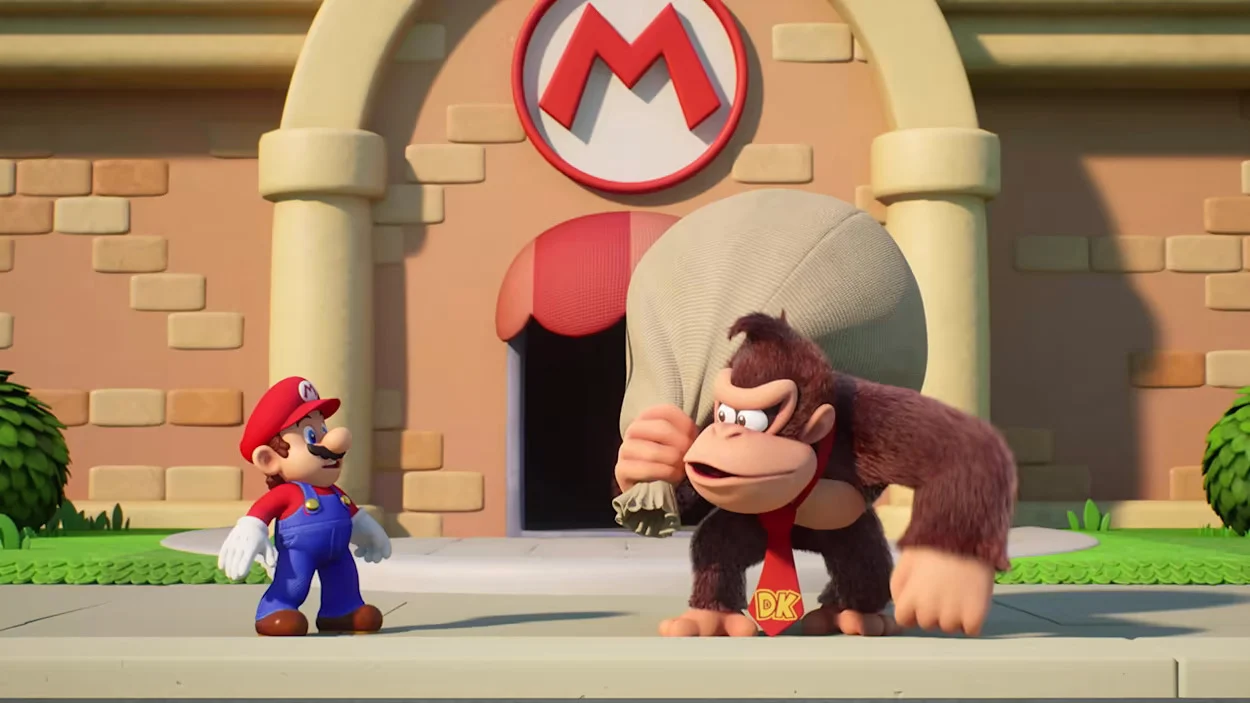
Mario vs. Donkey Kong Switch NSP XCI revisits a familiar Nintendo rivalry as a compact, methodical puzzle-platforming chase. Released in 2024, the game sends Mario after Donkey Kong, who has taken the Mini-Mario toys from the Mario Toy Company. The premise is playful, but the stages ask for patience: each new area layers obstacles, enemies, switches, and moving elements into routes that reward careful observation.
Mario vs. Donkey Kong on Switch: A Puzzle-Platforming Rivalry Returns
Mario vs. Donkey Kong 2024 frames its action around Mario’s pursuit of Donkey Kong through themed worlds. Donkey Kong’s fascination with the Mini-Marios becomes the spark for the adventure, while Mario’s response is direct: recover the stolen toys and continue the chase.
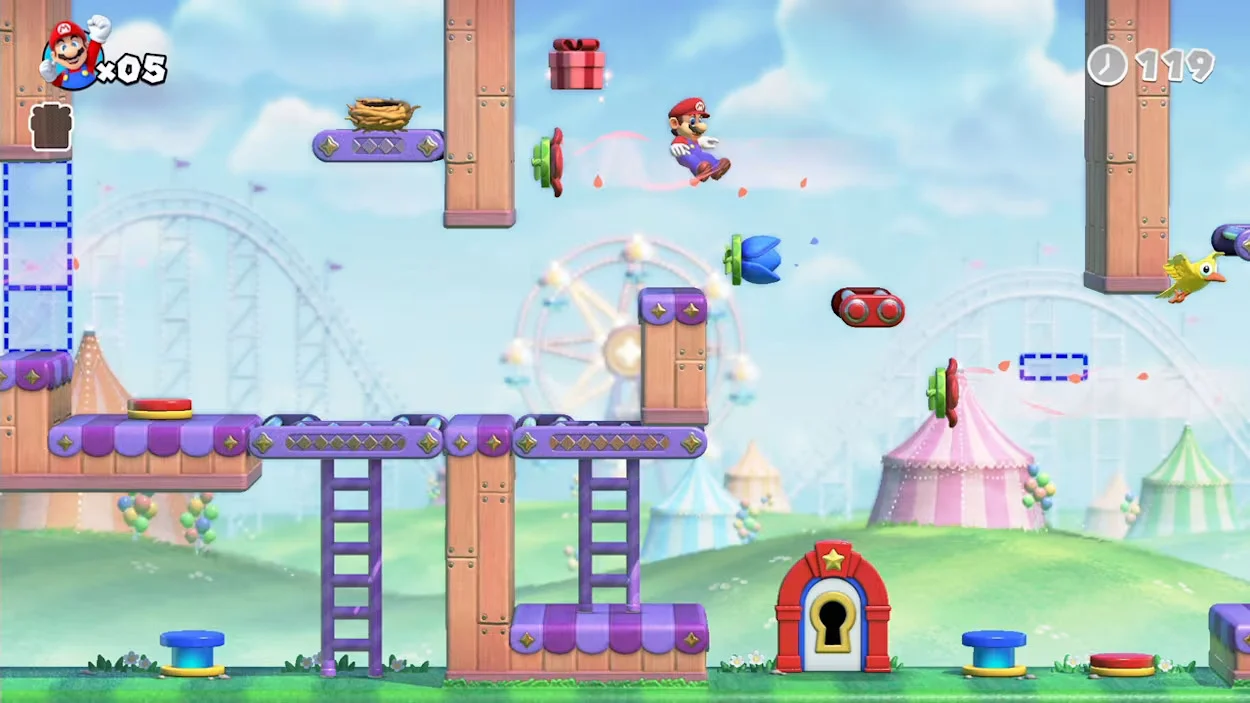
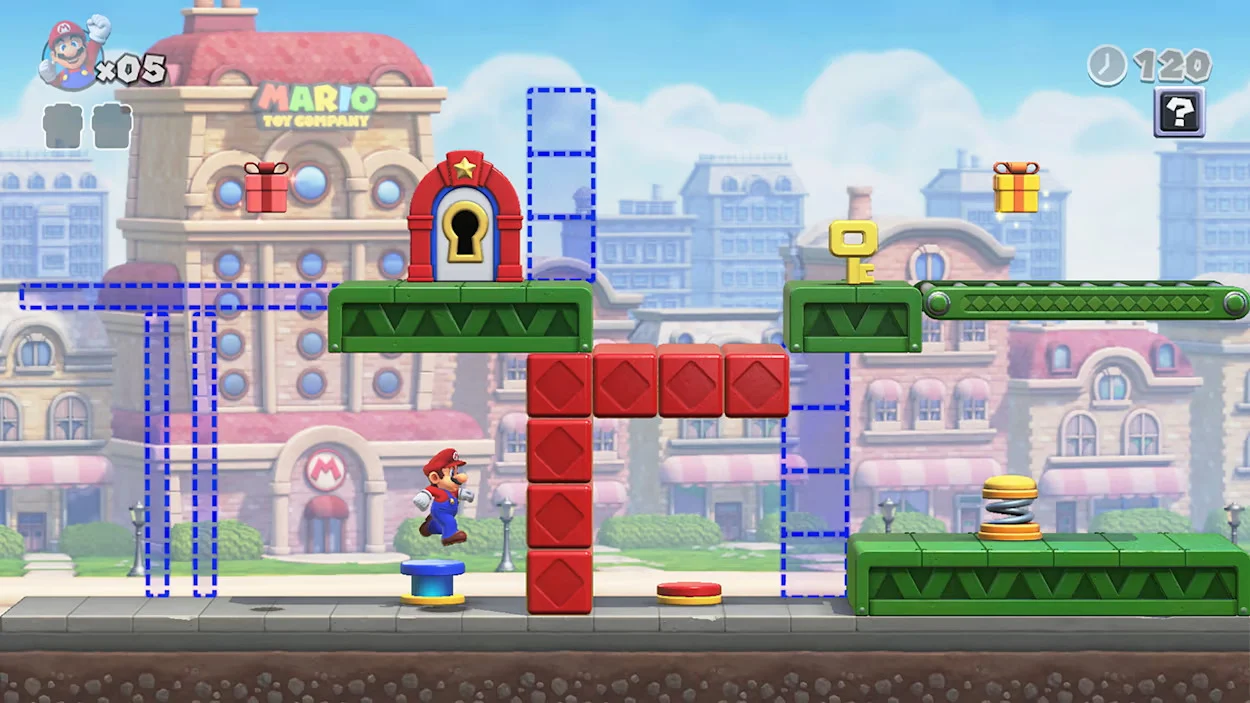
The result is a puzzle platformer in which movement and planning carry equal weight. Mario is not simply racing through a course. He has to read the layout, assess the hazards, and work out how interactive parts of the stage fit together. Enemies can obstruct a route, conveyor belts can alter the pace of a section, and switches may change what is possible elsewhere in the room.
That structure gives the rivalry a lighter, toy-themed atmosphere without taking attention away from the puzzles. The story remains simple and functional, allowing the escalating stage design to do most of the work. As Mario advances, the challenges introduce fresh combinations of obstacles and actions, making each section feel like a small problem to untangle before the pursuit can continue.
The Core Objective: Exits and Toy Boxes
The basic loop in Mario vs. Donkey Kong Switch is easy to understand but leaves room for increasingly intricate solutions. Mario explores a puzzle-filled stage, reaches the required objective that opens the exit, and then leads the Mini-Marios safely onward to their toy box.
Those two responsibilities shape the pace. A route that gets Mario through a danger zone may not be safe for the Mini-Marios that follow him. Players must consider where the toys will move, what hazards are still active, and whether a switch or item needs to be used before bringing the group across a difficult section.
The Mini-Marios are more than a story device; they are central to the challenge. Their movement follows Mario’s last action, so positioning matters. A successful solution often means preparing the route first, then leading them through it with enough care to avoid turning a completed path into a new problem.
Mario’s Movement and Puzzle-Solving Tools
Mario’s moveset supplies the tools needed to reshape a stage. Jumping helps him cross gaps and navigate vertical layouts, while climbing ropes opens routes that cannot be reached from the ground. These familiar actions gain puzzle value when they are used in the right sequence rather than merely for speed.
Item handling is another important part of the design. Mario can pick up and throw objects, which can clear obstructions or interact with elements positioned beyond his immediate reach. A throw may be the safer answer to a blocked route, particularly when hazards or enemies make direct contact inconvenient.
Acrobatic movement also helps Mario negotiate the level architecture. Together, jumping, climbing, carrying, throwing, and using the environment give players several ways to approach a problem. The game’s progression is built around gradually adding mechanics and complications, encouraging players to apply familiar actions in new arrangements instead of relying on one routine.
7 Practical Puzzle Tips for Mario vs. Donkey Kong
- Survey first. Before moving Mario, look across the stage for hazards, switches, conveyor belts, enemies, and possible routes. The obvious direction is not always the useful one.
- Plan the full route. Think beyond Mario’s immediate destination. A route must also work when it is time to bring the Mini-Marios through the area.
- Test item throws. Carryable objects can do more than remove a nearby obstacle. Try throws when a distant switch or blocked passage appears to be out of reach.
- Use switches deliberately. Activate interactive elements with a clear next step in mind. Changing the stage too early can make later movement less convenient.
- Watch the hazards. Enemies and environmental dangers can turn a short route into a risky one. Clearing or avoiding them before moving the toys is often the safer plan.
- Track Mini-Mario movement. The Mini-Marios respond to Mario’s last move, so lead them with intention. Avoid setting a direction that guides them toward danger.
- Communicate in co-op. In two-player challenges, decide who will handle movement, items, or switches before both players commit to different actions.
Two-Player Co-op and Shared Puzzle Planning
Mario vs. Donkey Kong co-op adds a shared approach to the game’s puzzle-solving. Two players can work together in dedicated two-player levels, coordinating their actions as they deal with the same kinds of interactive objects, hazards, and routes found throughout the adventure.
This mode can make planning more dynamic. One player may focus on reaching a switch or managing an item while the other considers the safer route through the stage. The benefit is not simply having another character present; it is the opportunity to discuss a solution, divide attention between different parts of the room, and adjust when a first idea does not work.
For players who enjoy cooperative puzzle games, the dedicated challenges offer a natural reason to revisit the game alongside a friend. The emphasis remains on communication and stage awareness, keeping the experience aligned with the single-player focus on deliberate movement and puzzle logic.
Release Details, Regions, and Language Support
Mario vs. Donkey Kong Switch NSP XCI is associated with a February 16, 2024 release. Nintendo serves as both publisher and developer. The game is listed for Europe, the USA, Asia, and Japan, with a Title ID of 0100B99019412000.
Language support includes English, Dutch, French, German, Italian, Japanese, Korean, Simplified Chinese, Spanish, and Traditional Chinese. It is classified in the Action and Puzzle genres, which reflects its blend of Mario’s platforming movement with obstacle-based, room-by-room problem solving.
The game is suited to players looking for a friendly but structured challenge: those who enjoy examining a stage before acting, experimenting with its interactive pieces, and guiding the Mini-Marios through a route that is safe as well as efficient.