Nippon Marathon Switch NSP
Report Link Error
Select the broken download file, then submit the report.
Screenshots
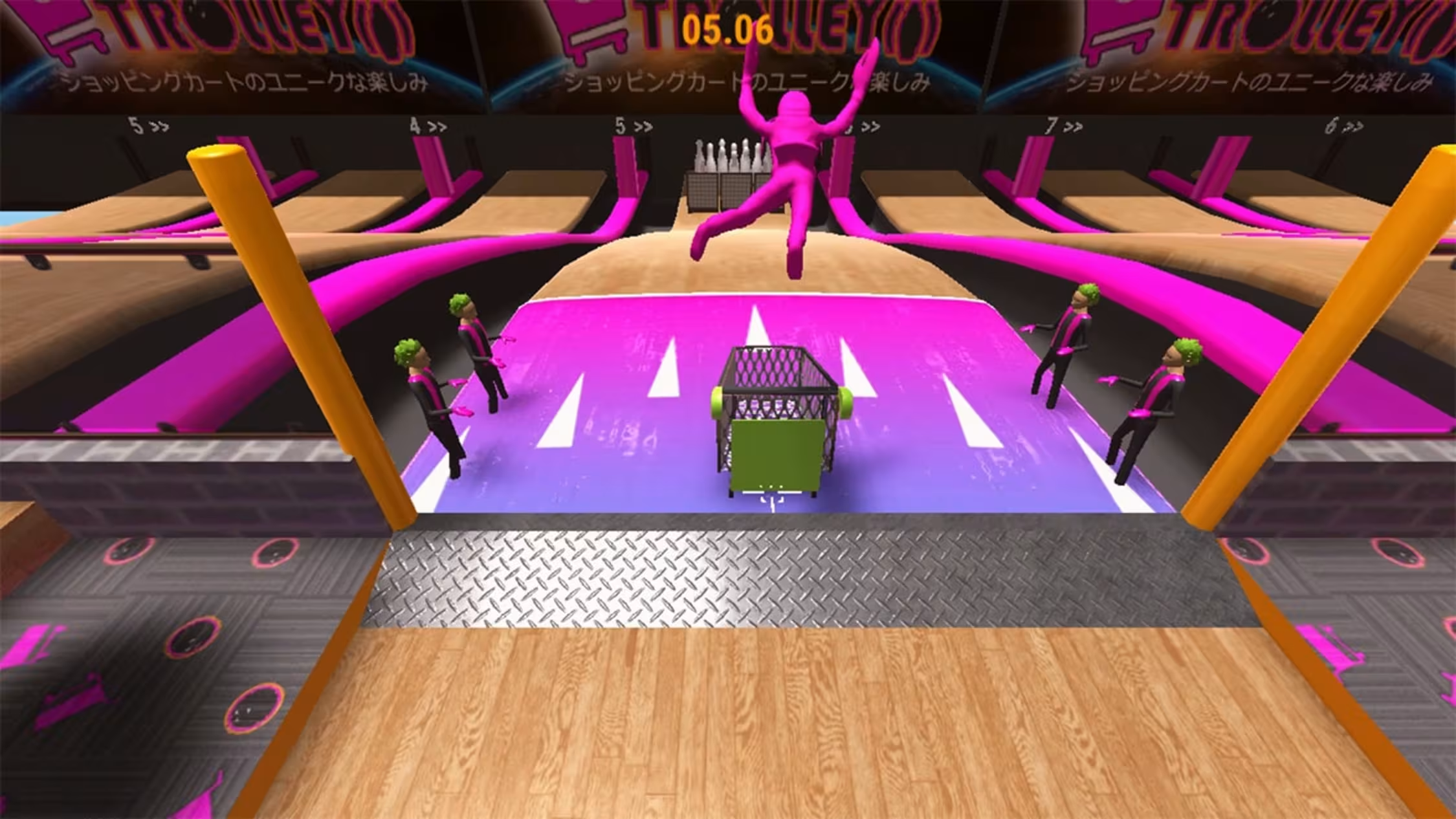
About Game
Nippon Marathon Switch NSP points to a deliberately unruly arcade party race where finishing a course can feel as important as winning it. Set against the exaggerated energy of a Japanese game show, the game mixes sprinting, platforming, item use, and slapstick collisions into races that are designed to go wrong in memorable ways.
What Makes Nippon Marathon a Chaotic Arcade Party Race
Nippon Marathon treats racing as a moving obstacle course rather than a clean contest of speed. Runners are expected to charge through bizarre environments, recover from spills, avoid hazards, and keep their place in a pack that can change shape in seconds. The arcade party racing format gives every mistake a visible consequence: a stumble can erase a lead, while a well-timed recovery can pull a trailing contestant back into contention.
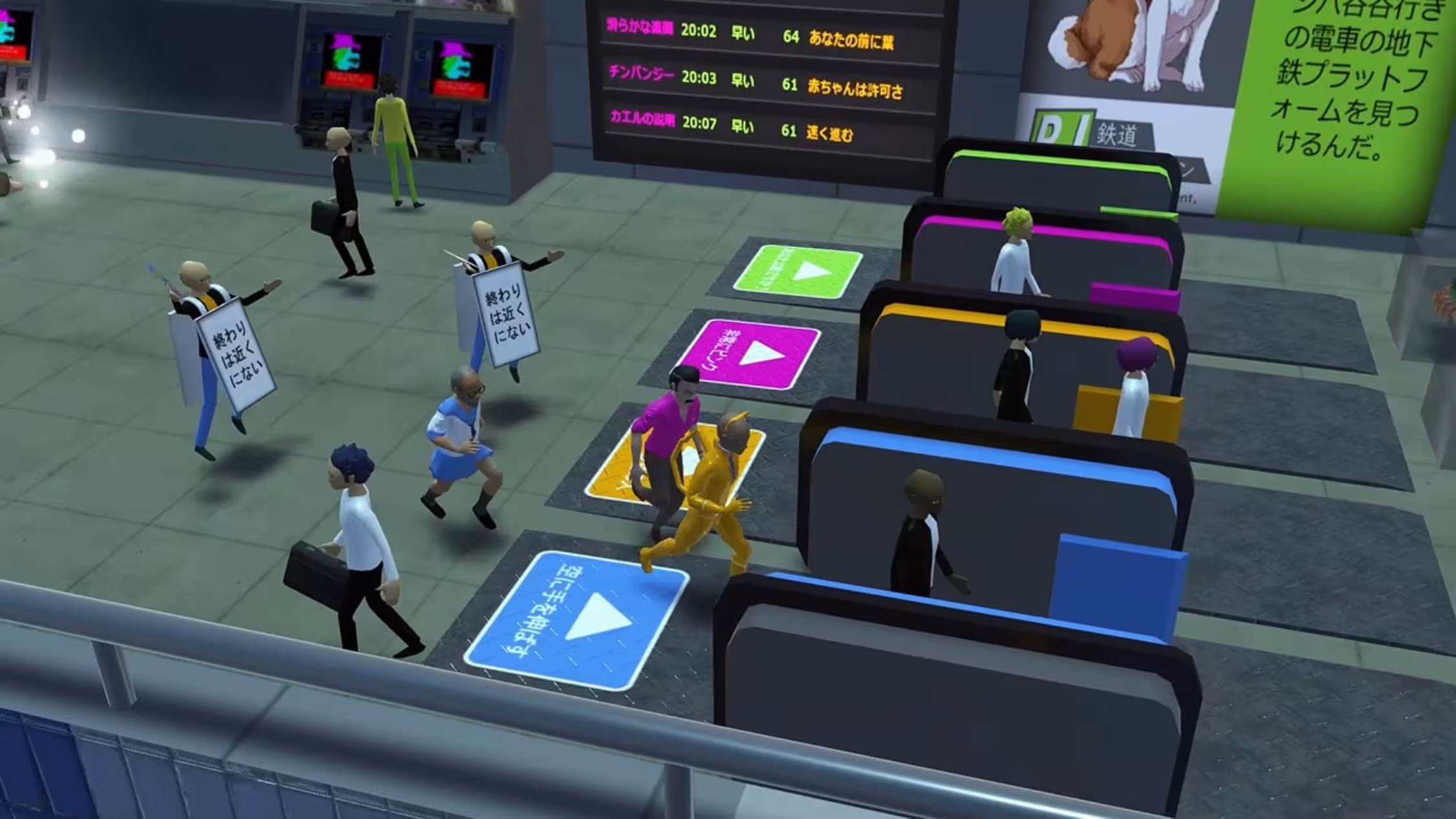
The Nintendo Switch game is built around physical comedy and unstable competition. Characters run, dive, shove, and collide as courses present obstacles that are often as dangerous as the other racers. Its exaggerated physics-driven action supports a playful tone, but the elimination rule adds real pressure. Falling too far behind does not simply mean a poor finishing position; it can mean being removed from the race entirely.
That tension makes the races more than a series of gags. Players need to keep moving, judge risks, and choose when to challenge an opponent. The result is a party game that can produce sudden reversals without losing sight of the basic goal: survive the course and reach the finish line ahead of the field.
A Futuristic Game Show Fighting to Stay on Air
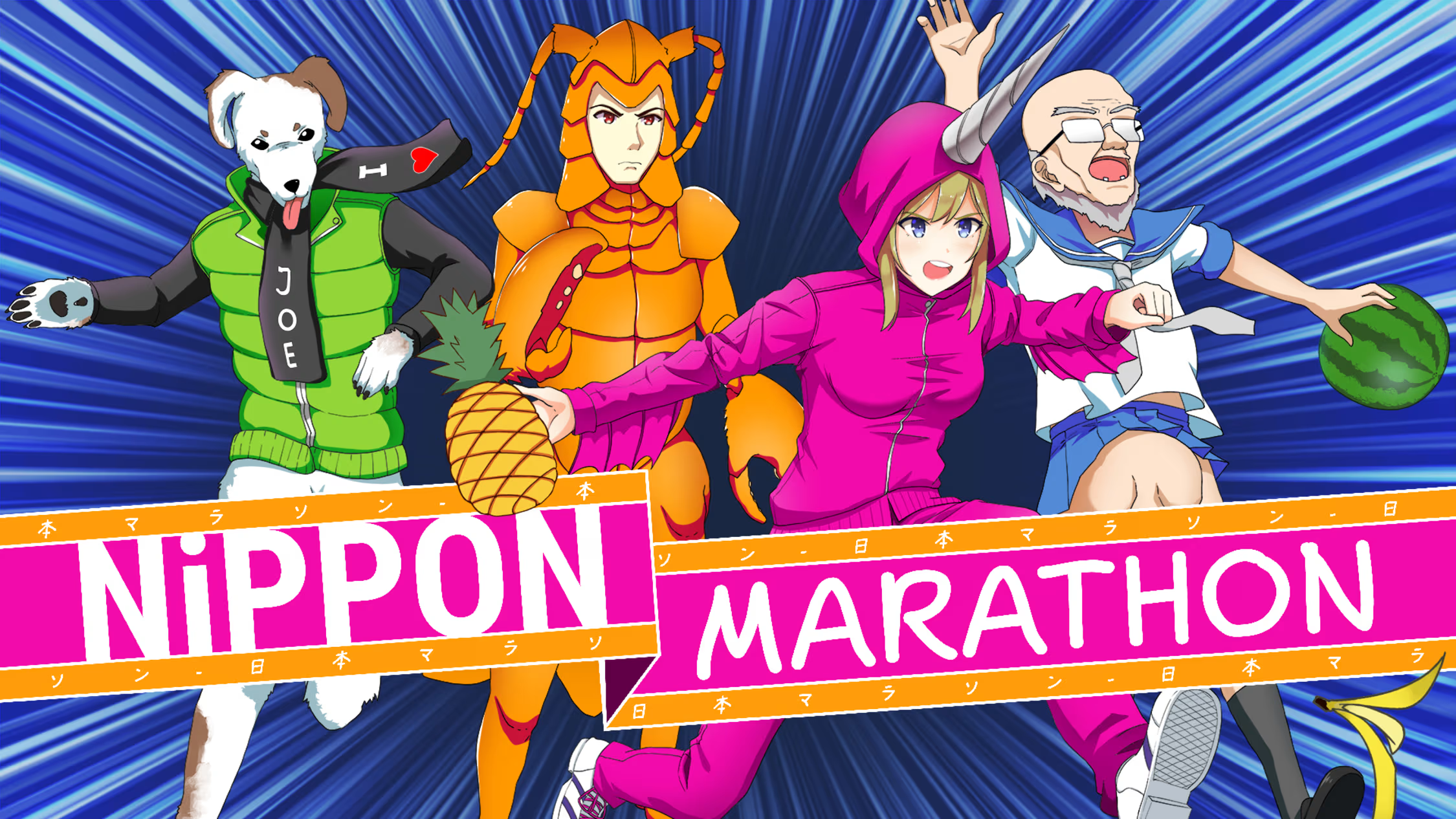
The Nippon Marathon story is framed around a future version of Japan where the Nippon Marathon reality TV show has become a major spectacle. Its contestants are an eccentric group with unusual motives for entering, matching the strange tone of the competition itself. The show’s larger problem is serious in only the broadest, most playful sense: financial trouble and falling ratings have put it in danger of closure.
This final marathon therefore carries the weight of saving the programme. The competitors are pushed through punishing courses for the entertainment of an audience, while the show fights to prove it can still command attention. It is a fitting premise for a game focused on absurdity. The reality TV show setup gives each race a sense of performance, as if every fall, collision, and miraculous recovery is part of a broadcast built for spectacle.
Rather than building a dense futuristic Japan setting, the narrative provides an excuse for the event’s escalating silliness. That light approach suits the game’s presentation: the race is the main attraction, and the story gives the chaos a playful reason to matter.
Outrageous Obstacles That Turn Every Course Into a Spectacle
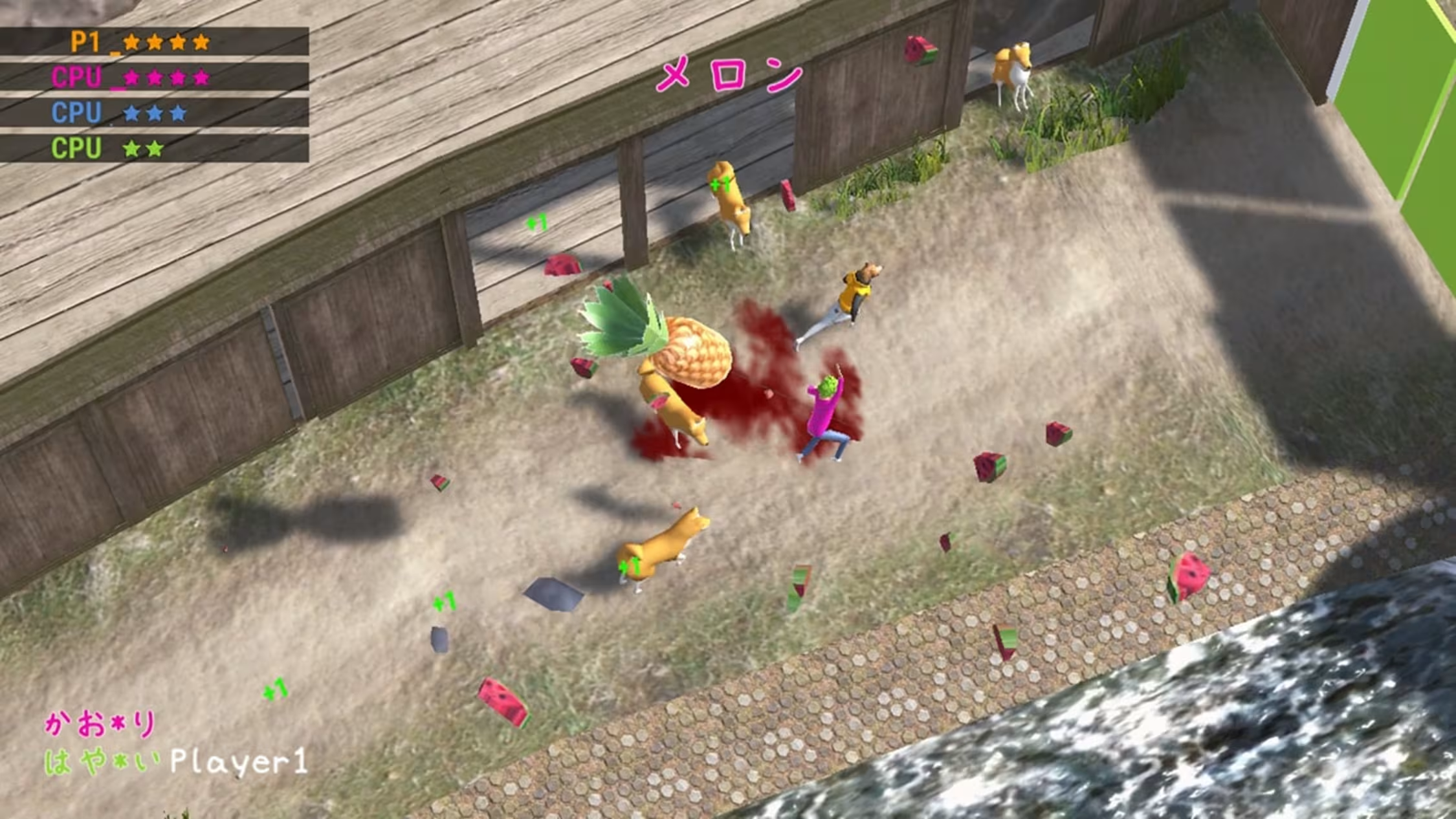
The best Nippon Marathon obstacles make ordinary movement unreliable. Giant rolling watermelons can transform a straightforward stretch of track into a scramble for balance. Shiba inus add another unexpected threat, while pitfalls and ledges force players to pay attention to footing as well as rivals. A course is not merely a route to memorize; it is an active source of interruption.
Environmental interactions expand the racing beyond running in a straight line. Wall-running opportunities and difficult ledges create platforming decisions during the race, asking players to choose between a potentially useful route and the danger of losing momentum. The courses are designed to make their hazards part of the action rather than background decoration.
Items further disrupt the field. Slippery banana peels and bowling balls can be used to inconvenience opponents, turning a close race into a fast-moving contest of timing and placement. Since everyone is trying to manage the same hazards, the atmosphere can shift from controlled movement to instant panic. A leading player may be one collision away from trouble, while somebody in the back may find an opening through a better line or a well-used item.
Why Local Multiplayer Fits the Party-Game Design
Nippon Marathon local multiplayer supports up to four players, a natural match for a game built on visible mistakes and sudden interference. Shared races make it easy for each player to see who caused a collision, who misjudged a ledge, and who survived an obstacle by a narrow margin. The humour is not separate from the competition; it grows directly from watching the race unravel in real time.
As a four player party game, it encourages rivalry without demanding perfect execution. Strong positioning can disappear after one hazard, and an eliminated racer can become a reminder that no lead is completely safe. That uncertainty gives group sessions a lively rhythm, with comebacks and setbacks arriving quickly enough to keep attention on every part of the course.
The Nintendo Switch multiplayer setting also suits the game’s immediate structure. Players can focus on learning the hazards, responding to items, and trying to stay ahead of elimination. Its replay value comes from the unpredictable interaction between people, obstacles, and the courses themselves. Familiarity may help with routes, but a race can still change because a rival shoves at the right moment or a rolling object catches several runners at once.
5 Ways to Stay Competitive in Nippon Marathon
- Keep the pace. Do not treat an early setback as harmless. Falling too far behind leads to elimination, so recovering forward momentum matters throughout the course.
- Read the hazards. Watch for rolling watermelons, shiba inus, pitfalls, and ledges before committing to a path. Avoiding one major stumble can protect a hard-earned position.
- Use items with purpose. Banana peels and bowling balls are most useful when rivals are nearby or approaching a difficult section where disruption can matter.
- Work with the course. Wall-running and other environmental interactions can provide an advantage, but only when attempted with enough control to avoid losing time.
- Challenge rivals at key moments. Pushing and shoving can send opponents off course or toward hazards. Save that interference for congested areas or decisive stretches of a race.
Nippon Marathon Switch Version Overview
The Nippon Marathon Switch release is published by PQube and developed by Onion Soup Interactive. Its listed genre is Arcade, Party, reflecting the mix of competitive racing, obstacle navigation, items, and local group play. The USA region release supports English and Japanese, and the verified version is 1.0.5.
For players looking for a competitive game that values laughter, disruption, and rapid reversals as much as clean racing lines, its tone is clear from the first dangerous course. The game is especially suited to local groups of up to four people, as well as solo players who enjoy demanding races shaped by hazards, environmental movement, and the constant threat of elimination.