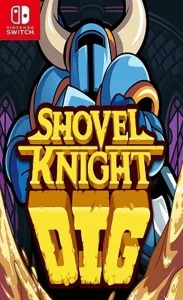
Shovel Knight Dig Switch NSP
Report Link Error
Select the broken download file, then submit the report.
Screenshots

About Game
Shovel Knight Dig Switch NSP brings Yacht Club Games’ blue hero to Nintendo Switch for a downward-driving adventure built around speed, precision, and changing underground routes. Released on September 23, 2022, the game was both developed and published by Yacht Club Games, and its listed genres—Action, Adventure, and Platformer—fit its mix of combat, exploration, and vertical movement.
Shovel Knight Dig on Nintendo Switch: A Fast Fact Overview
Shovel Knight Dig takes the familiar shovel-wielding hero into a different kind of journey. Rather than setting out across a fixed landscape, Shovel Knight heads below the surface, where each descent presents shifting paths, hazards, enemies, treasures, and opportunities to improve future attempts. The Nintendo Switch release gives the game a natural home for players looking for compact but demanding platforming runs.
The September 23, 2022 release arrived with Yacht Club Games handling both development and publishing. That direct involvement matters because the game retains key pieces of the series identity—jumping, enemy encounters, shovel-based attacks, gems, secrets, and colorful adversaries—while applying them to a roguelite structure. Progress is not solely about reaching a single destination. It is also about learning how the depths behave, finding useful items, and preparing for the next trip down.
The result is an action-platformer with an adventurous premise and a strong sense of momentum. A run can reward confident movement, but it also asks players to pause when a dangerous shaft, an unfamiliar foe, or a hidden route calls for a more careful approach.
Why Shovel Knight Goes Underground
The story begins when Drill Knight and the Hexcavators make off with Shovel Knight’s dirt mound. Their theft leaves behind a huge hole, and Shovel Knight immediately gives chase by leaping into the opening. The simple setup gives the descent a clear purpose: recover what was taken and confront the group responsible.
That pursuit carries Shovel Knight through increasingly perilous underground layers. The setting is not merely a backdrop for isolated stages; it frames the whole adventure as a plunge into a vast, hostile world beneath the surface. Different areas bring their own dangers and inhabitants, while the Hexcavators’ scheme remains the reason to keep pressing deeper.
The underground adventure also suits the game’s structure. Descending is both a story action and a gameplay commitment. Every drop can lead toward treasure, an alternate path, an enemy encounter, or a risk that demands a quick response. The hole left by Drill Knight is therefore more than an opening scene detail—it defines the game’s direction, pace, and tension.
Procedurally Generated Descents and Replayable Runs
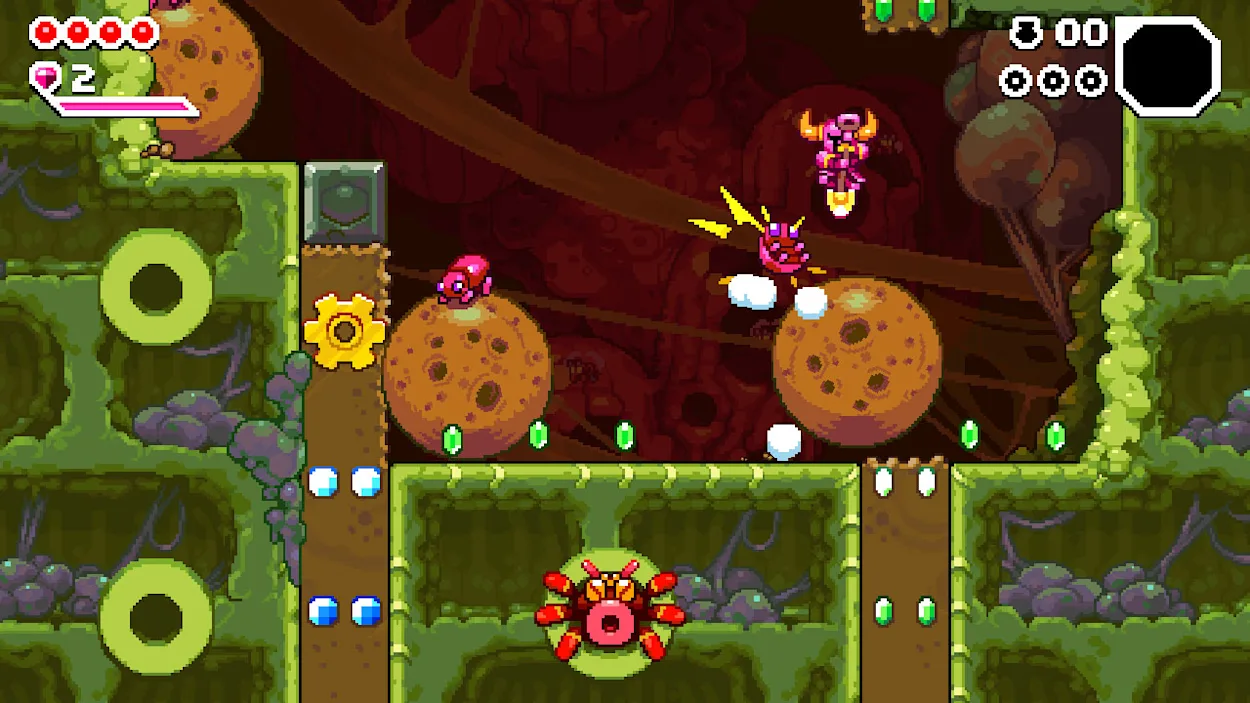
Changing level layouts give Shovel Knight Dig its replayable edge. The underground routes are procedurally generated, so a new run does not simply repeat the same sequence of rooms and obstacles. Players may face different paths, hazards, encounters, discoveries, and hidden passages as they descend.
This design makes adaptation important. A familiar toolset can meet unfamiliar circumstances: a route may offer room to move quickly, while another may require a more measured descent through dangerous vertical spaces. Relics and items can also change the feel of a run, giving players reasons to experiment rather than rely on one fixed approach.
- Changing routes: Procedurally generated levels make each trip underground different.
- Useful discoveries: Gems, power-ups, relics, items, and hidden paths can alter a run’s priorities.
- Permanent growth: Progress toward upgrades gives later descents a stronger foundation.
- Careful choices: Health, armor, and item-carrying upgrades can influence how far a run can go.
- Practice matters: Repeated attempts build familiarity with movement, hazards, and enemy behavior.
That loop makes the game suitable for players who enjoy platformers with room for repeated attempts and gradual improvement. Failure is part of the learning process, but each run can reveal a better route, a more effective item combination, or a safer answer to a challenge encountered before.
Digging, Shovel Drops, and Vertical Movement
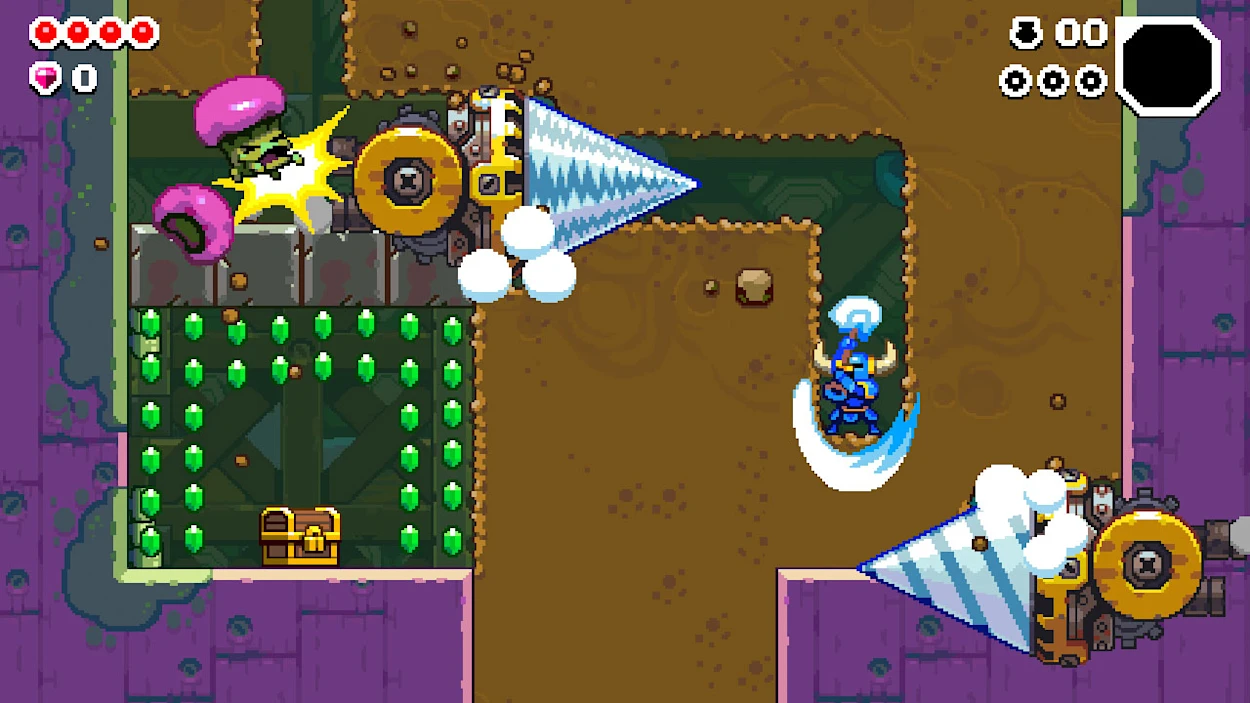
Vertical platforming is central to the experience. Shovel Knight digs downward, jumps between openings, fights enemies, and navigates shafts that demand accurate positioning. The movement is not just about getting from one ledge to the next; it is about controlling the pace of a descent while remaining ready for threats below.
The new Dig Down move supports quick vertical movement and can be used for escapes or strategic attacks. It fits neatly alongside the classic shovel drops associated with Shovel Knight’s platforming style. A well-timed shovel drop can help deal with enemies while keeping the hero moving through the level, but reckless movement can put him in danger.
Precision becomes particularly valuable in cramped or hazardous spaces. Digging can open a route, jumping can preserve momentum, and a deliberate downward strike can create an opening. The game’s mechanics encourage players to read the terrain instead of treating every shaft as a straight line to the bottom.
Enemies and Bosses in the Depths
The depths are populated by new enemies and formidable bosses. Their presence gives the underground world a lively but threatening character, especially as Shovel Knight travels through different layers and encounters new denizens serving Drill Knight’s larger plan.
Combat rewards observation. Enemies can have recognizable behaviors, attack patterns, tells, or vulnerabilities, and patience can be more valuable than charging forward. Choosing a safe opening for a shovel strike may protect health and keep a promising run alive. Some defeated foes can yield health or gems, adding another reason to consider when and how to engage.
Boss encounters raise the stakes further. These battles ask players to apply the same lessons learned during a descent: watch movement, recognize danger, and use precise timing. The game’s action is quick, but its combat strategy is not mindless. A player who pays attention to patterns has more room to turn difficult encounters into manageable ones.
Switch Release Details: Regions, Languages, and Technical Metadata
The Nintendo Switch release is listed for Europe, the USA, Asia, and Japan. Its Title ID is 0100B62017E68000. The base version lists firmware v14.1.2, while the update lists firmware v16.0.3.
Listed language support includes English, Dutch, French, German, Italian, Japanese, Korean, Portuguese, Russian, Chinese, and Spanish. English appears twice in the supplied language listing. For players seeking a brisk platforming challenge with changing layouts, permanent upgrade progress, hidden routes, and a focused underground premise, Shovel Knight Dig Switch NSP is defined by its repeated descents and the skill required to survive them.