Phoenix Wright Ace Attorney: Trilogy Switch NSP

Report Link Error
Select the broken download file, then submit the report.
Screenshots


About Game
Phoenix Wright Ace Attorney: Trilogy Switch NSP brings Phoenix Wright’s early courtroom adventures together on Nintendo Switch in a single collection. Developed and published by Capcom, it combines mystery-solving, investigation work, and high-pressure cross-examinations across three connected games, giving players a long view of a defense attorney learning how to fight for the truth.
Three Phoenix Wright Adventures in One Collection
The Phoenix Wright trilogy contains Phoenix Wright: Ace Attorney, Phoenix Wright: Ace Attorney – Justice for All, and Phoenix Wright: Ace Attorney – Trials and Tribulations. These three games follow a familiar structure: each adventure is divided into multiple cases, with every case presenting a new client, a new mystery, and a collection of facts that do not initially fit together.
The cases often begin with an apparently direct question of guilt or innocence, then grow more complicated as testimony changes and new information emerges. A witness may be mistaken, hiding something, or offering a statement that conflicts with the evidence. That rhythm makes the collection well suited to players who enjoy visual-novel storytelling but also want a clear problem-solving role within the narrative.
Rather than treating the three games as unrelated episodes, the collection presents them as successive stages in Phoenix’s career. Familiar relationships, earlier events, and personal consequences continue to matter as the cases become more demanding. The result is three games with their own mysteries, while still forming one broader legal drama.
Phoenix Wright’s Journey from Rookie Attorney to Confident Defender
Phoenix Wright begins as a rookie defense attorney trying to clear his clients’ names. His work places him in court against determined prosecutors, unusual witnesses, and cases where the available evidence can appear overwhelming. The central task is not simply to argue loudly; it is to identify what has been overlooked, question what has been assumed, and expose the gap between a statement and the facts.
Across the trilogy, Phoenix develops from an uncertain newcomer into a more confident defender. The cases raise the personal stakes around him, tying professional duties to friendships, losses, and difficult revelations. Maya Fey is part of that journey as Phoenix’s trusted assistant, bringing spiritual guidance and comic relief while remaining connected to the series’ larger mysteries.
This progression gives the courtroom drama a more personal dimension. Each defendant needs help in the moment, yet Phoenix’s own history increasingly shapes why the cases matter. The collection’s tension comes from both the immediate question of what happened and the longer question of what Phoenix will learn as he continues practicing law.
How Investigations Build Every Case
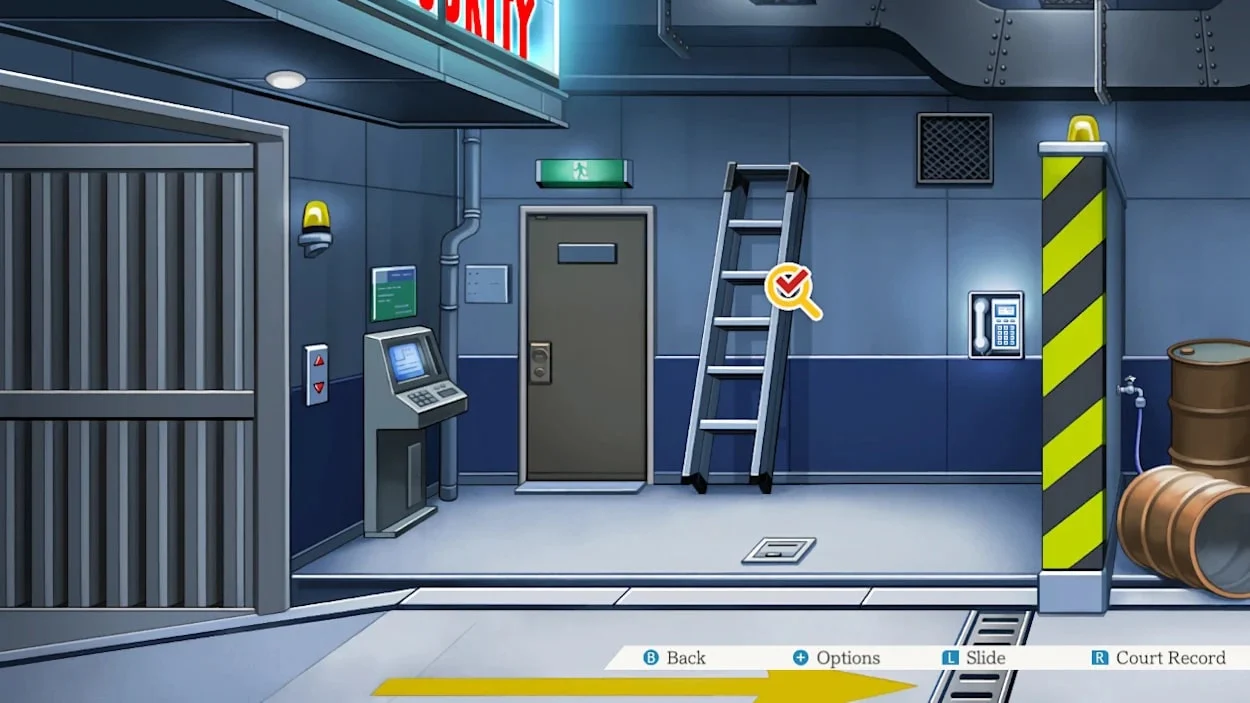
The investigation gameplay provides the foundation for each courtroom battle. Before presenting an argument, players visit locations connected to the incident, speak with involved characters, examine crime scenes, and collect information. The pace is more deliberate than the trial sequences, encouraging close observation and careful conversation.
Evidence collection is essential because courtroom arguments depend on what has been found during these investigations. Items, photographs, and character profiles can all become useful later. A detail that seems minor while examining a scene may be exactly what is needed to challenge a witness’s account.
These sections also help build the collection’s atmosphere. Crime scenes, conversations, and evolving clues create the sense that each case is being assembled piece by piece. Players are not merely watching a mystery unfold; they are gathering the material needed to build a defense. That investigation-to-trial structure gives the games a satisfying progression, moving from uncertainty toward a more focused courtroom strategy.
Justice, Friendship, Betrayal, and Escalating Mystery
The trilogy’s stories explore justice, friendship, and betrayal through cases that combine emotional stakes with legal puzzles. Phoenix is committed to defending clients whose situations may look hopeless, and the series repeatedly asks players to question easy conclusions. The truth is often concealed behind contradictory accounts, missing details, or deliberate deception.
Each case is self-contained enough to offer a distinct mystery, but the wider story gains force as relationships and past events return. Phoenix’s mentor, Mia Fey, and the circumstances surrounding her death are part of the larger emotional thread. The trilogy also includes secrets connected to a mysterious organization, adding another layer to the cases beyond the immediate courtroom dispute.
That structure makes the collection approachable in individual sessions while rewarding continued play. One case can provide a complete sequence of investigation and trial, yet the larger narrative keeps building through recurring characters and rising personal consequences. The tone has room for eccentric witnesses and comic relief, but the mysteries remain rooted in serious questions about trust and responsibility.
5 Practical Steps for Tackling Tough Courtroom Moments
- Read every line closely. Testimony can contain a small detail that does not match the rest of a witness’s account.
- Press for clarification. Asking witnesses for more information can reveal details that were not obvious in their first statement.
- Review the evidence file. Look again at collected items, photographs, and profiles before deciding what to present.
- Compare facts carefully. Match each statement against the clues gathered during investigation gameplay and look for contradictions.
- Do not rush the presentation. A strong piece of evidence only helps when it is used against the relevant part of the testimony.
These Ace Attorney tips reflect the series’ emphasis on observation and logical deduction. Courtroom strategy is less about guessing than about recognizing the exact moment when a witness’s words no longer align with the available information. When a contradiction is found, presenting the right evidence can shift the direction of the entire case.
Nintendo Switch Release and Supported Language Details
Phoenix Wright Ace Attorney: Trilogy Switch NSP was released for Nintendo Switch on September 04, 2019. Capcom served as both publisher and developer. The title is listed for Europe, USA, Asia, and Japan.
The supported languages are English, German, French, Japanese, Korean, and Chinese. Its genre classification is Adventure and Simulation, which reflects the blend of story-driven investigation, evidence gathering, and courtroom exchanges. The listed Title ID is 0100CB000A142000, and the required firmware version is v6.2.0.
For players drawn to mystery cases, dialogue-led adventures, and courtroom puzzles built around testimony and evidence, the trilogy offers a substantial journey through Phoenix Wright’s formative cases. Its three-game structure gives the story room to grow, while each individual case keeps the focus on the immediate challenge of finding the truth.