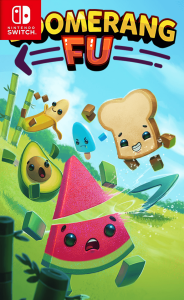
Boomerang Fu Switch NSP XCI
Report Link Error
Select the broken download file, then submit the report.
Screenshots
About Game
Boomerang Fu Switch NSP XCI is a compact, fast-paced party brawler built around one very readable idea: throw a boomerang, avoid the one coming back, and try not to get caught by a surprising angle. Developed and published by Cranky Watermelon, it arrived on Nintendo Switch on August 13, 2020. Its light presentation and simple controls make the action immediately approachable, while its returning-projectile combat leaves room for clever play in a crowded local match.
Boomerang Fu at a Glance on Nintendo Switch
Released as a party game, Boomerang Fu Switch turns short competitive rounds into quick tests of timing, movement, and awareness. Players take control of animated food fighters, enter interactive arenas, and attempt to eliminate rivals with thrown boomerangs. The premise is deliberately direct, giving the game an easy entry point for groups who want to start playing without a lengthy setup or a complicated rules explanation.
Cranky Watermelon frames the action with a colorful, playful tone rather than a serious fighting-game atmosphere. That does not make the matches passive. Boomerangs can travel through busy spaces, rebound from surfaces, and return along paths that remain dangerous after the initial throw. A player may line up a clean attack, only to be caught by their own weapon moments later.
The result is a party brawler with a balance of accessibility and unpredictability. Simple throws can produce immediate results, but repeated matches reveal opportunities to anticipate movement, use the arena layout, and turn the boomerang’s return trip into another threat.
A Food-Filled World Built for Friendly Rivalries
The world of Boomerang Fu food characters is intentionally whimsical. Avocados, bananas, milk cartons, and other animated food fighters take part in contests to establish who can become the best boomerang master. There is no elaborate campaign narrative or sprawling fictional conflict driving the action. The game’s story is mainly a cheerful setup for competitive matches between expressive culinary combatants.
That lightness matters to the game’s atmosphere. The characters and arenas support a playful mood even when the action becomes tense. A sudden elimination can feel funny rather than punishing, particularly when it comes from an accidental return hit or a badly judged throw. The presentation keeps attention on movement, projectiles, and the shared reaction around the screen.
Its animated food fighters also make the game easy to read in a social setting. The appeal is less about character backstory than immediate personality: recognizable food-shaped competitors in bright arenas, all armed with the same dangerous idea. The small-scale premise suits quick sessions, where the rivalry comes from the people playing rather than from a larger narrative arc.
The Returning Boomerang: The Core Combat Idea
Boomerang Fu gameplay revolves around a weapon that does not simply disappear after it is thrown. The boomerang can hit an opponent on its outward path, but it always comes back. That return creates a second line of danger for anyone nearby, including the person who threw it and any teammates caught in its route.
This is where the game’s physics-based boomerang combat gains its character. Throwing at the nearest opponent may work, but it can also leave the thrower exposed when the weapon curves back. Players need to consider where the boomerang will travel, who might move into its path, and when it is safer to dodge than to attack.
- Throw with purpose: A direct shot can pressure an opponent, but its return path deserves equal attention.
- Watch the comeback: The returning boomerang can eliminate opponents, allies, or its owner.
- Use the space: Walls and obstacles can reshape a throw into an unexpected attack.
- Grab power-ups: Fire, ice, disguises, multi-boomerangs, and explosive boomerangs can shift a match quickly.
- Keep moving: A well-timed dash helps avoid incoming throws when the arena becomes crowded.
Power-ups add another layer without replacing the central mechanic. Their value comes from how they interact with positioning and timing. A stronger boomerang effect may create an opening, but players still need to avoid the danger that follows it around the arena.
Why Ricochet Throws Create Memorable Matches
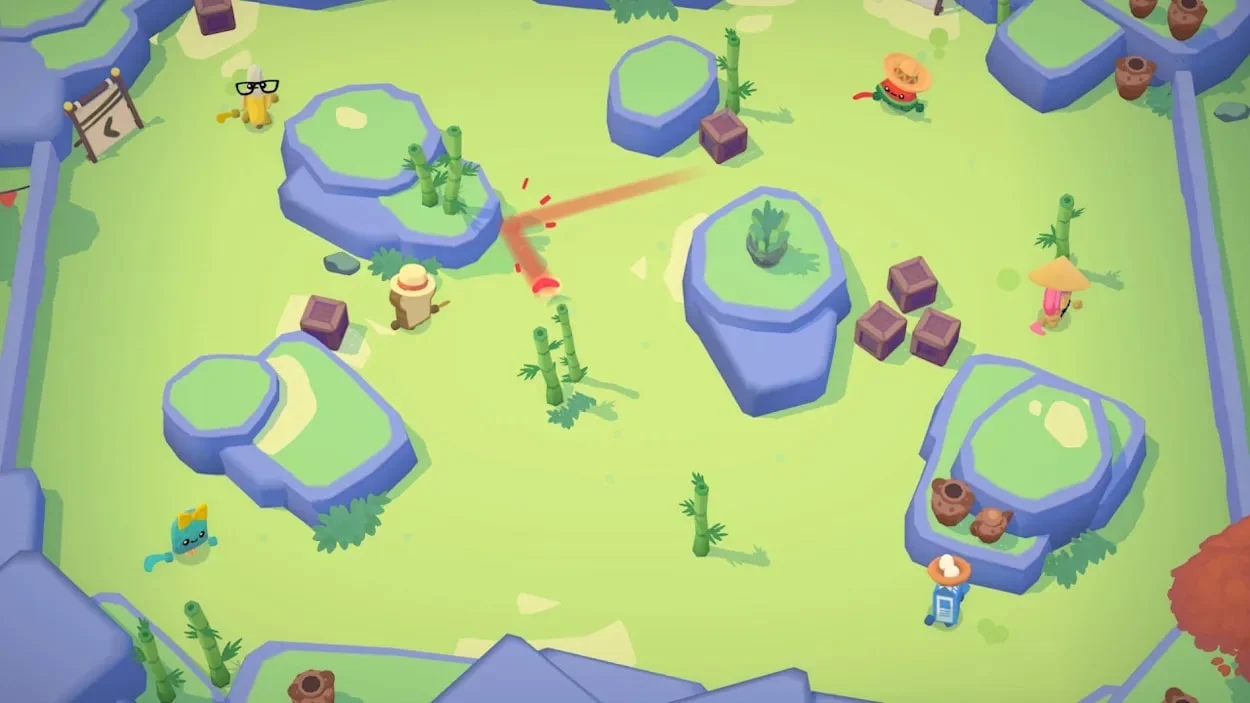
Boomerang Fu ricochet shots give the combat much of its replayable tension. Bouncing a boomerang from a wall or obstacle can send it toward opponents from angles that would not be possible with a straightforward throw. These plays reward spatial awareness, prediction, and a willingness to experiment with the shape of the arena.
A ricochet does not need to be perfectly planned to be memorable. In a busy match, a rebound can turn into an accidental elimination, a narrow escape, or an unexpected hit on the person who launched it. That uncertainty suits the game’s party-game strategy: there is room for deliberate setup, but also for quick reactions when a projectile returns from somewhere unexpected.
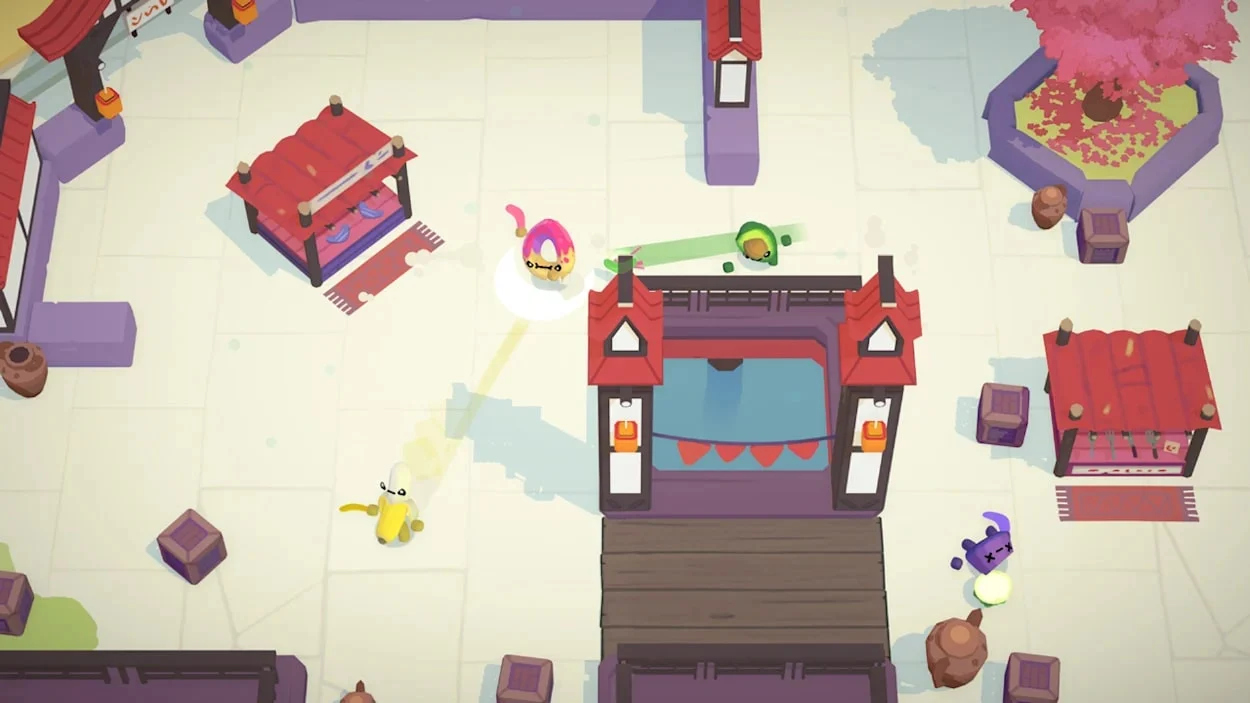
The interactive environments add to this changing geometry. Moving platforms, portals, and dangerous traps can alter where players stand and how safely they can move. Rather than treating the arena as a static backdrop, players can use it as part of the attack. A good boomerang angle is often one that accounts for both the wall in front of a target and the route the target may take to escape.
Local Multiplayer Chaos for Up to Six Players
Boomerang Fu local multiplayer supports up to six players, making it designed for people sharing a room and a screen. With several competitors throwing at once, the game becomes a lively mixture of intentional attacks, missed shots, sudden dodges, and friendly fire. The same boomerang that helps one player may become a problem for their side moments later.
This six-player party game is particularly suited to short sessions because the basic action is easy to understand from the start. New players can join the competition by throwing, moving, and learning the risk of the return path in real time. More experienced players have ways to create sharper angles and make better use of the arena, but the central joke of an ill-timed boomerang remains understandable to everyone watching.
The local focus also gives each match a shared rhythm. Players can react to a clever ricochet or laugh when an ally is caught by friendly fire. The appeal comes from the immediate social energy of the match rather than from long-term progression systems or a complex story structure.
Match Types Beyond Straight Elimination
The available Boomerang Fu game modes change what players need to prioritize. Classic elimination puts the emphasis on survival and accurate attacks. It is the clearest expression of the game’s combat: avoid incoming boomerangs, find an opening, and be careful when your own weapon circles back.
Team battles introduce shared responsibility. Friendly fire means allies cannot simply throw freely into every encounter, because their attacks may also take out teammates. Coordination, spacing, and awareness become more important when a reckless shot can damage the side meant to benefit from it.
A capture-the-flag-style challenge shifts attention toward objectives. Eliminations still matter, but players must also think about movement, routes, and how to protect or interrupt progress. Together, these modes give the party brawler enough variation to keep the same core boomerang mechanic feeling different across repeated sessions.
For groups looking for colorful competitive action on Nintendo Switch, Boomerang Fu Switch NSP XCI is best understood as a game of quick reads and recurring surprises. Its food-filled presentation keeps the mood friendly, while ricochets, power-ups, traps, and returning throws ensure that even a simple match can take an unexpected turn.