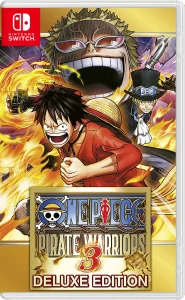
ONE PIECE Pirate Warriors 3 Deluxe Edition Switch NSP XCI
Report Link Error
Select the broken download file, then submit the report.
Screenshots
About Game
ONE PIECE Pirate Warriors 3 Deluxe Edition Switch NSP XCI brings the Straw Hat Pirates’ large-scale action to Nintendo Switch in a package built around previously released content. Released on May 10, 2018, this European and USA version is an Action title published and developed by Bandai Namco, with language support for English, French, Spanish, Italian, and Chinese. Its appeal is direct: revisit major One Piece moments while cutting through enormous enemy forces with the series’ best-known heroes and rivals.
What the Deluxe Edition Brings to Nintendo Switch
The Nintendo Switch release frames ONE PIECE Pirate Warriors 3 Deluxe Edition as a fuller version of the game’s pirate adventure. The Deluxe Edition includes previously released content, including additional characters and costumes, expanding the available combat options without separating that material from the main package.
That extra content matters because Pirate Warriors 3 is structured around variety. Its story missions move through major events from Luffy’s journey, while its side content gives players further reasons to revisit battles with different fighters. The game is listed as an Action release, and its design leans fully into broad, dramatic battles rather than careful one-on-one duels. Huge attack effects, crowded battlefields, and familiar character abilities give the presentation the heightened energy expected from One Piece.
For players seeking a portable version of this particular Musou-style adventure, the Switch edition places a large roster and a long sequence of story material in one release. The verified base firmware is v9.0.1, and the listed file size is 13GB.
Reliving Luffy’s Journey Through Major Story Arcs
The ONE PIECE Pirate Warriors 3 story begins with Luffy’s origins and the formation of the Straw Hat Pirates, then follows the crew through some of the series’ defining arcs. This gives the game a broad timeline rather than a single isolated chapter, letting its battles serve as a fast-moving tour through the crew’s rise.
Alabasta is among the key stops, bringing the game into one of the Straw Hats’ early major conflicts. From there, the narrative advances through the Enies Lobby incident and the Marineford War, each carrying the weight of events that shaped the wider world around Luffy and his allies. Cutscenes support the progression between battles, while the action stages translate major confrontations into the game’s crowd-clearing format.
The route continues to Dressrosa, providing the game’s later story destination and a more complete sweep of Luffy’s quest. The result is not simply a collection of disconnected fights. The campaign follows a recognizable journey of recruitment, conflict, loss, and renewed momentum, making it suitable for players who want the One Piece story’s major beats paired with immediate action.
Musou Combat and One-Man Army Battles
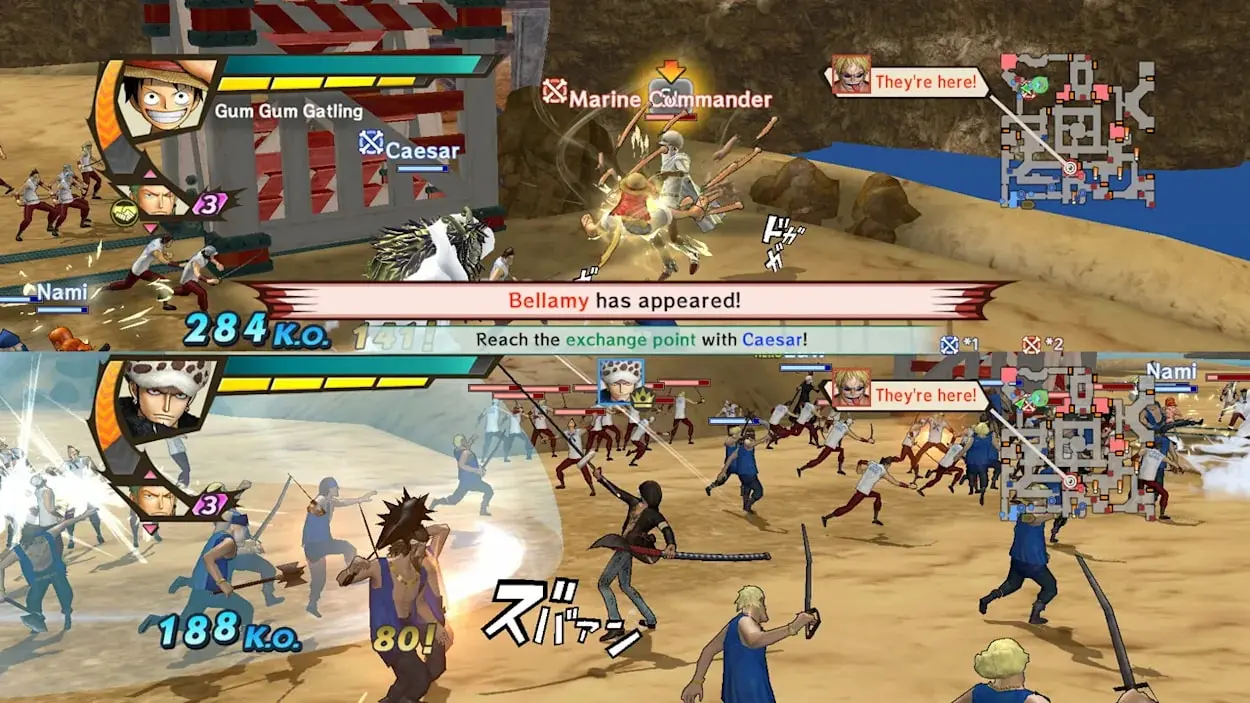
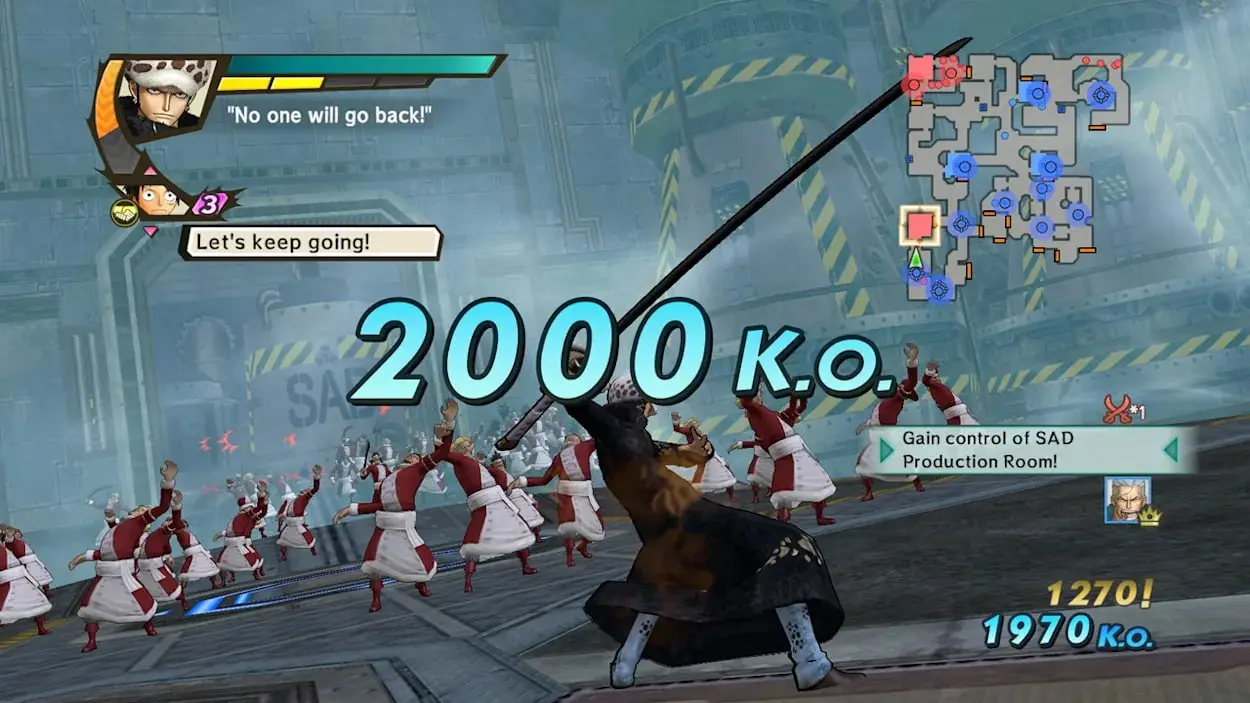
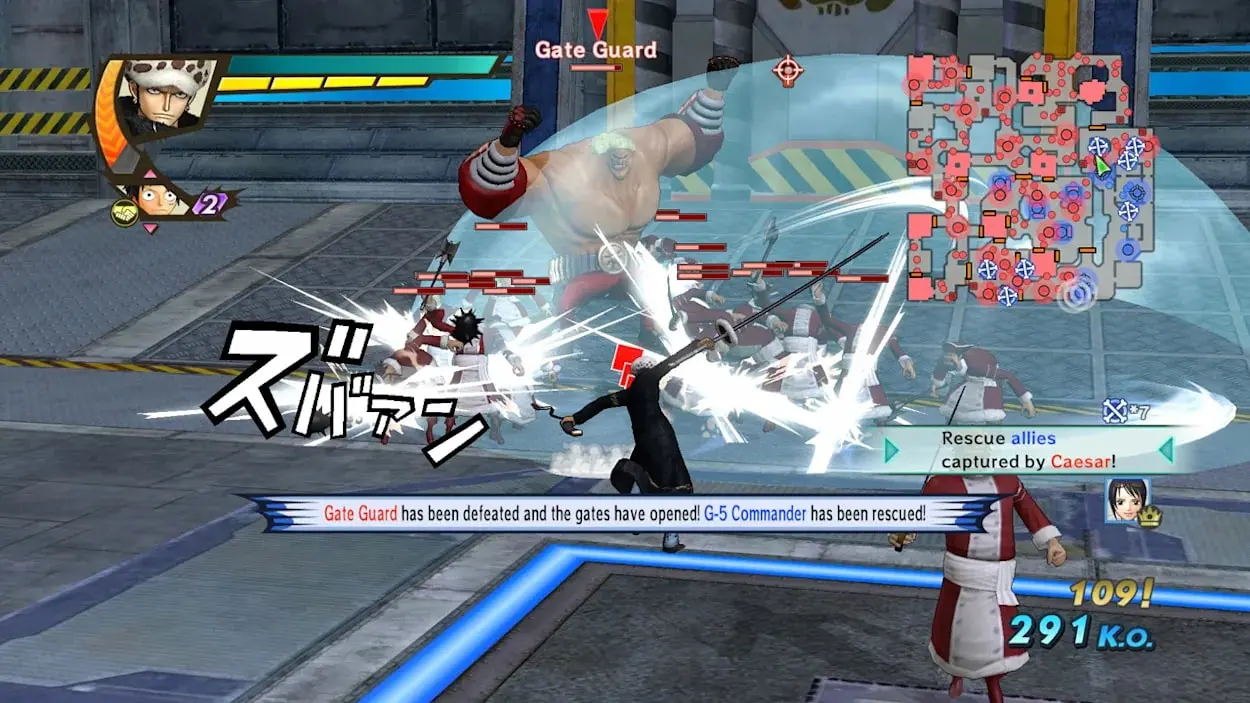
ONE PIECE Pirate Warriors 3 gameplay is built around Musou action: a powerful character enters a wide battlefield and tears through groups that can number in the hundreds. The scale is intentionally exaggerated. Instead of slowly trading blows with a small number of opponents, players build momentum by moving through formations, chaining attacks, and opening paths across the stage.
Fast combos form the basic rhythm, but special attacks provide the spectacle. These moves are designed to hit hard, clear space, and make a hero feel capable of turning a crowded fight in seconds. The game’s strongest moments come from that contrast between dense enemy groups and the oversized abilities used to scatter them.
Combat also asks players to pay attention to the wider battle. Allies can be called in through the Kizuna Rush system for tag-team attacks, adding another layer of screen-clearing force. Stages can include Treasure Events that require specific conditions to be met, so there is value in looking beyond simple enemy totals and considering what each encounter asks of the player.
Local or online co-op allows two players to tackle stages together. That changes the pace from individual domination to shared battlefield control, particularly when both players bring different attacks and roles to the same encounter.
Playable Characters and Distinct Fighting Styles
The roster includes more than 30 fan-favorite characters, and that number is important because each fighter has distinct abilities and special moves. Replaying a stage with a different character is more than a cosmetic swap; it changes how the player approaches crowds, movement, and powerful finishing attacks.
Luffy offers the elastic, far-reaching attacks associated with his abilities, making him a natural fit for hitting groups across a wider area. Zoro brings his three-sword style, giving his action a more blade-focused identity. Sanji, meanwhile, relies on powerful kicks, offering a different rhythm again.
These contrasts give the roster a practical purpose. A player who enjoys Luffy’s flexible attacks may find Zoro’s sword-driven approach more satisfying in another mission, while Sanji provides a third route through the same crowded battlefield. The included additional characters and costumes further broaden the available selection, supporting repeat runs through story stages and Dream Log challenges.
Dream Log and Its Original Battle Scenarios
Dream Log gives ONE PIECE Pirate Warriors 3 Deluxe Edition a mode apart from the main story. Rather than retracing the campaign’s established progression, it presents original scenarios, unique character interactions, and additional challenges.
That separation is useful for replay value. The story mode provides the familiar arc-by-arc journey, while Dream Log creates room for battles that are not bound to the same narrative path. Players can continue experimenting with the roster, encounter different interactions, and pursue challenges that extend the game beyond its central retelling.
The mode also suits the game’s larger-than-life atmosphere. One Piece characters are defined by their varied personalities and fighting styles, and original scenarios offer another setting for those elements to meet in battle. It is a natural companion to the campaign for players who want more than a single pass through Luffy’s major adventures.
7 Gameplay Priorities for New Pirate Warriors 3 Players
- Try the roster. Start with several characters instead of settling immediately on one. Luffy, Zoro, and Sanji provide clear examples of how different fighting styles can reshape a stage.
- Build longer combos. Large enemy groups are the foundation of Musou action, so use regular attacks to maintain pressure and create room to move through the battlefield.
- Save special attacks for key moments. Use these powerful moves when crowds become overwhelming or when a major opening is needed.
- Call in allies. Learn the Kizuna Rush system and use ally calls for devastating tag-team attacks that increase your strength and clear groups quickly.
- Watch Treasure Event conditions. Some rewards depend on fulfilling specific requirements during battle, making stage objectives worth checking carefully.
- Collect what battles provide. Berry and coins earned in combat feed into progression, giving successful runs a purpose beyond finishing the current mission.
- Upgrade with intent. Use collected resources to boost character stats and unlock new skills, then revisit stages or Dream Log scenarios with a stronger, more capable fighter.