Mega Man Battle Network Legacy Collection Switch NSP XCI

Report Link Error
Select the broken download file, then submit the report.
Screenshots

About Game
Mega Man Battle Network Legacy Collection Switch NSP XCI arrived on Nintendo Switch on April 14, 2023, bringing CAPCOM’s action role-playing series back to a format built around quick decisions, digital exploration, and the close partnership between a young operator and his NetNavi. Available in English, Japanese, Simplified Chinese, and Traditional Chinese, the collection gathers ten mainline adventures set in a future where daily life and the network are deeply connected.
What Mega Man Battle Network Legacy Collection Brings to Nintendo Switch
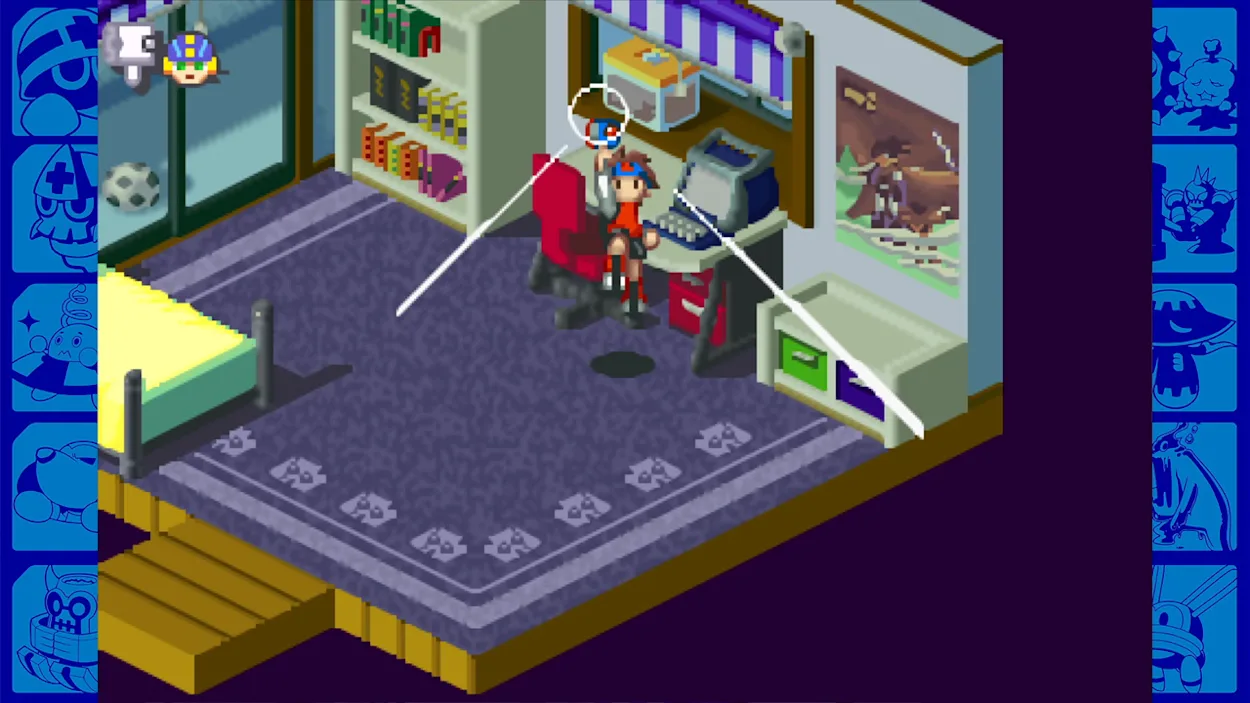
Developed and published by CAPCOM, this 2023 release revisits a branch of the Mega Man universe where the internet is not simply a background utility. It is a vast cyber-world accessed through PETs, personal terminals that house NetNavis. The result is a CAPCOM action role-playing game with two complementary spaces to explore: Lan Hikari’s everyday world and the digital environments navigated by MegaMan.EXE.
The collection’s identity comes from how it connects those spaces. Conversations, puzzles, and story developments in the real world lead to problems on the network, where viruses, hostile programs, and dangerous organizations threaten people and infrastructure. The included games build on that premise with new characters, rivals, conspiracies, and increasingly serious dangers, while keeping Lan and MegaMan.EXE at the center.
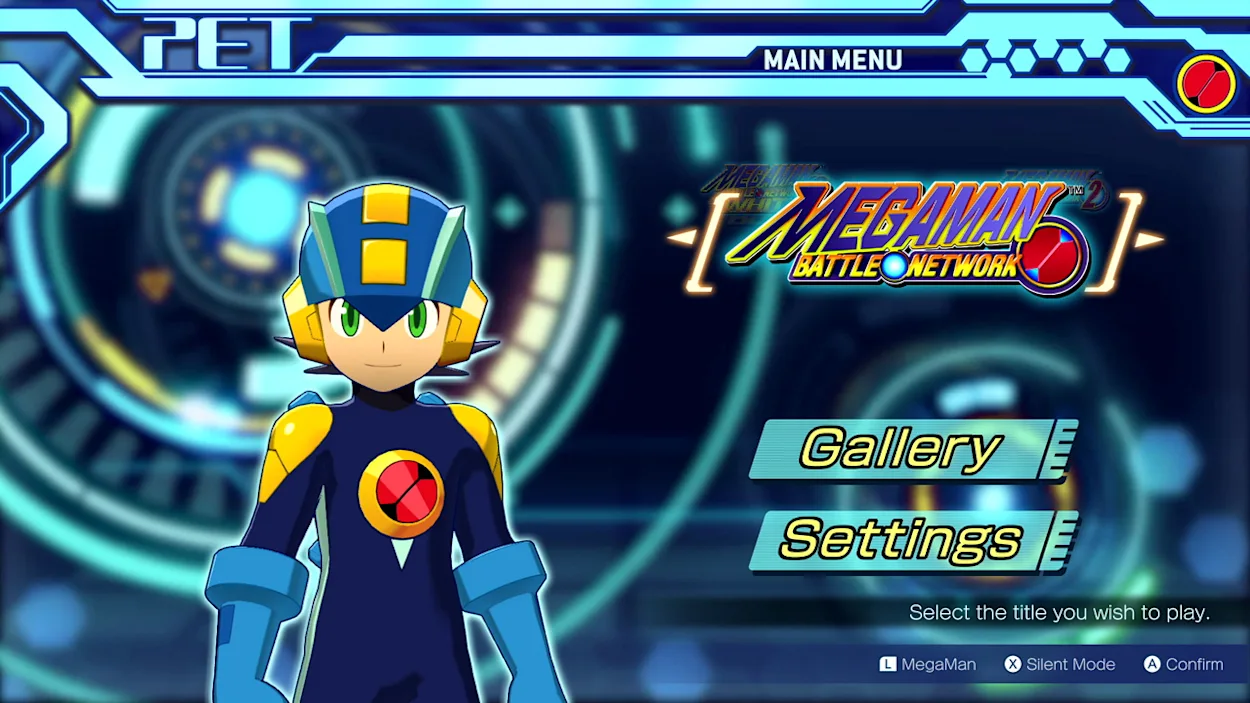
Presentation also supports the archival appeal. A high-resolution filter is available, while the Art Gallery includes character sketches and music. These extras give the collection room to function as more than a sequence of battles: it is also a look back at the visual and musical material surrounding the series.
Lan Hikari and MegaMan.EXE: The Operator–NetNavi Partnership
Lan Hikari is a student, but his role quickly becomes larger whenever trouble reaches the network. His NetNavi, MegaMan.EXE, is the partner who enters that digital space and handles the direct danger. Their relationship gives the games their emotional and mechanical focus. Lan investigates, talks to people, and finds a route forward; MegaMan.EXE takes those discoveries into the network and confronts the threats waiting there.
This operator–NetNavi partnership is tested repeatedly. Rogue viruses can create immediate problems, while cyber-terrorist groups and larger conspiracies raise the stakes across the adventures. Encounters with enemies such as the WWW organization and threats involving dark chips make the network feel less like a harmless convenience and more like a place where society can be disrupted.
The series also makes room for friendships, rivalries, and difficult character moments. Because Lan and MegaMan.EXE work as a pair rather than as a lone hero, progress often feels shared. The player is not just commanding a fighter; they are following a connection between the person outside the network and the ally operating within it.
How Real-Time Grid Battles Define the Series
The defining combat system combines action-RPG movement with Battle Chip selection. MegaMan.EXE moves in real time across a 3x6 battle grid, using open panels to avoid incoming attacks, create a useful angle, and prepare an offense. A battle is rarely about standing still and trading damage. Position matters, timing matters, and an opponent’s attack pattern can reshape the safe parts of the field in seconds.
These NetBattles ask players to react quickly while still thinking strategically. Viruses bring different attack behaviors, and NetNavi boss fights have distinct patterns and weaknesses to learn. A chip that is strong on paper may be awkward if MegaMan.EXE is poorly positioned, while a simpler attack can become valuable when it is lined up at the right moment.
That balance gives the series a particular rhythm. The action is immediate, but success depends on reading the grid rather than rushing through it. Players dodge, wait for a gap, select an attack, and capitalize when an enemy commits to a pattern. The system remains approachable in its basic movement while leaving room for increasingly careful decisions.
Program Advances and Powerful Chip Combinations
Battle Chips are not merely individual attacks to collect. They are the foundation of each player’s combat options, ranging from basic shots to more powerful effects. MegaMan.EXE can carry a customized folder of up to 30 chips, making preparation part of the experience before a fight even starts.
The most important reward for thoughtful planning is the Program Advance. These powerful techniques are triggered by using specific Battle Chips in the correct order during battle. That requirement changes how a folder is built. Instead of only choosing the strongest single chips, players can consider which chips support one another and which sequences are realistic to execute under pressure.
This is where Battle Chip combinations become a deeper form of combat strategy. Collecting chips expands the possibilities, but testing them reveals how useful they are in practice. A well-planned folder can offer reliable damage, useful positioning tools, and the potential for a major combination when the right moment appears. The collection’s progression therefore comes from story advancement and exploration, but also from learning how a growing chip selection can shape each encounter.
From Lan’s World to Cyber-Dungeons
The games alternate between investigation and action. As Lan, players move through the human world, speak with characters, solve puzzles, and follow the events surrounding each new crisis. Those scenes provide context for the conflict and often point toward the next place that needs attention.
Then Lan can jack in, sending MegaMan.EXE into the network. Cyber-dungeons become the route through digital systems, hiding viruses, secrets, and the obstacles that block progress. This loop gives the games their atmosphere: ordinary places have a connected digital counterpart, and a problem that begins in a conversation or local situation can become a dangerous mission inside the network.
Virus busting keeps the journey active, while exploration prevents the experience from becoming a chain of isolated battles. The real world supplies characters and puzzles; the cyber-world supplies navigation and confrontation. Together, they make the collection suitable for players who enjoy role-playing progression but want combat with direct movement and fast responses rather than purely menu-driven encounters.
7 Practical Battle Habits for New NetBattlers
- Keep moving. Use the battle grid actively instead of waiting in one panel. Movement helps MegaMan.EXE avoid attacks and creates better angles for offense.
- Study boss patterns. NetNavi bosses have distinct behaviors and weaknesses. Watching their attacks can reveal safer moments to strike.
- Place attacks carefully. Strong chips are more effective when MegaMan.EXE is positioned properly, so line up shots before committing to an attack.
- Collect Battle Chips. A larger chip selection gives more options for handling viruses and building a folder suited to different opponents.
- Plan the 30-chip folder. A folder can hold up to 30 chips, making consistency and useful choices as important as raw power.
- Test combinations. Try chips in different sequences to discover Program Advances and understand which setups work during real-time combat.
- Use later-game abilities. When available, Style Changes and Souls give MegaMan.EXE temporary elemental powers and abilities that can broaden battle options.
For players returning to Lan Hikari’s adventures or meeting MegaMan.EXE for the first time, Mega Man Battle Network Legacy Collection Switch NSP XCI offers a structured mix of story-led exploration, chip-based preparation, and demanding real-time grid combat. Its lasting appeal lies in that exchange between planning and reaction: build a useful folder, enter the network, and make the next move count.