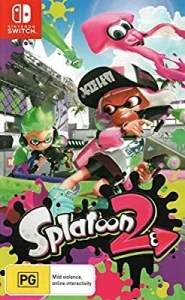
Splatoon 2 Switch NSP XCI
Report Link Error
Select the broken download file, then submit the report.
Screenshots
About Game
Splatoon 2 Switch NSP XCI refers to Nintendo’s colorful third-person shooter game for Nintendo Switch, released on July 21, 2017. Developed and published by Nintendo, it combines bright ink-covered arenas, unusual movement mechanics, competitive objectives, and a story campaign built around platforming, puzzles, and boss encounters. The game is available across Europe, USA, and Japan, with language support including English, French, Spanish, Japanese, German, Italian, Dutch, and Russian.
Splatoon 2 at a Glance on Nintendo Switch
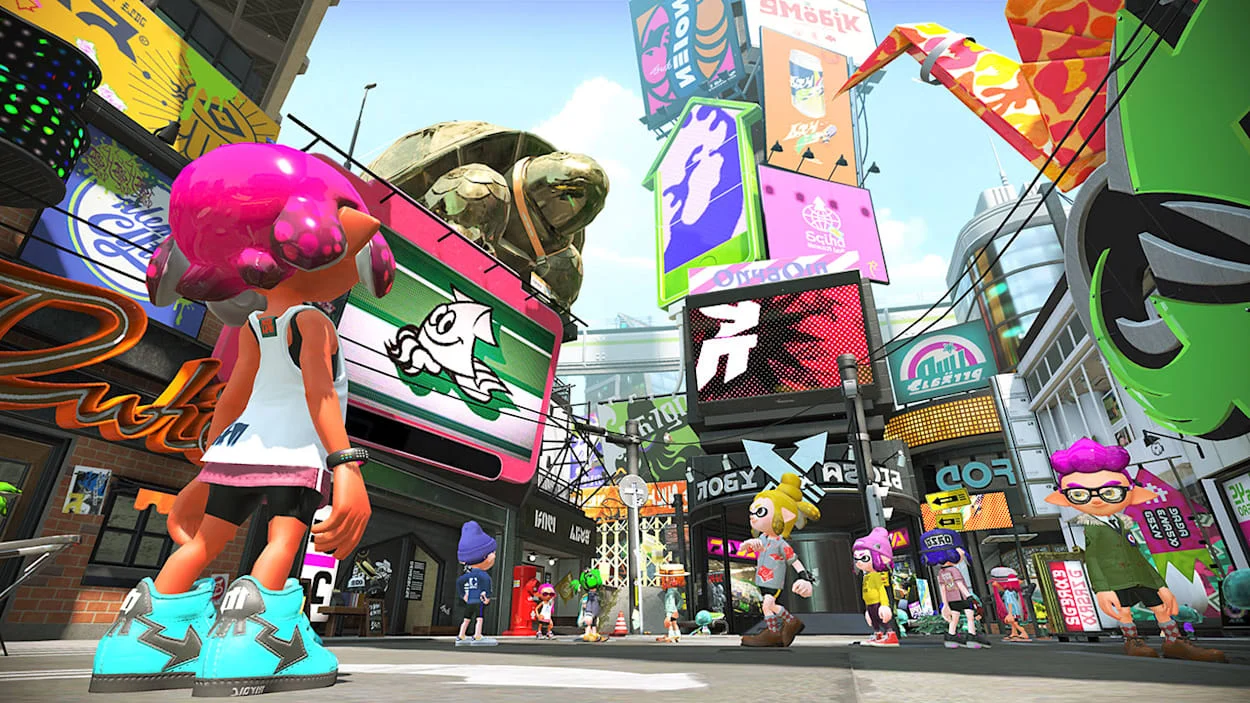
Splatoon 2 approaches the third-person shooter genre from a different direction. Success is not defined only by defeating opponents: ink changes how players travel, refill ammunition, claim space, and approach objectives. Arenas can rapidly shift in appearance as teams cover surfaces in their own color, giving matches a lively, constantly revised look.
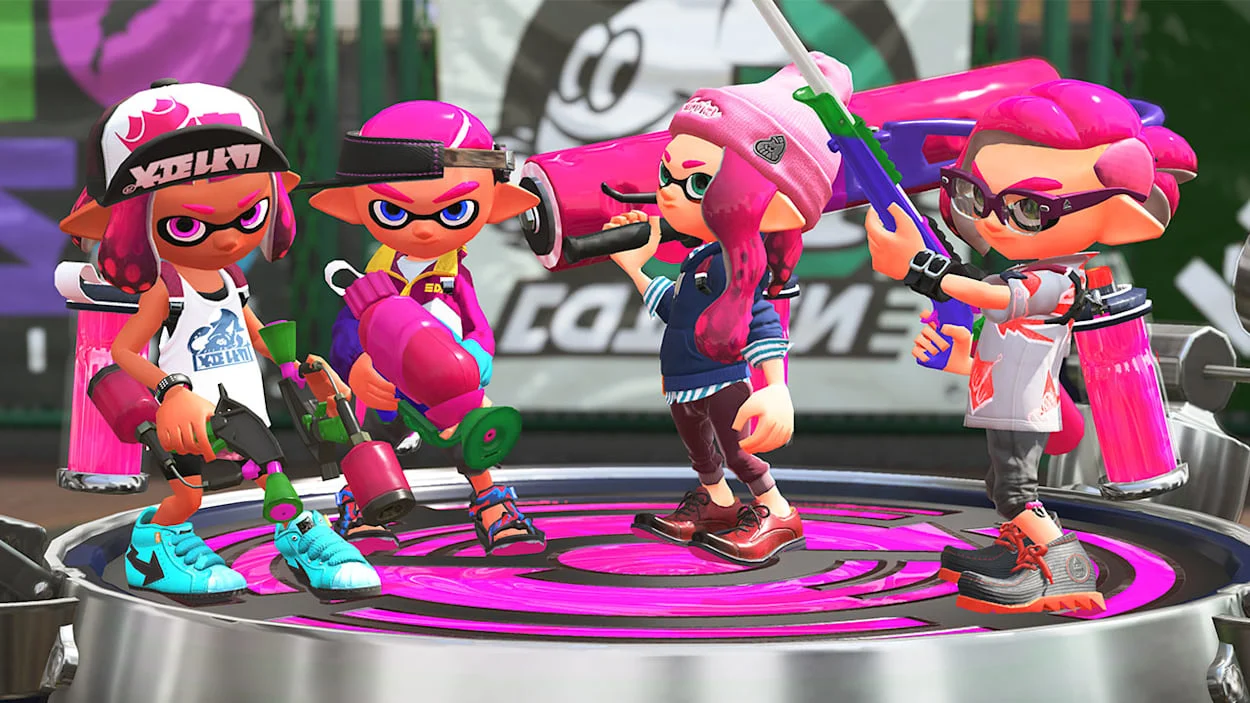
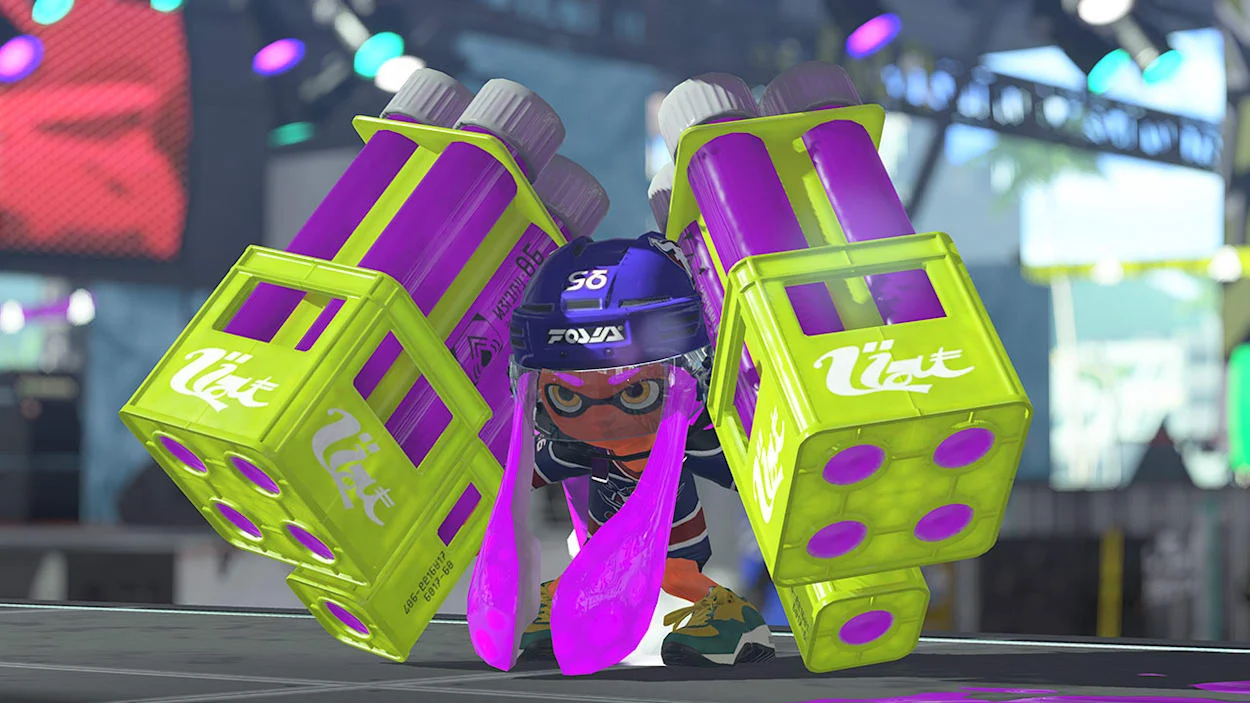
The presentation supports that sense of motion. Inklings and Octolings move between humanoid and squid-like forms, while the game’s weapons leave visible trails, patches, and pathways of ink across floors and walls. This makes map control easy to read in the moment, even as an opponent’s ink can block routes and create pressure around an objective.
There is room for several kinds of players. Those who prefer a solo route can enter Hero Mode, while competitive teams can focus on Ranked Battles. Salmon Run offers cooperative play against computer-controlled Salmonid enemies, and private matches provide a more casual setting. The result is a game with different rhythms rather than one fixed way to play.
Octo Canyon: Agent 4’s Mission to Recover the Great Zapfish
The single-player Hero Mode is set in Splatoon 2 Octo Canyon, where the campaign follows Agent 4, a new recruit to the New Squidbeak Splatoon. The story takes place two years after the original game. Callie of the Squid Sisters has disappeared, Cap’n Cuttlefish is also missing, and the Great Zapfish must be recovered.
Agent 4 works alongside Marie, the remaining Squid Sister, to investigate the situation and confront Octarian forces. The campaign is structured around individual stages rather than a single uninterrupted battlefield. These levels bring together shooting, movement challenges, platforming, creative puzzles, and boss encounters.
That format gives Hero Mode a useful role beyond the story. It provides a place to become comfortable with ink movement and weapon handling without the immediate uncertainty of a multiplayer match. Stages ask the player to recognize traversable ink, consider positioning, and deal with enemies while navigating unusual environments. Boss encounters change the pace again, putting the focus on identifying an opening and responding to a larger threat.
How Inkling and Octoling Transformations Shape Movement
The defining mechanic in Splatoon 2 is the ability to switch between humanoid form and squid form. In humanoid form, an Inkling or Octoling can use their weapon to paint surfaces and challenge opponents. In squid form, they can travel quickly through friendly ink, climb inked walls, and restore their ink supply.
This contrast gives Inkling movement and Octoling movement a tactical dimension. A player can paint a route, dive into it, and use that path to reposition. Friendly ink is both ammunition support and a mobility tool. When an ink tank is running low, returning to friendly ink is not simply a pause in the action; it can be the quickest route away from danger or toward a new angle.
Enemy ink matters just as much. It can limit available movement and reveal where an opposing team has established control. Good map awareness therefore comes from reading the color and shape of the arena, not merely watching for opponents. The strongest routes are often created during the match rather than waiting in place from the start.
Ranked Battles and Objective-Focused Competition
Splatoon 2 Ranked Battles move the emphasis toward coordinated objective play. Each named mode asks a team to do more than cover terrain. Positioning, support, route control, and awareness of teammates become especially important when a match turns around a shared goal.
- Splat Zones: Teams compete around designated areas, making ink coverage in key spaces more important than unfocused painting elsewhere.
- Tower Control: The contest centers on controlling and advancing the tower, demanding close support around a moving objective.
- Rainmaker: Teams fight over the Rainmaker, creating moments where protection, pressure, and a clear path forward matter together.
- Clam Blitz: This mode adds another objective-focused challenge, rewarding teams that can coordinate movement and respond quickly to changing control of the map.
These modes make weapon choice and team role more visible. A player may help by covering an advance, defending an important route, challenging opponents near the objective, or creating safe ink for teammates to use. Communication can help, but even non-verbal cooperation matters when players recognize what the current objective demands.
Salmon Run: Cooperative Golden Egg Collection
Splatoon 2 Salmon Run changes the competitive mood into cooperative survival. Players work together against Salmonid enemies and aim to collect Golden Eggs. Instead of trying to outpaint another team, the group must manage incoming threats while gathering what the mode requires.
The appeal comes from shared responsibility. A team has to handle enemy pressure and still keep the Golden Egg goal in view. That makes Salmon Run a useful contrast to Ranked Battles: the same core ink-based movement and weapon systems remain relevant, but the challenge is based on cooperation against a horde rather than direct opposition.
It also adds replay value through its different pace. Competitive modes ask players to predict opponents and contest space; Salmon Run asks them to react together under pressure. Players who enjoy helping teammates, responding to crowded encounters, and balancing offense with an immediate collection task have a clear reason to return.
Choosing Between Shooters, Rollers, Chargers, Sloshers, and Dualies
The weapon selection gives the game’s ink mechanics different personalities. Shooters offer a familiar starting point for players who want direct ink fire. Rollers emphasize spreading ink across surfaces in a different manner. Chargers, Sloshers, and Dualies broaden the available approaches further, each encouraging players to consider their position and role.
Experimentation is important because no single style needs to define every match. A preferred weapon can depend on whether a player wants to paint paths, support an objective, pressure opponents, or approach the map from a different angle. Gear can also customize an Inkling or Octoling with headgear, clothing, and shoes that provide special abilities, adding another layer to personal setup.
For players drawn to expressive movement, colorful competitive spaces, and modes that reward teamwork as much as aim, Splatoon 2 Switch NSP XCI points to a game with a distinct identity. Its strongest moments come from turning ink into a route, a resource, a defensive layer, and a way to reshape the next few seconds of play.