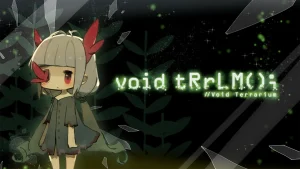
void tRrLM(); //Void Terrarium Switch NSP
Report Link Error
Select the broken download file, then submit the report.
Screenshots
About Game
void tRrLM(); //Void Terrarium Switch NSP places a small act of care inside a harsh, poisoned future. This Nintendo Switch RPG follows Robbie, a discarded maintenance robot, after he awakens amid a junk heap and finds Toriko, a vulnerable human girl living in a world devastated by toxic fungi. The result is a game shaped by two connected pressures: surviving dangerous expeditions and preserving a safe home for someone who cannot endure the outside world.
A Post-Apocalyptic RPG Built Around Care and Survival
Developed by Nippon Ichi Software and published by NIS America, void tRrLM(); //Void Terrarium uses its ruined Earth setting for more than atmosphere. The landscape is hostile, its former humanity largely absent, and the toxic environment makes Toriko’s safety an immediate concern rather than a distant story goal.
That premise gives this post-apocalyptic RPG an unusually intimate focus. Robbie is not simply venturing into ruins to become stronger or to reach a final destination. Each trip outside is tied to a practical purpose: finding food, water, materials, or improvements that can help sustain Toriko. The game’s dark world and its gentler caretaker role sit side by side, creating a contrast between hazardous exploration and the small comforts that can be built indoors.
The presentation supports that tension through environmental storytelling and discoveries made in the ruins. As Robbie goes deeper, the game reveals more about the devastated setting and its past. Progression is therefore connected to both survival needs and the gradual uncovering of the world around the pair.
Robbie and Toriko: The Emotional Core of the Story
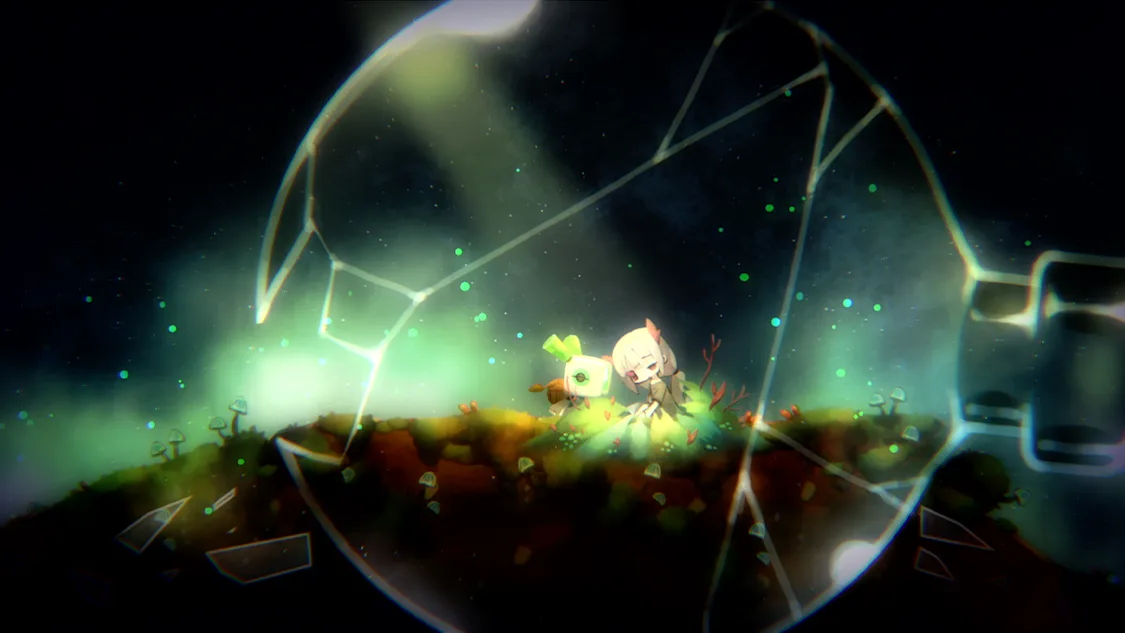
The Void Terrarium story begins with Robbie’s awakening as a maintenance robot discarded among junk. His discovery of Toriko changes the meaning of his continued operation. She appears to be the lone human survivor, but she is weak and highly susceptible to the poisonous conditions beyond a protected space.
Robbie’s role becomes one of protection. He cannot remove the danger of the wider world, yet he can gather what Toriko needs and create a more stable place for her to live. This bond gives the journey its emotional direction. Toriko is not merely a character waiting at a base; her condition directly affects the player’s choices, from the length of an expedition to the kinds of resources worth bringing home.
That connection also makes the setting feel more personal. The ruins contain threats and materials, but the terrarium gives those discoveries a human purpose. Robbie’s movement through a lonely, damaged Earth is driven by the hope that Toriko can remain healthy, comfortable, and protected.
The Terrarium as a Lifeline in a Toxic World
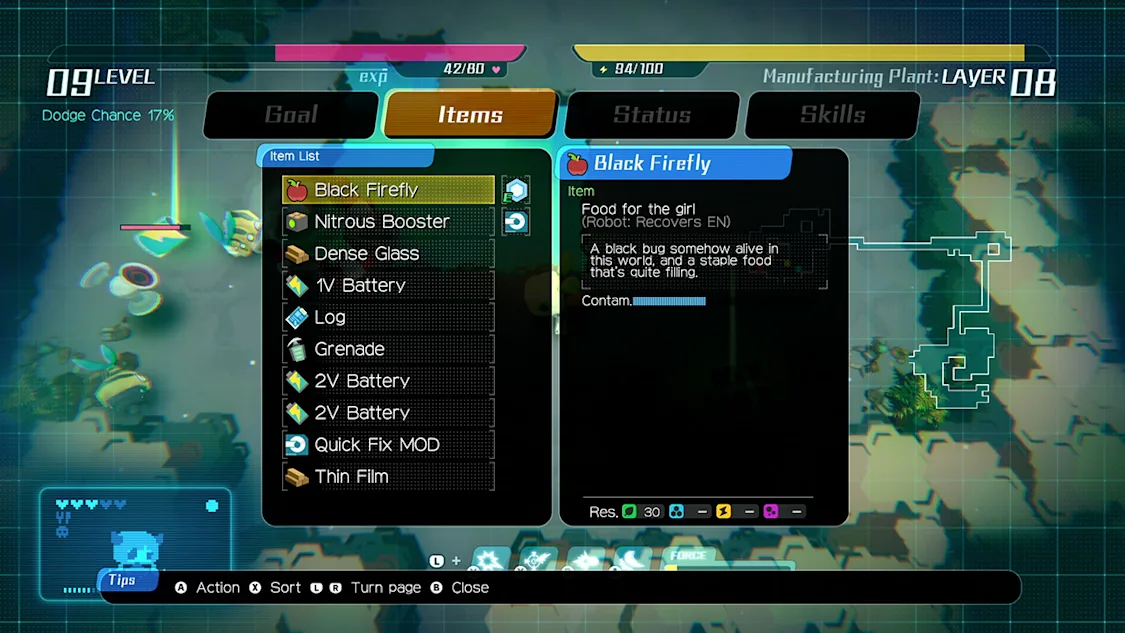
The isolated terrarium is essential to Toriko’s survival. It serves as shelter from the toxic environment, but it is also the game’s central management layer. Back from the dungeon, Robbie must pay attention to Toriko’s health, hunger, hygiene, and general well-being while using gathered materials to craft useful items and facilities.
This terrarium management system gives each resource a clear value. Food and water support immediate needs, while craftable materials can contribute to environmental upgrades and other improvements. Decorations and upgrades can also shape Toriko’s living space, adding a sense of comfort to a setting built around scarcity and danger.
Void Terrarium gameplay moves between these two modes: risky dungeon exploration and attentive upkeep at home. A successful run is not measured only by combat performance. It matters what Robbie returns with, what Toriko currently needs, and which improvement will make the terrarium safer or more comfortable. The home space becomes a visible record of progress, while its maintenance keeps the player focused on the consequences of every journey.
Turn-Based Combat, Equipment, and Robot Abilities
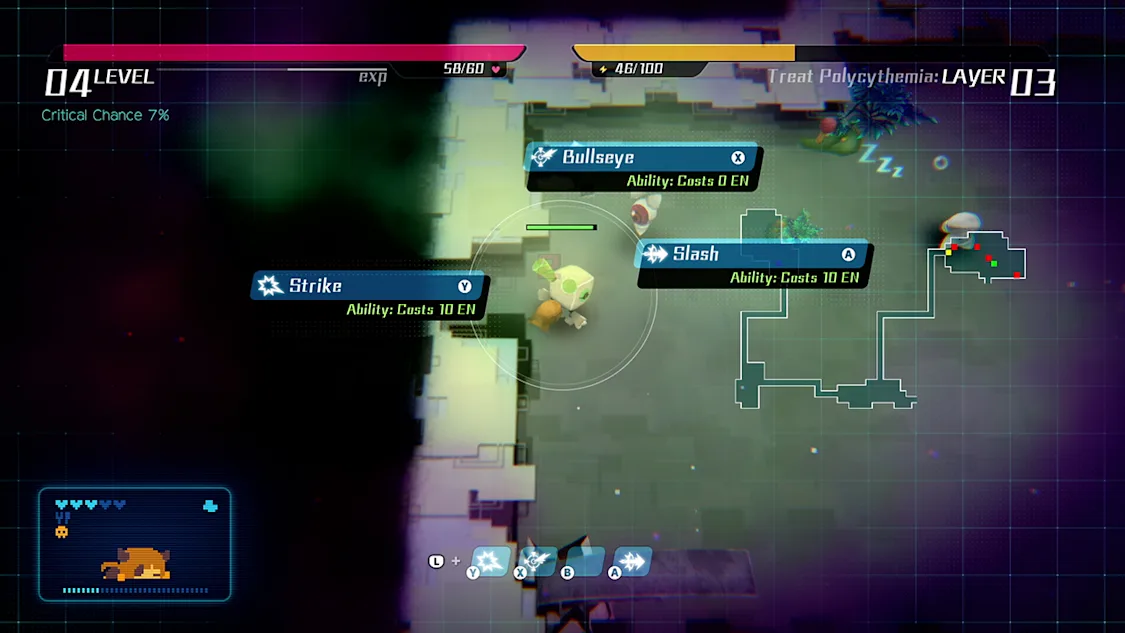
Outside the terrarium, Robbie explores procedurally generated roguelike dungeons. These hazardous areas are populated by mutated creatures and contain the materials needed for Toriko’s care. Their changing layouts give expeditions an adaptive quality: players must respond to the circumstances of each run rather than rely on a fixed path through every location.
Combat is turn-based, asking players to make deliberate choices while facing the dungeon’s inhabitants. Robbie can discover and use equipment upgrades as well as powerful robot abilities, giving exploration a combat-focused progression alongside the management of the terrarium.
The value of those upgrades is tied to deeper exploration. Better equipment and abilities can help Robbie endure more dangerous encounters, while the materials recovered in those areas can support new crafting projects and facilities back home. This loop offers replay value through repeated procedurally generated dungeon runs, but the reason to return is consistently grounded in Toriko’s needs rather than in combat alone.
5 Priorities for Safer Early Expeditions
- Check Toriko first. Review her health, hunger, hygiene, and general condition before leaving the terrarium. Immediate needs should take priority over a long expedition.
- Handle urgent care. Use available food, water, or other helpful items when Toriko requires attention, since the terrarium is her protection from the toxic world.
- Set a resource goal. Enter a dungeon with a clear purpose, such as finding materials for an environmental improvement, a facility, or another craftable item.
- Respect the risk. Mutated creatures and hazardous ruins make every run a balance between pushing farther and returning safely with what has already been collected.
- Bring progress home. Put recovered materials toward terrarium upgrades, useful items, equipment improvements, or facilities that strengthen Robbie’s next outing and support Toriko’s comfort.
These priorities reflect the game’s central rhythm. Resource management is not separate from dungeon expedition planning; it determines why Robbie takes risks in the first place. Careful returns can be more valuable than an overextended run that fails to bring back what Toriko needs.
Release and Nintendo Switch Game Details
void tRrLM(); //Void Terrarium Switch NSP was released on July 14, 2020. It is an RPG for Nintendo Switch, developed by Nippon Ichi Software and published by NIS America. The listed regions are Europe, USA, Asia, and Japan.
Available languages include English, Japanese, Taiwan, Korean, and Chinese. Its blend of procedurally generated dungeon exploration, turn-based combat, crafting, equipment upgrades, robot abilities, and terrarium care makes it suited to players interested in roguelike dungeon runs that are tied to a sustained survival-management objective. The game’s appeal rests on that contrast: a bleak world beyond the shelter, and the ongoing work of making one small protected space livable.
Recommended Similar Games
 Blazblue Entropy Effect X Switch NSPView Game
 NARUTO SHIPPUDEN : Ultimate Ninja STORM 4 ROAD TO BORUTO Switch NSP XCIView Game
 DRAGON QUEST I and II HD-2D Remake Switch NSPView Game
 Elementallis Switch NSPView Game
 Atelier Firis: The Alchemist And The Mysterious Journey DX Switch NSPView Game
 KAMiBAKO – Mythology of Cube Switch NSP XCIView Game
