Punch Club 2: Fast Forward Switch NSP

Report Link Error
Select the broken download file, then submit the report.
Screenshots
About Game
Punch Club 2: Fast Forward Switch NSP places its fighter-management formula in a controlled cyberpunk city where training schedules, money problems, personal needs, and underground bouts all compete for attention. Released on Nintendo Switch on July 20, 2023, this tinyBuild Games title combines Action, Adventure, Simulation, and RPG elements in a satirical story about ambition, survival, and a search for family.
Punch Club 2: Fast Forward on Nintendo Switch: A Futuristic Fighting Management Sim
Rather than asking players to control every strike during a match, Punch Club 2: Fast Forward focuses on the decisions made before the bell. Jimmy’s ability to win depends on the routine built around him: how he trains, what he eats, which jobs he takes, the perks he unlocks, and the moves he brings into a fight.
That structure gives the game its distinct identity as a fighting management sim. Combat matters, but it is the outcome of longer-term planning. A promising fighter can still struggle if his training is unfocused, his energy is depleted, or his chosen abilities do not suit the opponent waiting in the ring.
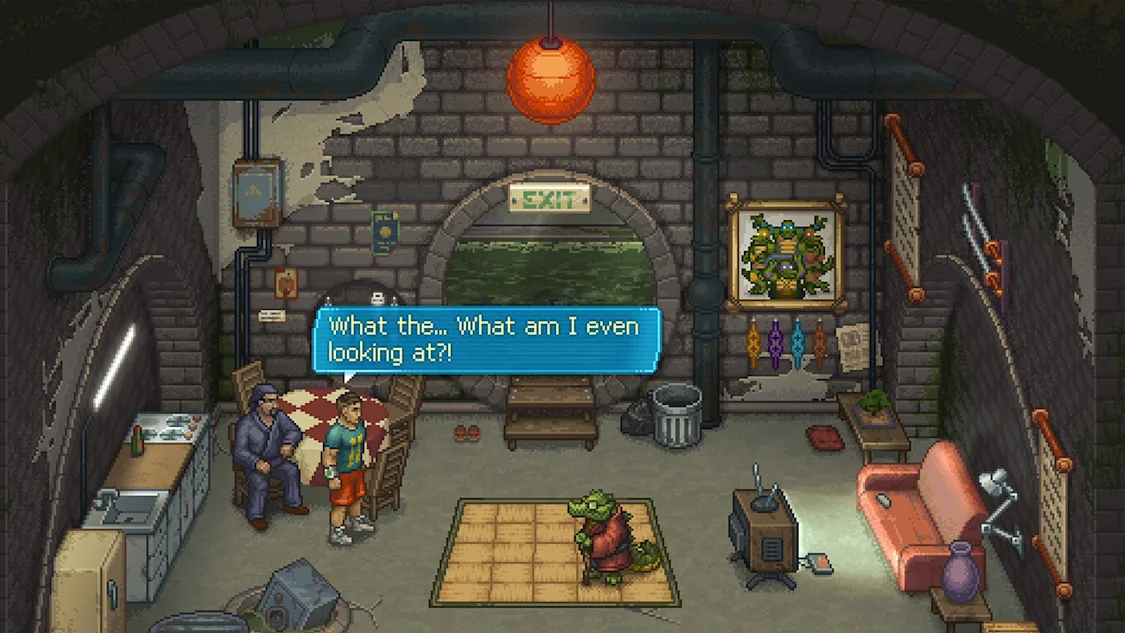
The futuristic setting adds a different tone to that familiar training-and-championship climb. This is a tightly managed city with cybernetic elements, odd jobs, shadowy organizations, and a deliberately strange view of everyday life. Dark humor and quirky characters keep the premise from playing as a straight sports drama, while the city’s controlled atmosphere gives Jimmy’s goals a sharper edge.
Jimmy’s Search for His Missing Father
Jimmy begins as a struggling fighter with a major personal reason to push forward: he wants to find his missing father. His route toward answers runs through the underground fighting circuit, where becoming a stronger and more visible competitor is tied to the wider mystery surrounding the city.
The story combines Jimmy’s championship ambitions with conspiracies and unexpected turns. His choices extend beyond workout plans, touching on work, relationships, and the direction of the narrative. That choice-driven structure supports multiple branching paths and outcomes, giving the game room to revisit decisions that may lead Jimmy through different parts of the mystery.
Its satire is important to the atmosphere. The world is hyper-futuristic, but its pressures are recognizable: earning enough money, finding time to improve, maintaining personal well-being, and trying to get ahead within systems that limit individual freedom. Jimmy’s pursuit of his father gives those routine management decisions a purpose beyond simply raising combat numbers.
Building a Fighter Through Stats and Skill Trees
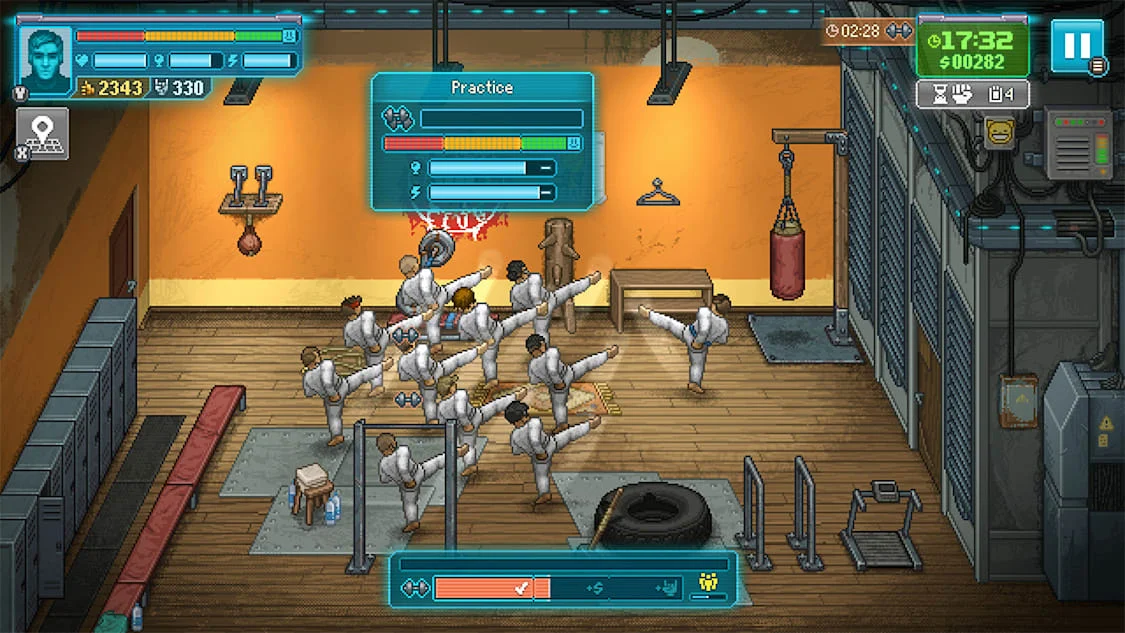
Fighter progression begins with three central areas: strength, agility, and stamina. Each supports a different approach to combat, so training is not simply about increasing every value equally. A player can prioritize the stats that fit a preferred fighting style, then shape the rest of Jimmy’s schedule around that goal.
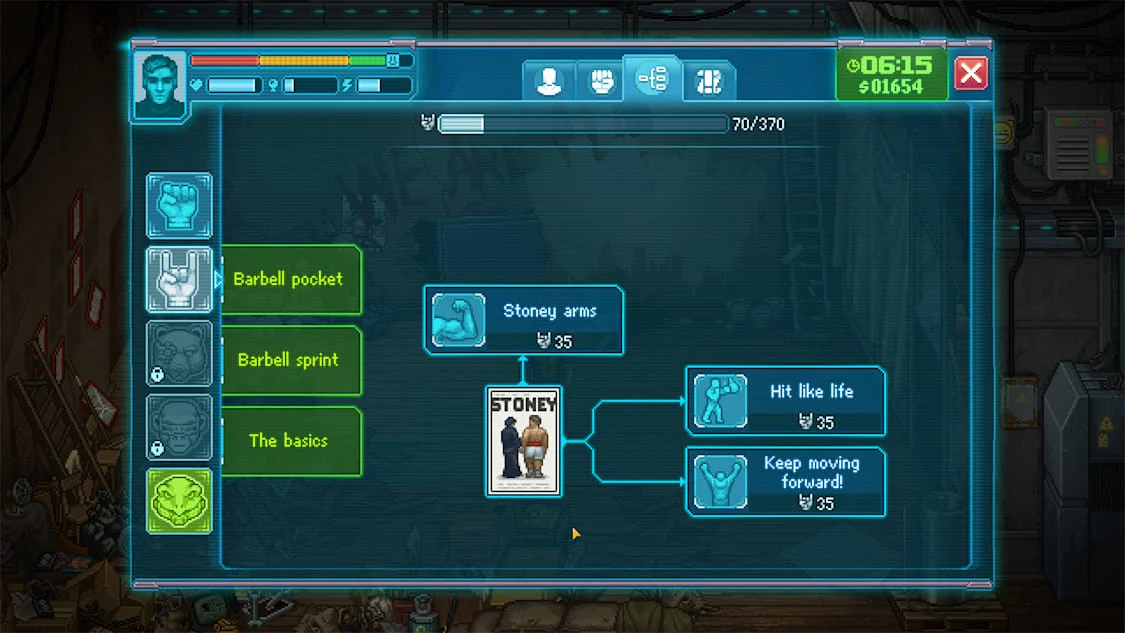
Skill trees expand those decisions. Skills, perks, and upgrades allow Jimmy to develop specialized advantages over time, while selected moves and abilities determine how he enters individual fights. This makes progression feel less like a fixed ladder and more like a series of connected choices: train toward a style, unlock tools that reinforce it, and adjust the setup when a new opponent calls for a different answer.
Money is part of this equation. Jimmy can take odd jobs to pay for food, gym memberships, and useful upgrades. Consumables and unique items can also provide temporary boosts or lasting advantages. The result is a resource-management loop in which a stronger fighter is built not only through exercise, but through careful use of time and income.
Why Preparation Matters More Than Direct Fight Controls
Matches are automated, which places the strategic emphasis on pre-fight planning. Before a bout, players review opponent traits and stats, then choose moves and abilities intended to counter that rival’s style. The fight itself reflects those preparations rather than demanding moment-to-moment button inputs.
This approach makes scouting valuable. An opponent’s strengths and weaknesses can reveal whether Jimmy needs a new move set, more training in a key stat, or a different skill arrangement. Entering a bout without that information can waste time and resources, especially as leagues introduce tougher competition.
Energy, mood, and hunger also influence the larger combat strategy. Ignoring those needs can damage Jimmy’s performance and slow his gym progress. The game therefore asks players to think in daily cycles: a hard training session may help one stat, but it also has to fit alongside work, recovery, food, and future fights.
Punch Club 2: Fast Forward Switch NSP uses this structure to make preparation feel like the real contest. The most satisfying wins are likely to come from recognizing what an opponent does well and arriving with a plan built specifically to answer it.
5 Priorities for an Efficient Early Fight Routine
- Train with a purpose. Focus on one or two core stats that suit the intended fighting style instead of spreading early effort evenly across strength, agility, and stamina.
- Protect daily needs. Keep an eye on energy, mood, and hunger, since poor condition can undermine training results and fight performance.
- Work for essential funds. Use jobs to support food, gym memberships, and upgrades rather than treating money as separate from fighter progression.
- Choose complementary skills. Unlock perks and abilities that reinforce the stats and approach Jimmy is already developing through training.
- Scout before committing. Check opponent stats and traits before a fight, then equip moves and abilities that make sense against that particular rival.
Leagues, Home Gym Upgrades, and the Road to Championship
Jimmy’s climb moves through different fighting leagues, with opponents becoming more challenging as he advances. That rising difficulty gives long-term value to the management systems introduced early on. A routine that works against an initial rival may not be enough later, encouraging players to refine builds, reconsider skills, and make better use of the available resources.
Home gym upgrades offer another practical layer of progression. Better training bonuses can improve Jimmy’s development, while avoiding some gym fees can ease the pressure on his finances. These improvements connect directly to the daily schedule: less money spent elsewhere can leave more room for food, items, or other useful preparation.
The road toward championship status is therefore built from many small decisions. Training, league fights, jobs, consumables, upgrades, and narrative choices all feed into Jimmy’s larger journey. The game is best suited to players who enjoy planning a fighter’s development, reading opponent information, and watching a carefully prepared strategy play out in a bizarre futuristic setting.