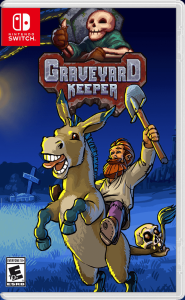
Graveyard Keeper Switch NSP
Report Link Error
Select the broken download file, then submit the report.
Screenshots
About Game
Graveyard Keeper Switch NSP frames medieval labor as a darkly comic adventure, asking players to take responsibility for a cemetery, its deceased residents, and the increasingly strange demands of the surrounding town. Developed by Lazy Bear Games and published by tinyBuild Games, this Nintendo Switch release combines adventure, role-playing, and simulation elements in a world where practical work, peculiar errands, and cynical humor are closely intertwined.
A Darkly Comic Medieval Management Adventure on Switch
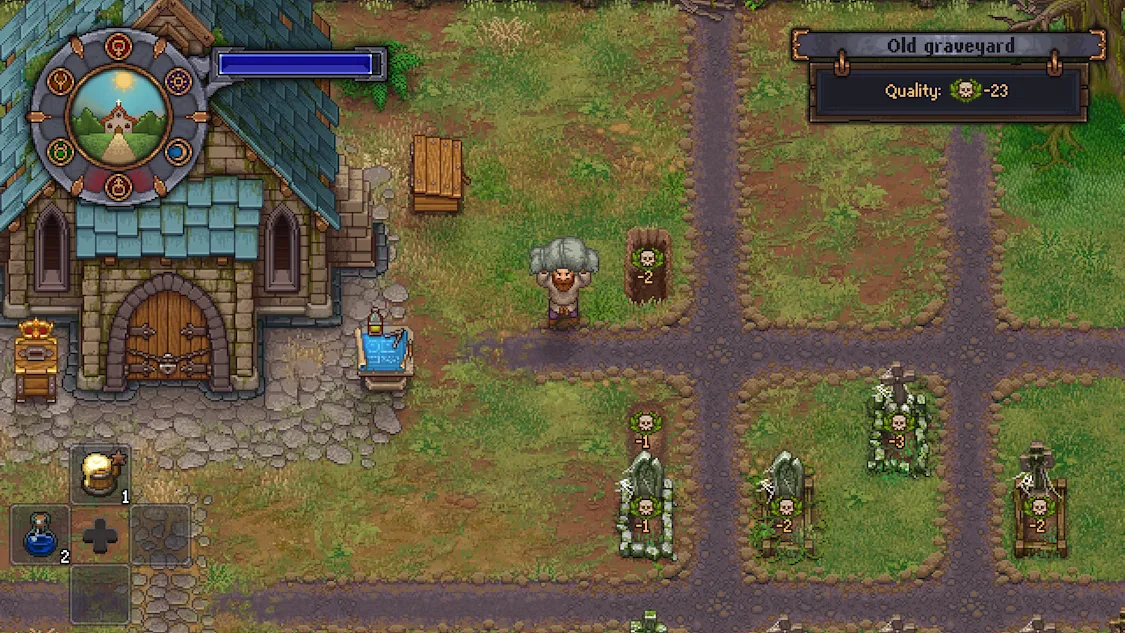
Graveyard Keeper begins with an unusual premise and builds its identity around equally unusual work. The player is not simply tending flowers or arranging headstones; the graveyard itself becomes a long-term project that needs maintenance, planning, resources, and steady improvement. Its medieval setting supports a routine of chopping wood, mining stone, farming crops, crafting supplies, and handling the responsibilities that arrive with the role of local keeper.
The tone is important. This is a dark humor simulation in which grim subject matter is often paired with absurd requests and ethically questionable circumstances. The game’s humor does not remove the weight of its setting, but it gives everyday cemetery management a deliberately offbeat edge. A task may begin as simple groundskeeping and lead into a wider chain involving the church, a witch, corrupt officials, or the town’s many eccentric inhabitants.
On Switch, the blend of management systems and role-playing progression creates a game built around accumulating small gains. Better facilities, new recipes, additional technologies, and improved access to materials all feed back into the work of developing the graveyard. The result is a medieval graveyard management experience with a busy, practical rhythm rather than a purely linear adventure.
The Premise: A Stranger Searching for a Way Home
The Graveyard Keeper story starts abruptly. After being hit by a car, the protagonist wakes in a strange medieval world and is placed in charge of the local graveyard. He is separated from the person he loves, and finding a path back home becomes the central personal goal behind his new duties.
That objective is not resolved quickly. The protagonist’s attempt to understand his circumstances opens into a larger medieval world adventure, one shaped by local relationships, hidden information, ancient secrets, and theological concerns. Town residents have their own interests, and cooperation frequently means accepting requests that are inconvenient, strange, or morally uncertain.
This structure keeps the narrative connected to the daily routine. Cemetery work is not separate from the plot; it is often the means by which the protagonist gains resources, influence, access, or answers. Helping someone may require finding uncommon ingredients, preparing church material, or dealing with official wrongdoing. The route home remains the motivation, but the journey is filled with detours that reveal how peculiar this world really is.
Cemetery Care, Body Processing, and Graveyard Upgrades
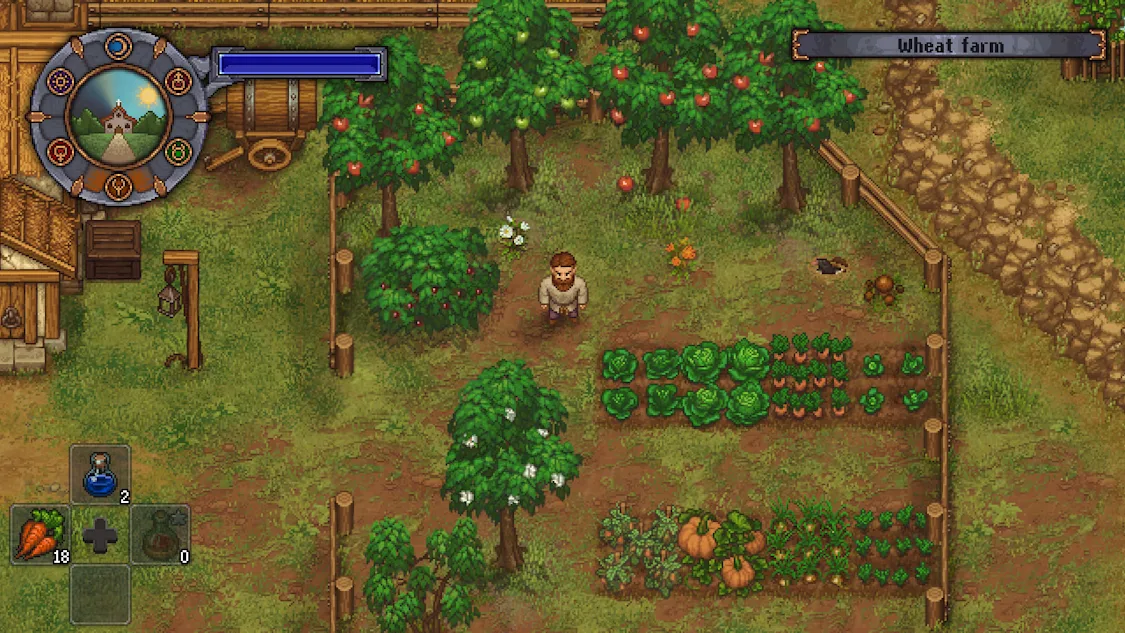
Graveyard Keeper gameplay is driven by maintenance and development. Early on, basic materials are especially important. Trees provide wood, stone can be mined, crops can be grown, and crafted goods support both practical needs and larger projects. The graveyard is a working establishment, so its condition and expansion demand continued attention.
Processing bodies is one of the game’s defining responsibilities. Rather than treating the cemetery as a decorative backdrop, Graveyard Keeper makes the deceased part of its resource and management systems. Bodies can be processed for resources, while the graveyard itself can be upgraded and improved through the materials gathered during daily work.
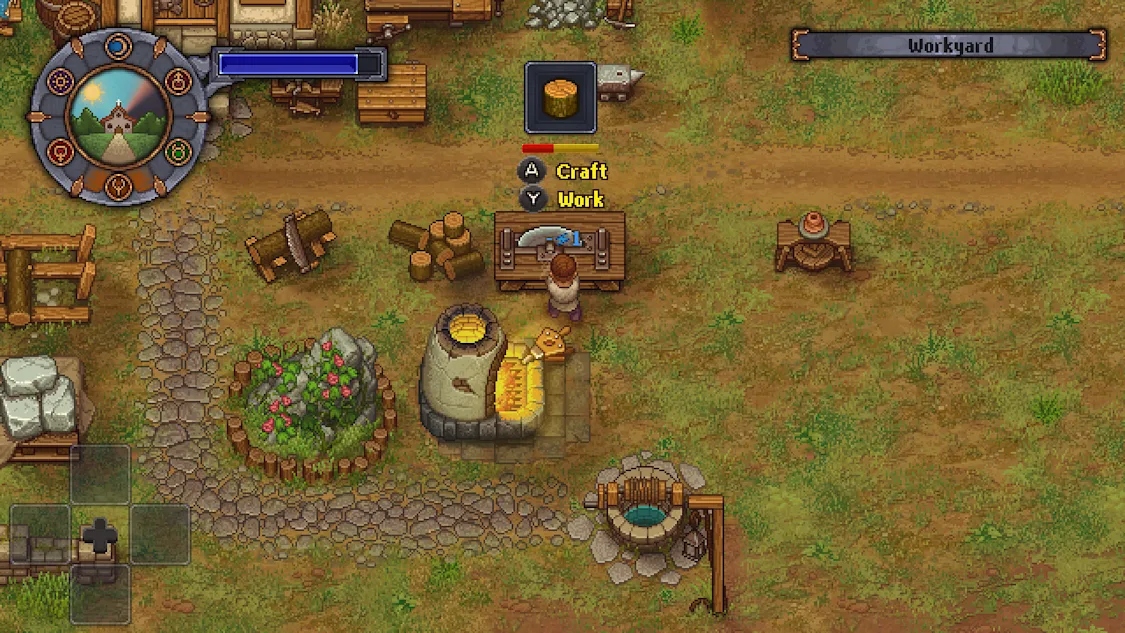
Progression expands beyond the opening chores. Technology unlocks and crafting recipes create new options, including alchemy, blacksmithing, and theological studies. Tools, building materials, potions, food, and other useful items can be made as the player’s capabilities grow. Farming and livestock also provide resources and income, helping to support wider goals.
There is a satisfying logic to this loop: gather what is needed, make what is missing, improve the establishment, then use those improvements to pursue more demanding work. The game gives its simulation systems a role-playing purpose, since new abilities and supplies are regularly tied to quests and story advancement.
Quests, Eccentric Locals, and Moral Ambiguity
The town’s residents provide much of the game’s personality. These NPC interactions are not presented as straightforward errands from uncomplicated heroes. Many characters have competing agendas, questionable motives, or requests that invite the player to consider just how far the keeper is willing to go in pursuit of progress.
Graveyard Keeper quests can involve unusual ingredients, forged documents, sermons, and other tasks that fit the game’s cynical medieval setting. The protagonist is often caught between practical necessity and moral ambiguity. The game’s world is populated by people whose problems do not always have clean or comfortable solutions.
Religious duties add another part to this social structure. Performing ceremonies and selling sermons can generate both influence and money, while theological studies become part of the wider advancement system. These activities reinforce the idea that the keeper’s role reaches beyond grave maintenance. He is gradually drawn into the town’s institutions, secrets, and conflicting interests.
Exploration, Dungeons, and Simple Combat
Life does not remain confined to cemetery paths. Graveyard Keeper exploration sends players into a broader world containing secret areas, dungeons, quests, rare materials, and hidden information. The need for resources gives exploration a practical purpose, but the promise of discoveries also supports the larger mystery surrounding the protagonist’s arrival.
Dungeons introduce simple combat into a game otherwise focused on management and crafting. Combat is not presented as the sole focus, yet it adds pressure and variety when searching for materials or pushing deeper into unfamiliar places. Exploration can reveal new possibilities while also supplying the ingredients and resources needed for crafting, technology, and quest work.
The progression is non-linear enough to let players set their own pace. A player can spend time strengthening the graveyard, gathering resources, pursuing a local problem, farming, or heading out in search of secrets. That flexibility suits the game’s many interconnected systems, where a pause in one project can often become an opportunity to advance another.
7 Activities That Define the Graveyard Keeper Routine
- Maintain the grounds. Tend the cemetery and work toward graveyard upgrades that improve the establishment over time.
- Handle the deceased. Process bodies and use the resulting resources as part of the game’s central management loop.
- Gather the basics. Chop trees, mine stone, and collect the materials needed for construction, crafting, and improvement.
- Craft useful goods. Produce tools, building supplies, food, potions, and other items that support larger tasks.
- Farm for support. Grow crops and raise livestock to create resources and income for ongoing projects.
- Unlock new knowledge. Develop technologies through skill trees, opening access to deeper systems such as alchemy, blacksmithing, and theological studies.
- Follow the town’s leads. Complete quests, explore dungeons and secret areas, face simple combat, and uncover information tied to the strange medieval world.
For players interested in a simulation RPG routine with a grim comic streak, Graveyard Keeper Switch NSP offers a dense mix of crafting, management, exploration, and story-driven errands. Its appeal lies in the way ordinary work and bizarre circumstances continually overlap: one day may be spent improving a burial site, the next gathering rare materials underground, and the next navigating another resident’s deeply questionable request.