Snipperclips Plus – Cut it out, together! Switch NSP
Report Link Error
Select the broken download file, then submit the report.
Screenshots
About Game
Snipperclips Plus – Cut it out, together! Switch NSP is a Nintendo Switch puzzle game built around a wonderfully simple idea: two paper friends can solve problems by cutting pieces out of one another. Developed by SFB Games and published by Nintendo, this expanded cooperative experience turns communication, experimentation, and a willingness to make slightly ridiculous shapes into the tools for progress. Its challenges are light in tone, but they ask players to think carefully about form, timing, and teamwork.
What Snipperclips Plus – Cut it out, together! Is
Released on November 10, 2017, Snipperclips Plus – Cut it out, together! is a puzzle game designed around cooperative problem solving. Rather than relying on combat or a sweeping story, it gives players a shared space in which every obstacle becomes a small design problem. A gap may require a platform. An object may need to be caught with a hook. A container of liquid may call for a carefully shaped scoop.
The result is a game where the route to an answer is often as entertaining as the answer itself. Players are encouraged to test ideas, make imperfect cuts, and adapt when a sensible plan becomes a paper-shaped mess. The puzzles reward creativity, but they also reward the basic social skill of explaining what one player is trying to do before another player removes an essential corner.
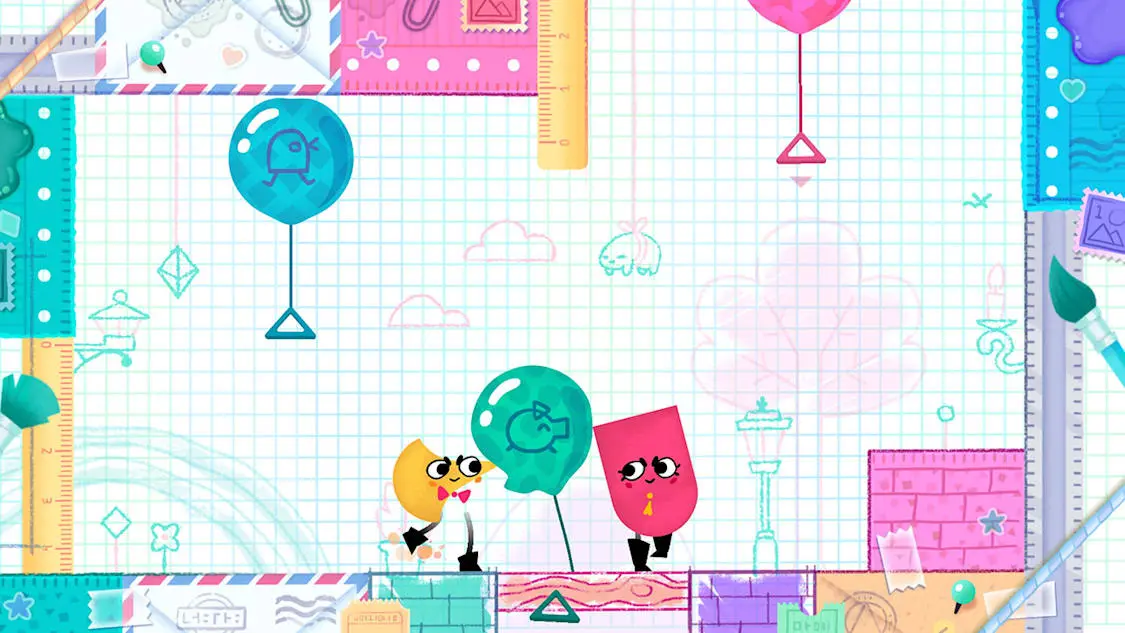
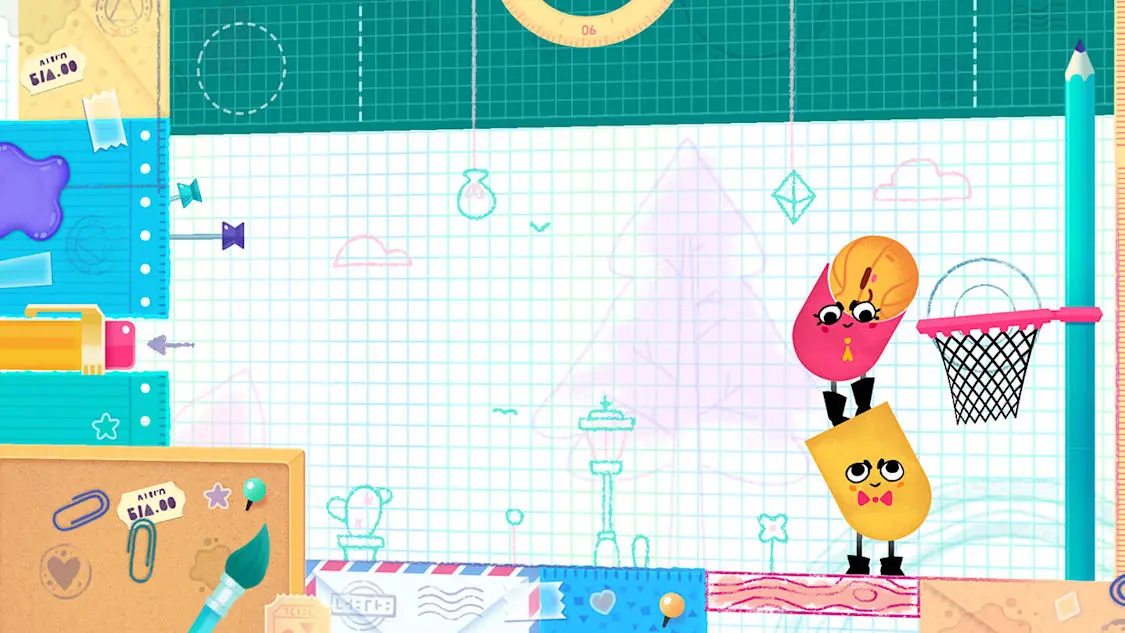
Its colorful paper-craft presentation supports that approachable mood. The characters and themed challenges are playful rather than imposing, making the game suitable for groups looking for a cooperative activity that can be thoughtful, silly, and occasionally chaotic in equal measure.
Snip and Clip’s Paper-Craft Premise
The premise is intentionally modest. Snip and Clip are colorful paper characters and close friends who face a series of quirky challenges. Their world does not need an epic conflict to move forward; the focus remains on their ability to reshape one another and work through each new situation together.
This gives the Snipperclips Plus story a gentle, functional role. The themed worlds provide a framework for fresh obstacles and new ways to cooperate, while the characters’ paper bodies make the unusual central mechanic easy to understand. They are not simply moving through levels. They are becoming the particular shapes those levels demand.
That premise also gives the game its cheerful atmosphere. Snip and Clip can be trimmed into practical tools, awkward silhouettes, or forms that only make sense after a few moments of trial and error. Even when a solution goes wrong, the visual result can be part of the fun: one player may be left with an unhelpful notch, while another has been turned into something more comic than useful.
The Core Mechanic: Cutting Shapes to Solve Problems
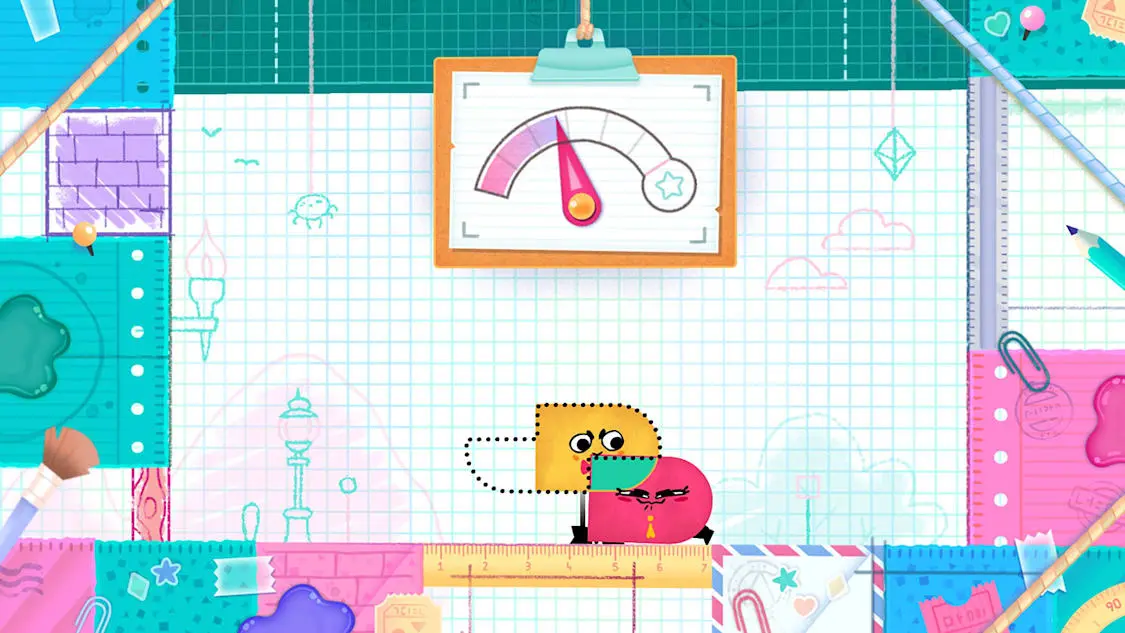
Snipperclips gameplay centers on cutting shapes from another character’s body. Players overlap Snip and Clip, rotate them into position, and make cuts to alter their outlines. Those altered forms can then interact with objects and puzzle objectives in ways a standard paper figure cannot.
The mechanic is straightforward, but its possibilities depend on precision and planning. A small cut can create a needed edge; a larger one can turn a character into a completely different tool. Because players must place and rotate their characters before cutting, the process is not only about recognizing a useful shape. It is also about creating that shape without removing too much.
- Line up first: Position and rotate the paper characters so the intended cut follows the right angle.
- Make a purpose-built outline: Trim a character into a form suited to the immediate puzzle objective.
- Use both bodies: One player’s new shape can create an opening, hold an object, or support another player.
- Test the result: An unusual cut may reveal a practical solution that was not obvious at first.
- Reset when needed: If a cut leaves a character unsuitable for the task, its shape can be restored and tried again.
This loop makes the game feel tactile despite its simple premise. Every successful solution begins with a visual question: what should this paper character become? The answer may be obvious in some puzzles and surprising in others, which helps keep the cooperative puzzles from feeling like a fixed sequence of routine actions.
Creative Shapes for Environmental Challenges
The game’s environmental puzzles give those paper transformations a clear purpose. A hook can be used to grab an object, while a scoop can carry liquid. A platform can help a friend reach a higher place. These examples explain the appeal of the shape-shifting mechanics: players are not cutting merely for decoration, but making temporary tools from the characters themselves.
Different challenges bring different environmental demands. Liquids, bouncy pads, and electrical circuits all ask players to consider not only the shape they need, but how that shape will behave in the space around it. A form that is useful for carrying something may not be the right one for crossing an obstacle. A carefully cut edge can matter as much as a broad, obvious silhouette.
This is where creative problem solving becomes more than a slogan. The game invites players to consider several possibilities, then see which one actually works. Some solutions may emerge from discussion, while others come from trying an odd-looking cut simply because it might fit. The level structure, with themed worlds introducing new mechanics and challenges, gives that experimentation a sense of progression without turning the experience into a complicated narrative.
How Up to Four Players Change the Experience
Snip and Clip’s cooperative design expands to support up to four players. More participants mean more paper characters, more potential shapes, and more opportunities for a group plan to become a lively scramble. The extra players can broaden the range of solutions, but they also make coordination more important.
With two players, communication can be direct: one person explains the needed cut, and the other lines up the characters. With four, the same puzzle can involve several separate roles. One player may need to become a tool, another may need to carry or position an object, and the rest may be trying to avoid accidentally interfering with the plan.
That change gives the multiplayer Switch game a distinct social quality. It can suit players who enjoy solving puzzles collaboratively, but it also leaves room for laughter when several people attempt to help at once. The game’s friendly visual style keeps that disorder from feeling harsh. A mistaken cut is a setback, yet it can also be a shared joke before the group resets and tries a new idea.
Party Mode and Its Competitive Mini-Games
Beyond the cooperative campaign, Party Mode introduces competitive mini-games and challenges. These activities shift the emphasis from jointly reaching an objective to reacting quickly, coordinating movements, and handling the same unusual paper-cutting abilities under a more competitive frame.
That contrast adds replay value for groups that want more than a single style of play. The campaign favors patience, discussion, and inventive solutions. Party activities can place greater value on quick thinking and coordination, allowing the game to move between collaboration and friendly competition without abandoning its central mechanics.
Snipperclips Plus – Cut it out, together! Switch NSP is therefore well suited to local groups who enjoy puzzle games with a playful tone. Its appeal lies in the shared process: noticing an obstacle, proposing a shape, making the cut, and discovering together whether that piece of paper has become exactly what the moment requires.