This War of Mine: Complete Edition Switch NSP XCI

Report Link Error
Select the broken download file, then submit the report.
Screenshots
About Game
This War of Mine: Complete Edition Switch NSP XCI approaches conflict from the viewpoint of civilians trapped inside a besieged city. Released on November 27, 2018, this strategy, simulation, and action title from 11 bit studios asks players to keep a small group alive through shortages, danger, and difficult personal choices. Its tension comes less from battlefield spectacle than from the fragile routine of maintaining a shelter while the outside world remains threatening.
A Civilian Perspective on Survival in a Besieged City
This War of Mine Complete Edition does not cast the player as an armed hero with a clear military objective. Its survivors are ordinary people attempting to endure life in a city under siege. They bring their own backgrounds and abilities to the shelter, but nobody is protected from hunger, illness, fear, or despair.
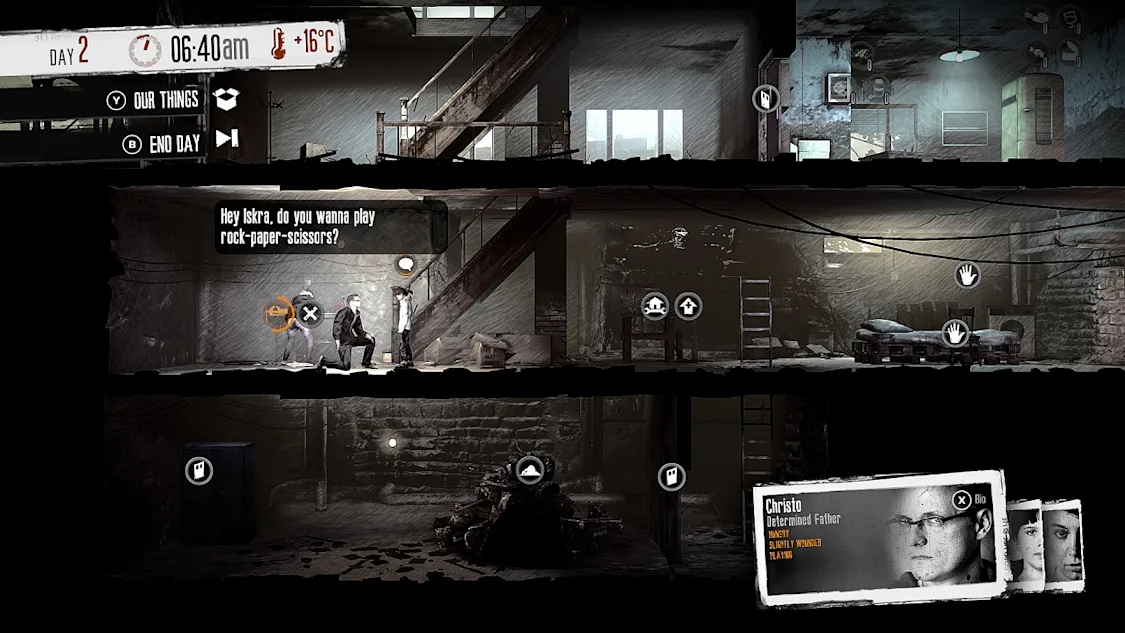
The daytime structure reinforces that civilian survival perspective. Snipers keep the group indoors, turning each day into a period of practical work and care. Players organize the shelter, repair what they can, create useful items, and respond to the immediate condition of each survivor. A weak shelter and neglected needs can quickly make the next day harder.
This framing gives the game a restrained but heavy atmosphere. War is presented through empty supplies, damaged buildings, vulnerable people, and choices that may help one person while hurting another. The story develops through those decisions rather than through a single fixed path. Survival is important, but the game also makes players consider what their group is becoming in order to endure.
Nighttime Scavenging: Risk, Stealth, and Resource Planning
When night arrives, the focus shifts from shelter management to nighttime scavenging. The player selects one survivor to leave the shelter and search dangerous locations. These expeditions are essential because food, medicine, and building materials are rarely available in sufficient amounts at home.
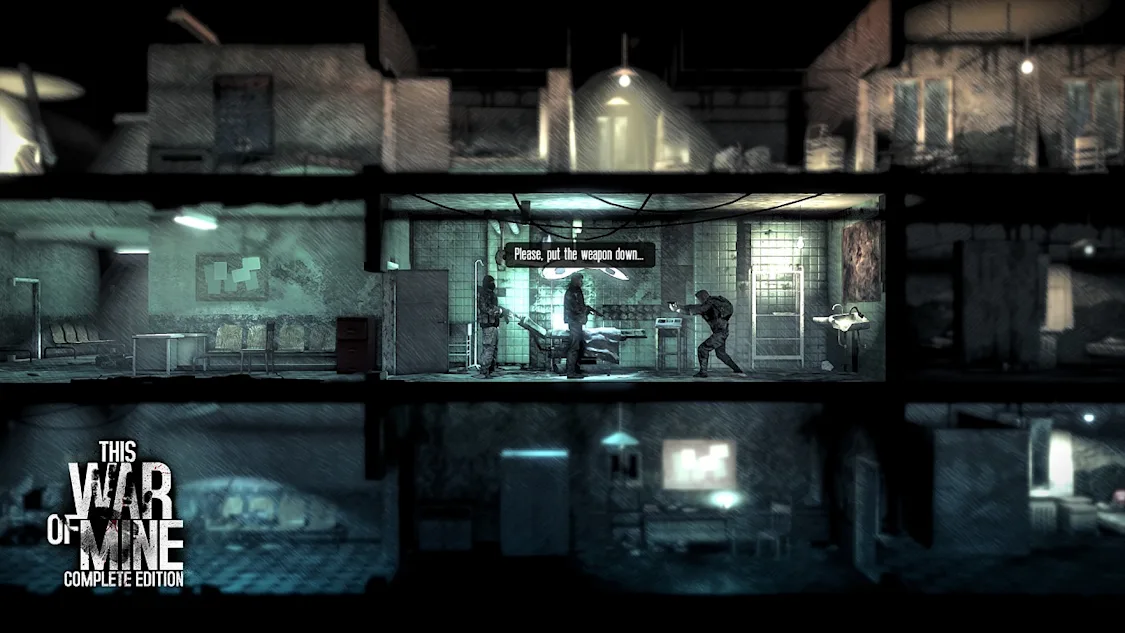
Choosing who goes out matters. Survivors have different skills and circumstances, so sending the wrong person can leave the shelter less prepared or put a valuable member of the group in danger. Each location must also be assessed carefully. A ruined building may contain needed supplies, but it can also contain other people, uncertain intentions, and threats that cannot be ignored.
The scavenging sequences lean on stealth survival and careful movement rather than simple resource gathering. Players must search rooms, decide what to carry, and weigh the value of supplies against the risk of staying longer. Returning with materials can support the entire group; returning empty-handed can deepen the pressure already building inside the shelter.
Resource Scarcity and the Constant Pressure of Basic Needs
Resource management is the daily foundation of the experience. Food, water, medicine, and crafting components all compete for attention, while beds, stoves, filters, repairs, and barricades demand materials of their own. There is rarely a comfortable surplus, so priorities must be set according to the group’s current problems.
Hunger and sickness are persistent dangers, but physical needs are not the only concern. Morale can suffer when survivors face severe conditions or are pushed toward painful choices. Caring for the group means balancing what is immediately useful with what may prevent a larger crisis later. A supply decision that seems efficient in the short term can carry a personal cost.
Weather and changing resource availability keep this survival strategy from feeling completely predictable. Different runs can create different pressures, encouraging players to adapt rather than rely on one rigid routine. The shelter becomes a living problem to manage: secure it, equip it, care for its residents, and prepare for the next difficult night.
How Trade and Encounters Shape Each Survival Run
Other survivors are a vital part of the city’s uncertain social landscape. Encounters can lead to trading, cooperation, or confrontation. A trade may provide the medicine or food the shelter urgently needs, while cooperation can offer a temporary answer to a shared problem.
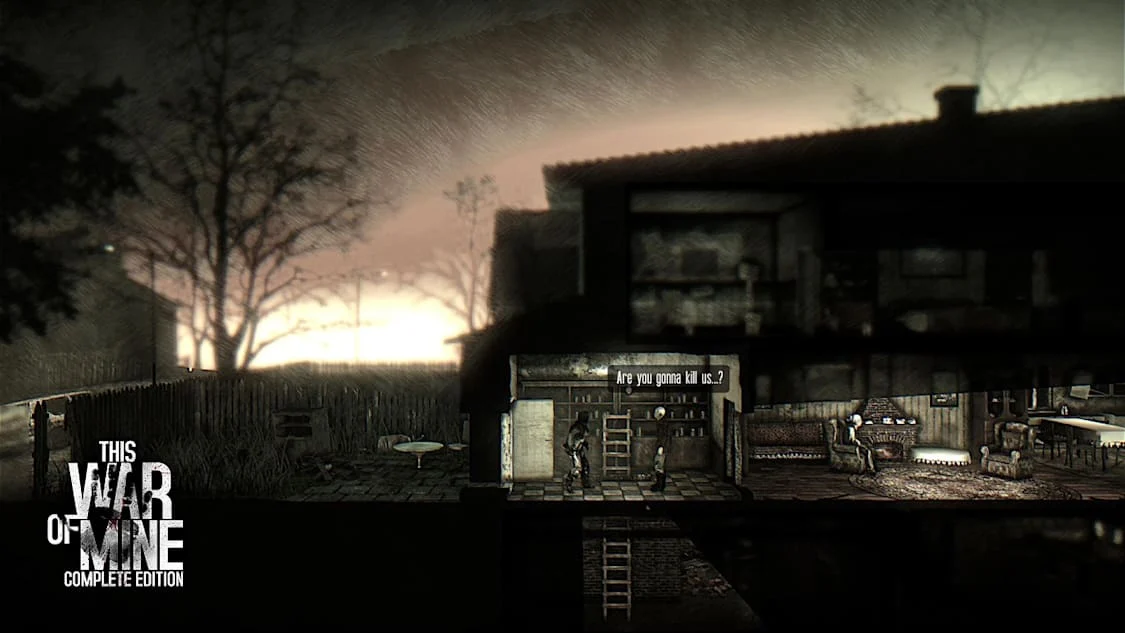
Trust is never guaranteed. Some people may be willing to help, while others may be hostile or unreliable. These survivor encounters give each scavenging trip another layer of tension because the player is not only measuring supplies, but also judging people and possible consequences.
The game’s ethical pressure is strongest when resources are scarce. Taking from others, turning away from someone in need, or placing the group’s survival above another person’s welfare can affect morale and the psychological state of the survivors. There are no easy outcomes promised by the setting. The player is left to decide what cooperation, caution, and survival mean under extreme conditions.
The Little Ones and the Added Responsibility of Protecting Children
The Complete Edition includes all DLC content, including The Little Ones. This addition brings children into the group, expanding both the practical demands of shelter life and the emotional stakes of each decision. Protecting children requires attention during a period when every adult survivor may already be overwhelmed by food shortages, illness, repairs, and scavenging.
Children make the consequences of resource scarcity feel more immediate. The task is no longer simply to maintain a functional group, but to provide safety and care for those who are especially vulnerable. That added responsibility fits the game’s civilian perspective, emphasizing the human cost of a besieged city rather than reducing survival to numbers alone.
For players who appreciate serious strategy games, this content gives the Complete Edition additional narrative depth without changing the central focus: keep people alive, preserve what comfort is possible, and confront the cost of every hard choice.
5 Priorities for a Strong Start in This War of Mine
A successful early run depends on setting practical goals before shortages become overwhelming. These beginner priorities can help establish a steadier shelter strategy in This War of Mine: Complete Edition Switch NSP XCI:
- Sort the shelter first. Review the space, identify what needs repair, and organize the group around immediate daily tasks.
- Craft useful essentials. Focus on practical items such as beds, stoves, and filters, which support basic needs and shelter routine.
- Secure weak points. Barricade vulnerable areas when possible so the shelter is better prepared for danger.
- Watch food and medicine. Keep track of hunger, sickness, water, and available supplies before they become a crisis.
- Plan each night carefully. Choose a suitable scavenger, consider the risks of the destination, and prioritize resources the group truly needs.
Published and developed by 11 bit studios, the USA release supports English, French, German, Italian, Japanese, Korean, Portuguese, Russian, Simplified Chinese, and Spanish. Version 1.0.4 presents a demanding survival experience suited to players who value resource planning, tense stealth expeditions, and stories shaped by morally difficult decisions.
Recommended Similar Games
 RealPro Limited Express Romance Car! Odakyu Electric Railway Edition Switch NSPView Game
 Baldur’s Gate: Dark Alliance Switch NSP XCIView Game
 Borderlands 3 Ultimate Edition Switch NSP XCIView Game
 Let’s! Revolution! Switch NSPView Game
 Bus Simulator – City Driving Ultimate Switch NSPView Game
 The Legend of Heroes: Trails of Cold Steel III Switch NSP XCIView Game
