Farm Frenzy: Refreshed Switch NSP
Report Link Error
Select the broken download file, then submit the report.
Screenshots
About Game
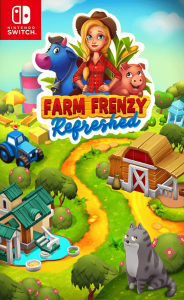
Farm Frenzy: Refreshed Switch NSP brings a brisk, level-driven farming challenge to Nintendo Switch, mixing animal care, production planning, and market-minded decisions. Its premise is simple: begin with a modest operation, keep it functioning efficiently, and turn raw farm output into the goods and income needed to meet each stage’s goals.
Farm Frenzy: Refreshed on Nintendo Switch: The Core Farming Loop
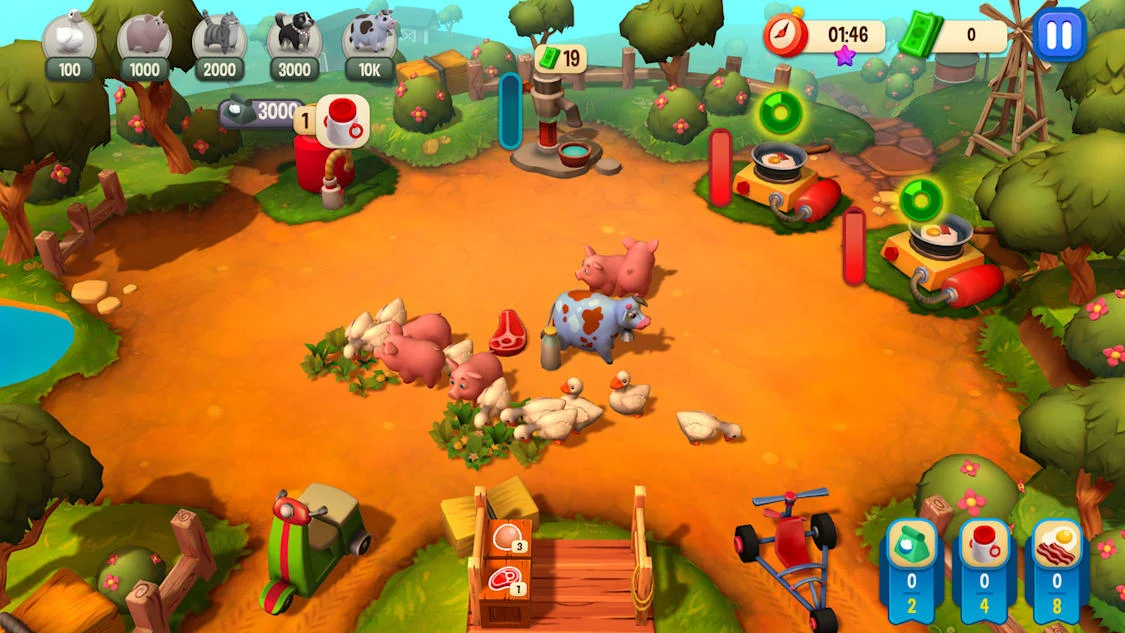
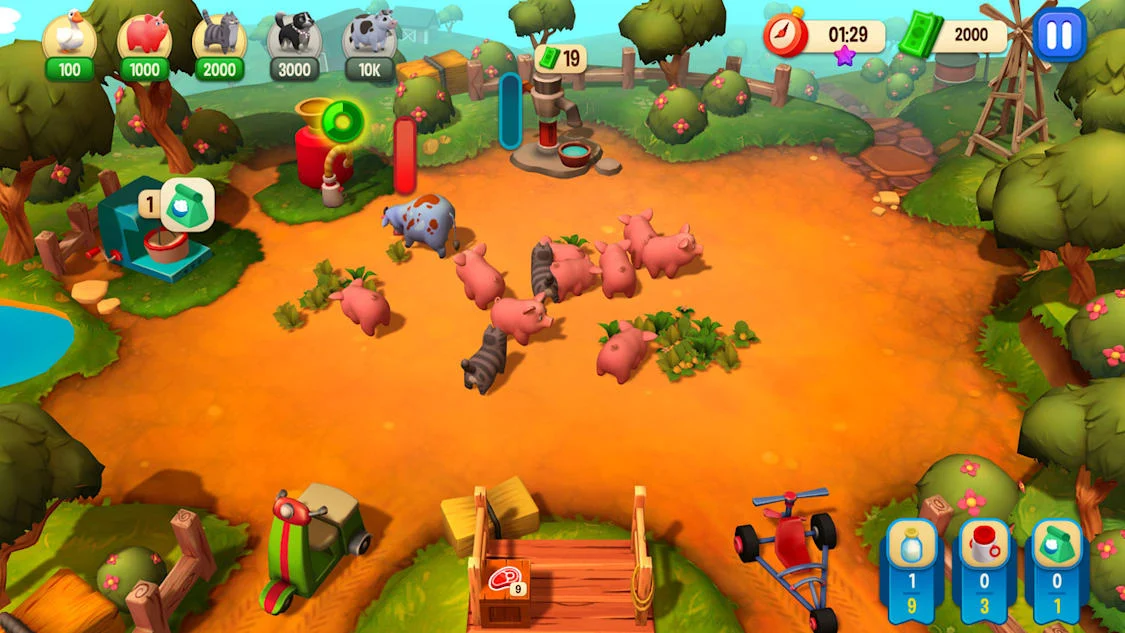
The rhythm of the game is built around farm management gameplay that asks players to react quickly while planning ahead. Animals need attention, water and feed must be available, products have to be collected, and finished goods need to move through the farm’s production system. A successful level depends less on one large decision than on keeping many smaller tasks flowing without interruption.
Each challenge presents a target, commonly tied to producing particular items or reaching a profit amount. That gives the game a focused structure: players are not simply tending an open-ended farm, but working toward a defined outcome under changing conditions. New levels add animals, products, facilities, and obstacles, steadily expanding what has to be managed.
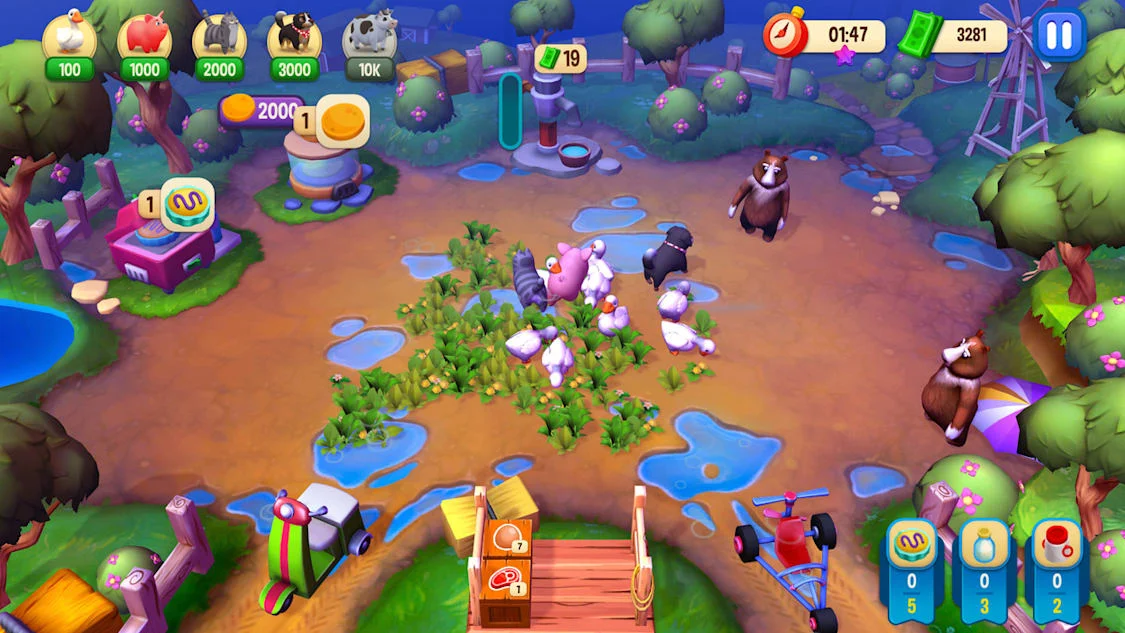
The pace is also shaped by threats on the farm. Bears can appear and must be captured before they cause trouble for livestock and resources. Their presence turns an otherwise orderly production routine into a game of attention and prioritisation. Water collection, animal upkeep, processing, storage, sales, and bear control can all demand action at once.
Farm Frenzy: Refreshed uses that busy routine to create a light but demanding strategy experience. The appeal comes from seeing a small plot develop into a productive enterprise, then refining the process to reach goals more efficiently on later attempts.
From Chickens to Cows: Building Productive Animal Farms
The confirmed animal roster includes chickens, pigs, and cows, each contributing raw goods to the wider farm economy. These animals are the foundation of production: without their output, buildings have little to process and the market has fewer valuable goods to sell.
That relationship gives the animal side of the game practical weight. Adding livestock can increase output, but it also increases the demand for essentials such as water and feed. A farm that expands too quickly may have more animals producing goods than its storage, buildings, or transport can handle. The goal is not simply to fill the farm with animals, but to make sure every part of the operation can support them.
In early stages, concentrating on a limited number of activities can help keep the farm organised. As more animal types and facilities become available, the production economy becomes broader. Chickens, pigs, and cows are not just decorative parts of the setting; they are the sources that start the chains leading to more profitable items.
Production Chains, Buildings, and Better Goods
Farm Frenzy Refreshed production chains centre on transforming basic animal products through different farm buildings. Raw output has value, but processing it into better goods creates a stronger route toward production and profit goals. This makes building choices important: a new facility is useful when the farm can consistently supply it, store its products, and move those products to market.
Inventory flow is a central concern. Goods may pile up if a building is not available, if warehouse space is limited, or if transport cannot keep pace. The most effective priorities often come from identifying the part of the chain that is holding everything else back. Expanding one area without considering the rest can create an expensive bottleneck.
A measured farm buildings strategy therefore means matching facilities to current objectives. If a level calls for a particular finished item, it makes sense to establish the required chain before spending resources on less relevant expansion. Producing goods in batches can also make the work more efficient, especially when several actions compete for attention.
- Start with supply. Keep water and feed available so animals can continue generating the materials the farm needs.
- Choose a chain. In earlier levels, focusing on one or two production routes can make inventory easier to control.
- Protect storage. Increase warehouse capacity when goods are accumulating and preventing further production.
- Improve movement. Vehicle upgrades can speed the transport of goods to and from the market.
- Watch the market. Selling finished products at favourable prices helps maximise profit.
- Handle bears fast. Capturing them quickly helps protect animals and farm resources.
Water, Feed, and Warehouse Space: Managing Farm Resources
The practical systems behind Farm Frenzy Refreshed resources give the game much of its time-management pressure. Fresh water is collected for animals, while feed helps keep them productive. If either requirement is neglected, the rest of the farm’s production cycle can slow down or stop.
The well is consequently a meaningful upgrade path, since a dependable water supply supports every animal-dependent process. Feed requires the same kind of attention. Keeping enough of it on hand is not glamorous, but it prevents avoidable disruption when the farm is busiest.
Warehouse management is equally important. Storage capacity determines how many collected or processed goods can remain on the farm before they need to be sold or used. A full warehouse can block the collection of new output, causing a chain reaction through animal production and buildings. Expanding storage is therefore more than a convenience; it can preserve the momentum of an entire level.
These systems reward players who read the farm as a connected operation. A warehouse upgrade may be more valuable than another animal, while a better well may matter more than a new production building. The right choice depends on where pressure is building at that moment.
Level Goals and the Path from Small Plot to Thriving Farm
Farm Frenzy Refreshed levels provide the game’s sense of progression. Players work through diverse challenges that ask for specific production results, collected amounts, or profit targets. Completing those objectives moves the farm from its basic beginnings toward a larger and more capable operation.
Progression unlocks additional buildings, vehicles, animals, and challenges. That gradual expansion ensures that new systems arrive with a purpose rather than all appearing at once. Earlier levels teach the value of routine, while later ones test how well players can coordinate several production demands at the same time.
The emphasis on goals also supports replay value. A level can be revisited to try a cleaner route through its objectives, improve planning, or pursue gold trophies through greater efficiency. Players who enjoy refining a strategy may find satisfaction in adjusting upgrade order, product timing, and sales decisions after seeing where an earlier attempt lost momentum.
Presentation supports the accessible farming theme with a whimsical tone and dynamic day-night cycles that add visual atmosphere to the work. The game is particularly suited to players looking for approachable strategy, quick decision-making, and the satisfaction of organising a growing production system rather than a deep narrative role-playing experience.
Release and Nintendo Switch Version Details
Farm Frenzy: Refreshed Switch NSP was released on August 4, 2023. It is published and developed by ChiliDog Interactive and is classified in the Simulation and Strategy genres. The Nintendo Switch release is available in Europe and the USA.
Supported languages are English, French, German, Russian, and Simplified Chinese. The base firmware requirement is version 16.0.1. The title has a file size of 683MB and the Title ID is 0100FD90152F2000.
Recommended Similar Games
 The Survivalists Switch NSPView Game
 Little Kitty Big City Switch NSPView Game
 Wall World Switch NSPView Game
 Touhou Lost Branch of Legend Switch NSPView Game
 ROMANCE OF THE THREE KINGDOMS XIV: Diplomacy and Strategy Expansion Pack Bundle Switch NSP XCIView Game
 Digimon World: Next Order Switch NSP XCIView Game
