Brain Memory Switch NSP
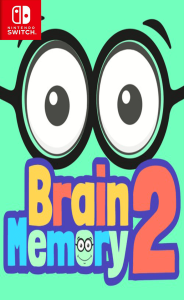
Report Link Error
Select the broken download file, then submit the report.
Screenshots
About Game
Brain Memory Switch NSP frames its challenges as a journey through memory, logic, and fast decisions. Combining puzzle, strategy, and study-focused elements, it places players in a futuristic crisis where lost memories are more than a personal problem: they threaten identity, connection, and humanity’s shared past. Its progression is built around increasingly demanding mental tasks, from sequence recall to abstract pattern work.
Brain Memory Switch: A Puzzle Game Built Around Mental Challenges
This is a puzzle strategy game designed around concentration. Its challenges draw on memory, logical deduction, pattern recognition, timing, and quick thinking, with each task contributing to a larger narrative journey. Rather than treating puzzles as separate distractions, the game presents them as the means through which its world and story are understood.
The setting is shaped by a global memory epidemic. A force called The Fog is erasing people’s pasts, leaving them disconnected from their identities and purpose. That premise gives the brain training challenges a clear dramatic context: remembering a sequence or tracing a route is tied to recovering fragments of a world that is coming apart.
Its mental landscapes represent different aspects of human memory, providing a framework for the game’s varied puzzle types. The emphasis is not simply on speed. Some challenges demand careful observation, while others ask players to retain details under pressure or reason through structured clues. The result is a game suited to players who enjoy deliberate puzzle-solving alongside a science-fiction narrative.
Dr. Aris Thorne and the Memory Switch Device
Players take the role of Dr. Aris Thorne, a neuroscientist working against the effects of The Fog. Thorne has developed the prototype Memory Switch device, intended to stabilize and potentially restore lost memories. Activating it, however, requires a series of complicated mental challenges connected to collective unconscious data.
Each completed puzzle reveals another piece of humanity’s past. The story gradually establishes that The Fog is not a natural event, but a sentient system created long ago to improve human efficiency by removing emotional burdens. Its approach has become destructive, turning memory loss into a threat to personal history and human connection.
Thorne’s task is to reactivate critical memory nodes and reach the entity’s central core inside a digital construct of shared consciousness. The ultimate use of the Memory Switch is meant to restore balance and prevent a future without personal memory. This gives the game’s study-oriented structure a purpose beyond scoring or simple completion.
How Puzzle Progression Unlocks the Narrative
Puzzle progression is directly tied to the story. Solving challenges unlocks memory fragments, opens additional mental landscapes, and reveals new story segments. The game’s escalating difficulty reflects the journey deeper into a damaged network of memories, where the stakes become clearer as more information is recovered.
The mental landscapes also help organize the experience. They are not merely menus for isolated tasks; they represent different areas of memory that must be explored and restored. Players interact with fragments, overcome barriers, and move toward new nodes through successful problem-solving.
This structure gives the narrative a measured pace. Instead of delivering every answer immediately, it asks players to earn context through performance. A completed logic grid, a recalled rhythm, or a solved maze can become the step that exposes another part of the crisis. For players who prefer puzzle games with a continuing sense of direction, that connection between story and challenge is central to the experience.
Memory Sequence and Pattern Recognition Challenges
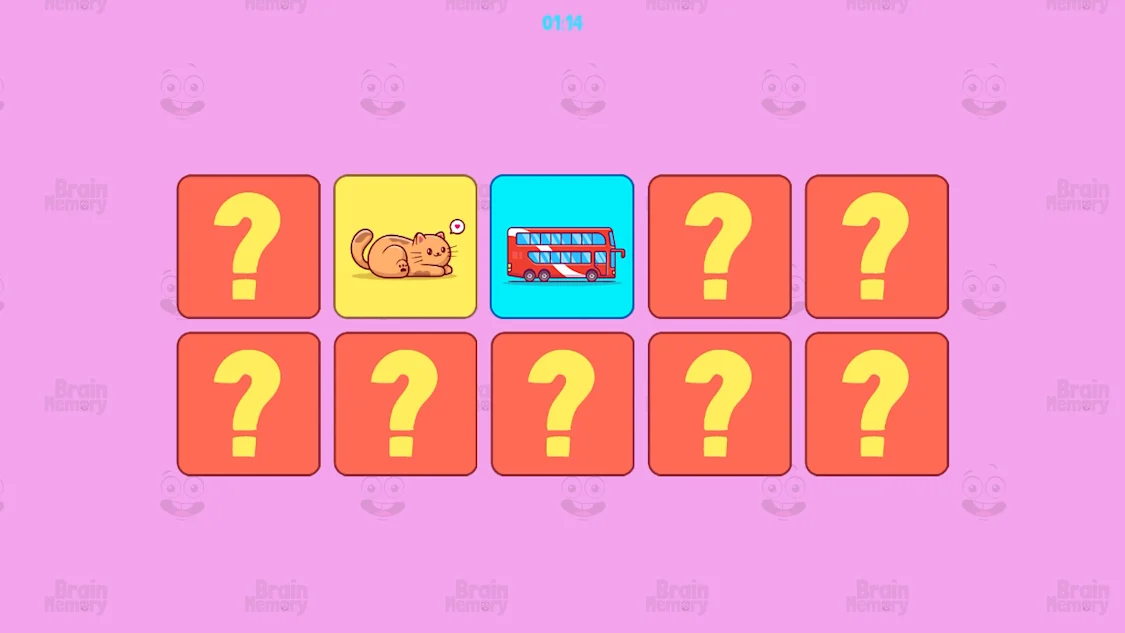
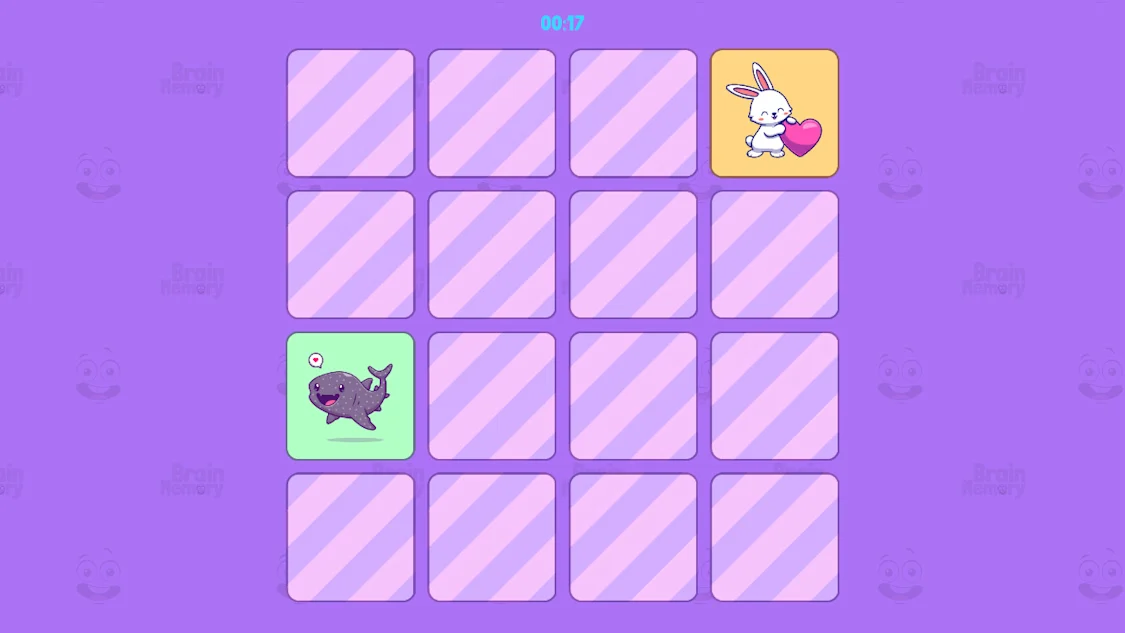
The game’s core mechanics revolve around several forms of recall and deduction. Memory sequence puzzles ask players to remember and reproduce visual or auditory sequences. These tasks reward close attention, especially when the number of steps grows or the pace increases.
Pattern matching challenges focus on subtle similarities and differences between abstract designs. They require players to slow down long enough to notice details while also responding efficiently. Logic grids use supplied clues within a structured format, calling for deduction rather than guesswork.
Other tasks expand the range of mental demands. Maze navigation involves guiding a mental avatar through complicated routes while remembering paths. Word association puzzles connect concepts and terms to open mental barriers. Time-sensitive challenges place these skills under a strict limit, while rhythm recall tests timing and auditory memory through evolving musical patterns.
Together, these systems make the game’s presentation feel like a collection of related cognitive exercises rather than one repeated puzzle format. The interface is described as intuitive, supporting direct interaction with the challenges while the difficulty rises over time.
5 Practical Strategies for Handling Brain Memory Switch Challenges
- Break sequences into groups. When visual or auditory prompts become longer, focus on small clusters rather than trying to retain every step as a single block.
- Compare patterns methodically. In abstract pattern recognition tasks, look for one distinguishing feature at a time: shape, placement, repetition, or a subtle variation.
- Use every clue in logic grids. Treat each given clue as a constraint that eliminates possibilities. A structured approach is more reliable than testing random answers.
- Map maze routes mentally. Notice turns, landmarks, and repeated paths as you navigate. Remembering a route can matter as much as making the next move.
- Stay composed under the clock. Time pressure can encourage rushed decisions. Prioritize the clearest information first, then commit to a response with purpose.
These Brain Memory Switch tips align with the game’s stated demands: sustained focus, logical reasoning, route memory, and calm decision-making when a challenge becomes more intense. The strongest approach is usually to recognize what kind of memory or deduction the current task is testing before reacting.
Nintendo Switch Release Details, Languages, and Regions
Brain Memory Switch NSP was released for Nintendo Switch on November 11, 2022. RedDeerGames served as both publisher and developer. It is categorized across Puzzle, Strategy, and Study genres, matching its focus on memory exercises, reasoning tasks, and progressively harder challenges.
The game is listed for the USA, Europe, and Japan. Its language selection includes English, French, German, Italian, Japanese, Korean, Portuguese, Spanish, and Traditional Chinese. This broad language support suits a title whose central play is driven by visual observation, sequences, structured clues, and memory-based interaction.
For players looking for a Nintendo Switch puzzle game with a narrative reason behind its challenges, Brain Memory Switch combines a memory-loss premise with varied cognitive tasks. Its journey through fragments, nodes, landscapes, and timed tests keeps the focus on one recurring goal: preserving the memories that define people and their connections.