For The King Switch NSP
Report Link Error
Select the broken download file, then submit the report.
Screenshots
About Game
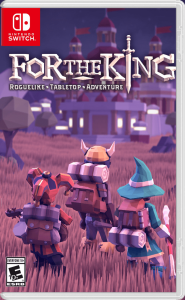
For The King Switch NSP frames its adventure around a kingdom in crisis: Fahrul has been thrown into chaos after the murder of its king, and a party chosen by the Queen must investigate the loss while confronting the dangers spreading across the realm. Its mix of board-game movement, turn-based RPG battles, and roguelike uncertainty gives the journey a measured but uneasy rhythm. Charming visual presentation softens the tone, yet the decisions made on the road can carry real consequences.
How the Hex-Grid World Shapes Every Journey
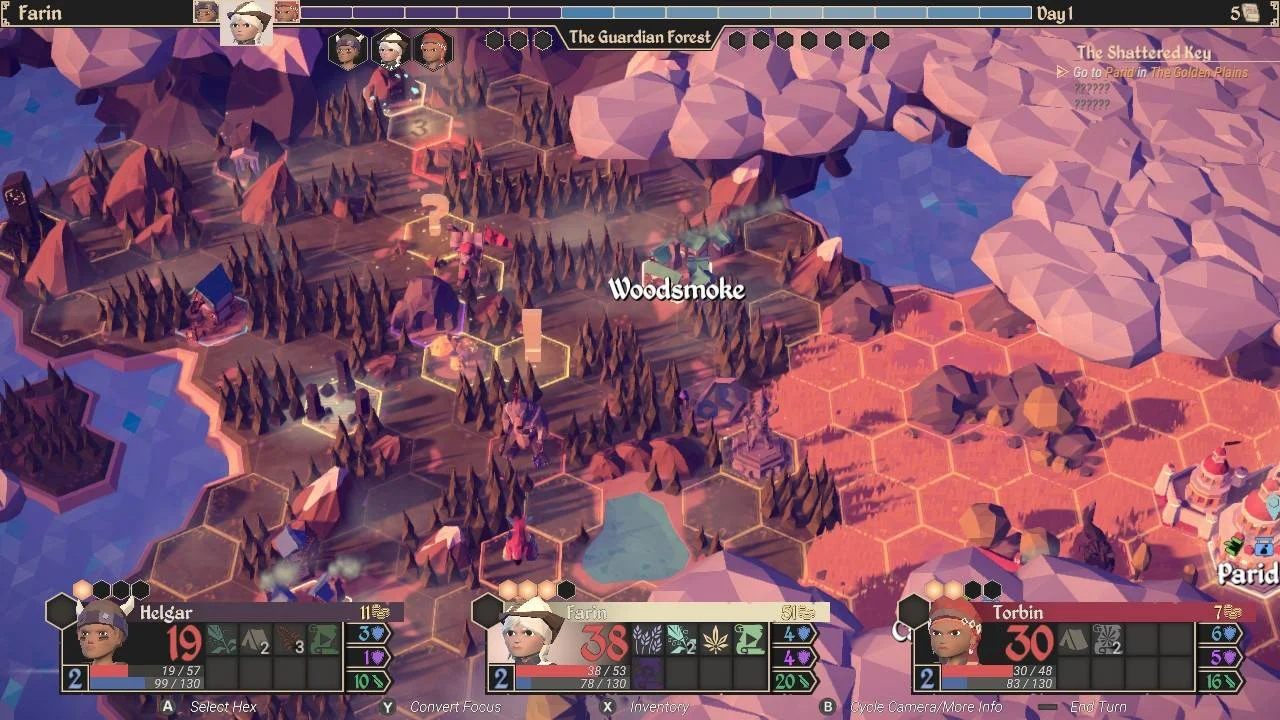
Exploration is structured around a hex-grid map, turning travel into a sequence of deliberate choices rather than a simple route between objectives. The party moves through changing terrain and biomes, with towns, dungeons, quests, and other points of interest appearing across the procedurally generated world. A distant location may promise supplies, equipment, or information, but reaching it can mean crossing hazardous ground or leaving another opportunity behind.
This approach gives For The King Switch NSP gameplay a board-game-like sense of scale. Each hex can matter because the map is not merely a backdrop for combat. It is where the party finds towns for key stops on the journey, enters dungeons, uncovers locations, and encounters the unpredictable conditions of Fahrul. The procedural world helps ensure that the route through the kingdom is not fixed from one run to the next.
The atmosphere grows from that uncertainty. Fahrul is a land under pressure, threatened by monstrous creatures and malevolent forces, and the party’s mission to restore order unfolds through the places it visits. The world can feel inviting in its presentation while still demanding caution in practice. A quest, a dungeon entrance, or an unexplored stretch of terrain can become the next defining moment in the run.
Turn-Based Battles Built on Planning and Dice Rolls
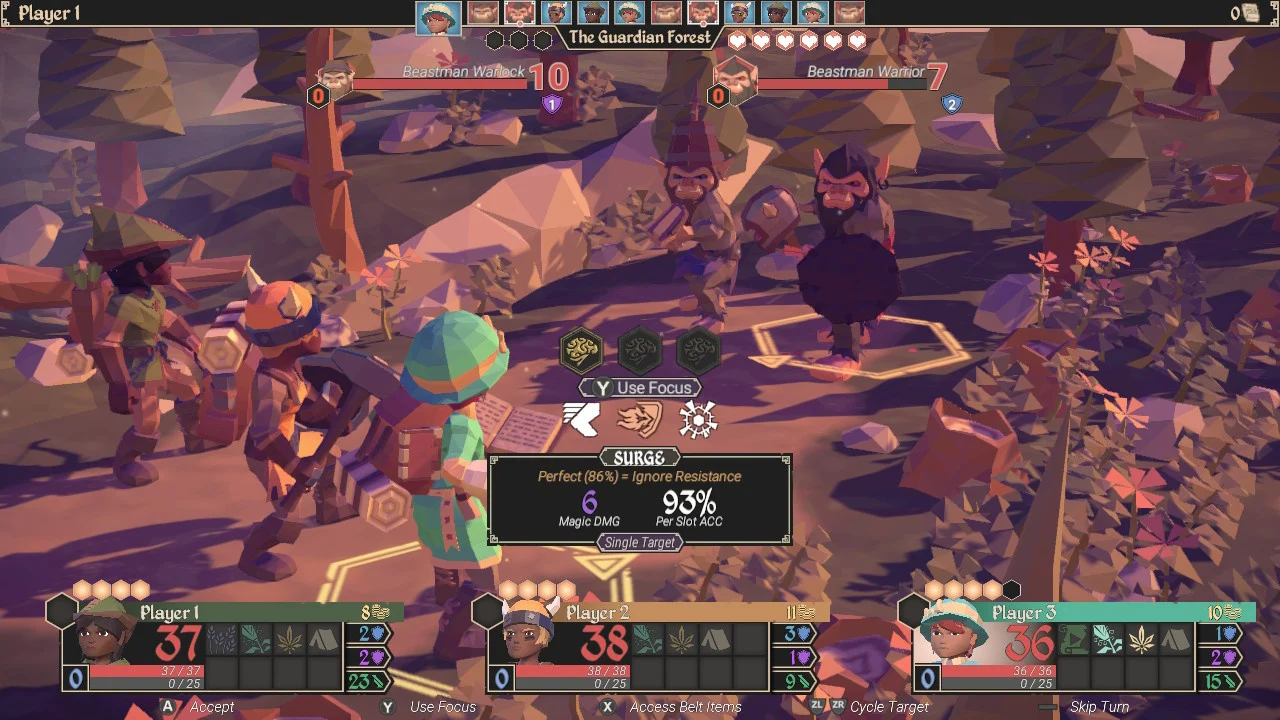
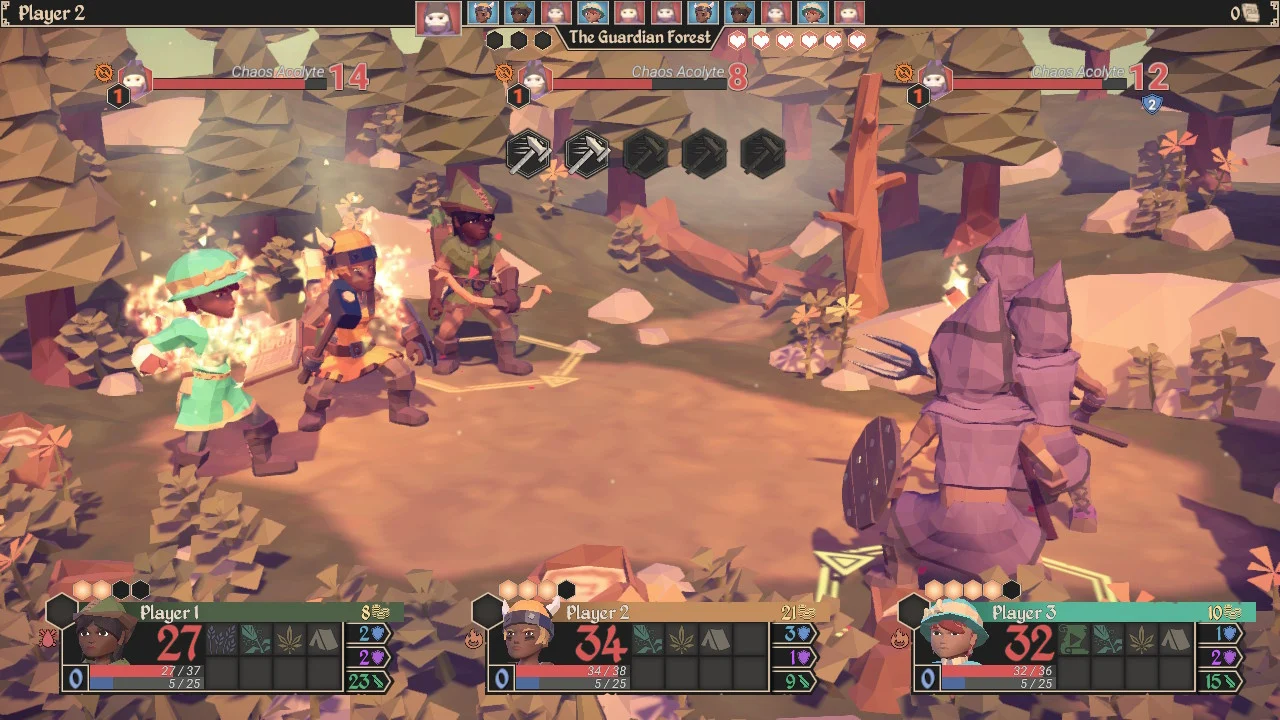
Combat uses a tactical turn-based RPG structure in which party choices, abilities, equipment, and positioning all influence an encounter. The system asks players to think beyond a straightforward attack order. A character’s available skills and gear help define what they can contribute, while placement can affect how the party responds to enemies and protects its more vulnerable members.
The extra variable is the game’s dice-roll mechanics. Attacks and abilities rely on rolls to determine success, adding luck to decisions that are otherwise rooted in planning. That does not remove the value of preparation; it makes preparation more important. Selecting useful equipment, understanding the party’s strengths, and approaching battles with a plan can help manage risk when a roll does not go as hoped.
For The King Switch NSP combat therefore has a different pace from action-driven RPGs. It rewards players willing to consider the situation before committing to a move. The pressure comes from balancing what a party can reliably do against what it may need a favorable result to accomplish. Battles can be tense not because the rules are hidden, but because even sound decisions must coexist with chance.
Focus Points and the Cost of Moving Forward
Focus points give exploration an additional strategic layer. Movement consumes this resource, so travel cannot be treated as free. Choosing a path is also choosing how much of the party’s available focus to spend before reaching a town, dungeon, quest, or point of interest.
That restriction makes tactical exploration central to the experience. A nearby destination may be safer on paper, while a more distant opportunity may be worth the cost if the party needs what it offers. The result is a steady evaluation of priorities: press into dangerous territory, pursue a newly discovered location, or take a more conservative route through the procedural map.
For a strategy RPG, this creates useful friction between curiosity and caution. The world invites exploration, but its systems ask the party to account for the price of every step. Focus points help make the journey across Fahrul feel like part of the challenge rather than downtime between battles.
Building a Party for the Perils of Fahrul
Character classes provide another foundation for planning. The available roster includes classes with differing starting statistics, equipment, and skills, allowing parties to be assembled with distinct strengths. A group is not simply a collection of individual heroes; its composition influences how it approaches combat, exploration, and the changing demands of a run.
- Starting stats: Different class attributes shape early strengths and weaknesses.
- Equipment choices: Starting gear helps establish each character’s practical role.
- Distinct skills: Class abilities give party members different options during encounters.
- Shared coverage: Party composition can determine how prepared a group is for varied threats.
- Flexible runs: Changing the lineup can make a new journey through Fahrul feel meaningfully different.
This is where RPG strategy becomes personal. Players can weigh the value of a party built around familiar roles against one designed to test different combinations of stats, gear, and skills. Since the world, quests, events, and loot can change between playthroughs, a composition that feels effective in one adventure may face a different set of pressures in the next.
The game also supports local and online co-op multiplayer, giving groups a way to confront Fahrul’s challenges together. Cooperative play suits the party-based structure naturally, as each participant can share in the decisions surrounding routes, battles, and the risks that emerge during a run.
Why Procedural Generation Keeps Adventures Unpredictable
Procedural generation is central to the game’s replayability. Maps, quests, events, encounters, and loot are randomly generated, so the broad mission to investigate the king’s murder can unfold through different paths and situations. The story remains rooted in Fahrul’s disorder, but the practical shape of an adventure changes with the world that is created.
This roguelike influence matters because it prevents knowledge of one map from becoming a complete answer for the next. A new run can present altered routes, new points of interest, different rewards, and fresh combinations of obstacles. The uncertainty supports the game’s thematic premise: the heroes are entering a realm where order has broken down, and each expedition must respond to the conditions it finds.
Progression also extends through a persistent Lore Store, which can unlock new classes, items, and cosmetics. That gives repeated play a broader sense of accumulation while the procedural generation keeps individual journeys from becoming routine. It is a fitting structure for players who enjoy revisiting a system, experimenting with party ideas, and seeing how changing circumstances reshape familiar goals.
Nintendo Switch Release Overview and Supported Languages
For The King Switch NSP was released for Nintendo Switch on May 24, 2019. It was developed by IronOak Games and published by Curve Digital, with availability listed for Europe, the USA, Asia, and Japan. Its genre classification combines Adventure, Board Game, RPG, and Strategy, which closely reflects the way hex-grid travel, party planning, dice-based encounters, and procedural challenges intersect.
The game supports English, German, French, Spanish, Italian, Portuguese, Russian, Japanese, Chinese, and Korean. This wide language selection matches its broad regional listing and makes its strategic systems accessible across multiple markets. For players drawn to tactical turn-based battles, resource-conscious travel, party-building decisions, and repeatable adventures shaped by chance, Fahrul offers a deliberately unpredictable road forward.