The Rewinder Switch NSP

Report Link Error
Select the broken download file, then submit the report.
Screenshots
About Game
The Rewinder Switch NSP is a 2023 adventure-puzzle game from Gamera Games that places investigation, folklore, and time-focused problem-solving in the same haunted frame. Its story follows a spiritual detective with the ability to communicate with spirits and revisit past events, using that power to uncover the causes behind a village’s lingering grief.
What Is The Rewinder on Nintendo Switch?
Released on August 10, 2023, The Rewinder is an adventure puzzle game developed and published by Gamera Games. The premise centers on the last Rewinder, a figure able to perceive spiritual traces, speak with lost souls, and manipulate local moments in time. That combination gives the game a detective-like structure: each discovery is tied not simply to a locked route or missing object, but to an earlier event that must be understood.
The Rewinder Switch experience unfolds in a deserted village affected by temporal disturbances. A mysterious presence known as the Soul Eater is connected to those disruptions, while the spirits encountered along the way preserve fragments of the area’s history. Progress comes from assembling those fragments into a clearer account of what happened and why certain souls remain unable to move on.
Rather than separating story from gameplay, the game uses its narrative questions to direct its puzzles. Conversations with spectral residents can reveal a clue, an object may point toward a prior scene, and a changed outcome can expose a new path. The result is an adventure puzzle game built around observation as much as action.
Chinese Mythology and Folklore in The Rewinder
The Rewinder setting draws inspiration from Chinese mythology and folklore, particularly through its spiritual imagery, village atmosphere, and focus on the relationship between the living, memory, and the dead. The player’s role as a Rewinder gives the story a supernatural perspective without losing sight of its human concerns: regret, unresolved conflict, forgotten events, and the bonds that remain after loss.
Its spectral encounters are important to that mood. Spirits are not merely obstacles placed in the player’s route; they are sources of testimony and pieces of a sorrowful history. Speaking with them helps establish the game’s investigative rhythm, while their stories provide context for the disturbances surrounding the village.
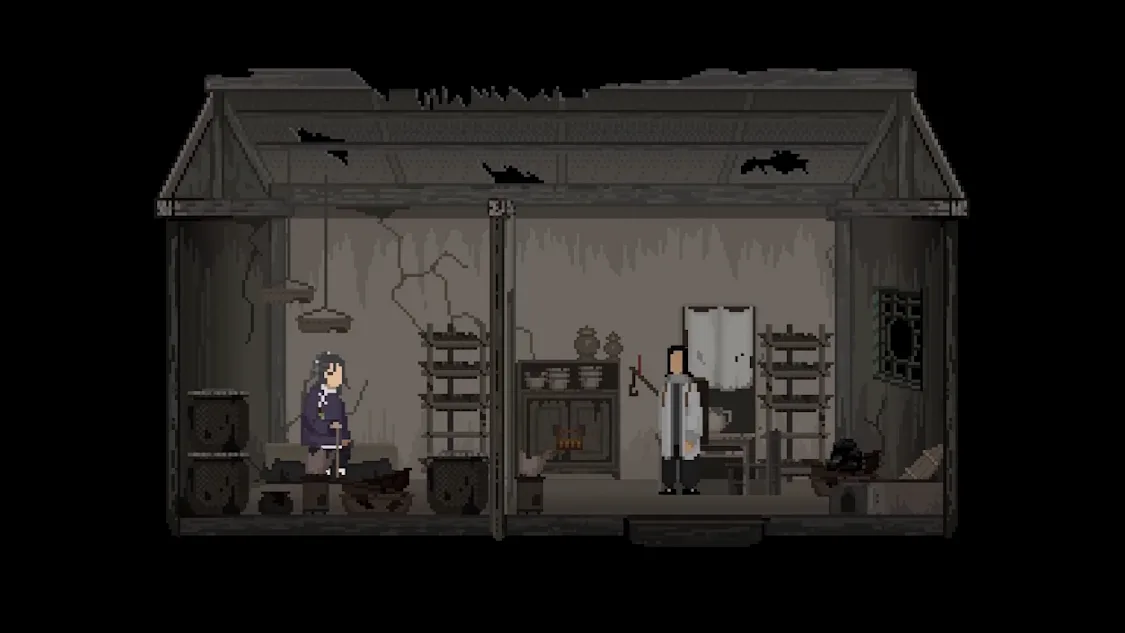
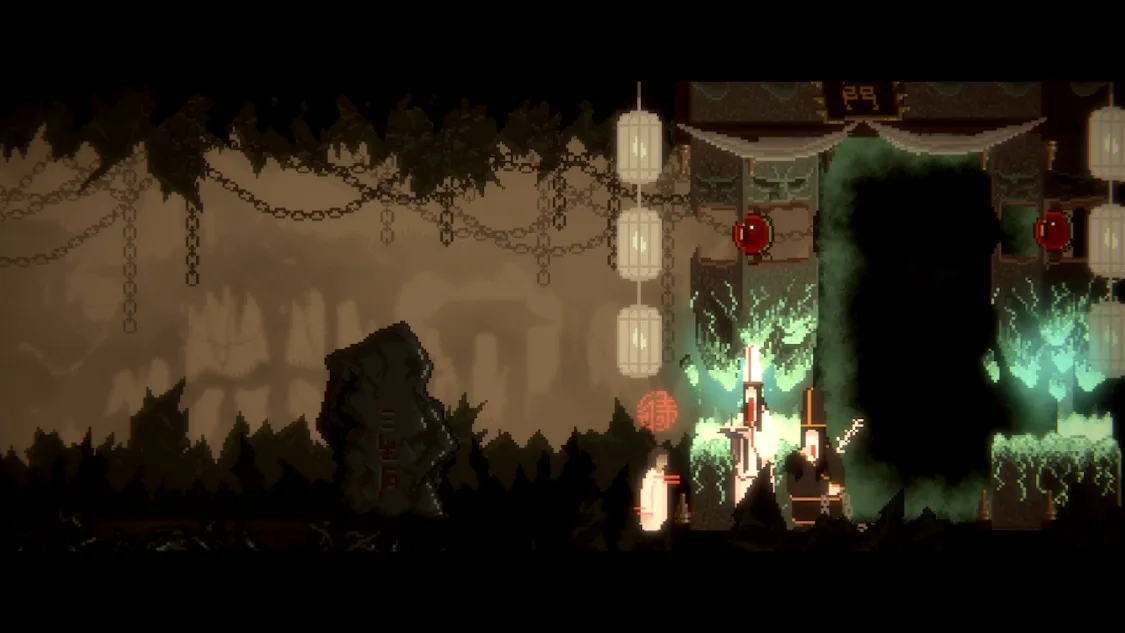
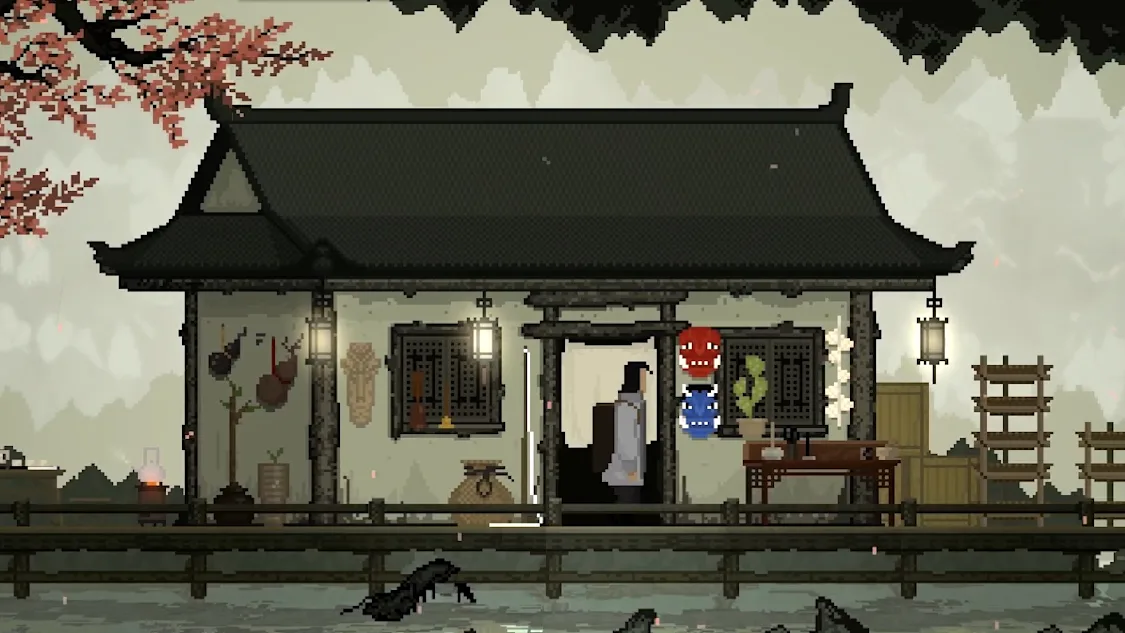
The game’s folklore influence also supports its visual atmosphere. Its 2D pixel-art world is shaped by traditional Chinese aesthetics and supernatural themes, creating an environment where ordinary spaces can feel charged with older memories. The quiet tension of a deserted location, combined with spirits and time fractures, gives the story room to feel reflective as well as mysterious.
How the Time-Rewinding Puzzle Mechanic Works
The Rewinder time rewind mechanic is the game’s central tool for both narrative discovery and puzzle-solving. Players can revisit specific events or scenes, observe what took place earlier, and use that knowledge to approach the present differently. This is not simply a visual flashback system: prior outcomes can contain the clues needed to change an immediate situation or understand why a route remains blocked.
These time manipulation puzzles ask players to compare circumstances. An object that appears unimportant in one moment may matter in another. A spirit’s account can take on new meaning after a scene is revisited. An inaccessible area may become reachable when the conditions surrounding it are altered. The point is to read cause and effect across a local timeline rather than treat each screen as a fixed space.
The mechanic also reinforces the game’s themes. Looking backward is necessary for progress, but it is not presented as a detached exercise. The player is examining echoes of difficult events and seeking a way to resolve the grievances left behind. That makes each revelation part of the investigation into the Soul Eater and the village’s past.
Solving Environmental Puzzles Across Different Timelines
The Rewinder puzzles combine traditional adventure-game habits with timeline-based experimentation. Players inspect environments, interact with objects, gather useful items, and combine them when appropriate. Spiritual sight can reveal hidden interactions, while conversations with spirits may identify what an item is for or which event needs another look.
Environmental puzzles become more layered because changed circumstances matter. A path that cannot be used in the present may have a different purpose in a previous scene. An item’s location, condition, or relevance may shift when an event is rewound. These situations reward players who return to familiar places after learning something new instead of assuming an earlier screen has been fully solved.
This structure keeps progression closely tied to curiosity. The game encourages players to test possibilities, revisit local events, and notice details that initially seemed decorative. It also allows choices to subtly alter the events being observed, providing new insights into the story’s timeline. For players who enjoy tracing connections rather than rushing from one objective to the next, that rhythm is a natural fit.
5 Practical Tips for Reading The Rewinder’s Puzzles
- Revisit the scene. If a puzzle appears static, use the rewind ability to inspect the earlier event again and compare what has changed.
- Read the environment. Examine objects, routes, and small visual details carefully; an inaccessible path may become meaningful under different timeline conditions.
- Speak with spirits. Spectral characters can provide critical information about the village, their own histories, and the clues needed for progression.
- Test outcomes. Time rewind strategy depends on experimentation, so try observing events from another point in the sequence when a direct solution is unclear.
- Track mystical items. Collected objects may be essential later, especially when item combination or a hidden interaction opens the next step.
Pixel Art, Language Support, and Switch Release Details
The Rewinder uses a 2D pixel-art presentation that supports its supernatural village setting and Chinese folklore influences. The visual style gives the game a deliberate, atmospheric look while leaving room for environmental inspection and character-focused scenes. Its point-and-click adventure elements fit naturally within that presentation, as players move through spaces, examine details, and follow leads across different moments in time.
The Rewinder Switch NSP launched on August 10, 2023, with availability listed for Europe, the USA, Asia, and Japan. Language support includes English, Japanese, Simplified Chinese, and Traditional Chinese. These options make the game’s dialogue-heavy investigation and folklore-rooted story accessible across several regions.
For players drawn to narrative adventures, environmental puzzles, pixel art, and stories shaped by spiritual mystery, The Rewinder offers a focused experience. Its appeal lies in the way its clues, spectral encounters, item use, and timeline puzzles all feed into the same question: what happened in the village, and what can be learned by looking back?