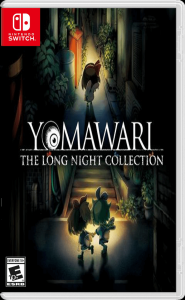
Yomawari: The Long Night Collection Switch NSP
Report Link Error
Select the broken download file, then submit the report.
Screenshots
About Game
Yomawari: The Long Night Collection Switch NSP brings two small-scale nighttime horror adventures to Nintendo Switch in one package. Built around vulnerable young protagonists, quiet streets, and unseen threats, the collection favours unease over combat. Its fear comes from navigating darkness with limited options while personal searches unfold across a town that feels familiar by day and deeply unsafe after nightfall.
What Is Included in Yomawari: The Long Night Collection
Yomawari: The Long Night Collection contains Yomawari: Night Alone and Yomawari: Midnight Shadows. Both games share a focus on horror adventures set in a nocturnal Japanese town, where ordinary routes, homes, alleys, and landmarks become dangerous after dark.
The two stories are connected more by mood and approach than by a single continuous plot. Each follows young characters caught in frightening circumstances, with spirits occupying spaces that would otherwise seem mundane. The games balance stylised visual presentation with unsettling situations: small figures move through large stretches of shadow, and the town’s familiar details become part of the tension.
Night Alone centers on a girl looking for loved ones, while Midnight Shadows follows two friends separated during a summer-night outing. Together, the collection presents two perspectives on fear, loss, friendship, and childhood loneliness. The emphasis remains on survival, discovery, and finding a way forward rather than confronting danger head-on.
Night Alone: A Search Through a Haunted Town
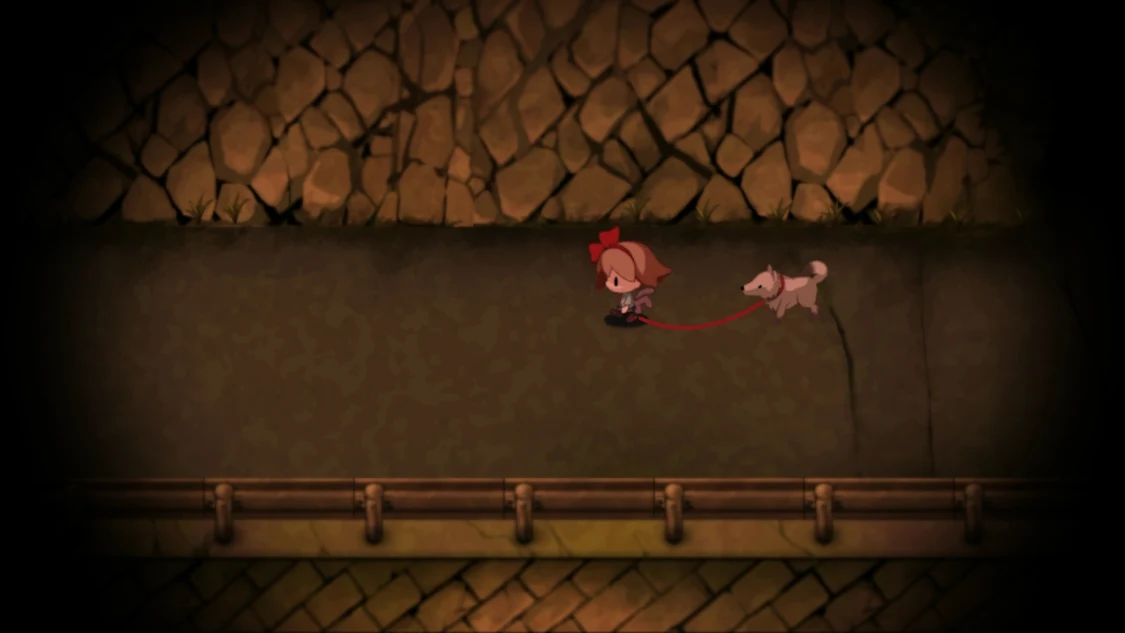
The Yomawari Night Alone story begins when a young girl loses her dog, Poro, and then becomes separated from her older sister. Her search takes her through a deserted town after night has fallen. Streets, paths, and neighbourhood corners become part of a larger maze, one inhabited by spirits that can turn a simple search into a risky journey.
Poro is central to the girl’s reason for venturing into the night, but the search expands as she attempts to locate both her dog and her sister. The premise gives the game’s haunted town exploration an emotional foundation. The player is not simply moving through eerie locations for their own sake; each route and clue supports a personal attempt to reunite a family.
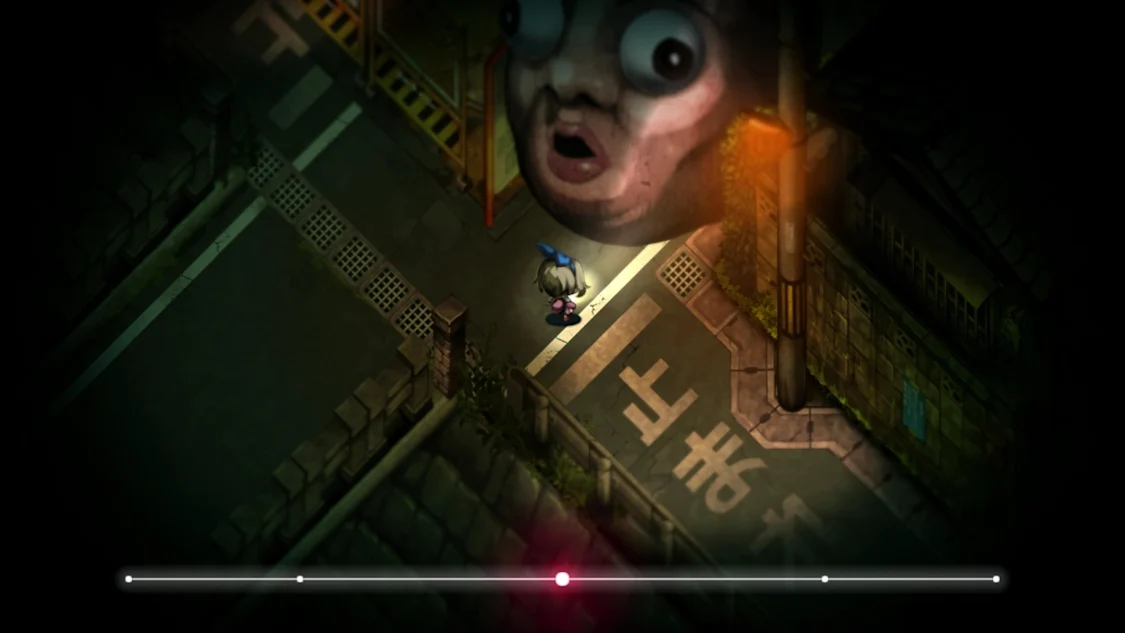
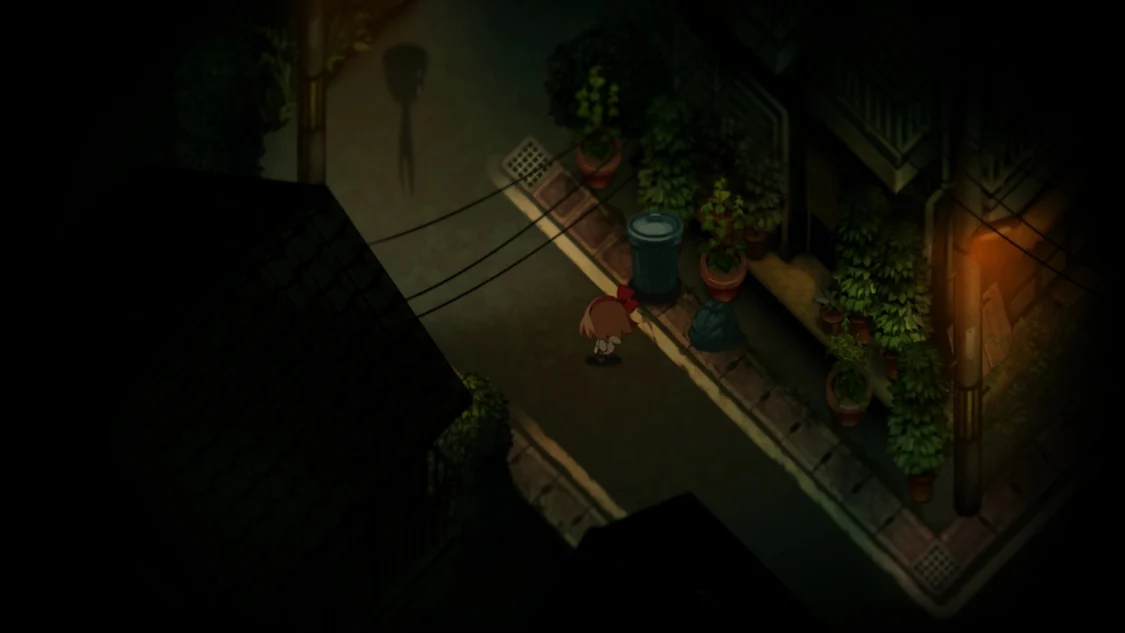
The setting contributes heavily to the game’s tone. Darkness conceals hazards and makes familiar areas difficult to read, while spectral encounters create uncertainty about what may be waiting beyond the next pool of light. The protagonist’s small scale reinforces the feeling that the town is larger, stranger, and more threatening than it first appears.
How Exploration, Stealth, and Puzzles Shape the Experience
Yomawari gameplay combines interconnected-map exploration, clue hunting, item collection, environmental puzzles, and stealth horror. Players guide a vulnerable protagonist through broad areas rather than relying on combat tools. Progress comes from observing the environment, locating useful objects, working out where to go next, and surviving encounters with hostile spirits.
The maps encourage attention to routes and surroundings. A path that appears unimportant may lead to an item, a clue, or a new way through an obstacle. Environmental puzzles support this sense of gradual progression, asking players to interact with the town and its objects rather than simply move from one objective marker to another.
Stealth is equally important. Spirits are not challenges to overpower, so caution becomes a practical part of exploration. Running can create distance, and hiding can provide a brief chance to avoid detection, but neither option removes the tension of deciding when it is safe to proceed. The result is a survival-focused structure in which knowledge of an area can be as valuable as speed.
This approach also shapes the collection’s presentation. The visual contrast between small characters, dim streets, and looming spaces supports its atmospheric horror. The games do not need constant action to create pressure; an empty route can feel dangerous when the player knows a spirit may be nearby.
Why Sound and Flashlight Use Matter at Night
Sound is more than background atmosphere in these adventures. Yomawari sound cues can signal that a spirit is close before it is clearly visible, making careful listening part of staying alive. A change in the audio can encourage players to slow down, reconsider a route, or prepare to run and hide.
The Yomawari flashlight is similarly useful. Light helps reveal paths in dark environments and supports interactions with objects. It gives players a limited sense of orientation in places designed to feel obscure, though it does not make the town safe. The flashlight’s practical role strengthens the atmosphere: visibility is valuable, but the darkness beyond its reach remains a constant concern.
These systems make each journey feel deliberate. A player may hear danger before seeing it, notice a usable object in the beam of light, then decide whether to continue forward or retreat. That mix of audio awareness, limited visibility, and uncertain movement gives the collection much of its uneasy rhythm.
5 Practical Tips for Facing the Long Night
- Study new spaces. Pause before entering unfamiliar streets or side paths. Observing the area can reveal routes, obstacles, items, and possible threats before a situation becomes urgent.
- Protect your stamina. Sprinting is a key escape option, so avoid exhausting stamina without a clear reason. Remaining calm during quieter moments leaves more room to react when danger appears.
- Run with purpose. Sprint when a spirit makes immediate escape necessary, not simply because an area feels unsettling. Planned movement is safer than panicked rushing through an unknown route.
- Notice hiding places. Bushes, signs, and similar spots can offer opportunities to break detection. Identifying them while exploring may help when a chase begins.
- Trust the audio. Danger cues can arrive before a spirit is visible. Listen closely, then use that warning to change direction, hide, or prepare an escape.
Nintendo Switch Release Details for Yomawari: The Long Night Collection
Yomawari: The Long Night Collection Switch NSP was released on October 30, 2018. It is classified across the Adventure, Action, and Puzzle genres, which reflects its mix of exploration, tense evasive movement, and environmental problem-solving.
NIS America published the Nintendo Switch collection, while Nippon Ichi Software developed it. The release is listed for Europe, the USA, and Japan, with English language availability. Its two-game format makes it suited to players seeking story-led horror with a strong nighttime atmosphere, careful navigation, and an emphasis on avoiding danger rather than fighting it.
Recommended Similar Games
 LEGO Jurassic World Switch NSP XCIView Game
 SpongeBob SquarePants: Titans of the Tide Switch NSPView Game
 Harry Potter: Quidditch Champions Switch NSPView Game
 LOLLIPOP CHAINSAW RePOP Switch NSPView Game
 Shantae : Half-Genie Hero Ultimate Edition Switch NSP XCIView Game
 Mullet MadJack Switch NSPView Game
