Mega Man Legacy Collection Switch NSP
Report Link Error
Select the broken download file, then submit the report.
Screenshots
About Game
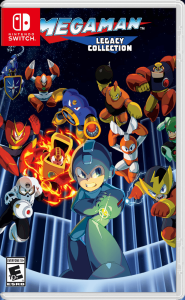
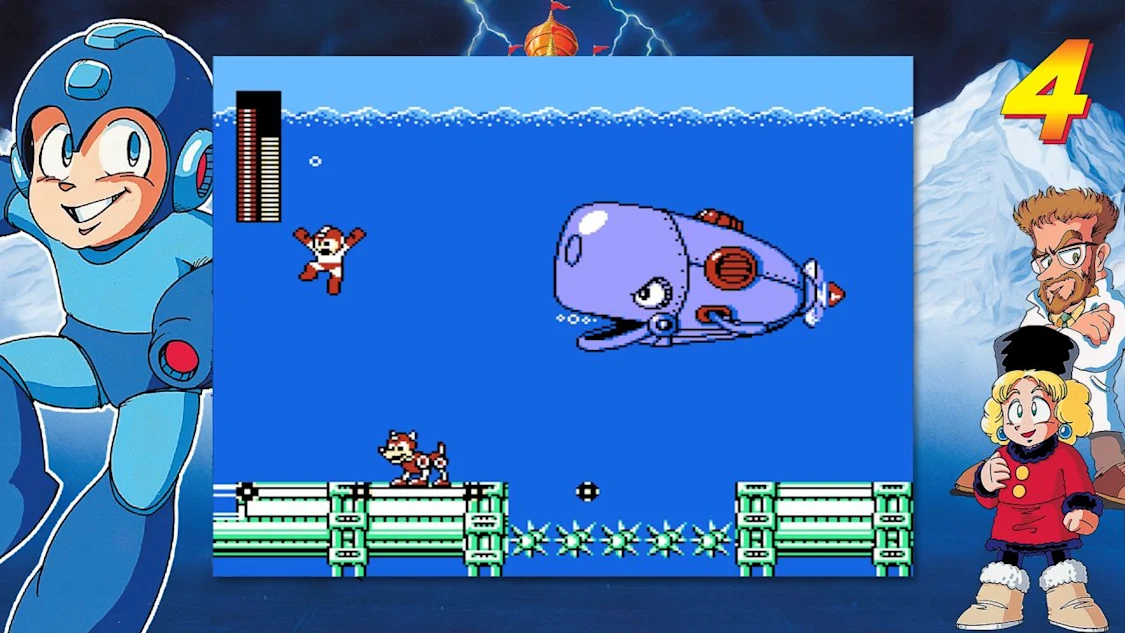
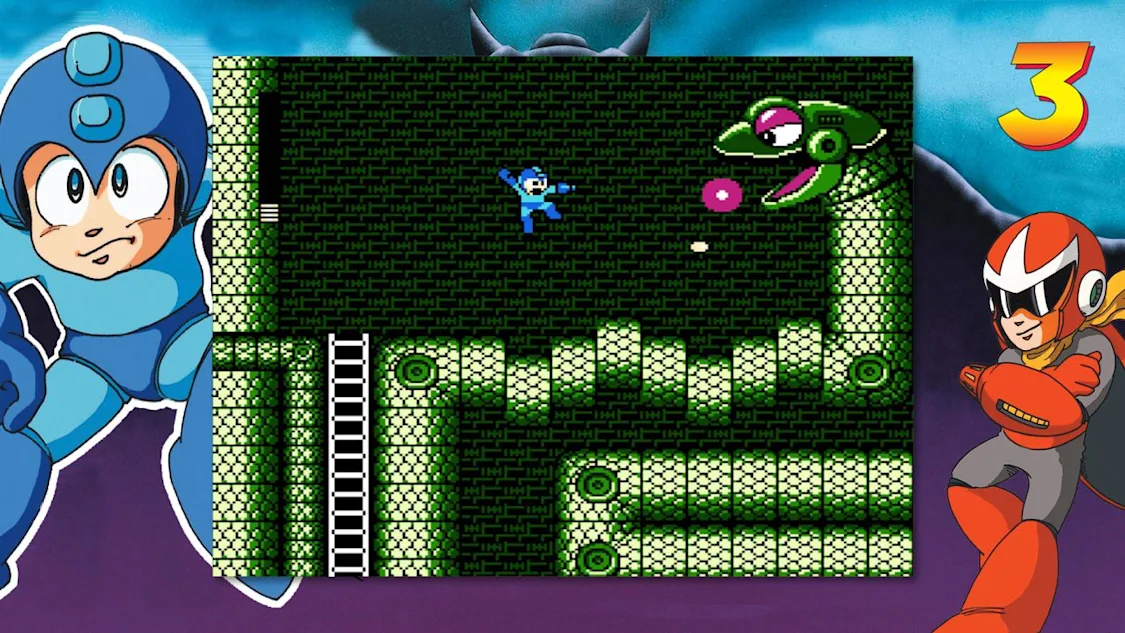
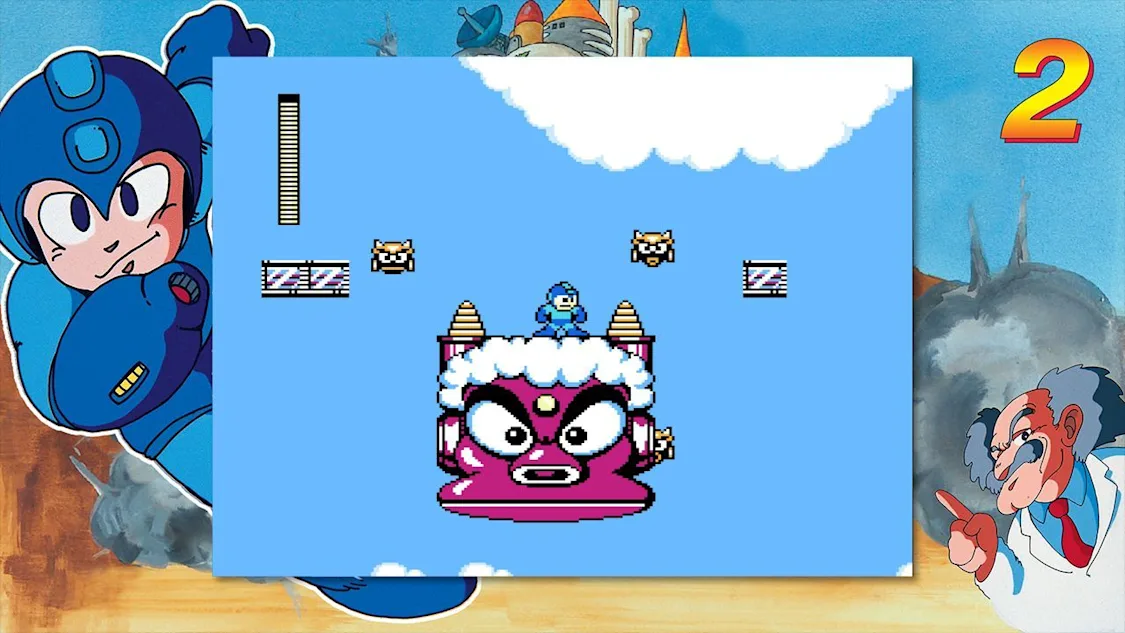
Mega Man Legacy Collection Switch NSP brings Capcom’s original six 8-bit Mega Man adventures to Nintendo Switch in a compact compilation built around demanding stages, memorable Robot Masters, and the familiar push toward Dr. Wily’s fortress. Released on May 22, 2018, it offers a direct way to revisit a formative run of action-platforming games, with enough historical material to give newcomers useful context alongside the challenge.
What Mega Man Legacy Collection Includes on Nintendo Switch
The collection gathers the original six Mega Man games, preserving a substantial stretch of the character’s early history in one release. These are games shaped by clear visual identities, tightly focused stages, and a structure that rewards learning through repetition. Their 8-bit presentation is simple by modern standards, yet the essentials remain immediately readable: hazards have distinct shapes, enemies announce their behavior through movement, and each stage has a strong theme.
For longtime players, the appeal is in returning to familiar routes, boss encounters, and weapon combinations. For players meeting Mega Man for the first time, the compilation makes the series’ foundational ideas easy to see. Each entry approaches the same basic formula with a different collection of stages, Robot Masters, obstacles, and special weapons. The games share a recognizable framework without feeling like identical repetitions.
There is also more to the package than six separate campaigns. Museum Mode offers historical material and concept art, while Remix Mode creates new challenge stages by combining segments from across the games. Those additions give the collection a broader purpose than a straightforward sequence of re-releases.
A Six-Game Tour of Mega Man’s 8-Bit Era
Mega Man 1 through 6 form a connected tour through the series’ classic 8-bit platformers. The structure is familiar from one game to the next: select a themed stage, make it through enemy-filled rooms and environmental traps, defeat a Robot Master, then use the weapon earned from that victory to open new tactical possibilities.
That format gives each game a useful sense of progression. A stage is not simply a route to its boss; it is a test of movement, timing, and observation. Platforms may demand careful jumps, enemies can pressure Mega Man from awkward positions, and hazards punish reckless forward motion. Success comes from recognizing the rhythm of a level rather than forcing a fast route through it.
- Choose a stage: Each adventure begins with themed Robot Master stages that invite players to decide their own early path.
- Read the room: Enemy patterns, moving platforms, gaps, and hazards reward attention before action.
- Face a Robot Master: Every stage culminates in a boss encounter with its own attacks and behavior.
- Claim a new weapon: Defeating a boss expands Mega Man’s arsenal with that Robot Master’s special weapon.
- Plan the next match-up: Special weapons often reveal an effective weakness against another boss.
- Storm Wily’s fortress: Completing the Robot Master stages leads toward the final confrontation with Dr. Wily.
The order of those steps matters. A player can overcome bosses through persistence and careful play, but discovering the right weapon relationship can change the shape of an encounter. That modest layer of strategy is one reason the six games remain satisfying to revisit.
The Core Conflict: Mega Man Against Dr. Wily
The Mega Man story across these games is direct and recurring. Dr. Wily threatens the world by reprogramming robots or by creating dangerous machines of his own. Rock, a lab assistant robot, becomes Mega Man and takes on the task of stopping him.
The narrative is not presented as an elaborate drama. Instead, it supplies a clean motivation for the action and gives the game’s repeated structure its purpose. Robot Masters are more than end-of-stage obstacles; they are the immediate barriers between Mega Man and Wily’s latest plan. Once their stages are cleared, the focus shifts to Wily’s fortress and the final series of confrontations.
That repetition across six games creates an atmosphere of escalating mechanical menace rather than complicated storytelling. The world is repeatedly placed in danger, Mega Man is sent into hostile territory, and Wily waits at the end of a fortress filled with tougher tests. It is a simple setup, but one that fits the concise, stage-based design.
Precision Platforming and Mega Buster Combat
Movement and shooting carry nearly every moment of play. Mega Man runs, jumps, climbs through challenging 2D stages, and fires the Mega Buster at enemy robots. The demands can be exacting: a mistimed jump may send him into a hazard, while an enemy’s movement pattern can turn a safe-looking platform into a difficult position.
The Mega Buster is the dependable baseline weapon, but the games become more flexible as special weapons are collected. A boss weapon can make another Robot Master encounter considerably more manageable, encouraging players to experiment instead of treating every battle as a pure test of reflexes. Learning which tools work best is part of the progression.
Patience is often more useful than rushing. Studying how enemies move and attack can reveal safe openings, while repeated attempts help make difficult platform sequences more legible. The collection also includes a save-state feature for practicing troublesome sections, and its rewind feature can help players revisit an error immediately. These options do not erase the games’ demands, but they make experimentation and practice less punishing.
For an audience drawn to deliberate action games, the result is a satisfying loop of failure, observation, adjustment, and eventual mastery. The challenge remains central, yet the collection provides room to learn why a particular jump, weapon choice, or boss strategy works.
Museum Mode and the Collection’s Historical Material
Museum Mode broadens the presentation beyond the playable campaigns. It includes Mega Man concept art and historical information connected to the series, giving players a place to examine the visual and developmental context around these early games.
This material is especially valuable in a compilation built from titles with a shared design language. Seeing concept art alongside the games helps underline how much personality was created through limited 8-bit forms: distinctive helmets, silhouettes, themed environments, and mechanical enemies all contribute to the series’ identity.
Remix Mode adds another replay-focused feature. By combining portions of the six games into new, intense levels, it asks players to apply familiar skills in a different arrangement. The mode complements the main campaigns rather than replacing them, offering a sharper challenge for players who have already learned the original stage designs.
Switch Release Details: Date, Regions, and Language Support
This Capcom Switch release arrived on May 22, 2018. It was made available in Europe, the USA, Asia, and Japan. The supported Nintendo Switch languages are English, German, Spanish, French, Italian, Japanese, Portuguese, and Russian.
As an action-platformer compilation, Mega Man Legacy Collection is best suited to players interested in classic 2D design, demanding boss fights, and the satisfaction of gradually improving through practice. The six-game format supplies a long view of Mega Man’s 8-bit era, while Museum Mode and Remix Mode add reasons to spend time with the collection beyond completing each campaign once.