Animal Revolt Battle Simulator Switch NSP
Report Link Error
Select the broken download file, then submit the report.
Screenshots
About Game
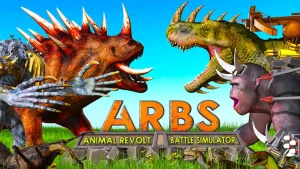
Animal Revolt Battle Simulator Switch NSP is a Nintendo Switch release from VDimension that turns battlefield design into the main event. Released on January 20, 2022, it combines Action, Simulation, Fighting, and Strategy in a deliberately open-ended format: players arrange unusual forces, start the fight, and watch physics-driven combat take over.
Animal Revolt Battle Simulator on Nintendo Switch: Game Overview
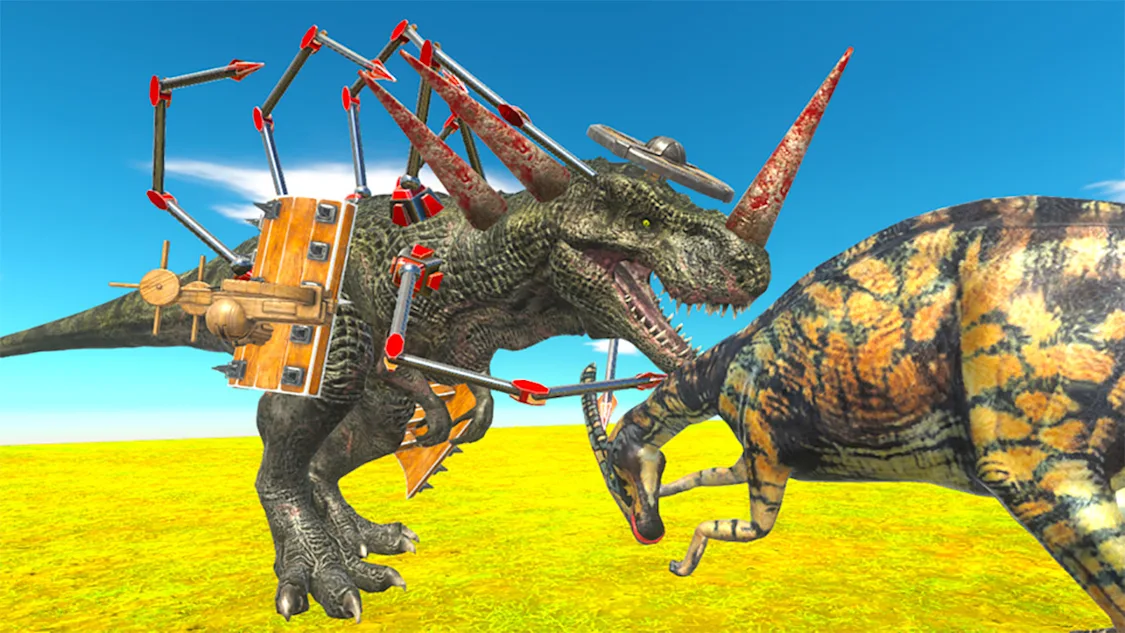
Animal Revolt Battle Simulator is built as a physics battle sandbox rather than a conventional action game with a fixed path. VDimension gives players the tools to assemble confrontations that can be strategic, ridiculous, or both. Dinosaurs can be placed against military equipment, animals can meet human fighters, and fantastical creatures can enter clashes that would make little sense outside a sandbox.
That mixture explains the game’s broad genre label. It has the immediate spectacle of fighting, the planning of strategy, the systems-led appeal of simulation, and the active experimentation associated with action games. The appeal is not simply deciding who wins. It is seeing how positioning, unit traits, terrain, obstacles, and collisions influence a battle after it begins.
On Switch, the game’s premise suits short experiments as well as longer sessions spent refining a single setup. A small encounter can become a quick test of scale or placement, while a much stranger battlefield can invite repeated adjustments. The central pleasure comes from giving an idea physical form and seeing the simulation answer back in unexpected ways.
A Player-Created Story Instead of a Traditional Campaign
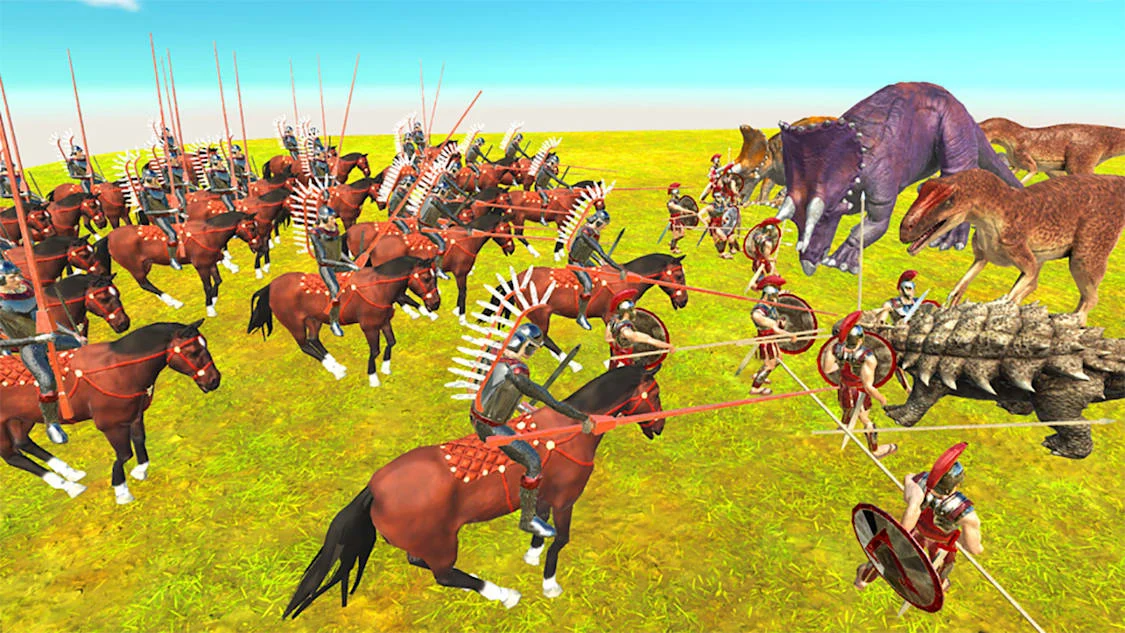
There is no overarching narrative campaign in Animal Revolt Battle Simulator Switch NSP. Its story is formed battle by battle, through the scenarios the player chooses to build. A confrontation between giant beasts and ancient warriors can suggest one kind of invented history; a clash involving dinosaurs, humans, and equipment can suggest another. The game supplies the participants and the battlefield tools, while the surrounding context remains player-defined.
This makes each setup feel less like a mission from a script and more like a prompt for imagination. Why are these units facing one another? Is one side defending an obstacle-filled position? Is the point to create a balanced contest, or to stage an intentionally unfair disaster? Those answers are not delivered through a campaign. They emerge from selection, placement, and the events that unfold once combat starts.
The lack of a fixed plot also supports a loose, playful atmosphere. Defeat can be as entertaining as victory when a carefully arranged force is knocked apart by a collision, a fall, or a larger opponent. In that sense, the player-created battles become the game’s ongoing record of unlikely heroes, failed plans, and sudden reversals.
How the Core Battle Sandbox Works
The basic loop is clear and flexible: choose units, place them on a battlefield, begin the encounter, and observe the outcome. The planning stage is where the strategic element enters. Unit placement can affect how quickly forces meet, which fighters reach the front first, and how obstacles or terrain alter movement through the area.
- Choose a force: Select from the available mix of animals, dinosaurs, humans, fantastical creatures, and military equipment.
- Set the positions: Arrange opposing units to create a direct clash, a defensive line, an ambush-like layout, or a deliberately uneven encounter.
- Shape the field: Add terrain, obstacles, and environmental elements that can influence the route and flow of combat.
- Adjust the balance: Experiment with unit size, health, and attack power to produce advantages, disadvantages, or extreme mismatches.
- Start and observe: Let the combat play out, then use the result as the basis for another attempt or a completely different scenario.
Because the outcome is shaped by physical interactions rather than a strictly fixed sequence, repeating an idea can remain useful. A setup that looks decisive on paper may change when units collide differently or fail to move through a crowded area as expected. The battle simulator format encourages testing rather than a single prescribed solution.
Building Unlikely Matchups: Animals, Humans, Creatures, and Equipment
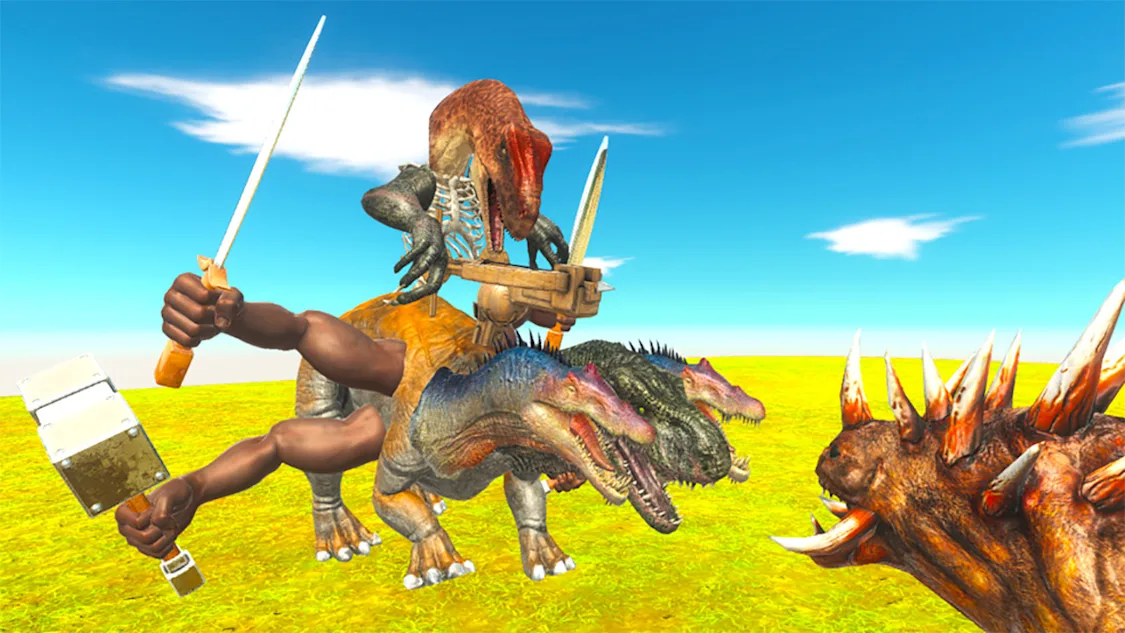
The unit selection is the engine behind the game’s most memorable setups. The supplied examples range from tiny chickens and large T-Rexes to humans, fantastical beings, and military equipment. That range invites matchups based on contrast: small against huge, prehistoric against modern, living creatures against machines, or familiar animals against something far less ordinary.
Dinosaur battles are an obvious draw, but they are only one part of the sandbox. The option to place animals alongside human units and equipment allows players to pursue many different scales of conflict. An animal versus tank battle can be staged as a serious test of adjusted health and damage values or as a knowingly absurd experiment in size and force.
Customization extends beyond the initial roster. Unit size, health, and attack power can be altered to reshape the balance of a fight. The game also allows custom units with their own appearances and abilities, widening the set of possible encounters. These tools make the experience less about finding one ideal combination and more about seeing what happens when familiar combinations are changed.
Physics, Ragdolls, and Unpredictable Combat Results
Physics gives each confrontation its character. Units collide, lose balance, fall, and can be launched across the battlefield. The ragdoll effects make force and impact visible, turning even a simple clash into a chain of movement that may be difficult to predict in advance.
This unpredictability is important to the game’s presentation. The spectacle is not based on a scripted battle scene; it comes from watching units react to one another and to the environment. A well-placed opponent may be pushed aside. A crowded group may become tangled in collisions. A large unit can change the shape of a fight simply through its physical presence.
That does not remove strategy. Instead, it gives strategy a more experimental role. Players can tune a scenario, watch the result, and decide whether the issue was unit strength, arrangement, terrain, or the chaotic consequences of contact. For players who enjoy ragdoll battles and systems that can produce surprising results, that uncertainty is part of the attraction rather than a distraction.
Battlefield Setup: Terrain, Obstacles, and Environmental Choices
Battlefields are more than empty stages. Terrain, obstacles, and environmental elements can be used to influence movement and the wider flow of a confrontation. A clear area may encourage a fast meeting between two forces, while placed obstacles can complicate routes and change where units gather.
This gives players another layer to consider beyond the roster itself. A matchup that seems straightforward on open ground may play out differently when the path is interrupted or when units are arranged around environmental features. Battlefield design can therefore support a more considered contest, or simply create more opportunities for messy collisions and falls.
The game also supports saving favorite battle scenarios and returning to them later, which suits its repeatable design. A saved setup can be revisited after changing unit values, rebuilding the terrain, or testing a different side against the same challenge. Animal Revolt Battle Simulator is best suited to players who enjoy creating their own sandbox scenarios, watching simulations unfold, and finding entertainment in the gap between a planned battle and its unpredictable result.
Recommended Similar Games
 THE KING OF FIGHTERS XIII GLOBAL MATCH Deluxe Edition Switch NSP XCIView Game
 Slime Rancher: Plortable Edition Switch NSPView Game
 Yohane The Parhelion -Blaze in the Deepblue- Switch NSP XCIView Game
 BloodRayne Betrayal: Fresh Bites Switch NSP XCIView Game
 Yacht Haven Tycoon: Marina Port Parking Simulator Switch NSPView Game
 BLAZBLUE CENTRALFICTION Special Edition Switch NSPView Game
