Barony Switch NSP
Report Link Error
Select the broken download file, then submit the report.
Screenshots
About Game
Barony Switch NSP is a first-person roguelike RPG built around hazardous dungeon expeditions, unpredictable layouts, and the pressure of permanent death. Its setting sends players into the cursed depths of Devil’s Goya, where the goal is to reach and defeat the lich Baron von Lichtenstein. The journey is not simply about moving downward through a dungeon: it is about observing danger, adapting to changing conditions, and carrying lessons from one failed attempt into the next.
How First-Person Roguelike Exploration Shapes Every Run
The first-person viewpoint gives Barony’s dungeon crawling a close, immediate feel. Corridors, doors, enemies, and hazards are encountered from inside the character’s perspective, which can make even a routine turn through an unfamiliar room feel uncertain. The dungeon is not presented as a fixed route to memorize once and repeat comfortably. Its layouts, enemy encounters, and item placement are procedurally generated, giving each expedition a different shape.
That procedural generation is central to the game’s replay value. A useful item found early in one run may not appear in the same place during the next. An encounter that seemed manageable before may become more complicated when it occurs in a different room or alongside different threats. This does not remove the importance of player knowledge; instead, it shifts that knowledge toward reading situations, recognizing risks, and making choices with incomplete information.
The result is a first-person roguelike where exploration and tension are closely linked. The dungeon’s darkness, curses, hostile inhabitants, and treasure-filled spaces establish the atmosphere, while the changing structure prevents the experience from settling into a predictable routine. Players are encouraged to keep moving forward, but every new passage also raises the question of what may be waiting beyond it.
Permadeath and the Value of Learning From Defeat
Permadeath gives every decision added consequence. When a character dies, that run ends, and the player begins again with a fresh character rather than continuing from the same point. The immediate loss can be severe, but Barony frames failure as part of the learning process. Knowledge of enemy behavior, useful routes, dangerous situations, equipment choices, and dungeon hazards remains valuable even after a run is over.
This structure favors patience over reckless momentum. Caution matters when entering an unexplored room, deciding whether to spend resources, or choosing how much inventory space to devote to a particular find. Roguelike strategy comes from understanding that progress is not measured only by reaching a deeper level. It is also measured by becoming better prepared for the next attempt.
- Pause before pushing ahead: unexplored areas can contain enemies, traps, or useful discoveries, so careful observation has practical value.
- Protect the run: permanent death makes survival a priority, not merely a temporary inconvenience.
- Read the situation: procedural generation means familiar plans may need to change when layouts, items, and encounters differ.
- Use defeat as information: each lost character can reveal a better approach to danger, equipment, or class abilities.
- Value small advantages: a weapon, spell, piece of armor, or discovered route may have lasting importance in a difficult expedition.
Character Classes and Their Different Starting Approaches
Barony offers several class examples, including the Warrior, Rogue, Mage, and Cleric. Their different starting equipment and abilities provide distinct ways to begin the dungeon rather than a single prescribed style of play. A Warrior can be approached as a more direct combat-oriented choice, while a Rogue suggests a different relationship with the dungeon’s threats and opportunities. Mage and Cleric options introduce their own ability-based starting approaches.
The value of these classes is not only variety for its own sake. Because each run is shaped by random layouts, items, and enemy encounters, the starting identity of a character can influence early priorities. Equipment and abilities help define what a player may be ready to handle, what resources are especially useful, and which dangers require more care.
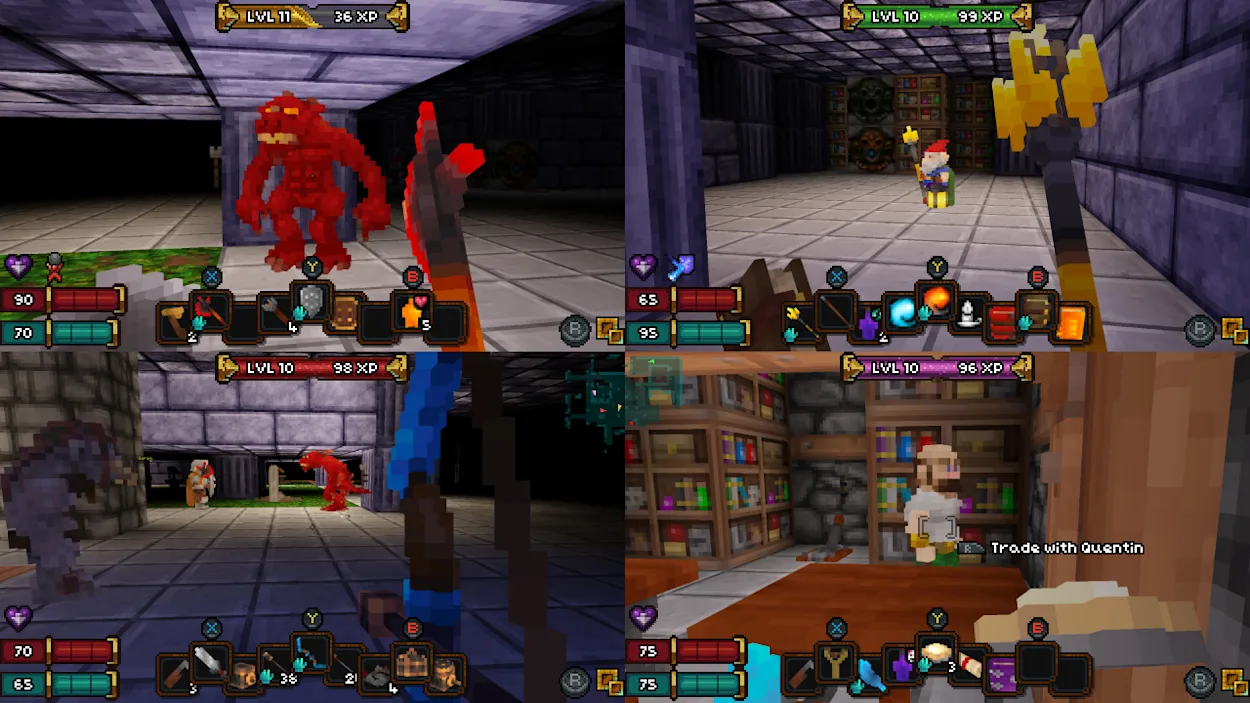
In cooperative play, these differences can also support a group approach. Barony supports local and online co-op for up to four players, allowing players to bring different classes and abilities into the same expedition. Combining those roles can change how a party handles combat, exploration, and the burden of surviving the dungeon’s deepest areas.
Combat, Spells, Gear, and Inventory Decisions
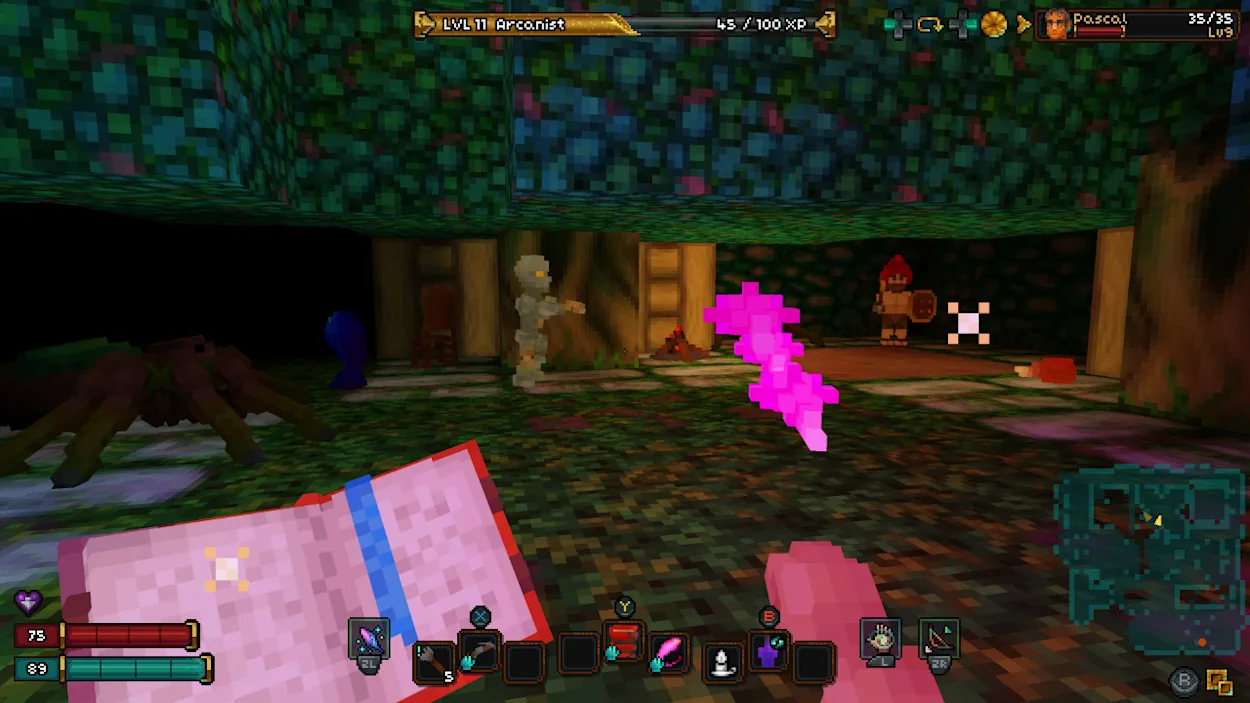
Combat is supported by a broad set of RPG mechanics rather than being limited to straightforward weapon use. Characters can level up, wield weapons, equip armor, cast spells, and manage the contents of their inventory while facing dungeon enemies. These systems give the game multiple layers of decision-making, especially when a run does not provide the same tools in the same order.
Inventory management is particularly important in a dungeon crawler where discoveries compete for limited attention. Equipment may promise better protection or stronger attacks, while spells offer another means of responding to threats. The player must judge what is useful now and what may matter later, with the risk of permanent death making poor preparation more costly.
For Barony Switch NSP, progression is therefore tied to both character growth and practical judgment. Leveling up can strengthen a character over the course of a run, but it does not erase the need to use weapons, armor, abilities, and inventory space thoughtfully. The game’s challenge comes from the interaction between those RPG mechanics and the uncertain conditions created by procedural generation.
Secrets, Traps, and Hidden Passages Worth Investigating
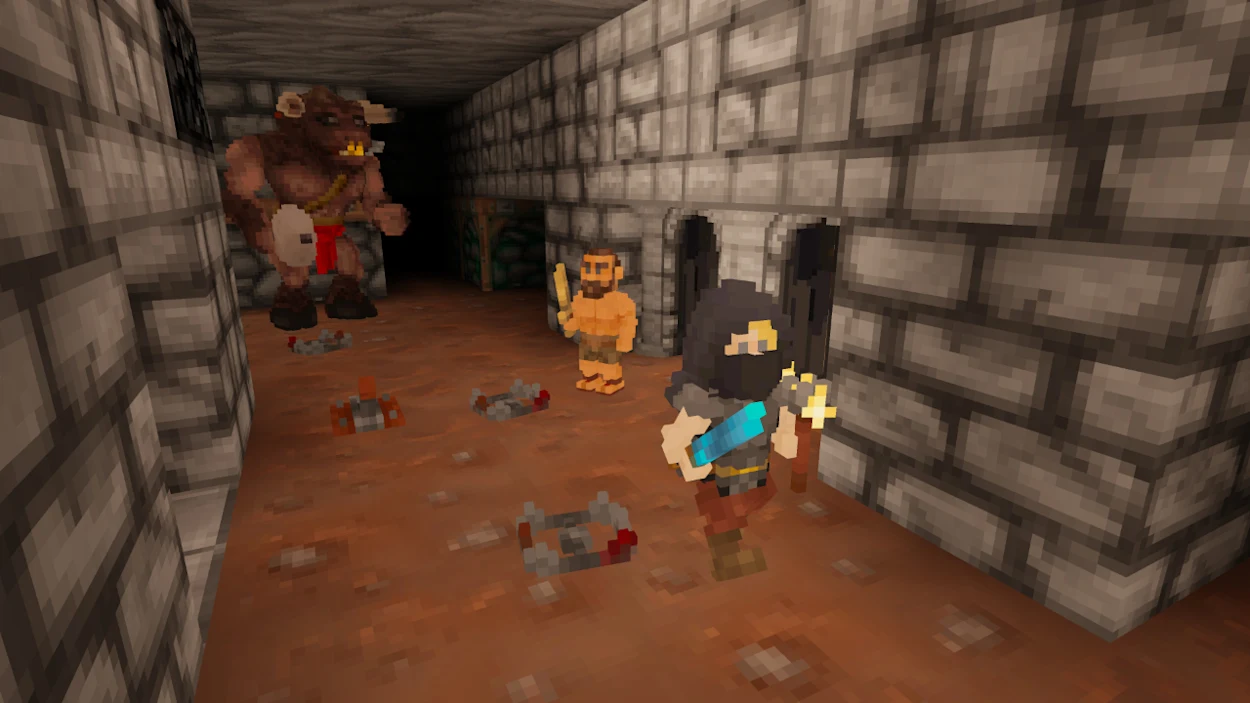
Devil’s Goya is more than a sequence of combat spaces. Hidden passages, traps, secrets, treasures, and environmental clues reward players who do not treat each room as a simple obstacle on the way to the next floor. Careful exploration can reveal opportunities, but it also asks players to remain alert to danger concealed within the environment.
This attention to detail supports the game’s dark fantasy atmosphere. The dungeon is described as a place of ancient curses and lingering history, and parts of its narrative are conveyed through environmental storytelling and item descriptions. Players gradually piece together details about the dungeon and its inhabitants while pursuing the larger objective of confronting Baron von Lichtenstein.
Secrets are not merely decorative. In a roguelike structure, a hidden passage or valuable discovery can affect how a run develops. The same is true of traps: they reinforce the need for observation and restraint. A player who notices a clue may gain an advantage, while one who rushes forward may lose resources or far more.
Nintendo Switch Release Details and Technical Metadata
Barony was released for Nintendo Switch on August 1, 2023. Turning Wheel served as both publisher and developer. Its listed genres are Action, Adventure, and Role-Playing, a fitting description for a game that combines first-person dungeon crawling, combat, character progression, spells, and exploratory risk.
The release is listed for Europe and the USA, with English language support. The base firmware requirement is v17.0.0. For players interested in a demanding dungeon crawler with procedural generation, class-based starting options, co-op support, and a permanent-death loop that rewards accumulated knowledge, Barony offers a focused challenge shaped by careful play rather than repetition alone.